Tag Archives: al-Qaeda

Al-Qaeda and Global Terror

This article was originally published at European Eye on Radicalisation

By Kyle Orton (@KyleWOrton) on 16 April 2019

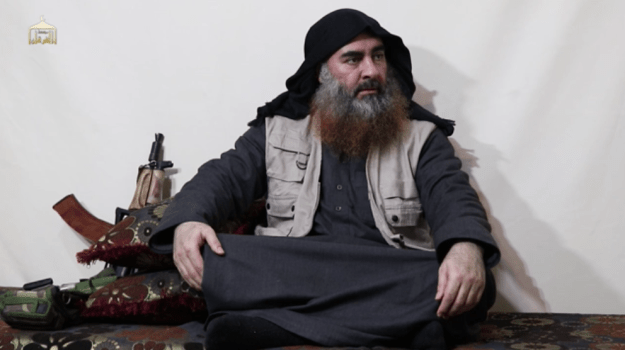
Ahmad al-Shara (Abu Muhammad al-Jolani) [image source]

Several years ago, Al-Qaeda made a strategic decision to refrain from foreign terrorist operations, refocusing away from these global spectaculars towards integrating more closely into local conflicts. The 2014 rampage across Iraq and Syria by Al-Qaeda’s rebellious former Iraqi branch, the Islamic State (ISIS), provided both the opportunity and additional incentive for a long-mediated rebranding effort. However, there have recently been signs of a shift back towards external terror operations, just as ISIS undergoes a setback and Al-Qaeda has a chance to reassert its dominance over the jihadi scene. Continue reading

Islamic State Profiles the Leadership

By Kyle Orton (@KyleWOrton) on 6 April 2019

Islamic State flag in front of the main gate of Saddam Husayn’s palace in Tikrit, 5 April 2015 // AFP PHOTO / MOHAMMED SAWAF

A lengthy document—roughly sixty pages and 12,000 words—was published online on 21 February 2019 containing biographies of twenty-seven senior Islamic State (IS) officials, past and more recent. Those bios that are dated were written between October 2018 and the time of publication, with one exception that was written in the summer of 2018. The author claims to be an IS veteran. While longevity is difficult to prove, the fact that the author provides heretofore unseen images of some of the IS leaders suggests that at a minimum he is an IS operative. Continue reading

Jihadist Groups Capitalize on Far-Right Terrorism in New Zealand

By Kyle Orton (@KyleWOrton) on 29 March 2019

Al-Nur Mosque, Christchurch, New Zealand [image source]

In the wake of the terrorist atrocity against two mosques in Christchurch, New Zealand, on 15 March 2019, by Brenton Harrison, an Australian far-Right ideologue, jihadist groups released various statements seeking to exploit the event for their own purposes, an illustrative case of two extremisms feeding off one-another, a phenomenon known as “reciprocal radicalisation”, which seems likely to become more prevalent in the future. Continue reading

The Shah, the Cold War, and the Islamists

By Kyle Orton (@KyleWOrton) on 20 March 2019

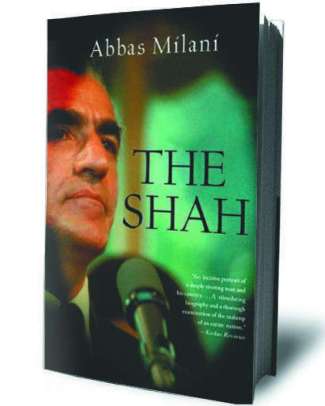
Abbas Milani’s The Shah gives a portrait of Iran’s last monarch, Muhammad Reza Pahlavi, and the impact that his downfall forty years ago continues to have in the Middle East, notably the emboldening of the Islamist movement. Continue reading

What is Turkey Doing in Syria?

By Kyle Orton (@KyleWOrton) on 10 March 2019

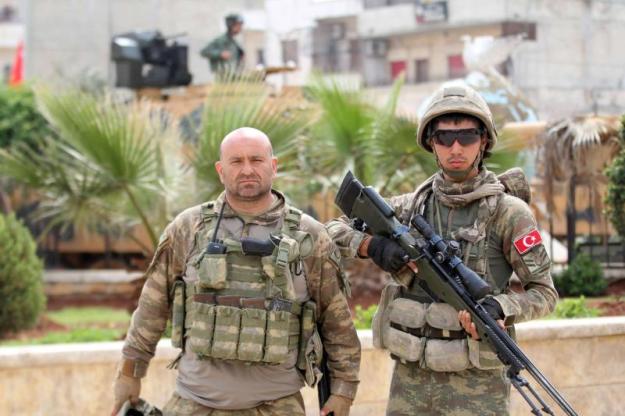
Turkish soldiers in Efrin, Syria, March 2018. (AFP)

Eight years ago, peaceful protests began against Syrian President Bashar Assad. Since then, outside powers — the Iran-Russia axis, the United States and Turkey — have become dominant in Syria.

The Iranians and Russians keeping Assad’s regime alive are clearly going nowhere. The Americans’ indecision on the point is apparently final. So, what of Turkey, which is the custodian of the remnants of the armed opposition? Continue reading

Islamic State Urges Defiance as the Caliphate Collapses, Attacks Other Islamists

By Kyle Orton (@KyleWOrton) on 9 March 2019

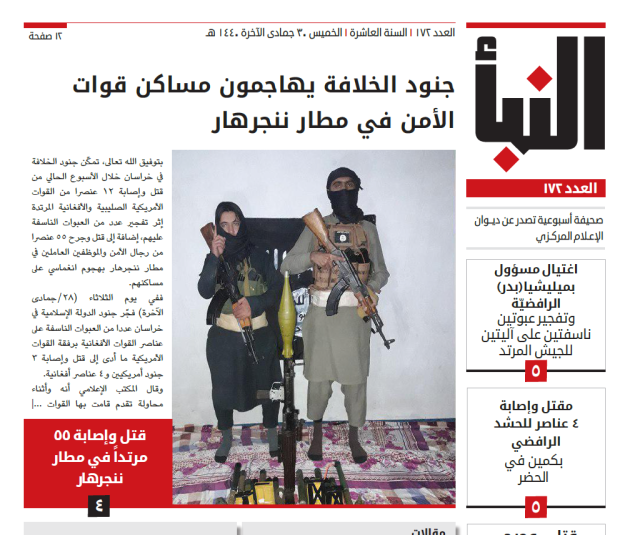
Al-Naba 172 front page

The Islamic State (IS) released the 172nd edition of Al-Naba, its newsletter, on 7 March 2019. Continue reading

Islamic State Newsletter Celebrates Guerrilla Campaign, Attacks Saudi Arabia as ‘Stalinist’

By Kyle Orton (@KyleWOrton) on 16 February 2019

Front page Al-Naba 169

The Islamic State (IS) released the 169th edition of its newsletter, Al-Naba, on 14 February 2019. Al-Naba 169 leads with the attack on the governor of Borno in Nigeria by IS’s branch in that country. In terms of volume, much of the focus remains on the guerrilla campaign in Iraq and Syria, though there is an item on the last stand of the caliphate in Baghuz, the final village in eastern Syria. IS highlights its clashes with al-Qaeda in Yemen. There is a profile of a Russian-speaking atheist-turned-jihadist who was killed in Egypt. And perhaps most notable is an essay on Saudi Arabia, where IS has a terrorist infrastructure that is instructed to be patient. It is a question that likely is unanswerable until it is too late how strong IS is in Saudi Arabia. Continue reading

Can Russia Reconcile Turkey and Syria?

This article was published at Ahval under the headline, “Back to the Future for Turkey and Syria?”

By Kyle Orton (@KyleWOrton) on 1 February 2019

American base on the outskirts of Minbij, 26 December 2018. (Photo by Delil souleiman / AFP)

U.S. President Donald Trump’s surprise announcement that U.S. troops would be withdrawn from Syria came with many visible costs. The benefits the anti-Islamic State (ISIS) campaign has delivered to Syrian President Bashar Assad, Iran, and Russia were made permanent. There is also more space for ISIS and greater instability in northeast Syria as Turkey confronts Syrian Kurdish forces. And there is the political cost to the United States of leaving its Kurdish anti-ISIS partner to face Turkey and the pro-Assad coalition alone. Continue reading

IHH, Al-Qaeda, and Turkey

By Kyle Orton (@KyleWOrton) on 26 January 2019

Mavi Marmara arrives at Sarayburnu port as people wave Turkish and Palestinian flags, 26 December 2010 [source]

An article posted on the website of IHH Humanitarian Relief Foundation on 14 July 2006 told of a massive funeral ceremony in Istanbul for Shamil Basayev, an al-Qaeda-linked Chechen jihadist. The original article has been removed, though a cached version is currently available. To avoid this being lost, the article is reproduced below. Before that is a brief outline of the context. Continue reading

The Consequences of American Withdrawal from Syria

A version of this article was published at CapX

By Kyle Orton (@KyleWOrton) on 21 December 2018

President Trump in a Twitter video saying fallen soldiers agree with his plan to withdraw from Syria, 19 December 2018 [image source]

“We have won against ISIS”, declared President Donald Trump in a Twitter video on Wednesday night. “We’ve taken back the land. And now it’s time for our troops to come back home.” After a day of reporting that the United States has decided on a rapid, total withdrawal from Syria, here was the confirmation. It is a policy course fraught with danger and very likely to lead to outcomes unfavourable to Western interests, whether defined in humanitarian or strategic terms.
Continue reading