By Kyle Orton (@KyleWOrton) on 29 March 2019

Al-Nur Mosque, Christchurch, New Zealand [image source]
By Kyle Orton (@KyleWOrton) on 29 March 2019

Al-Nur Mosque, Christchurch, New Zealand [image source]
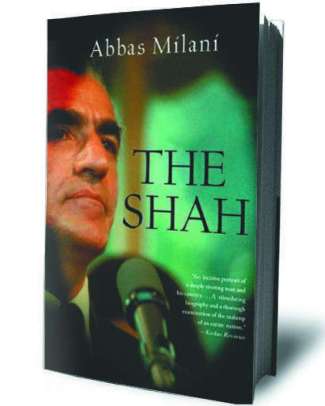
By Kyle Orton (@KyleWOrton) on 20 March 2019

Abbas Milani’s The Shah gives a portrait of Iran’s last monarch, Muhammad Reza Pahlavi, and the impact that his downfall forty years ago continues to have in the Middle East, notably the emboldening of the Islamist movement. Continue reading
By Kyle Orton (@KyleWOrton) on 10 March 2019

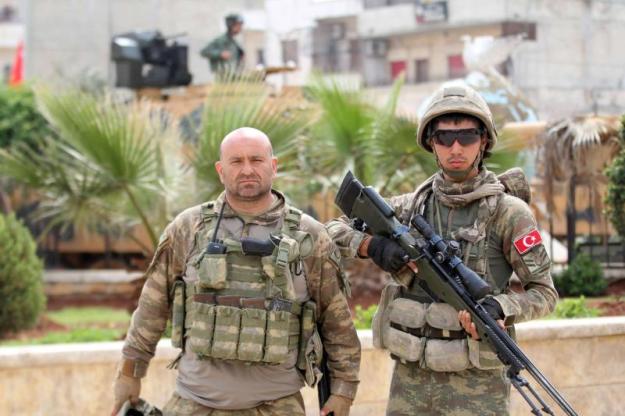
Turkish soldiers in Efrin, Syria, March 2018. (AFP)
Eight years ago, peaceful protests began against Syrian President Bashar Assad. Since then, outside powers — the Iran-Russia axis, the United States and Turkey — have become dominant in Syria.
The Iranians and Russians keeping Assad’s regime alive are clearly going nowhere. The Americans’ indecision on the point is apparently final. So, what of Turkey, which is the custodian of the remnants of the armed opposition? Continue reading
By Kyle Orton (@KyleWOrton) on 9 March 2019

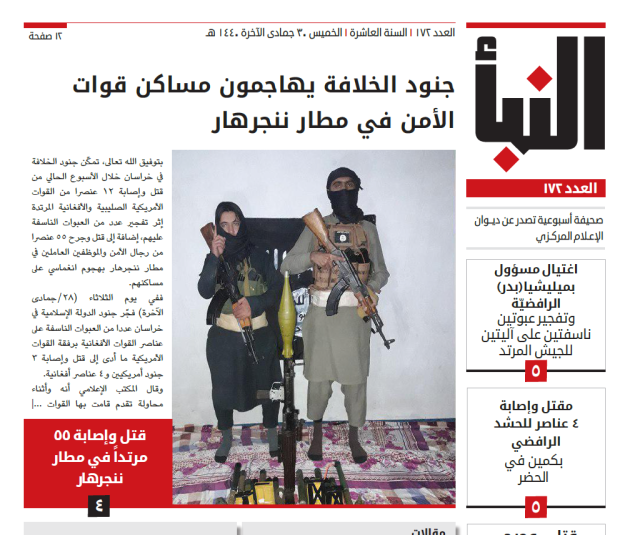
Al-Naba 172 front page
The Islamic State (IS) released the 172nd edition of Al-Naba, its newsletter, on 7 March 2019. Continue reading
By Kyle Orton (@KyleWOrton) on 16 February 2019

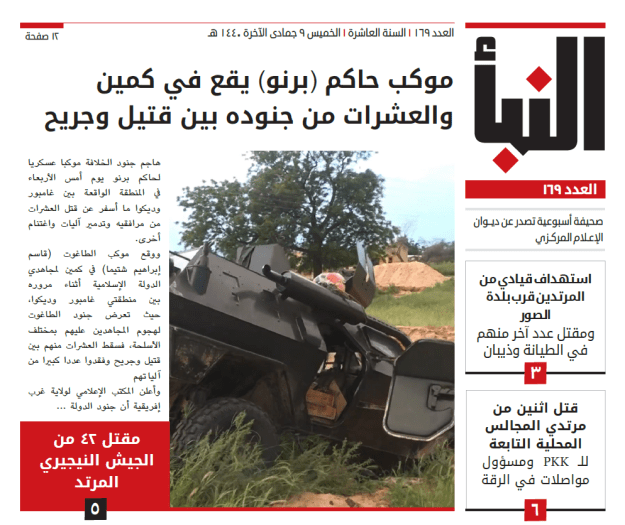
Front page Al-Naba 169
The Islamic State (IS) released the 169th edition of its newsletter, Al-Naba, on 14 February 2019. Al-Naba 169 leads with the attack on the governor of Borno in Nigeria by IS’s branch in that country. In terms of volume, much of the focus remains on the guerrilla campaign in Iraq and Syria, though there is an item on the last stand of the caliphate in Baghuz, the final village in eastern Syria. IS highlights its clashes with al-Qaeda in Yemen. There is a profile of a Russian-speaking atheist-turned-jihadist who was killed in Egypt. And perhaps most notable is an essay on Saudi Arabia, where IS has a terrorist infrastructure that is instructed to be patient. It is a question that likely is unanswerable until it is too late how strong IS is in Saudi Arabia. Continue reading
This article was published at Ahval under the headline, “Back to the Future for Turkey and Syria?”
By Kyle Orton (@KyleWOrton) on 1 February 2019

American base on the outskirts of Minbij, 26 December 2018. (Photo by Delil souleiman / AFP)
U.S. President Donald Trump’s surprise announcement that U.S. troops would be withdrawn from Syria came with many visible costs. The benefits the anti-Islamic State (ISIS) campaign has delivered to Syrian President Bashar Assad, Iran, and Russia were made permanent. There is also more space for ISIS and greater instability in northeast Syria as Turkey confronts Syrian Kurdish forces. And there is the political cost to the United States of leaving its Kurdish anti-ISIS partner to face Turkey and the pro-Assad coalition alone. Continue reading
By Kyle Orton (@KyleWOrton) on 26 January 2019

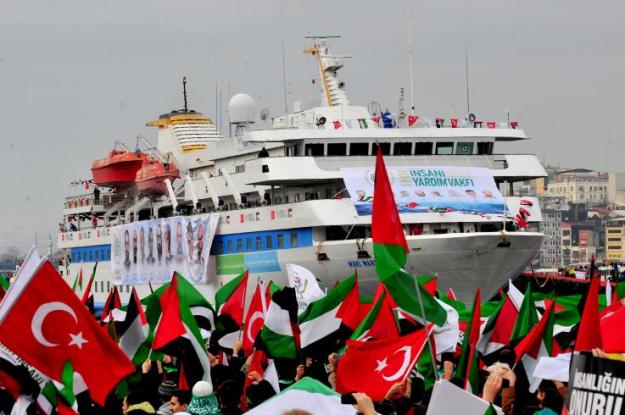
Mavi Marmara arrives at Sarayburnu port as people wave Turkish and Palestinian flags, 26 December 2010 [source]
A version of this article was published at CapX
By Kyle Orton (@KyleWOrton) on 21 December 2018

President Trump in a Twitter video saying fallen soldiers agree with his plan to withdraw from Syria, 19 December 2018 [image source]
By Kyle Orton (@KyleWOrton) on 12 December 2018

© AP Photo / Jim Hollander, Pool
Essay: “Zionism is Making Us Stupid”: The Russian Relationship with Israel from the Soviets to Putin Continue reading
By Kyle Orton (@KyleWOrton) on 6 December 2018
This article was originally published at Ahval, headlined, “The Best Bad Outcome for Idlib”

The sun setting over Deraa, in southern Syria, 28 May 2018 (image source)
The Turkey-Russia Sochi Agreement in September won Idlib a reprieve from what had seemed to be an imminent and catastrophic offensive by Syrian President Bashar Assad’s forces and his Russian and Iranian patrons against the last insurgent-held province.
The ceasefire was meant to provide space for Turkey to dismantle the radical insurgents. Instead, those radicals consolidated their dominance in Idlib and the ceasefire has been visibly fraying. How to proceed is a matter of domestic security for the West. Continue reading