Tag Archives: al-Qaeda

Islamic State Response to the Leaking of Abu Sulayman al-Utaybi’s Testimony

By Kyle Orton (@KyleWOrton) on 7 November 2018

On 24 November 2013, the day after Al-Qaeda leaked the full testimony of Abu Sulayman al-Utaybi, the chief judge of the Islamic State (IS) who made various charges against the leadership after he defected in 2007, a pro-IS response was issued, signed by one Mu’awiya al-Qahtani, entitled, “Refutation of the Letter Attributed to the Judge Abu Sulayman al-Utaybi—May God Accept Him—with Evidence and Proofs”. A translation of Al-Qahtani’s document is given below.

Continue reading

Testimony of Islamic State Defector Abu Sulayman al-Utaybi

By Kyle Orton (@KyleWOrton) on 6 November 2018

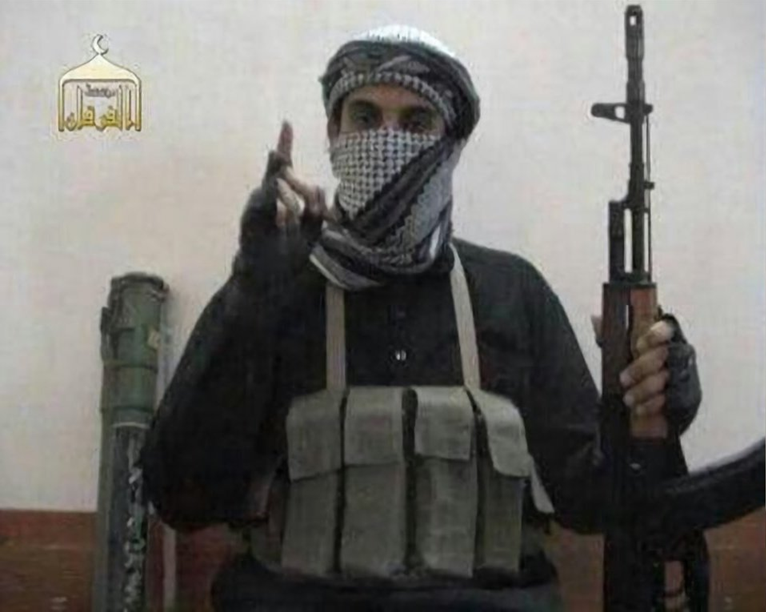
Abu Sulayman al-Utaybi, a Saudi who abandoned his Islamic studies to journey to Iraq in 2006, was appointed chief judge, of the Islamic State movement in March 2007, six months after the Statehood declaration. Between April and June 2007, Abu Sulayman released some public sermons—the picture above is from the first—for what was then called the Islamic State of Iraq (ISI), which had publicly dissolved its bonds to Al-Qaeda when it became a “State” in October 2006, while in fact retaining its bay’a (oath of allegiance) to Al-Qaeda in private.

Continue reading

Europe Tries to Re-engage in Syria

By Kyle Orton (@KyleWOrton) on 30 October 2018

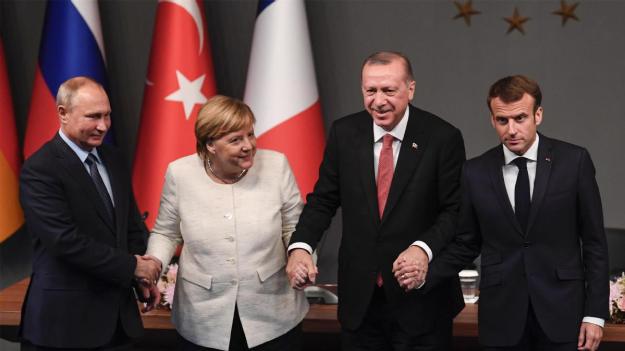
Istanbul summit, 27 October 2018 (image source)

At Saturday’s summit in Istanbul between Turkey, Russia, France and Germany, the focus was on extending the September 17 Turkey-Russia ceasefire agreement reached in Sochi that spared Idlib a full-scale offensive by Bashar al-Assad’s regime and his supporters, and to “progress” on the political track. Continue reading

Can the Europeans Help Reach Peace in Syria?

This article was published at The New Turkey

By Kyle Orton (@KyleWOrton) on 27 October 2018

Today in Istanbul, four governments—Turkey, Russia, Germany, and France—are meeting for a summit over Syria, attempting to consolidate the Sochi Agreement signed by Russia and Turkey over Idlib, and re-invigorate the international political process. There is little reason to think that these talks can succeed on either front. Continue reading

Examining Iran’s Long Relationship with Al-Qaeda

This article was originally published at The Brief

By Kyle Orton (@KyleWOrton) on 26 October 2018

At the beginning of September, New America published a paper, based on recovered al-Qaeda documents, which concluded that there was “no evidence of cooperation” between the terrorist group and the Islamic Republic of Iran. New America’s study lauds itself for taking an approach that “avoids much of the challenge of politicization” in the discussion of Iran’s relationship with al-Qaeda. This is, to put it mildly, questionable.

A narrative gained currency in certain parts of the foreign policy community during the days of the Iraq war, and gained traction since the rise of the Islamic State (IS) in 2014, that Iran can be a partner in the region, at least against (Sunni) terrorism, since Tehran shares this goal with the West. Under President Barack Obama, this notion became policy: the US moved to bring Iran’s revolutionary government in from the cold, to integrate it into the international system. Continue reading

The Idlib Offensive: Delayed, Not Cancelled

By Kyle Orton (@KyleWOrton) on 20 September 2018

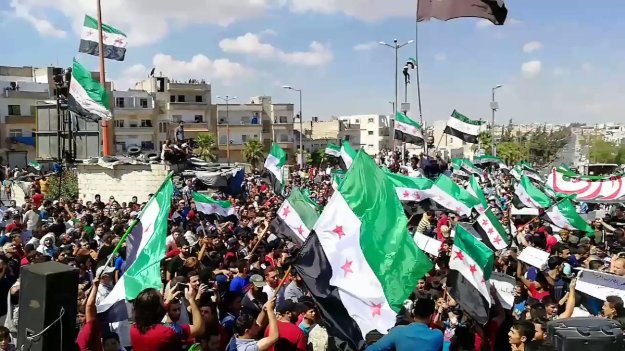
For about two months, it has seemed that an offensive by Bashar al-Assad’s regime, Iran, and Russia into Idlib was imminent, with disastrous humanitarian and strategic consequences. On Monday, an agreement was reached between Turkey and Russia that put a halt to this prospect, at least for now. There is good reason to think the pro-Assad forces are delaying, rather than cancelling, their plans to reconquer Idlib, but the extra time gives space to Turkey to alter the terms politically. Continue reading

Al-Qaeda Leader Says America is the Main Enemy

By Kyle Orton (@KyleWOrton) on 11 September 2018

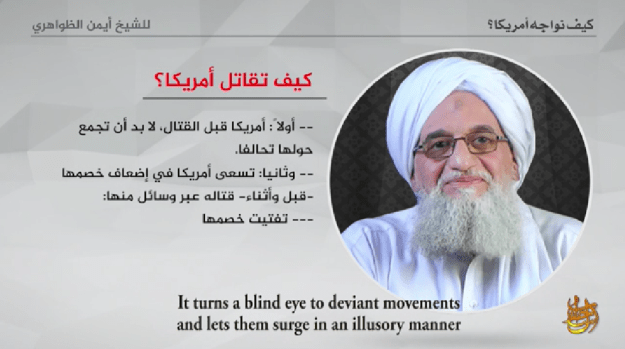
Al-Qaeda’s emir, Ayman al-Zawahiri, released a half-hour video speech today, entitled, “How to Confront America”. Al-Zawahiri’s speech mentions in passing the move of the U.S. Embassy in Israel from Tel Aviv to Jerusalem, but this—and the increasing relations of the Gulf states with the Jewish state—are held to be mere examples of the rot spread by America. Despite the lessening of Christian belief in the West, says Al-Zawahiri, the inhabitants of what was once called Christendom remain “Crusaders” at heart, with a fierce hatred for Islam and Muslims. Perhaps worse than any physical attack on the jihadists, however, is the ideological challenge of America’s secularism, Al-Zawahiri adds. An English transcript of the speech was released by As-Sahab Media and is reprinted below. Continue reading

The Man Who Made Crime Pay For the Islamic State

By Kyle Orton (@KyleWOrton) on 9 September 2018

The United States has launched at least five raids into Syria to date, all of them against the Islamic State (IS).[1] The second such raid, on 15 May 2015, killed Fathi al-Tunisi (Abu Sayyaf al-Iraqi, Abu Muhammad al-Iraqi, or Abd al-Ghani), who oversaw critical revenue-generating criminal schemes for the group. Al-Tunisi was primarily responsible for the oil industry in eastern Syria, in which capacity he collaborated with Bashar al-Asad’s regime, and he worked as head of the Antiquities Division of IS Diwan al-Rikaz, which translates literally as the “Department of Precious Things That Come Out of the Ground”, usually given as the “Department of Natural Resources”. Al-Tunisi was what is sometimes termed a “middle manager”: the connective tissue between the most senior levels of the leadership and local administrators, ensuring smooth coordination between the two by inter alia keeping the books. In short, the kind of terrorist operative that keeps an organisation going. Continue reading

What Questions Remain About 9/11?

By Kyle Orton (@KyleWOrton) on 5 September 2018

In less than a week, it will be the seventeenth anniversary of al-Qaeda’s “Plane’s Operation”, the assault on the United States. It is a vertiginous enough reflection that many of us have been alive more years since 11 September 2001 than before it, and positively alarming that many of those who will soon move into the government, media, and other leading societal institutions will have been born after an event that still shapes so much of the international scene. As Anthony Summers and Robbyn Swan put it in The Eleventh Day: The Ultimate Account of 9/11 (2011), we are left with “the brief name ‘9/11’,” the context and meaning stripped away all this time later. The book is a useful overview of an event that should always be to some degree fresh in mind, though it is not without its problems in its analytical sections. Continue reading

The State of Play in Syria and Iraq on the Eve of the Idlib Offensive

By Kyle Orton (@KyleWOrton) on 29 August 2018

Two ideas that have become quite prevalent are that the Islamic State is defeated or on its way to defeat and that the Syrian war is winding down. Both are gravely mistaken. Continue reading