By Kyle Orton (@KyleWOrton) on 17 July 2017

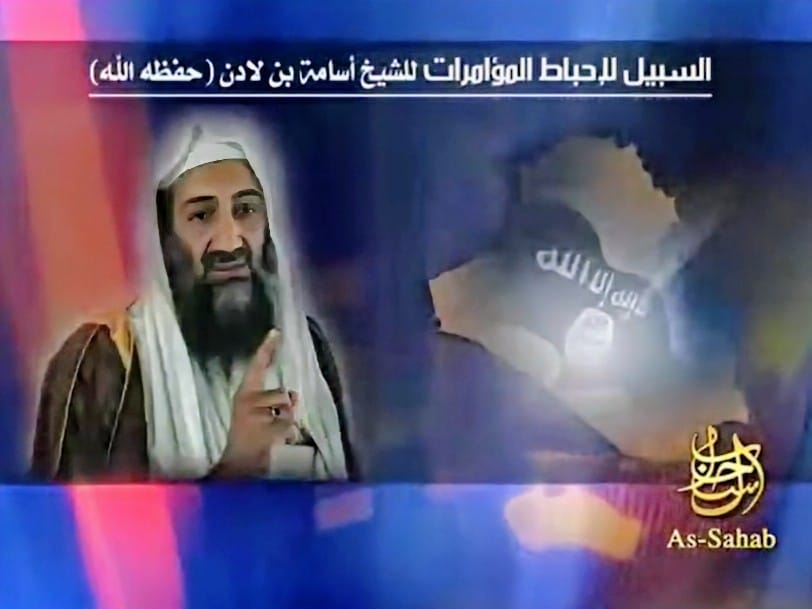
Usama bin Laden gave a speech lasting nearly an hour on 29 December 2007, entitled, “The Way to Foil the Conspiracies”. A translation of the speech is published below.
By Kyle Orton (@KyleWOrton) on 17 July 2017

Usama bin Laden gave a speech lasting nearly an hour on 29 December 2007, entitled, “The Way to Foil the Conspiracies”. A translation of the speech is published below.
Originally published at The Henry Jackson Society
By Kyle Orton (@KyleWOrton) on 9 July 2017

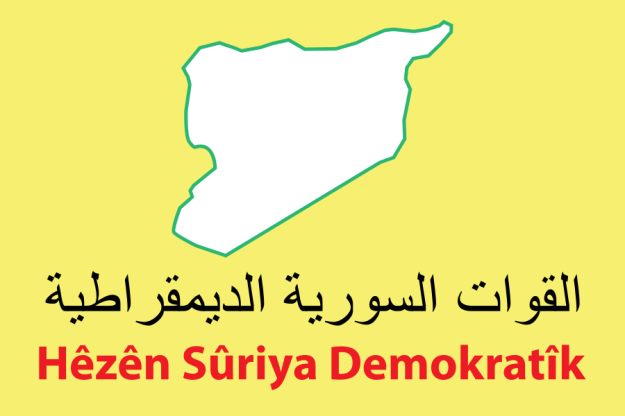
Syrian Democratic Forces (SDF) logo
The offensive to expel the Islamic State (IS) from its primary urban stronghold in Syria, Raqqa city, began on 6 November 2016 with shaping operations and commenced in earnest on 6 June 2017. Backed by the U.S.-led Coalition, the operation, known as EUPHRATES WRATH, is being carried out on the ground by the Syrian Democratic Forces (SDF) or Quwwat Suriya al-Dimoqratiyya (QSD). The SDF is formally a coalition of Kurds and Arabs—its announcement of the Raqqa operation named eighteen distinct sub-units. But the predominant force within the SDF is the Kurdistan Workers Party (PKK), and the Arab SDF play a “secondary role of maintaining local security,” which is to say providing an acceptable face for the PKK’s administration in the Arab-majority areas it has captured. Examining the SDF’s composition, and the recent marginalization of Arab SDF groups, underscores the point. Continue reading
By Kyle Orton (@KyleWOrton) on 7 July 2017

Announcement of the Kurdish Salvation Movement, 12 March 2017
As the operation proceeds to expel the Islamic State (IS) from its last major Syrian urban stronghold, Raqqa city, a statement was published on 5 July by a number of clerics, which points to the danger that the Coalition campaign, by partnering exclusively with Kurdish forces, is preparing conditions that will allow other Islamists to fill the vacuum after IS loses overt control of eastern Syria.
Continue reading
By Kyle Orton (@KyleWOrton) on 30 June 2017

Abdirahman Sheik Mohamud (source)
In April 2015, a United State Federal Grand jury in Ohio charged Abdirahman Sheik Mohamud, also known as “Ayanle”, with three terrorism-related offences. Yesterday, court records were unsealed that revealed that Mohamud pleaded guilty to all charges, admitting to having fought with a terrorist organization in Syria and returned to the United States with the intention of carrying out an act of domestic terrorism. Mohamud was in contact with foreign terrorist operatives throughout the period he was plotting an attack within the United States. But—and this is the most significant aspect of the case—Mohamud was not in contact with one of the Islamic State’s intelligence operatives, who guide attacks in a manner now relatively well-understood. Instead, Mohamud was in contact with Jabhat al-Nusra, at that time al-Qaeda’s declared branch in Syria. Al-Nusra is now known as Hay’at Tahrir al-Sham (HTS) and claimed in July 2016 to have disaffiliated from al-Qaeda’s “central”, not that this has (nor will nor should) remove HTS from the terrorism list. Regardless of its formal status within al-Qaeda’s command structure, HTS retains significant links with al-Qaeda’s global networks, and a breakaway group from HTS in Syria has reaffirmed its loyalty to al-Qaeda. Mohamud’s case is an extremely important data point in assessing the risk these overlapping and mutually reinforcing entities pose to the West and the wider world. Continue reading
By Kyle Orton (@KyleWOrton) on 19 June 2017

YPG and U.S military vehicles in Darbasiya, northern Syria, 28 April 2017. REUTERS/Rodi Said/File Photo
At the end of May, Christoph Reuter, a journalist with Der Spiegel, embedded with the Syrian Democratic Forces (SDF) as it made its way, supported by the U.S.-led Coalition, toward Raqqa city, the Syrian “capital” of the Islamic State’s (IS) caliphate. Reuter’s report provides snapshots of a number of important—and worrying—dynamics at play that have made the U.S. decision to back the SDF to liberate Raqqa so worrying over the long-term, even on its own terms as a means of sustainably defeating IS. Continue reading
By Kyle Orton (@KyleWOrton) on 16 June 2017

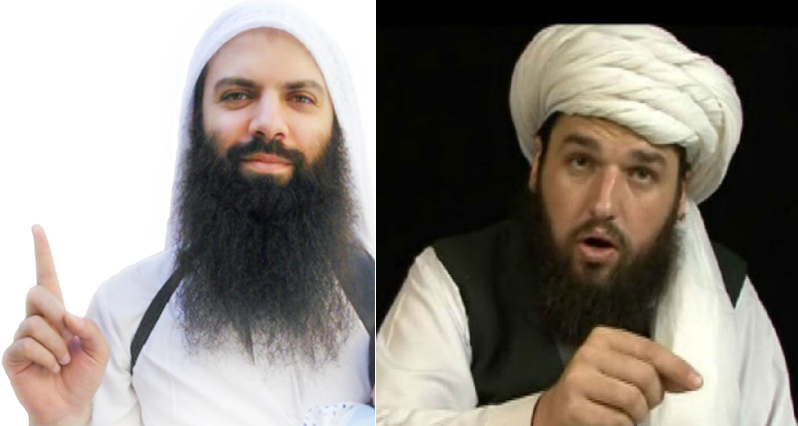
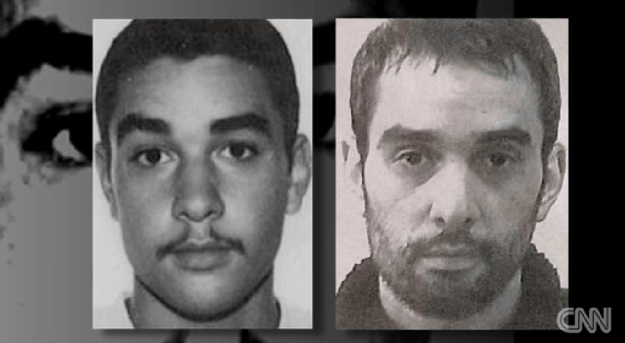
Usama Atar, older picture and most recent (picture via CNN)
Just three days after the U.S. government sanctioned two Islamic State (IS or ISIS) operatives for their role in helping the jihadists develop chemical weapons of mass destruction, another raft of sanctions were issued on 15 June against four IS members occupying varying positions within the organization from finance to propaganda to orchestrating the foreign attacks. Continue reading
By Kyle Orton (@KyleWOrton) on 13 June 2017

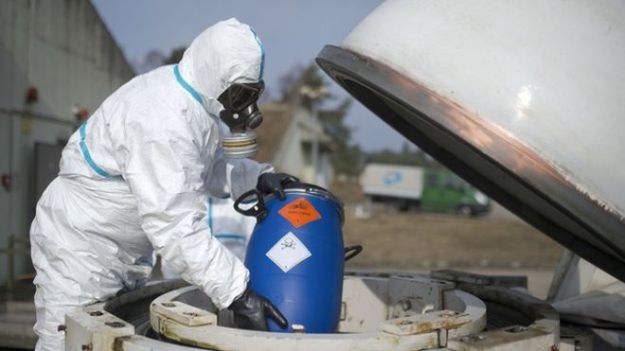
(source)
The U.S. Treasury Department’s Office of Foreign Assets Control (OFAC) announced financial sanctions against an individual involved in the “development” of chemical weapons of mass destruction (CWMD) for the Islamic State (IS) on 12 June. Simultaneously, the State Department labelled another individual involved in the development of CWMD for IS as a Specially Designated Global Terrorist (SDGT). These are the first sanctions of their kind. Continue reading
By Kyle Orton (@KyleWOrton) on 11 June 2017

Turki al-Binali at prayers in Raqqa, July 2015
It was reported on jihadist websites and by local activists that Turki al-Binali (Abu Hammam al-Athari), a senior cleric of the Islamic State (IS) and perhaps the most important public proponent of the caliphate’s formation, had been killed in Syria by an airstrike from the U.S.-led Coalition on 29 May. IS has been silent on this despite releasing their newsletter al-Naba and the tenth edition of their English-language propaganda magazine Rumiyah since then. On Tuesday, the intelligence services of the Kurdistan Regional Government (KRG) in northern Iraq confirmed that al-Binali had been killed. Continue reading
By Kyle Orton (@KyleWOrton) on 9 June 2017

Ayman al-Zawahiri, the leader of al-Qaeda, released a nearly-six-minute speech today entitled, “One Umma, One War on Multiple Fronts,” as part of the “Brief Messages” series, this being “Brief Messages to a Victorious Nation 7”. A transcript of al-Zawahiri’s speech was released by As-Sabha Media and is reproduced below with some editions in transliteration and explanatory notes added.
Al-Zawahiri continues a theme he has emphasized in previous speeches in this series, namely that Muslims are a unitary block, and thus the interference of the jihadists in all these states is legitimate because these states are false, their borders drawn by colonialists so as to keep Islamdom weak and divided, and their governments are agents of external powers (and therefore a de facto foreign occupation). The historical examples that al-Zawahiri reaches for in describing the kind of “resistance” to this Western scheme that al-Qaeda supports include the founder of the Muslim Brotherhood, Hassan al-Banna, and the first leader of the Taliban, Mullah Muhammad Umar. Continue reading
Published at The Telegraph
By Kyle Orton (@KyleWOrton) on 7 June 2017

Armed terrorists stormed the Iranian parliament complex in Tehran (CREDIT: OMID VAHABZADEH/AFP/GETTY IMAGES)
In its choice of target and timing, ISIL has shown, once again, its skill in exploiting the rivalries of its enemies—setting them against one another to buy itself greater room for manoeuvre. Continue reading