Tag Archives: al-Qaeda

Liberating Raqqa from the Islamic State

By Kyle Orton (@KyleWOrton) on February 17, 2017
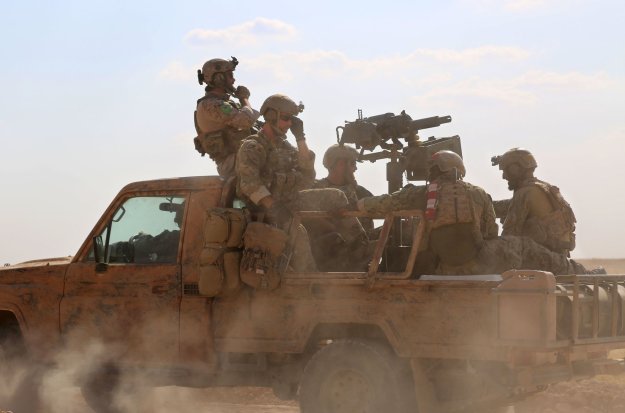
As the new administration of Donald Trump works through the United States’ options in dealing with Syria, and the Islamic State (IS) specifically, one option apparently under consideration is the use of greater numbers of combat troops to accelerate the expulsion of IS from its Syrian capital, Raqqa. While more U.S. troops would undoubtedly hasten the collapse of IS’s grip on its urban strongholds in Syria, such a policy risks continuing the failed U.S. policies of the past six years in Syria that have tackled symptoms of the conflict, rather than its causes, have tried to tackle elements in isolation from the wider conflict, and have placed too great an emphasis on military progress over politics. Continue reading
Leader of New Al-Qaeda Group in Syria Speaks

By Kyle Orton (@KyleWOrton) on February 9, 2017

hashem-al-shaykh-2

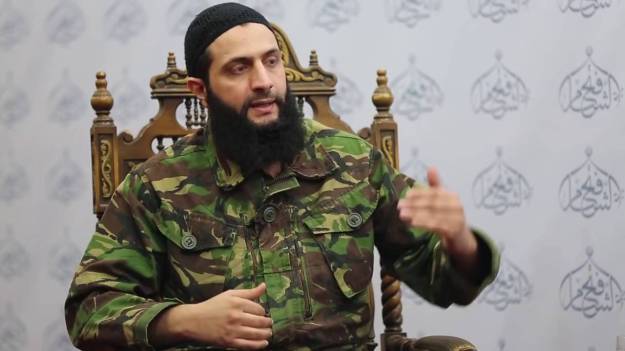
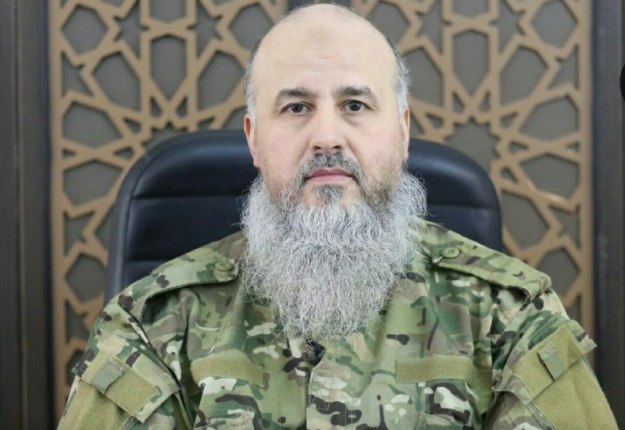
After a series of intra-insurgent clashes beginning on 19 January 2017 in northern Syria, al-Qaeda’s rebranded presence, Jabhat Fatah al-Sham (JFS), annexed several groups and clerics—and a number more since—on 28 January in a merger that took on the name Hay’at Tahrir al-Sham (HTS). JFS followed the pattern of its parent branch, the Islamic State, and did not monopolize the leadership posts in HTS, leaving the emir post to Hashem al-Shaykh (Abu Jabbar). Al-Shaykh is a former senior official of Ahrar al-Sham, an insurgent group that also has links to al-Qaeda and has been the primary bridge between the mainstream rebellion in Syria and al-Qaeda. Al-Shaykh gave his first speech as General Leader of Hay’at Tahrir al-Sham on 9 February, and Bilad al-Sham Media put out a transcript (reproduced below) and picture (above). Continue reading

Al-Qaeda Reshapes the Insurgency in Northern Syria

By Kyle Orton (@KyleWOrton) on February 7, 2017

Hay’at Tahrir al-Sham logo

A series of clashes broke out on 19 January between al-Qaeda’s rebranded Syrian branch, Jabhat Fatah al-Sham (JFS), and its heretofore close ally and portal into the Syrian rebellion, Ahrar al-Sham. By 23 January, JFS had expanded its targets, engaging in hostilities with mainstream rebel groups in the “Greater Idlib” area, and specifically trying—and succeeding—in dismantling the positions of Jaysh al-Mujahideen, a moderate group, west of Aleppo. The crisis continued to escalate, forcing many groups to merge with Ahrar al-Sham for protection, until 28 January, when a JFS-led merger was announced under the banner of Hay’at Tahrir al-Sham (HTS), or the Syrian Liberation Committee. HTS announced a ceasefire, and since then individuals and groups—including a significant number from Ahrar—have given allegiance to HTS. This radical reshaping of revolutionary dynamics in northern Syria has undoubtedly created antibodies going forward against al-Qaeda that could be capitalized on by the international community, but the present situation is highly favourable to al-Qaeda. Continue reading

Pro-Al-Qaeda Ideologue on Merging With Non-Jihadi Groups

By Kyle Orton (@KyleWOrton) on February 5, 2017

Abdallah al-Muhaysini at a rally for Hay'at Tahrir al-Sham, 3 February 2017

Abdallah al-Muhaysini at a rally for Hay’at Tahrir al-Sham, 3 February 2017

On 28 January, as a part of its long-term strategy of integrating with, and ultimately co-opting, the Syrian rebellion, al-Qaeda shifted ground again and merged into a wider spectrum of insurgent groups, many of them jihadi in character, but many not, united under the banner of Hay’at Tahrir al-Sham (HTS). One of the non-jihadi groups to join HTS was Harakat Nooradeen al-Zengi, which became infamous in July 2016 after it beheaded one of the Bashar al-Assad regime’s child soldiers on video. This has aroused some controversy in jihadi circles, and today a statement by a jihadi ideologue, Abu Mahmud al-Filistini, who lives in London, was circulating explaining why HTS was right to take in al-Zengi. The statement was entitled, “Clearing the Doubts Regarding Nooradeen al-Zengi Uniting with Hay’at Tahrir al-Sham,” and is reproduced below. Continue reading

Kuwaiti Islamic State Military Official Killed in Syria

By Kyle Orton (@KyleWOrton) on February 1, 2017

abdul-al-taresh-abu-jandal-al-kuwaiti-2

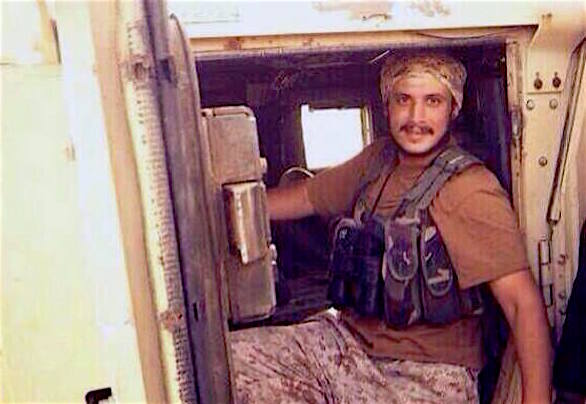
In September 2014, Kuwait undertook a series of raids against terrorists loyal to the Islamic State (IS). It was found by authorities that one of the “great influence[s]” over the jihadi-Salafists in Kuwait was Abdulmuhsin al-Taresh (Abu Jandal al-Kuwaiti). Al-Taresh was an important propagandist-recruiter for IS at this time, and would later become a senior military official. He was killed near IS’s Syrian capital, Raqqa, by the U.S.-led Coalition at the end of December. Continue reading

Mohamed Moumou: Islamic State’s Commander of the North

By Kyle Orton (@KyleWOrton) on January 28, 2017

Mohamed Moumou (Abu Qaswara)

Mohamed Moumou (Abu Qaswara)

Mohamed Moumou, better-known as Abu Qaswara, was the Commander of the North for the Islamic State of Iraq (ISI), one of the most powerful military positions in the group, when he was killed by American forces in Mosul on 5 October 2008. Continue reading

Al-Qaeda Says Attacking Syrian Rebel Groups Was Self-Defence Against A ‘Conspiracy’

By Kyle Orton (@KyleWOrton) on January 26, 2017

Ahmad al-Shara (Abu Muhammad al-Jolani)

Ahmad al-Shara (Abu Muhammad al-Jolani)

Violence erupted between Jabhat Fatah al-Sham, the rebranded al-Qaeda branch in Syria, and Ahrar al-Sham, its long-time ally and its bridge into the Syrian rebellion, beginning on 19 January. These clashes expanded to encompass the mainstream armed opposition on 23 January. Today, al-Maqalaat, a pro-JFS outlet, published a long statement explaining the fighting from JFS’s point-of-view. The salient points of the argument and other interesting elements are highlighted in bold. Continue reading

The Islamic State’s First War Minister

By Kyle Orton (@KyleWOrton) on January 25, 2017

One of the few existing pictures of Abu Hamza al-Muhajir (Abdul Munim al-Badawi)

One of the few existing pictures of Abu Hamza al-Muhajir (Abdul Munim al-Badawi)

Below is reproduced a very short biography for Abu Hamza al-Muhajir, sometimes called Abu Ayyub al-Masri, whose real name is Abdul Munim al-Badawi,[1] that circulated on pro-Islamic State forums. Al-Badawi took over leadership of al-Qaeda in Iraq (AQI) when its founder, Ahmad al-Khalayleh (Abu Musab al-Zarqawi), was killed on 7 June 2006. Al-Badawi then declared his allegiance to Hamid al-Zawi (Abu Umar al-Baghdadi) and the Islamic State of Iraq (ISI) on 10 November 2006, formally dissolving al-Qaeda on Iraqi territory, and becoming al-Zawi’s deputy. Abu Hamza had been in Iraq, including Baghdad, a year before Saddam Husayn was overthrown, and he and al-Zawi were killed together on 18 April 2010. Continue reading

What to Expect in Syria in 2017

By Kyle Orton (@KyleWOrton) on January 25, 2017

Syria has broken down as a functioning entity. There were some who saw in the takeover of Aleppo City last month by the coalition of states and militias that supports Bashar al-Assad’s regime the beginning of the end of the war. The pro-Assad coalition will make further territorial gains in 2017, but peace—even the peace of the graveyard—is still a long way off, and unlikely to ever arrive while Assad remains in power. The West, unwilling and apparently unable to remove him, nonetheless has vital interests in Syria that cannot be outsourced and must be secured by navigating a fragmented state. Continue reading

Jihadist Profile of Abu Bakr al-Baghdadi

By Kyle Orton (@KyleWOrton) on January 23, 2017

A short biography of the “Caliph” of the Islamic State (IS), Ibrahim al-Badri (Abu Bakr al-Baghdadi), was leaked online by the group in July 2013. A rough translation is reproduced below.

Continue reading