Tag Archives: al-Qaeda

In View of Vienna

By Kyle Orton (@KyleWOrton) on December 15, 2015

Published at NOW Lebanon.
1

So the Syrian opposition can unite. Foreign powers have been the major cause of rebel discord. Previous rebel unity initiatives like the Joint Command were pulled apart by the competition between the insurgency’s sponsors—Saudi Arabia and Qatar primarily—and the last rebel umbrella group, the Supreme Military Council, which was identified with Western power, collapsed after President Barack Obama decided not to punish Bashar al-Assad for the massive chemical weapons attack on the population of Ghouta. But under Saudi auspices, an opposition “team” was announced on December 10 after a three-day conference in Riyadh, which includes the political and military opposition and groups with varying ideologies and patrons. This is an achievement. Unfortunately, this team’s task is an impossible one: intended to partake in the Vienna process begun in October, ostensibly to negotiate an end to the war, Syria is not, at present, in a condition where a political agreement can be made and implemented, not least because the Assad regime and its supporters in Iran and Russia have doubled down, and the opposition continues to receive insufficient support to pressure the regime enough to force an agreement. Continue reading
The Islamic State Was Coming Without the Invasion of Iraq

By Kyle Orton (@KyleWOrton) on December 12, 2015

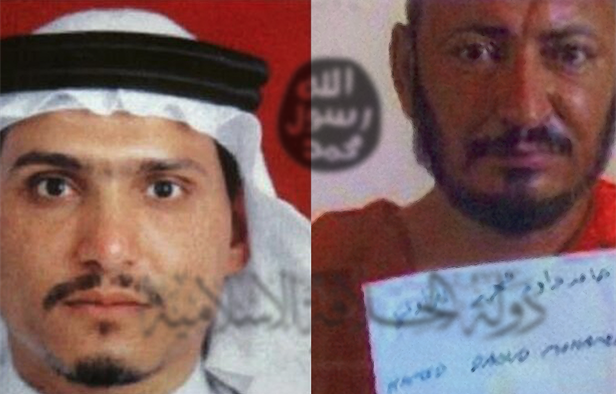
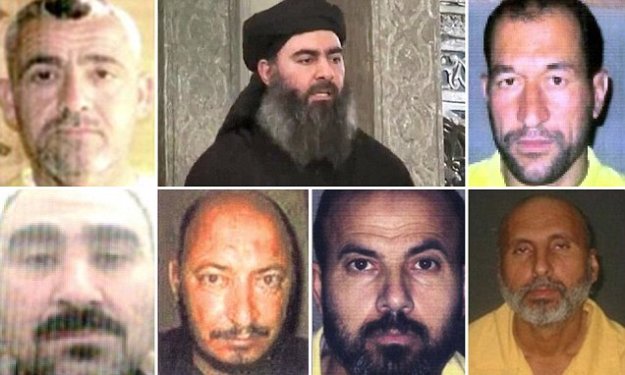
From top left clockwise: Fadel al-Hiyali, Ibrahim al-Badri (Abu Bakr al-Baghdadi), Adnan al-Bilawi, Samir al-Khlifawi (Haji Bakr), Adnan as-Suwaydawi (Abu Ayman al-Iraqi), Hamid az-Zawi (Abu Omar al-Baghdadi), Abu Hajr as-Sufi

From top left clockwise: Fadel al-Hiyali, Ibrahim al-Badri (Abu Bakr al-Baghdadi), Adnan al-Bilawi, Samir al-Khlifawi (Haji Bakr), Adnan as-Suwaydawi (Abu Ayman al-Iraqi), Hamid az-Zawi (Abu Omar al-Baghdadi), Abu Hajr as-Sufi

Yesterday, Reuters had an article by Isabel Coles and Ned Parker entitled, “How Saddam’s men help Islamic State rule“. The article had a number of interesting points, but in its presentation of the movement of former (Saddam) regime elements (FREs) into the leadership structure of the Islamic State (IS) as a phenomenon of the last few years, it was a step backward: the press had seemed to be recognizing that the Salafization of the FREs within IS dates back to the Islamization of Saddam Hussein’s regime in its last fifteen years, notably in the 1990s after the onset of the Faith Campaign. Continue reading

As Syria’s Opposition Tries To Unite, Prospects For Peace Recede

By Kyle Orton (@KyleWOrton) on December 9, 2015

A version of this article was published at Middle East Eye.

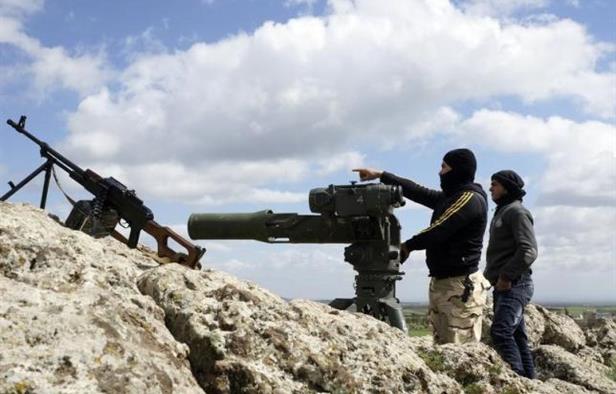
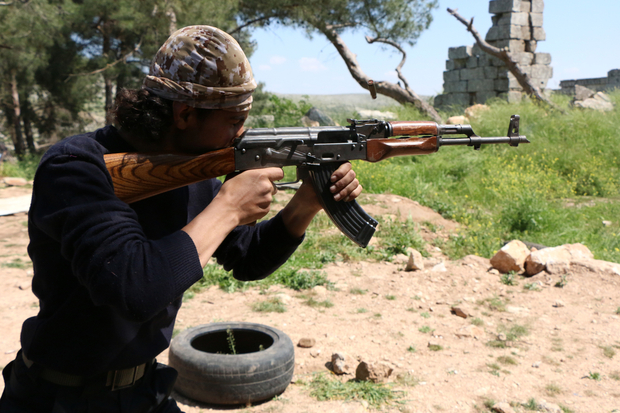
A rebel fighter from the Free Syrian Army's

A rebel fighter from the Free Syrian Army’s “First Battalion” takes part in military training on May 4, 2015, in rebel-held northern Rif Aleppo. (AFP, Baraa al-Halabi)

The Syrian opposition is meeting in Saudi Arabia between December 8 and 10 in an attempt to create a unified structure that can credibly sit across the table from the Bashar al-Assad regime in the internationally-organised peace talks in Vienna, and make a binding commitment on the path forward for Syria. Continue reading

If Assad Is Not Forced Out, ISIS Never Will Be

By Kyle Orton (@KyleWOrton) on December 3, 2015

A version of this article was published at The Independent.

1

Yesterday, the British House of Commons voted 397 to 223 to extend airstrikes against the Islamic State (ISIS) into Syria from Iraq. After the vote in August 2013 against military action to punish Syrian dictator Bashar al-Assad for the massive poison gas attack outside Damascus that killed 1,500 people in a few hours, this is undoubtedly a sign of a recovery in confidence of Britain’s international role, but it is only the beginning. Continue reading

Syria’s Many Moderate Rebels

By Kyle Orton (@KyleWOrton) on November 30, 2015

A version of this article was published at NOW Lebanon.

Rebels from the Southern Front in northwest Deraa, March 2015

Rebels from the Southern Front in northwest Deraa, March 2015

In early November, the Foreign Affairs Select Committee released a report challenging the British government’s proposal to extend airstrikes from Iraq into Syria against the Islamic State (IS). Among other things, the report asked for a proposed political path to ending the Syrian civil war, a necessary prerequisite to defeating IS. On Thursday, Prime Minister David Cameron released a response, part of which said:

Military action against ISIL will also relieve the pressure on the moderate opposition, whose survival is crucial for a successful transition to a more inclusive Syrian government. Syria has not been, and should not be, reduced to a choice between Assad or ISIL. Although the situation on the ground is complex, our assessment is that there are about 70,000 Syrian opposition fighters on the ground who do not belong to extremist groups.

This number has blown up into a major political row, with many Members of Parliament and pundits taking their personal unfamiliarity with Syria’s military landscape as evidence that it cannot be so. The Labour Opposition has made the number of non-extremist rebels a focal point of their challenge to the Prime Minister’s proposal for moving forward in Syria, and one of Cameron’s own Conservative MPs referred to the number as “magical”. The challenge to the number is part of a longer-term trend, where a narrative has become prevalent that there are no moderate opposition forces left in Syria. The corollary of this view is usually the argument that the West should side with the “secular” Assad regime as the “lesser evil” to put down a radical Islamist insurrection.

Sidestepping the ignorance that goes into believing a blatantly sectarian regime propped up by an international brigade of Shi’a jihadists is secular: What of this claim that there are no moderate rebels left? It isn’t true, as I recently made clear in a paper for The Henry Jackson Society. Continue reading

Destroying Islamic State, Defeating Assad: A Strategy for Syria

By Kyle Orton (@KyleWOrton) on November 25, 2015

1

Today, my first report with The Henry Jackson Society was published: “Destroying Islamic State, Defeating Assad: A Strategy for Syria“. Continue reading

The Riddle of Haji Bakr

By Kyle Orton (@KyleWOrton) on November 10, 2015

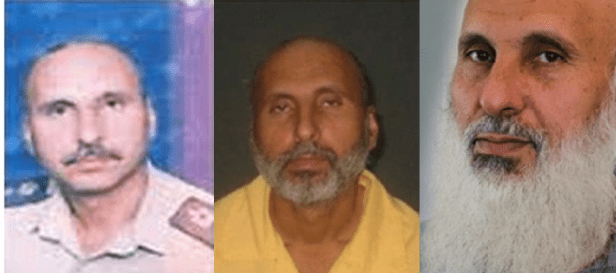
Samir al-Khlifawi (Haji Bakr): in Saddam's army, in American prison, as a commander of the Islamic State

Samir al-Khlifawi (Haji Bakr): in Saddam’s intelligence service, in American prison, as a commander of the Islamic State

In the last few months I’ve increasingly focussed on the former (Saddam) regime elements (FREs) within the Islamic State (IS). There’s now an entire section on this blog about it, and Aaron Zelin over at Jihadology recently gave me time to elaborate in a podcast.

In studying this topic there is one inescapable name: Samir Abd Muhammad al-Khlifawi, better-known by his pseudonym Haji Bakr, and sometimes by his kunya, Abu Bakr al-Iraqi. Al-Khlifawi is a former colonel in an elite intelligence unit of the Saddam Hussein regime—focussed on air defence at Habbaniya airbase, though what exactly that entails is murky. Al-Khlifawi was also apparently involved in weapons development.

Al-Khlifawi came to international attention in April when Christoph Reuter published an article in Der Spiegel naming al-Khlifawi as the “architect” of IS’s expansion into Syria, and the man who had been “pulling the strings at IS for years.” Continue reading

What’s Behind the Rise of the Islamic State?

By Kyle Orton (@KyleWOrton) on November 5, 2015

Published at NOW Lebanon.

1

William McCants’ The ISIS Apocalypse: The History, Strategy, and Doomsday Vision of the Islamic State is an immensely readable addition to the literature on the most powerful terrorist-insurgent group in the world. McCants covers the Islamic State, often referred to as ISIS, from its inception in Taliban Afghanistan in 1999 to its migration to Iraq in 2002, and through its various stages before its blitzkrieg from Syria across central Iraq in June 2014, which brought ISIS to global attention. McCants shows that ISIS’s evolution is not just a religio-socio-political and military phenomenon, but an intellectual one. ISIS has built the foundations of its statelet on the lessons learned by Salafi-jihadists from their previous battlefronts, such as Afghanistan, Chechnya, and Algeria, and their various mistakes, many of them ISIS’s own. Continue reading

The Islamic State Can’t Be Defeated Without Fighting it in Syria

By Kyle Orton (@KyleWOrton) on November 3, 2015

Published at Left Foot Forward.

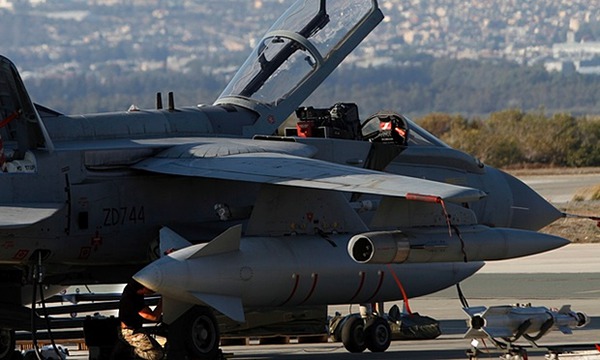
An RAF Tornado fighter jet in Cyprus

An RAF Tornado fighter jet in Cyprus

This morning the House of Commons Foreign Affairs Committee published a report recommending that the British government should not extend its airstrikes campaign against the Islamic State (ISIS) from Iraq to Syria.

The report makes little legal or military sense, but its political objection—that the government’s attempt to defeat ISIS independently of a resolution to the Syrian war is untenable—is exactly right. Unfortunately the report, while very vague, hints that a resolution involves cooperation with the Bashar al-Assad regime and Iran, which cannot work, and actually helps ISIS. Continue reading

Kamel Sachet and Islamism in Saddam’s Security Forces

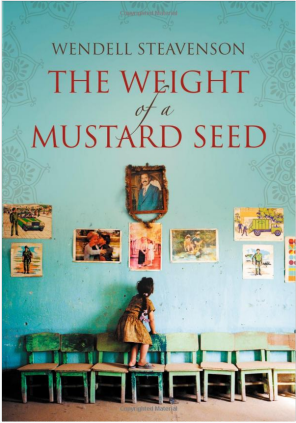
1Book Review: The Weight of a Mustard Seed: The Intimate Life of an Iraqi Family During Thirty Years of Tyranny (2009) by Wendell Steavenson

By Kyle Orton
(@KyleWOrton) on October 24, 2015

Wendell Steavenson’s The Weight of a Mustard Seed—the title drawn from a verse of the Qur’an about the difference between attaining heaven and hell—comprises five years of research about Kamel Sachet Aziz al-Janabi, one of Saddam Hussein’s favourite and most senior generals.

Born in 1947, Kamel Sachet joined the Iraqi police straight from school in the mid-1960s and joined the army in 1975. Sachet was soon in the Special Forces, training in mountain warfare in Germany in 1978, taking part in joint exercises with Iranian Special Forces during the time of the Shah—learning Farsi along the way—and then being part of the Iraqi Special Forces advanced party sent to invade Iran after Ruhollah Khomeini’s takeover. Sachet would later be part of the elite forces sent to secure Saddam’s occupation of Kuwait. After Saddam was evicted from Kuwait, Sachet, who had been slipping deeper and deeper into religious zeal from the early 1980s, was made governor of Maysan where he ran a de facto Salafi commune. Sachet was eventually removed from this post by regime internal intrigue, and was moved to a job in the office of the president. For reasons never definitively established, Sachet was murdered on Saddam Hussein’s orders on the first day of Operation DESERT FOX in December 1998.

Kamel Sachet’s story is an interesting one for what it says about the Saddam regime’s changing attitude toward Islamism as it ran its course, reversing the hard-secular outlook that prevailed at varying degrees of intensity from the late 1960s to the early 1980s, and transforming into an Islamist State in the last fifteen years of the regime. Continue reading