Tag Archives: al-Qaeda

Al-Qaeda Central in Syria

By Kyle Orton (@KyleWOrton) on September 14, 2015
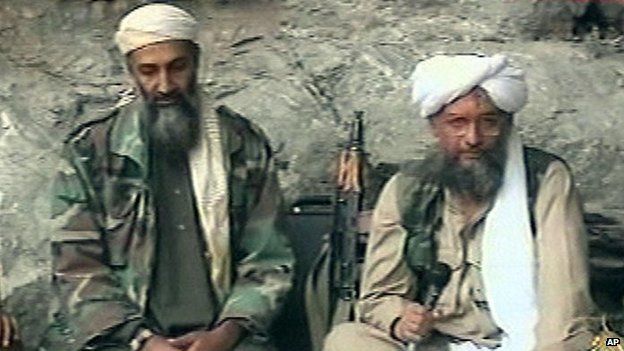
Osama bin Laden and Ayman az-Zawahiri (2001)

Usama bin Ladin and Ayman az-Zawahiri (2001)

A couple of days ago, a leader Jabhat an-Nusra issued a statement condemning Ahrar a-Sham. The statement is actually rather milder than initial reports suggested. Nusra is mostly annoyed at Ahrar for working with Turkey and Qatar to acquire money and weapons. Nusra is also displeased that Ahrar, at the instigation of Ankara and Doha, asked Nusra to publicly break its al-Qaeda link. Nusra also felt Ahrar was too willing to publicly distance itself from Salafi-jihadism to gain war materiel. This will no doubt help intensify the debate about Ahrar’s ostentatious “moderation” over the last eighteen months, and what the West should do about Ahrar.

In this post, however, I’d like to focus on the statement’s author, Abu Firas as-Suri, or more precisely on what he represents. Abu Firas is part of a group of (known) agents of al-Qaeda Central (AQC) who were sent into Syria in mid-2013 to mediate the dispute between Nusra and then-ISIS (now the Islamic State, I.S.), and when that failed the AQC veterans stayed, erected a veritable bureaucracy, and sought to forestall Nusra “going local”. Below are mini-profiles of these AQC veterans. Continue reading

Did Saddam Hussein Become A Religious Believer?

By Kyle Orton (@KyleWOrton) on September 12, 2015

Saddam Hussein prays at a mosque in Samarra, March 12, 1998 (AP Photo)

Saddam Hussein prays at a mosque in Samarra, March 12, 1998 (AP Photo)

It should be stated up front that the question posed in the headline is, strictly speaking, unanswerable: only Saddam Hussein could ever answer that question, and even then any out-loud answer given by Saddam could be untrue in any number of directions, for any number of reasons. Still, from the available evidence it does seem Saddam had some kind of “born-again” experience.

Of crucial importance, however, is that while Saddam’s actual beliefs had a significant impact in providing some of the colour and shape to the Faith Campaign, even if one believes Saddam remained a secularist and Islamized his regime as a wholly cynical means of shoring-up support, this is completely irrelevant to the effect this Islamization had. Saddam put in place a governmental administration that created a religious movement, which brought men to a faith they otherwise would not have had, and in combination with the increased sectarianism fostered by Saddam’s regime, this prepared the ground for al-Qaeda and its offshoots like the Islamic State (ISIS) in the aftermath of the regime. Continue reading

How Russia Manipulates Islamic Terrorism

By Kyle Orton (@KyleWOrton) on September 8, 2015

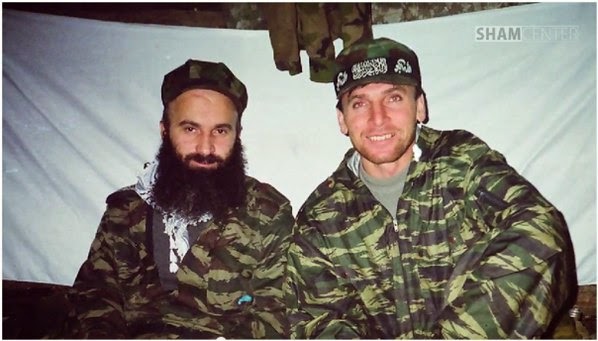
Shamil Basayev and Murad Margoshvili (a.k.a. Muslem al-Shishani)

Shamil Basayev and Murad Margoshvili (a.k.a. Muslem a-Shishani)

Last year I wrote about the murky role Russia was playing in the Syrian war, bolstering the Bashar al-Assad tyranny while facilitating the rise of the Islamic State (ISIS) and other Salafi-jihadists as a means of dividing and discrediting the Syrian opposition. This strategy and the associated tactics—infiltrating the insurgency, facilitating the arrival of al-Qaeda and other global jihadists to displace the nationalists, and in general driving the rebellion into the political dead-end of extremism and barbaric atrocities—has worked in other States where the intelligence services were trained by Moscow, and it worked internally to defeat the separatist movement in Chechnya. In Syria, Russia is reinforcing an old client regime, which has staked its life on the proposition that it is the last line of defence against a terrorist takeover and a genocide against the minorities, a policy now largely directed on-the-ground by Iran, to whom Assad surrendered sovereignty some time ago. New evidence has emerged to underline these points. Continue reading

Intra-Jihadi Competition, Iran, and Western Staying Power in Afghanistan

By Kyle Orton (@KyleWOrton) on September 1, 2015

1

The Taliban on August 31 finally confessed all: its leader, Mullah Muhammad Omar, had been dead since April 23, 2013. The Taliban admitted that Mullah Omar had passed from this veil of tears on July 30 but had been distinctly vague about when. Omar’s death was kept secret because of “jihadi considerations,” namely the “testing” time the mujahideen were having with the “foreign invaders,” the Taliban says. While the Taliban places the emphasis on its struggle with NATO, the reality is that NATO is drawing down and the Taliban’s burgeoning foe is the Islamic State (I.S.). The Taliban is tied to al-Qaeda’s faltering brand, and conditions are militating to help I.S., not al-Qaeda, in “Khorasan”. Continue reading

A Case Study of the Islamic State as the Saddam Regime’s Afterlife: The Fedayeen Saddam

By Kyle Orton (@KyleWOrton) on August 31, 2015

Published at Baghdad Invest

Fedayeen Saddam

Saddam Hussein created the Fedayeen Saddam in 1994 as a paramilitary Praetorian unit. The Fedayeen were initially charged with protecting the regime from a repeat of the revolts that followed Saddam’s eviction from Kuwait by acting as a pre-emptive counter-insurgency force. Over time this internal security mission became increasingly about enforcing the Islamic law. Saddam had begun Islamizing his regime in the late 1980s, and intensified this in the early 1990s, attempting to create a synthesis of Ba’athism and Salafism to buttress his legitimacy. Saddam had begun Islamizing his foreign policy as early as 1982-83, making alliances with all manner of Islamist terrorists, thousands of whom came to Iraq for training in the 1990s, where they attended camps run by the Fedayeen. In the Fedayeen—connected to the global Islamist terrorist movement, combining elements of Ba’athism with an increasingly-stern Salafism—is a microcosm of the Saddam regime’s mutation into the Islamic State (ISIS). Continue reading

Islamist Clerics Reject Abu Muhammad al-Maqdisi’s Stance on Islamic State

By Kyle Orton (@KyleWOrton) on August 30, 2015

1

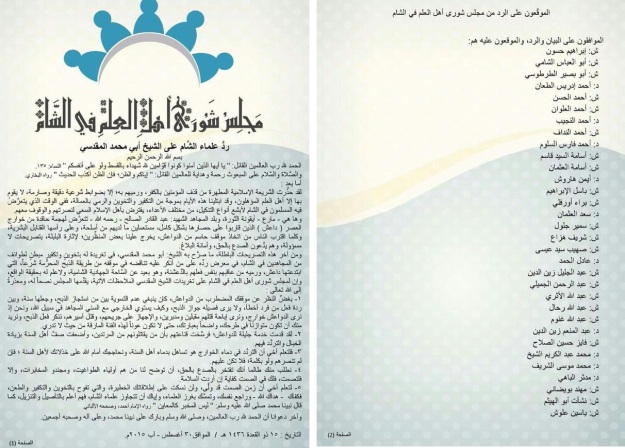
A council of ulema (clerics), some within Syria and some abroad, al-Majlis Shura Ahl al-ilm fil-Sham (Advisory Council of the People of Knowledge in Syria), was formed late last month. Its first statement was to condemn the 25 July assassination of the Faylaq al-Sham commander Mazin al-Qassum by Islamic State (IS) operatives with Jund al-Aqsa, and to demand that all groups clarify their stance on IS and expel IS agents and sympathizers from their ranks. A fatwa early this month said it was permissible to work with Turkey against IS and the Kurdistan Workers’ Party (PKK), which in Syria operates politically under the name of the Democratic Union Party (PYD) and militarily as the People’s Protection Units (YPG).

Among the leading names associated with this new council are three foreign Islamist scholars: Umar al-Hadouchi, a Moroccan jihadi-salafist; Muhammad al-Hassan Ould al-Dedew al-Shinqiti (not to be confused with Abu al-Mundhir al-Shinqiti), a Mauritanian more closely aligned with Sururism than outright jihadism; and Abdallah al-Muhaysini, a Saudi jihadist who is inside Syria and a member of al-Qaeda in everything but name. Prominent Syrians involved include Dr. Ayman al-Harush, associated with Ahrar al-Sham, and another Ahrar member, a shar’i, Mohamed Ayman Aboul-Tout (Abu Abbas al-Shami), who fought against the Assad regime during the revolt in the 1980s as part of the most extreme Islamist splinter from the Muslim Brotherhood, the Fighting Vanguard. There is also the son of Abd al-Karim, an important figure in the Hama branch of the Muslim Brotherhood, Sa’ad al-Uthman; a follower of the ideas of Muhammad Surur that mix Salafism with political agitation, Ahmad al-Salum, and many others.

Majlis Shura Ahl al-ilm fil-Sham put out a statement today, “Response of the Ulema of Sham to Shaykh Abu Muhammad al-Maqdisi”. Al-Maqdisi’s real name is Issam al-Barqawi; he is based in Jordan and is the most influential jihadi-salafist cleric. The Council attacks al-Maqdisi for what they perceive as his softness toward IS. The statement, translated by @nasrshahada, is reproduced below. Continue reading

Leaving Afghanistan to Iran Won’t Bring Stability—nor Keep ISIS Out

By Kyle Orton (@KyleWOrton) on August 26, 2015

Published at National Review

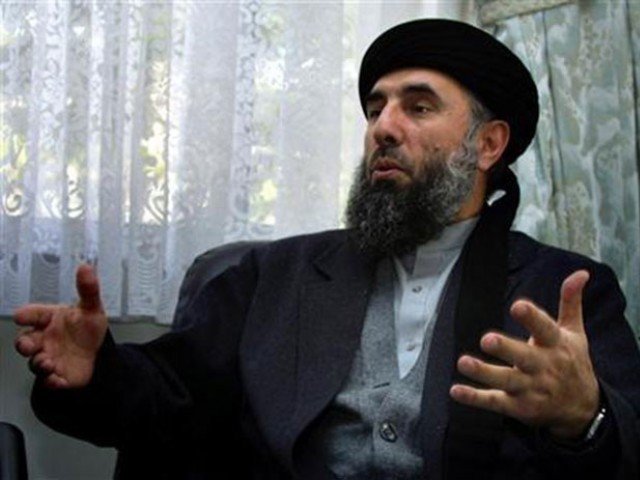
Gulbuddin Hekmatyar, one of the three major insurgent leaders in Afghanistan, a close ally of Iran

Gulbuddin Hekmatyar, one of the three major insurgent leaders in Afghanistan, a close ally of Iran

The admission by the Taliban on July 30 that its leader, Mullah Muhammad Omar, had died was widely seen as good news for the Islamic State (ISIS) against its jihadist competitors. But while ISIS’s growing power in Afghanistan over the last year has garnered significant attention, the rise of Iran’s influence in the country has been less noted. Worse, in the light of the nuclear agreement with the U.S., Iran’s expanded influence is held by some observers to be a stability-promoting development. This is a dangerous fantasy that has already been falsified in the Fertile Crescent, where the synergetic growth of Iran and ISIS promotes chaos and radicalism—to the advantage of both and the disadvantage of the forces of moderation and order. Continue reading

Britain’s Embassy in Iran Reopens, Putting Commerce Above Human Rights

By Kyle Orton (@KyleWOrton) on August 26, 2015

1

On Sunday the British Embassy in Iran was reopened after four years of closure. The British government’s decision is consistent with two emerging trends: the United States using the nuclear accord to facilitate détente with Iran, and European States falling into line with this policy and beginning to compete to enter the emerging Iranian market.

The British Embassy in Tehran was closed in November 2011 after ‘protesters’—a regime-orchestrated mob—stormed the building, ostensibly in protest against sanctions. The regime claimed helplessness in the face of angry demonstrators.

But it is worth remembering that when Iranian citizens take to the streets in a manner the regime actually disapproves of, it mobilises its security forces to murder them, and imprison them en masse in facilities where they are, male and female, raped as a form of punishment and torture. Continue reading

The Islamic State’s Deputy and the Ghost of Saddam Hussein

By Kyle Orton (@KyleWOrton) on August 22, 2015

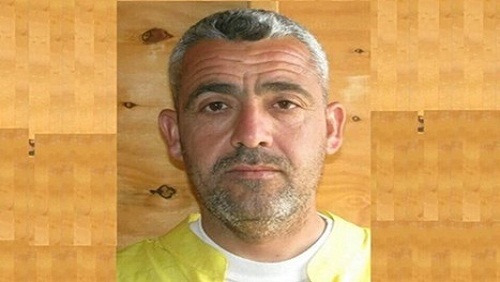
Fadel al-Hiyali

Fadel Ahmad Abdullah al-Hiyali (a.k.a. Abu Muslim al-Turkmani a.k.a. Haji Mutazz)

Fadel Ahmad Abdullah al-Hiyali, the overall deputy to the “caliph” Abu Bakr al-Baghdadi, who heads the Military Council of the Islamic State (ISIS) and is the direct commander of ISIS’s forces in Iraq, was killed in a drone strike in Mosul on August 18, according to a U.S. spokesman for the National Security Council yesterday. Al-Hiyali, who also goes by the pseudonyms Abu Muslim al-Turkmani, Abu Mutaz al-Qurayshi, and Haji Mutaz, was reported to have been travelling in a car with a media operative named Abu Abdullah when he was killed.
Continue reading

America Abandons the Syrian Revolution

By Kyle Orton (@KyleWOrton) on August 14, 2015

1

In the last week, two events have provided further evidence that the United States has effectively sided with the Assad regime in Syria, acting effectively as the regime’s air force, and that America’s alliance with Assad is part of the broader policy of détente with Iran, facilitated by the nuclear deal, which has ceded Syria to Iran as a sphere of influence. Continue reading