Tag Archives: al-Qaeda

The Jihadists’ Information War in Syria and Iraq

By Kyle Orton (@KyleWOrton) on July 22, 2014

In April, the International Centre for the Study of Radicalisation produced a report, ‘Measuring Importance and Influence in Syrian Foreign Fighter Networks,’ which examined the use of social media in recruiting people to the jihadist groups, referring almost solely to Syria at that time, but which applies equally to Iraq. I have now gotten around to reading it and its findings are extremely interesting.  Continue reading

Syria’s Forty Months Of Carnage And The Lessons Of Bosnia

By Kyle Orton (@KyleWOrton) on July 15, 2014

A picture I took of Stari Most (Old Bridge) in Mostar, Bosnia, August 2011

A picture I took of Stari Most (Old Bridge) in Mostar, Bosnia, August 2011

Since the Syrian uprising began on March 15, 2011, there have been persistent echoes of Bosnia. There are some critics of the liberal interventionism specifically on the grounds that their worldview is so heavily coloured by Bosnia—and they make some valid points—but the analogy has been inescapable in Syria.
Continue reading

Al-Qaeda In Syria Declares War On The Rebellion

By Kyle Orton (@KyleWOrton) on July 13, 2014

The only official picture of Jabhat an-Nusra’s Emir, Abu Muhammad al-Golani, given out by the Iraqi government.

Syria’s rebellion was already fighting for its life, squeezed between the regime and the Islamic State (I.S.) in Aleppo, and on Friday night a new front appeared to open. Jabhat an-Nusra, al-Qaeda’s official branch in Syria, announced that it was forming an Islamic Emirate. According to a translation by Hassan Hassan, Nusra’s commander, Abu Muhammad al-Golani, said that they would now start implementing the shari’a “in the full sense of the word,” and “without compromise, leniency, ambiguity, or politeness.” Golani specifically says that Nusra will begin implementing the hudud, the harsh punishments like amputation for theft, which Nusra has very deliberately not done so far, saying war conditions suspended such punishments according to the Holy Law. At a more material level, it avoided garnering them bad press for savagery against the civilian population. Golani dismissed with contempt the secular rebels as “grovelling” to the West, and declared I.S.’s Caliphate “void” and its members ghulat (extremists).

Continue reading

Syria’s Rebellion on the Ropes

By Kyle Orton (@KyleWOrton) on July 9, 2014

3

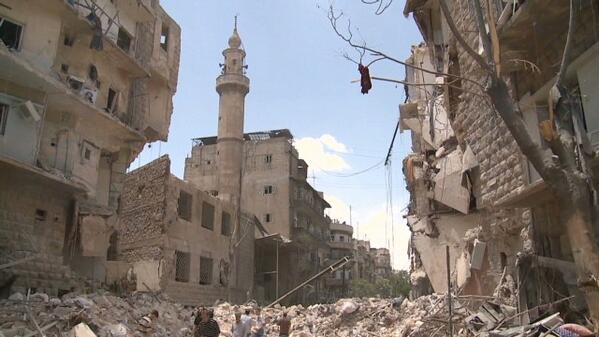
The devastated city of Aleppo

As we approach the forty month mark for the Syrian uprising the situation is grimmer than it has ever been. Not just the casualties: more than 200,000 people dead. Not just the physical devastation and mass-displacement of more than a third of the country. But now in military terms the rebellion is on the defensive in a way it has not been since it erupted at the end of 2011, after more than six months of peaceful protests.

Continue reading

The Anti-Interventionists Got What They Wanted in Syria and Iraq: Are They Happy Now?

By Kyle Orton (@KyleWOrton) on July 1, 2014

BBC map of ISIS’/Islamic State’s operational area

As we enter the fortieth month of Syria’s ordeal, and with the renegade Zarqawi’ite network in Iraq finally declaring that its virtual ministries are being uploaded into a fully restored Caliphate extending from Raqqa to Tikrit, the most depressing thought of all is that it did not have to be this way. Continue reading

Is Jordan Next To Fall To ISIS?

By Kyle Orton (@KyleWOrton) on June 29, 2014

Jordan’s King Abdullah: The West’s closest Arab ally—but for how long?

It has been a rough fortnight for Jordan. After the fall of Mosul, the Islamic State of Iraq and Syria (ISIS) announced an “unofficial” branch in Jordan and the Iraqi government surrendered its only legal border-crossing on the 110-mile frontier to tribal insurgents—opposed to ISIS, so far as can be told, but not without the danger they will be overwhelmed as has previously happened in areas like Fallujah, where the dam initially fell to local insurgents (albeit Ba’athists) and ISIS then pushed them out. Jordan has beefed up its border-defences but this has not stopped the speculation on whether Jordan, the “jewel in the ISIS crown,” will be the next domino to fall to the takfiris. Continue reading

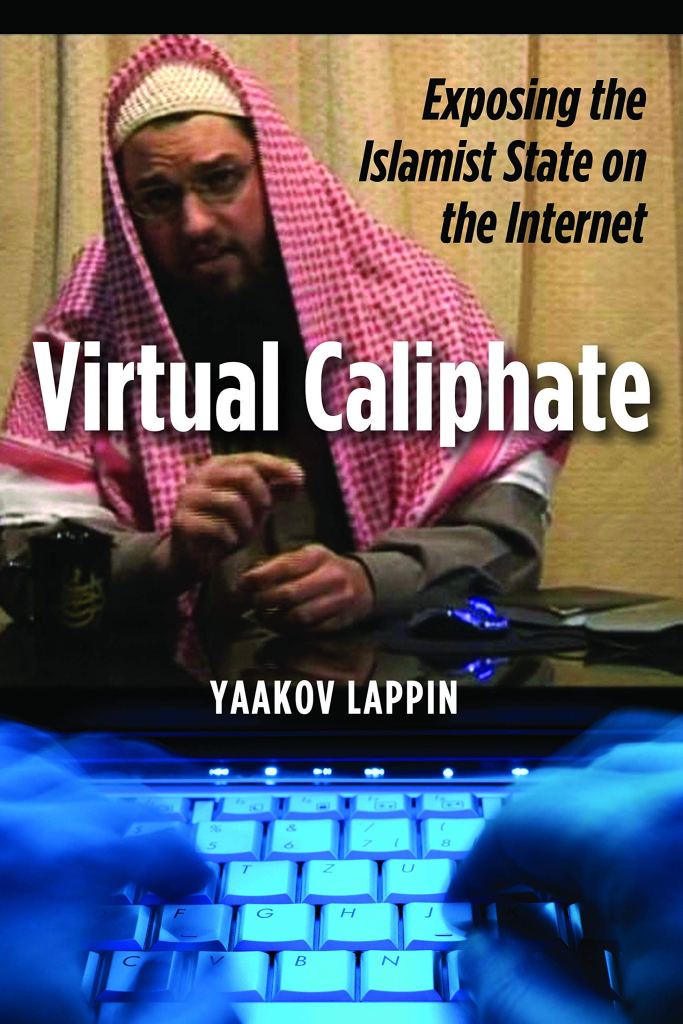
Book Review: Virtual Caliphate (2011) by Yaakov Lappin

By Kyle Orton (@KyleWOrton) on June 13, 2014

I have yet to read a book more prescient than Yaakov Lappin’s about events in Iraq in the last few days. Having sketched out the way Salafi-jihadists have created the ministries of a future Caliphate in cyber-format—the simple fact that “Al-Qaeda would not be in existence were it not for the pervasive presence of online jihadis”—Lappin finished by suggesting three options: (1) we manage to take down this virtual Empire; (2) we manage to weaken it in cyberspace; or (3) the jihadists “upload” this virtual State into the real world. Continue reading

Nouri al-Maliki Is Pushing Iraq Into The Abyss

By Kyle Orton (@KyleWOrton) on June 10, 2014

Iraqi Prime Minister Nouri al-Maliki

Whatever one thinks about the decision in 2003 to finish the war Saddam Hussein started by annexing Kuwait, serious people should be able to agree that the way the country was abandoned by the United States—first politically after 2009 and then militarily—was deeply irresponsible, not least because of the motives of this decision. Continue reading

Are There Any Good Guys Left In Syria?

By Kyle Orton (@KyleWOrton) on May 30, 2014

3

The short answer is “yes”. The longer answer is, “It depends on how good you want,” and discovering the answer to that relies on having a strategic vision of what you want from Syria. Continue reading

Obama Doubles-Down On His Foreign Policy At West Point

By Kyle Orton (@KyleWOrton) on May 28, 2014

President Obama Delivers Commencement Address At West Point

It was to be expected that this would be a bad speech. Attacked from all sides President Barack Obama was going to have to push back and that was always going to make the speech defensive. As usual, the President ploughed bravely into a battalion of straw men: positing extremes then selecting a cool middle way. But it was so much worse than that. The tone was not the problem; the content was. Continue reading