By Kyle Orton (@KyleWOrton) on 12 March 2025
By Kyle Orton (@KyleWOrton) on 22 July 2022
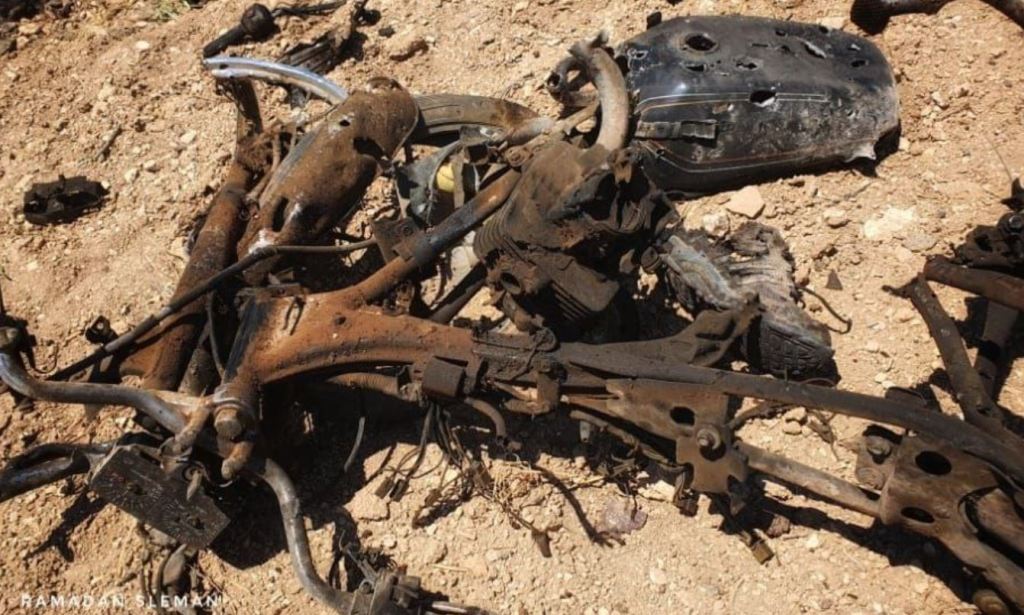
The United States announced on 12 July that it had killed the Islamic State’s (ISIS) governor of Syria in a drone strike in the village of Galtan in the Jinderes district of the north-western Syrian province of Efrin on the border with Turkey. The U.S. Central Command (CENTCOM) statement identified the slain man as “Maher al-Agal”, though a more precise transliteration is Maher al-Aqal (ماهر العقال). Riding on the motorcycle alongside Al-Aqal when he was killed was a “senior ISIS official” with whom he was “closely associated”. This ISIS official was “seriously injured during the strike”, CENTCOM notes, adding that the Jinderes strike caused no civilian casualties. Continue reading
By Kyle Orton (@KyleWOrton) on 24 May 2021
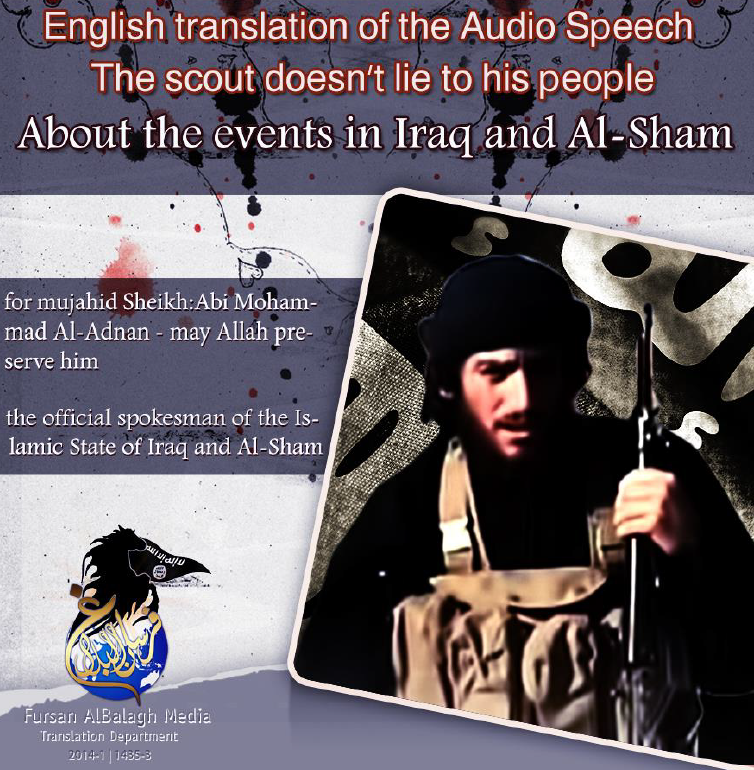
Taha Falaha (Abu Muhammad al-Adnani) is probably most famous for the September 2014 speech he made as the official spokesman for the Islamic State (IS) calling for international terrorist attacks, which initiated a wave of atrocities in Europe and beyond lasting about three years. But Falaha had been in office by that time, formally, since the summer of 2011, and in total he would make two-dozen speeches before he was killed at the end of August 2016. The twelfth speech, entitled, “The Scout Doesn’t Lie to His People”, and reproduced below,[1] was made on 7 January 2014, four days after the onset of a massive assault on IS by the Syrian rebellion that inter alia killed senior jihadist commanders like Samir al-Khlifawi (Haji Bakr or Abu Bakr al-Iraqi). What is interesting about this speech, as revealed in the recent Al-Naba profile of Falaha’s great friend and collaborator, the media emir Wael al-Ta’i (Abu Muhammad al-Furqan), is that Falaha composed this speech while he was besieged by the rebels in Aleppo. Al-Ta’i had evacuated the IS media department and their families, then slipped back into the area surrounded by the rebels to help Falaha compose IS’s first political counter-measure to this unexpected development in Syria, which was followed nearly a fortnight afterwards by a speech from the caliph himself, Ibrahim al-Badri (Abu Bakr al-Baghdadi). Continue reading
By Kyle Orton (@KyleWOrton) on 15 November 2020

Al-Naba 260, page 10
The Islamic State (IS) put out the 260th edition of its newsletter, Al-Naba, on 13 November. Much of the focus was on IS’s war with its jihadi rival, Al-Qaeda, in northern and western Africa. There are reports of guerrilla operations from elsewhere in Africa, from the Centre (in Iraq and Syria), as well as from Egypt and Afghanistan. IS notably feels secure enough in the strength of its networks to draw attention to its responsibility for several attacks in the Turkish-held areas of northern Syria, and there is a rare report of an attack in Indonesia. Al-Naba 260 also has IS’s response to the U.S. Election. Continue reading
By Kyle Orton (@KyleWOrton) on 18 April 2019

Israeli opinion generally regards the country’s efforts to contain Iran, especially in Syria, as having been successful. In fact, the trendline runs the other way: Iran is constraining Israel, entrenching all around the Jewish state. Continue reading
By Kyle Orton (@KyleWOrton) on 12 December 2018
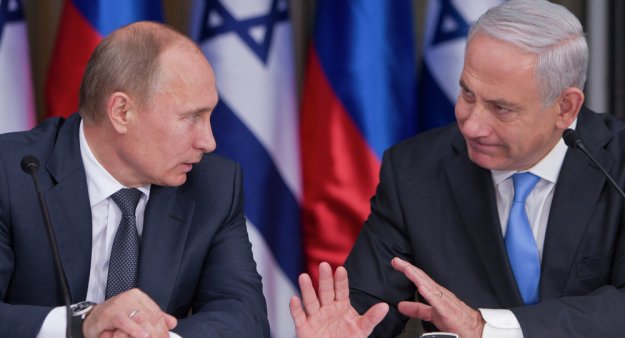
© AP Photo / Jim Hollander, Pool
Essay: “Zionism is Making Us Stupid”: The Russian Relationship with Israel from the Soviets to Putin Continue reading
By Kyle Orton (@KyleWOrton) on 14 May 2018
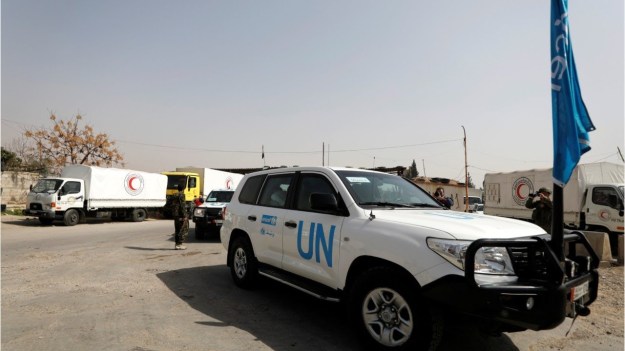
United Nations in East Ghouta, Syria (image source)
At best, the United Nations has been impotent as Syria was destroyed. But when the U.N.’s role is examined more closely it looks more like a collaborator, than a bystander, to that destruction. Continue reading
Originally published at Ahval
By Kyle Orton (@KyleWOrton) on 31 March 2018
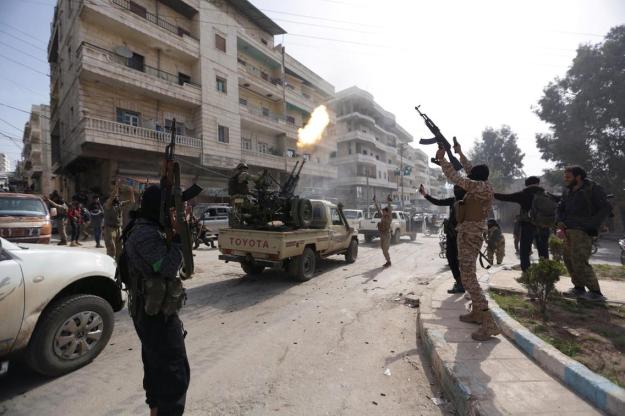
Turkish Armed Forces and allied Syrian Arab fighters capture Efrin city, Syria, 18 March 2018 (Reuters)
Since its incursion into Afrin began in January, Turkey has made significant progress in turning the military landscape in Syria in its favour. Turkish President Recep Tayyip Erdogan has signalled that further operations are to come in Syria, and perhaps in Iraq, too. These next operations would present new challenges, particularly politically, an area where Turkey has not made quite as much progress. Continue reading
 Kyle Orton's Blog