Tag Archives: Algeria

How Russia Manipulates Islamic Terrorism

By Kyle Orton (@KyleWOrton) on September 8, 2015
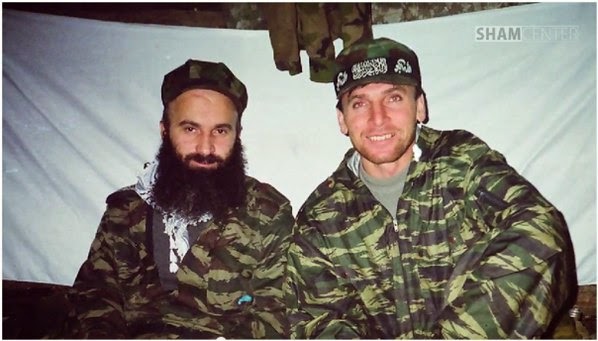
Shamil Basayev and Murad Margoshvili (a.k.a. Muslem al-Shishani)

Shamil Basayev and Murad Margoshvili (a.k.a. Muslem a-Shishani)

Last year I wrote about the murky role Russia was playing in the Syrian war, bolstering the Bashar al-Assad tyranny while facilitating the rise of the Islamic State (ISIS) and other Salafi-jihadists as a means of dividing and discrediting the Syrian opposition. This strategy and the associated tactics—infiltrating the insurgency, facilitating the arrival of al-Qaeda and other global jihadists to displace the nationalists, and in general driving the rebellion into the political dead-end of extremism and barbaric atrocities—has worked in other States where the intelligence services were trained by Moscow, and it worked internally to defeat the separatist movement in Chechnya. In Syria, Russia is reinforcing an old client regime, which has staked its life on the proposition that it is the last line of defence against a terrorist takeover and a genocide against the minorities, a policy now largely directed on-the-ground by Iran, to whom Assad surrendered sovereignty some time ago. New evidence has emerged to underline these points. Continue reading
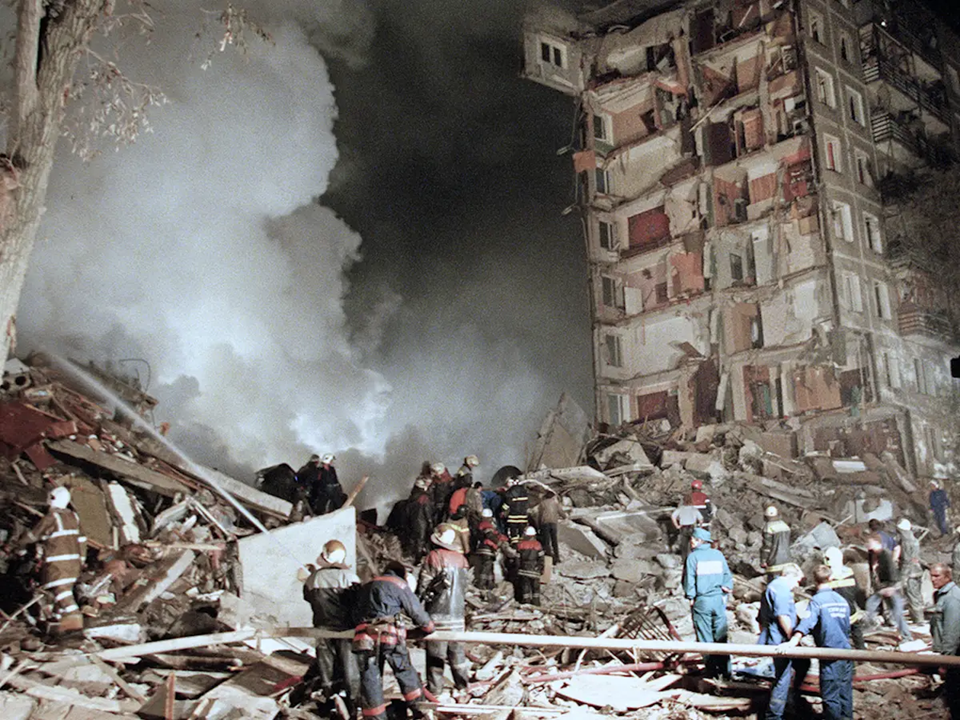
Everyone Who Questions Russia’s Story About the 1999 Apartment Bombings Dies

By Kyle Orton (@KyleWOrton) on September 6, 2015

Continue reading

Does Iran Support The Islamic State?

By Kyle Orton (@KyleWOrton) on May 26, 2015

Qassem Suleimani, Iran's spymaster, believed in some MidEast conspiracy theories to control ISIS

Qassem Suleimani, Iran’s spymaster, believed in some Mid-East conspiracy theories to control ISIS

In 2010, Farzad Farhangian, an Iranian diplomat based in Belgium, defected to Norway. Farhangian has now emerged with the extraordinary accusation that the Islamic Republic of Iran is controlling the Islamic State (ISIS) and using it as part of Tehran’s war against the Gulf States, especially Saudi Arabia. Farhangian’s accusations are lurid and (literally) incredible, but the question of Iran’s role in ISIS’ creation and growth, and Iran’s manipulation of ISIS to further its own ends, is one well worth asking. Continue reading

The Islamic State’s Strategy Is Working, Its Enemies Are Failing

By Kyle Orton (@KyleWOrton) on May 23, 2015

1

To hear President Obama tell it, his announced program to defeat the Islamic State (ISIS), which began with airstrikes into Iraq last August that were extended into Syria in September, is working, albeit with some tactical setbacks. The implication is that the setbacks of the U.S.-led anti-ISIS campaign are not strategic.

As J.M. Berger phrased it:

In the Washington vernacular, the act of Being Strategic implies a near mystical quality of superior thinking possessed by some, and clearly lacking amongst the vulgarians of the world—heedless brutes such as ISIL. Tactics are short-term ploys, easy to dismiss. Strategy is for winners.

Unfortunately, this soothing view is almost exactly wrong: it is the United States that is relying on various short-term methods—commando raids into the Syrian desert, for example—while ISIS has a long-term goal fixed in mind and is working assiduously to achieve it. The U.S.-led Coalition is losing, in short, and ISIS is winning. Continue reading

Saddam Hussein’s Regime Produced The Islamic State

By Kyle Orton (@KyleWOrton) on April 21, 2015

1

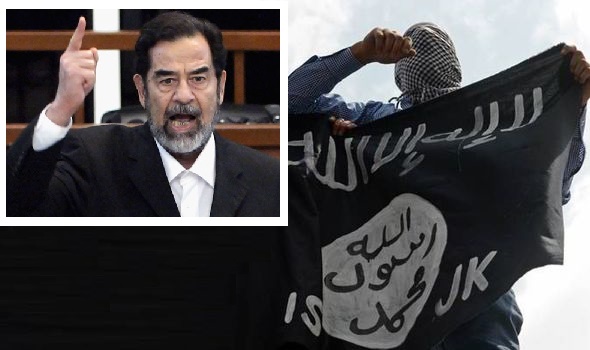
Having presented the evidence that Saddam Hussein Islamized his foreign policy and then Islamized his regime, above all with the Islamic Faith Campaign, beginning in June 1993 that tried to fuse Ba’athism with Salafism, encouraging (and keeping under surveillance) a religious revival in Iraq that redounded to the benefit of the regime’s legitimacy and support, I wanted to look at what this history means for Iraq and the wider region now.

I pointed out in October that the “military strength” of the Islamic State (ISIS) “comes from the remnants of Saddam Hussein’s military-intelligence apparatus and the Caucasus’ Salafi-jihadists.” Continue reading

An Update On The Anti-Assad Imam Killed In London

By Kyle Orton (@KyleWOrton) on April 13, 2015

Abdul Hadi Arwani

Abdul Hadi Arwani

In Brent, northwest London, in the evening of April 12, a 46-year-old man was arrested as part of the ongoing investigation into the April 7 murder of the Syrian-born imam, Abdul Hadi Arwani, a long-time opponent of the Syrian regime of Bashar al-Assad.

Writing about the murder of Arwani last week, I noted that the available evidence suggested the motivations of the murderer(s) could be:

  • Financial: related to Arwani’s business dealings as the owner of his construction company
  • Other local or personal
  • Far-Right anti-Muslim
  • Intra-Islamist: Arwani had been the director at the Salafist An-Noor Mosque and was himself clearly an Islamist, but Arwani was against the Islamic State (ISIS), for example, which might have made him enemies among some congregants
  • Agents of the Assad regime, conceivably with the complicity of Iran and Russia

Those options still stand, but some important updates over the weekend have helped alter the relative likelihood of each. Continue reading

The Islamic State, Libya, and Interventionism

By Kyle Orton (@KyleWOrton) on February 19, 2015

Rebels with Qaddafi's

Rebels with Qaddafi’s “golden gun”

Yesterday morning in Libya, it was announced that militias from Misrata were moving into Sirte to combat the Islamic State (I.S.). The militias preparing to fight I.S. are drawn from Libya Dawn, the Islamist coalition that ousted the internationally-recognised government in August 2014. Continue reading

If Assad Murdered His Own Brother-In-Law To Survive, What Wouldn’t He Do?

By Kyle Orton (@KyleWOrton) on December 19, 2014

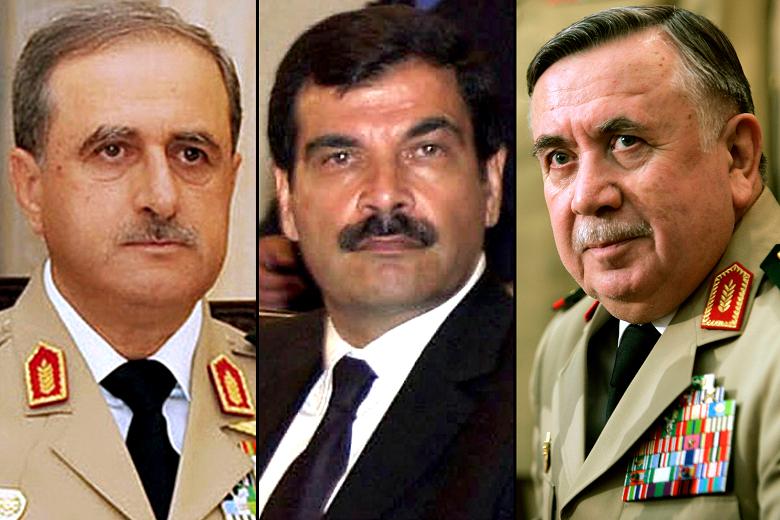
Defence Minister Daoud Rajha, General Assef Shawkat and General Hassan Ali Turkmani

Defence Minister Daoud Rajha, General Assef Shawkat and General Hassan Ali Turkmani

Sam Dagher at the Wall Street Journal has identified the July 18, 2012, bombing, which killed four senior Assad regime officials, most seriously Assef Shawkat, as the turning point in Syria, reversing the rebellion’s momentum, bringing the scale of the killing above where it had been before, closing the ranks of the minorities around the regime, and opening the country up to Iran.

Dagher certainly has the timing correct. It was the late summer, and most noticeably the fall of 2012, when the death toll in Syria markedly increased. 5,000 people had been killed in all of 2011, and another 5,000 by May 2012. By September 2012, 30,000 people were dead, the kill-rate now reaching 5,000-per-month. By January 2013, 60,000 people were dead, a kill-rate of 10,000-per-month. Nobody really knows what the total, let alone the rate, is now, but this was when it spiked. This period is also concurrent with the massive operation mounted by Clerical Iran to rescue the Bashar dictatorship.

Given how beneficial this bombing was to the regime, there have long been rumours it was an inside job. A recent report by Naame Shaam said exactly this, that this was an Iranian-orchestrated counter-intelligence operation to snuff-out the softliners within the regime who were trying to reach a deal with the protesters and rebels inside the country and their Gulf Arab patrons, which would have involved some concessions from the regime on its absolute control. Continue reading

The Islamic State Creates Foreign “Provinces”

By Kyle Orton (@KyleWOrton) on December 6, 2014

Abu Bakr al-Baghdadi gave his eighth speech[1] since becoming the leader of the Islamic State (ISIS), entitled, “Even if the Disbelievers Despise Such”, on November 13, 2014. The speech was notable for two things. First, it taunted the American-led coalition about the lack of success their campaign has had against ISIS since it began in June and was extended into Syria in September, and invited the U.S. and other Western states to deploy ground troops. Secondly, the speech accepted the pledges of allegiance from groups outside Syria and Iraq for the first time, from Saudi Arabia, Yemen, Egypt, Libya, and Algeria. In Saudi Arabia and Yemen, the groups that have joined ISIS are unknown. In Egypt, the group is Ansar Bayt al-Maqdis (The Partisans of Jerusalem). In Libya, the group is al-Majlis Shura Shabab al-Islam (The Islamic Youth Consultation Council). And in Algeria the group is Jund al-Khalifa (Soldiers of the Caliphate). These areas will now become wilaya (provinces) of the caliphate, al-Baghdadi says, and ISIS will send a governor to oversee them. An English transcript of the speech was produced by ISIS and is reproduced below with important sections highlighted in bold. Continue reading

How Dictators Manipulate Jihadists To Defeat The Opposition

By Kyle Orton (@KyleWOrton) on November 9, 2014

Smain Lamari (1941-2007)

Smain Lamari (1941-2007)

This Arab regime claims to be a one-party system but in reality a small Mafia-like cabal of military and intelligence officers have dispensed power for decades. Finally a democratic challenge erupts; people take to the streets demanding first reforms and, when the regime responds with pseudo-reforms and lethal violence, the fall of the government. Eventually the people fight back and an armed struggle breaks out. The regime builds its strategy around provocation, arresting and killing the liberals and democrats, infiltrating the insurgent groups and having the extremists attack the moderates, directing infiltrated groups to commit atrocities that discredit the whole insurgency, and using Iran’s international terrorist networks to lure Salafi-jihadists into the country who can help discredit the opposition’s cause in the eyes of the world. By presenting a binary picture—the regime or a terrorist takeover—the state tries to secure at least tacit support, if not direct intervention, from the West to defeat the insurgency.

No I’m not talking about Syria. This is Algeria. Continue reading