Tag Archives: AQAP

A Counterterrorism Policy in Syria That Helps Terrorists

Originally published at The Henry Jackson Society

By Kyle Orton (@KyleWOrton) on January 5, 2017

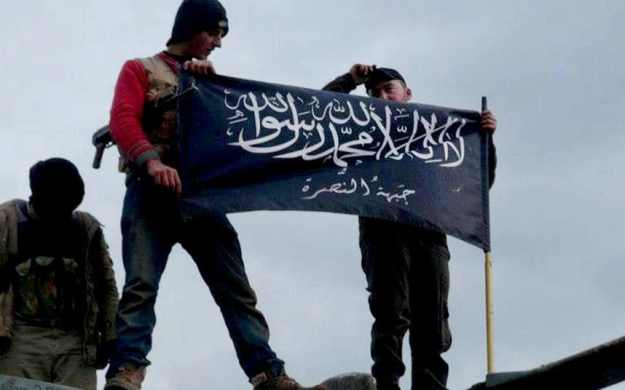
Jabhat al-Nusra jihadists wave their flag in Syria (Associated Press picture, source)

In the last week, the American-led Operation INHERENT RESOLVE, whose primary mission is to “degrade and ultimately destroy” the Islamic State (IS), has apparently conducted two airstrikes against senior members of Jabhat Fatah al-Sham (JFS), once known as Jabhat al-Nusra, al-Qaeda’s rebranded presence in Syria. In late 2016, the U.S. began an intensified targeting campaign against al-Qaeda and associated individuals; this appears to be a continuation of that policy, which provides some guidance about Western policy on Syria more broadly. Continue reading

The Structure of Al-Qaeda

By Kyle Orton (@KyleWOrton) on August 14, 2016
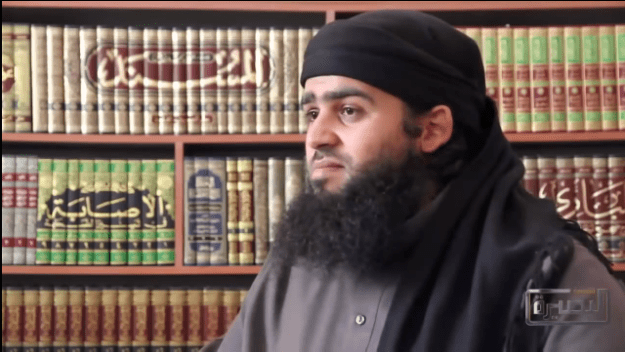
Screenshot of Mostafa Mahamed (Abu Sulayman al-Muhajir) during a video interview, 12 April 2014

Screenshot of Mostafa Mahamed (Abu Sulayman al-Muhajir) during a video interview, 12 April 2014

Mostafa Mahamed (Abu Sulayman al-Muhajir) is an Australian citizen who was born on 14 February 1984 in Port Said, Egypt. Mahamed currently occupies a “senior leadership position” within al-Qaeda in Syria—formerly Jabhat al-Nusra, now Jabhat Fatah al-Sham (JFS)—according to the sanctions levied against him in May by the U.S. Treasury. In an indication of Mahamed’s seniority, he moved from Australia to Syria in late 2012 and within a few months led the mediation efforts between al-Nusra and the then-Islamic State of Iraq and Syria (ISIS), now the Islamic State (IS), that began with a breach in April 2013 and ended with al-Qaeda expelling ISIS from its command structure in February 2014. Mahamed is also one of the public faces of al-Qaeda in Syria, now calling himself the “Director of Foreign Media Relations of JFS”. In this capacity, Mahamed has inter alia recently communicated with CNN to further the narrative that al-Nusra/JFS has “split” with al-Qaeda—something, let it be noted, neither the leader of al-Nusra/JFS nor Mahamed have actually said.

With regard to both the ongoing narrative war between IS and al-Qaeda over what their actual relationship was in the lead-up to the schism and al-Qaeda’s structure—the two things very much interlinked—Mahamed gave a very useful interview on 12 April 2014, about ten weeks before ISIS became IS when it declared its caliphate. Mahamed also touches on other interesting matters, such as those jihadi ideologues al-Nusra/JFS regards as guides, and—small point—al-Qaeda’s continuing claim that IS’s founder, Abu Musab al-Zarqawi would have sided with them. (This is matched on the other side by IS continuing to feature Usama bin Ladin in their propaganda as one of their forebears, while regarding Ayman al-Zawahiri as deviant.)

In watching the video back, I ended up taking notes, which turned into a partial (though fairly substantial) transcript that will perhaps be of use to others as well, so it’s posted below. Continue reading

Yemen and Al-Qaeda’s Long-Term Strategy

By Kyle Orton (@KyleWOrton) on May 10, 2016

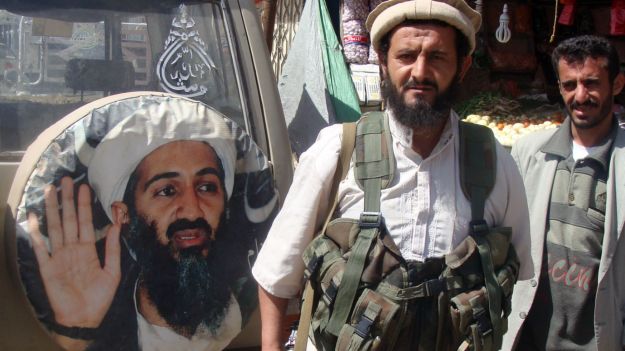
During al-Qaeda's occupation of al-Mukalla, Yemen, April 2015 to April 2016 (source)

During al-Qaeda’s occupation of al-Mukalla, Yemen, April 2015 to April 2016 (source)

In Yemen, at the end of last month, al-Qaeda in the Arabian Peninsula (AQAP) was cleared from al-Mukalla, their major urban stronghold. This ends a year of occupation and brings to a close what is effectively the third emirate or statelet AQAP has either set up or attempted to set up in Yemen since 2011. These projects offer some insights into al-Qaeda’s methodology in getting to an Islamic state, including its rebranding in opposition to the Islamic State (IS). Continue reading

Al-Qaeda Central in Syria

By Kyle Orton (@KyleWOrton) on September 14, 2015

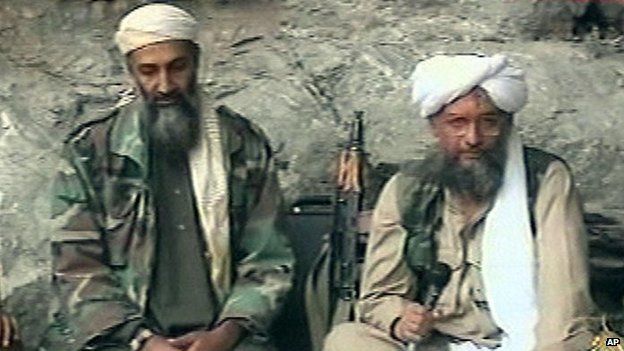
Osama bin Laden and Ayman az-Zawahiri (2001)

Usama bin Ladin and Ayman az-Zawahiri (2001)

A couple of days ago, a leader Jabhat an-Nusra issued a statement condemning Ahrar a-Sham. The statement is actually rather milder than initial reports suggested. Nusra is mostly annoyed at Ahrar for working with Turkey and Qatar to acquire money and weapons. Nusra is also displeased that Ahrar, at the instigation of Ankara and Doha, asked Nusra to publicly break its al-Qaeda link. Nusra also felt Ahrar was too willing to publicly distance itself from Salafi-jihadism to gain war materiel. This will no doubt help intensify the debate about Ahrar’s ostentatious “moderation” over the last eighteen months, and what the West should do about Ahrar.

In this post, however, I’d like to focus on the statement’s author, Abu Firas as-Suri, or more precisely on what he represents. Abu Firas is part of a group of (known) agents of al-Qaeda Central (AQC) who were sent into Syria in mid-2013 to mediate the dispute between Nusra and then-ISIS (now the Islamic State, I.S.), and when that failed the AQC veterans stayed, erected a veritable bureaucracy, and sought to forestall Nusra “going local”. Below are mini-profiles of these AQC veterans. Continue reading

Why The West Should Support The Saudi-Led Intervention In Yemen

By Kyle Orton (@KyleWOrton) on April 11, 2015

1

In The Independent of April 10, Daniel Wickham wrote in opposition to the campaign of airstrikes, led by Saudi Arabia, against the Iran-backed Houthi militia in Yemen, which has overthrown the government in that country and is now marching on the port city of Aden where the remnants of the fallen regime reside. Wickham notes that the Houthis have behaved abominably since they took the capital, Sanaa, including the “use of torture and extreme violence to suppress dissent,” still “two wrongs do not make a right” and the Saudi-led Operation DECISIVE STORM is “very clearly wrong.” I think this is mistaken. Continue reading

A Red Line For Iran’s Imperialism In Yemen

By Kyle Orton (@KyleWOrton) on March 27, 2015

1

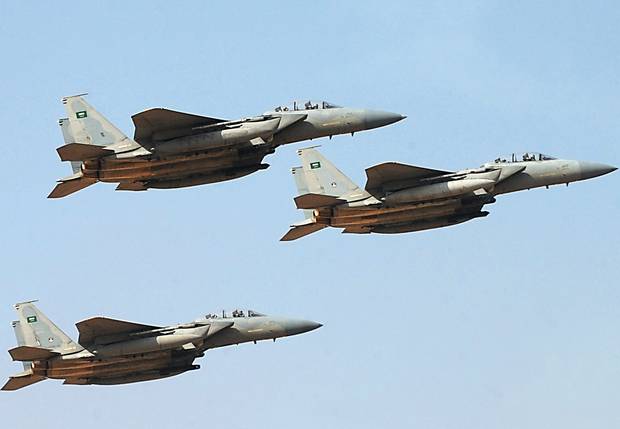
Late in the day on March 25, a Saudi-led coalition intervened in Yemen with airstrikes against the Houthis.

The Iranian-backed Houthis (a.k.a. Ansar Allah) took over Yemen’s capital, Sanaa, in September, and forced the resignation of the Saudi-backed Yemeni ruler, Abed Rabbo Mansour Hadi, in January. Hadi escaped house arrested in Sanaa and retreated to Aden with the remnants of his regime. On March 21, the Houthis had called for a “general mobilisation” and by the next day had pushed south toward Aden. The Houthis said they were combatting “terrorist forces”. As in Syria, Iran’s allied forces cast a narrative where there were no Sunni moderates, nobody with whom a deal might be struck.

Hadi’s predecessor, Ali Abdullah Saleh, whose resignation was compelled in early 2012 after the “Arab Spring,” stands accused not only by Hadi but by the United States of supporting the Houthis. Continue reading

The Islamic State, Libya, and Interventionism

By Kyle Orton (@KyleWOrton) on February 19, 2015

Rebels with Qaddafi's

Rebels with Qaddafi’s “golden gun”

Yesterday morning in Libya, it was announced that militias from Misrata were moving into Sirte to combat the Islamic State (I.S.). The militias preparing to fight I.S. are drawn from Libya Dawn, the Islamist coalition that ousted the internationally-recognised government in August 2014. Continue reading

The Long History of Middle Eastern State-Terrorism In Paris

By Kyle Orton (@KyleWOrton) on January 19, 2015

Said Kouachi and Cherif Kouachi

Last week, Lee Smith wrote of the reasons that it was likely that there was a foreign hand, quite probably that of a State, in the attack on Charlie Hebdo and the Jewish deli in Paris. Smith noted that the French believe that the funding and weapons for the attacks came from abroad. Smith pointed to the historical record, in which terrorism in Paris is typically not carried out because of religion—or not directly: it might come from States that see themselves as god’s representatives on earth—or community grievances, but “because you’re getting paid to stage an operation on behalf of a particular cause or regime.” Smith gave three cases, and they seemed worth expanding on. Continue reading