Tag Archives: Bashar al-Assad

United Nations Documents Human Rights Abuses By the “Syrian Kurds”

By Kyle Orton (@KyleWOrton) on 8 March 2018

Kurdish YPG/PKK fighters (Rodi Said/Reuters)

The Independent International Commission of Inquiry (IICI) on the Syrian Arab Republic was set up in 2011 by the United Nations Human Rights Council to track human rights abuses in Syria.

Naturally, this has meant that most of the Commission’s work is focused on the industrial-scale crimes against humanity committed by Bashar al-Asad’s regime and his enablers in Russia and Iran. Later, as non-state terrorist and extremist groups intruded into Syria, the Commission documented the atrocities by the Islamic State (IS), al-Qaeda, and the Kurdistan Workers’ Party (PKK), which works under the label of the People’s Protection Units (YPG) in Syria and dominates the so-called Syrian Democratic Forces (SDF) that the U.S.-led Coalition works with against IS. The Commission has also recorded abuses by rebel groups.

The Commission’s latest report, released on 6 March 2018, “draws from more than 500 interviews and encapsulates the trends over the past six months in the Syrian Arab Republic, with particular focus on the impact of the offensive against [the Islamic State] and the use of siege warfare on the civilian population.” The report, therefore, has something of a focus on the SDF/PKK human rights violations, though IS’s horrific treatment of religious minorities and so on, plus the pro-Asad coalition’s ongoing campaign of massacre and displacement in areas such as East Ghuta, are given ample attention. Continue reading

Crisis and Opportunity for Turkey and America: The Minbij Dispute

By Kyle Orton (@KyleWOrton) on 4 March 2018

A version of this article was published in The Arab Weekly

The YPG/PKK Minbij Military Council (image source)

The city of Minbij in northern Syria has become a source of severe political tension between the United States and Turkey. It might also be the key to reducing tensions and normalising relations. Continue reading

Human Rights Abuses in Rojava and the Anti-ISIS War

By Kyle Orton (@KyleWOrton) on 3 March 2018

Guerrillas from the Sinjar Resistance Units (YBS), the name the Kurdistan Workers’ Party (PKK) uses in Sinjar, Iraq, together with operatives from the People’s Defence Forces (HPG), the armed units of the PKK inside Turkey, holding a picture of PKK leader Abdullah Ocalan. (image source)

The American-led Coalition’s partner against the Islamic State (IS) in Syria, the so-called Syrian Democratic Forces (SDF), presents itself, ideologically and in terms of the governance structure it controls, in universalistic liberal and democratic terms, emphasizing ecological and feminist themes. The reality is that the SDF is under the politico-military control of the Kurdistan Workers’ Party (PKK), a designated terrorist organization that has run a four-decade-long insurgency against Turkey. The PKK has brought some measure of stability to the areas it controls, but it continues to struggle for legitimacy and without locally-legitimate government IS and other jihadi-Salafists will find political room to operate. The PKK’s continued monopolization of power and abusive governance practices undermine the chances for the “Rojava” system to evolve into a long-term solution to the jihadist terrorists that have used Syrian territory to threaten the region and the wider world. Continue reading

The United Nations Ceasefire for East Ghouta is a Farce

By Kyle Orton (@KyleWOrton) on 2 March 2018

Aftermath of an Assad regime bombardment in Hamouriyah, Eastern Ghouta, 9 January 9, 2018. Samir Tatin/Anadolu Agency/Getty Images

The international community tried to impose a ceasefire in Syria on 24 February, passing resolution 2401 through the United Nations Security Council. The ceasefire never took hold and it is now clear it will not. This was inevitable.

Bashar al Assad’s regime, and the governments that support him in Iran and Russia, have repeatedly made use of ceasefires to sequence their war, taking advantage of the calm on some fronts to concentrate firepower on other areas. The only question is why Western diplomats gambled that this time would be any different. Continue reading

Coping With America’s Syria Policy, Israel Tries To Draw its Own Red Line

Published at TRT World

By Kyle Orton (@KyleWOrton) on 13 February 2018

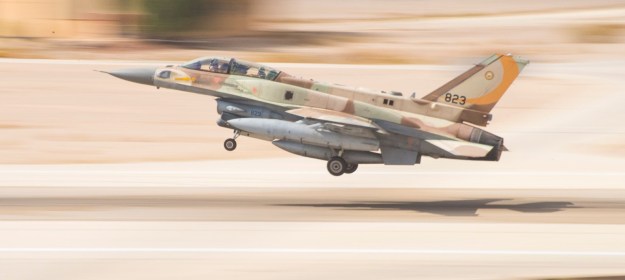
There was a serious escalation between Israel and Iran in Syria last week. This has been a long-time coming, an inevitable part of the contest for regional order that was obscured, and fuelled, by the narrow focus on the Islamic State (Daesh) and the war against its “caliphate”, particularly over the last year. Continue reading

America’s Kurdish Allies in Syria Can’t Counter Iran

Published at The Arab Weekly

By Kyle Orton (@KyleWOrton) on 11 February 2018

US Secretary of State Rex Tillerson laid out the Trump administration’s vision for Syria, making clear that, contrary to the expectations of many, the United States will stay in Syria beyond the collapse of the Islamic State’s (ISIS) self-proclaimed caliphate, holding the jihadists at bay and establishing an order compatible with US interests.

Crucially, Tillerson—in a sharp break with US President Donald Trump’s predecessor—specified that countering Iranian influence within Syria was a central US objective. The problem with the strategy is that it seems to rely on repurposing the United States’ anti-ISIS Kurdish militia allies against the Iranian revolution. Continue reading

Trump Completes Obama’s Syria Policy

By Kyle Orton (@KyleWOrton) on 4 February 2018

Syrian rebels in eastern Aleppo, November 2016 (image source)

Operation TIMBER SYCAMORE, the formally-covert program run by the Central Intelligence Agency (CIA), has, since approximately 2012, ostensibly provided support to vetted Syrian rebel units fighting against Bashar al-Asad’s regime. This program, begun by President Barack Obama, was never raised to a level that could alter the course of Syria’s conflict in favour of the opposition, and indeed one of its most concrete effects was denying certain categories of heavy weapons to the rebellion. While providing subsistence to some rebels, the program was mostly a political instrument, shielding Obama from criticism as he tilted U.S. policy in Asad’s favour by empowering his patron, Iran. President Donald Trump abandoned even this fig-leaf of opposition to Asad in July 2017, announcing the end of the program, a termination that went into effect last month. Continue reading

Why The Obama Doctrine Failed

Film review of The Final Year (2018)

By Kyle Orton (@KyleWOrton) on 31 January 2018

The Final Year, a new documentary film directed by Greg Barker, tracks the closing stages of the administration of President Barack Obama in 2016. Senior officials are followed and interviewed, and the White House is watched as it tries to react to daily events. Much of the substance contained in the film was knowable in real time, but it is very useful to have these officials on record—on video, no less—explaining the assumptions and thought processes they were operating with as they made decisions that led to a series of such intense disasters around the world. This is especially interesting since the ripple effects from these catastrophes ultimately set the conditions for the election of Donald Trump and dismantling of much of the Obama legacy. Continue reading

Turkey’s Afrin Offensive and Russia’s Policy in Syria

Originally published at Ahval

By Kyle Orton (@KyleWOrton) on 21 January 2018

Turkey’s president, Recep Tayyip Erdoğan, threatened on Jan. 13 to begin a military operation “in about a week” to evict Kurdish militants from Afrin in northwestern Syria. Erdoğan has repeatedly threatened to “cleanse” Afrin of the fighters over the last two years. It turned out he really meant it this time: on Jan. 20 Turkey commenced Operation Olive Branch against Afrin.

Kurdish forces, affiliated with the Kurdistan Workers’ Party (PKK), have constituted an important element of the Coalition’s ground force in Syria against the Islamic State (ISIS) since late 2014, expanding their “Rojava” statelet by capturing vast swathes of territory from ISIS in northern and eastern Syria that is connected to Afrin under a deal with the pro-regime coalition—Bashar al-Assad, Iran, and Russia.

Any Turkish government would see this situation as a threat, and be angry at the United States for supporting the Kurds. The PKK regards Rojava and the ruling Democratic Union Party (PYD) as strategic elements in its long war against the Turkish state. Indeed, Kurds in Rojava have already provided at least logistical support for PKK attacks inside Turkey.

Continue reading

Former Al-Qaeda Group Continues Its Efforts To Annex The Syrian Revolution

By Kyle Orton (@KyleWOrton) on 17 January 2018

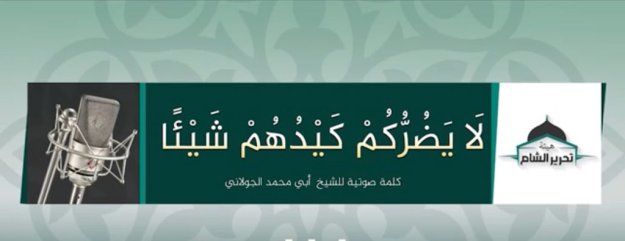
Ahmad al-Shara (Abu Muhammad al-Jolani), the leader of the Syrian jihadi group, Hay’at Tahrir al-Sham (HTS), released an audio speech, entitled, “Their Plot Will Not Harm You At All” or “Not The Least Harm Will Their Cunning Do To You” [Ali Imran (3): 120], on 16 January 2018. The speech is a continuation of themes HTS—even under its previous names, Jabhat al-Nusra and Jabhat Fatah al-Sham—has used, namely that it saw through the “peace processes” from the beginning as a conspiracy against the revolution, and that only it has the will and capacity to fulfil the desires of those Syrians who want to be free of Bashar al-Asad’s tyrannical regime. The recent insurgent counter-offensive in Idlib is taken by HTS as vindication, and as an opportunity to draw what’s left of the northern rebellion out of Turkey’s orbit and under its influence. A pro-HTS Telegram channel put out a transcript of the speech, which is reproduced below with some syntactical edits.
Continue reading