Tag Archives: chemical weapons

The Criminality of the Syrian Regime

By Kyle Orton (@KyleWOrton) on 29 April 2018
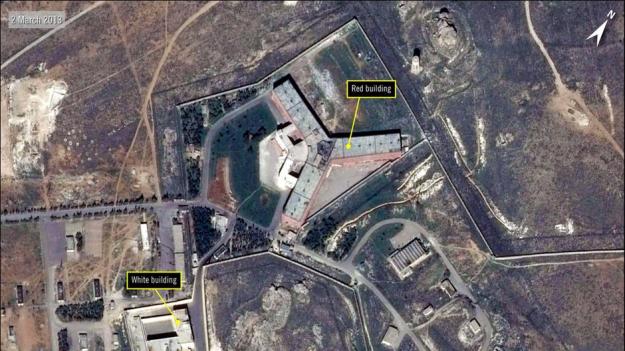
A satellite image of Sednaya prison, about 20 miles north-east of the presidential palace. CNES and ASTRIUM / Amnesty International via AFP

To accompany the release of “Syria’s Slaughterhouses”, a film by TRT World’s “Off The Grid”, I was asked to give an overview of the available evidence of the Assad regime’s crimes against humanity.

The launching of a limited punitive raid against the Syrian regime of Bashar al Assad for the use of poison gas has brought some attention to the regime’s crimes. The regime’s visible crimes are numerous and devastating.

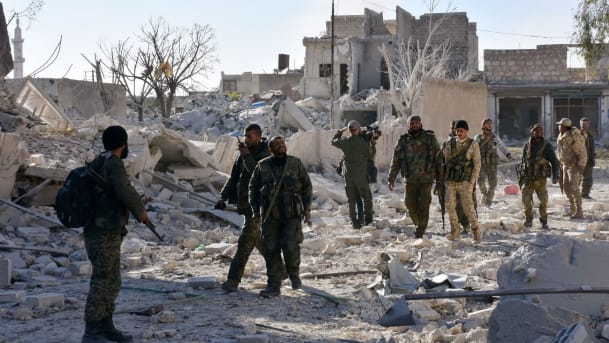
In addition to using weapons of mass destruction, fighter jets have levelled ancient cities, sieges have starved populations into submission, and improvised explosives like barrel bombs have maimed thousands. These tactics are part of what UN investigators have called a “systematic and widespread attack against [the Syrian] civilian population”.

The UN commission recently noted that what the Assad regime has done amounts to crimes against humanity, including extermination, murder, rape, and torture.

What does not get enough attention is the part of Assad’s criminality that is most difficult to see: that which takes place in the prisons, a vast network of concentration camps where torture and murder is routine. Continue reading
Islamic State Reacts to Western Strikes on the Syrian Regime

By Kyle Orton (@KyleWOrton) on 21 April 2018

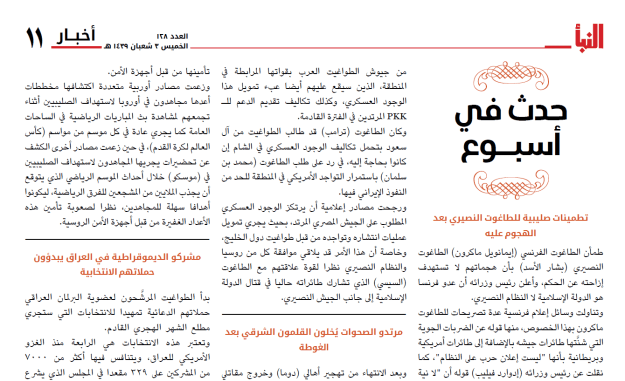
Al-Naba 128, page 11

The 128th edition of Al-Naba, the Islamic State’s (IS) weekly newsletter, released on 20 April, contained in its concluding, “Events of the Week” section, the organisation’s reaction to the 14 April military strikes by America, Britain, and France against the Bashar al-Asad regime for its use of poison gas in Duma. This short comment is reproduced below. Continue reading

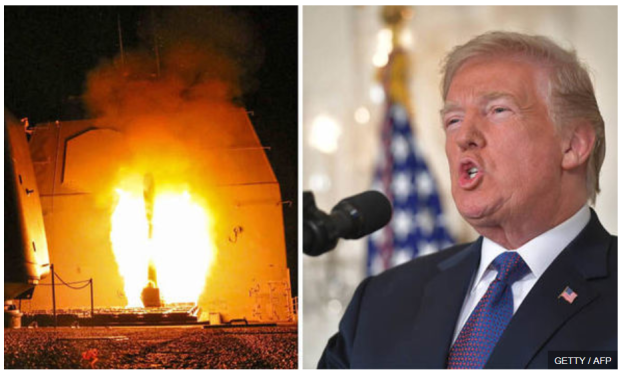
Trump’s Syria Strike Upheld an Important International Norm, But Did No More

A version of this article was published at The Sunday Express

By Kyle Orton (@KyleWOrton) on 15 April 2018

Britain joined the United States and France in a round of punitive military strikes in Syria on Friday night. The Coalition was retaliating for a poison gas attack by Bashar al-Assad’s regime in the Duma area of Damascus on 7 April. The three targets the Allies went after were related to his chemical weapons program. This was a just operation that upheld the norms of the international system, but there are disturbing signs that it will not be linked to a course correction in Syria. Continue reading

Trump Should Not Fear Russia In Responding to Assad’s Chemical Attack

By Kyle Orton (@KyleWOrton) on 10 April 2018

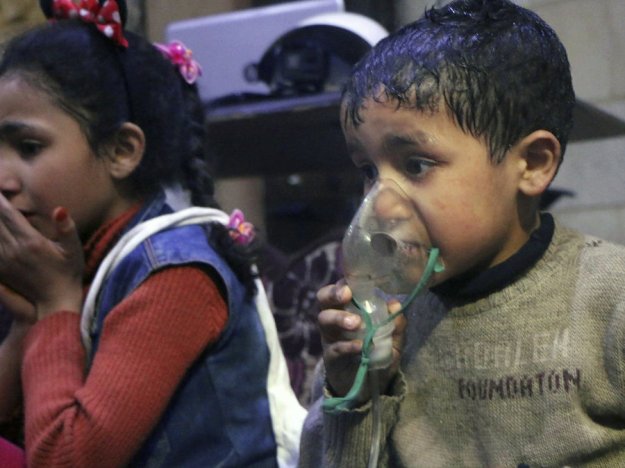
A child receiving oxygen after a poison gas attack in Douma, near Damascus, Syria | SYRIAN CIVIL DEFENSE WHITE HELMETS VIA AP

A year to the day after the United States struck at a Syrian airbase to punish Bashar al Assad for a chemical weapons attack, the regime has suspectedly carried out another devastating chemical atrocity. Signs are that the United States will, again, respond with force, attempting to rescue some part of the fraying international taboo against the use of poison gas. The larger question remains how Assad has gotten away with this for so long—and why murder only with certain categories of munitions prompts retaliation. Continue reading

United Nations Documents Human Rights Abuses By the “Syrian Kurds”

By Kyle Orton (@KyleWOrton) on 8 March 2018

Kurdish YPG/PKK fighters (Rodi Said/Reuters)

The Independent International Commission of Inquiry (IICI) on the Syrian Arab Republic was set up in 2011 by the United Nations Human Rights Council to track human rights abuses in Syria.

Naturally, this has meant that most of the Commission’s work is focused on the industrial-scale crimes against humanity committed by Bashar al-Asad’s regime and his enablers in Russia and Iran. Later, as non-state terrorist and extremist groups intruded into Syria, the Commission documented the atrocities by the Islamic State (IS), al-Qaeda, and the Kurdistan Workers’ Party (PKK), which works under the label of the People’s Protection Units (YPG) in Syria and dominates the so-called Syrian Democratic Forces (SDF) that the U.S.-led Coalition works with against IS. The Commission has also recorded abuses by rebel groups.

The Commission’s latest report, released on 6 March 2018, “draws from more than 500 interviews and encapsulates the trends over the past six months in the Syrian Arab Republic, with particular focus on the impact of the offensive against [the Islamic State] and the use of siege warfare on the civilian population.” The report, therefore, has something of a focus on the SDF/PKK human rights violations, though IS’s horrific treatment of religious minorities and so on, plus the pro-Asad coalition’s ongoing campaign of massacre and displacement in areas such as East Ghuta, are given ample attention. Continue reading

Trump Completes Obama’s Syria Policy

By Kyle Orton (@KyleWOrton) on 4 February 2018

Syrian rebels in eastern Aleppo, November 2016 (image source)

Operation TIMBER SYCAMORE, the formally-covert program run by the Central Intelligence Agency (CIA), has, since approximately 2012, ostensibly provided support to vetted Syrian rebel units fighting against Bashar al-Asad’s regime. This program, begun by President Barack Obama, was never raised to a level that could alter the course of Syria’s conflict in favour of the opposition, and indeed one of its most concrete effects was denying certain categories of heavy weapons to the rebellion. While providing subsistence to some rebels, the program was mostly a political instrument, shielding Obama from criticism as he tilted U.S. policy in Asad’s favour by empowering his patron, Iran. President Donald Trump abandoned even this fig-leaf of opposition to Asad in July 2017, announcing the end of the program, a termination that went into effect last month. Continue reading

Further Details Emerge of Obama’s Failed Iran Policy

Published at The New Arab.

By Kyle Orton (@KyleWOrton) on 21 December 2017

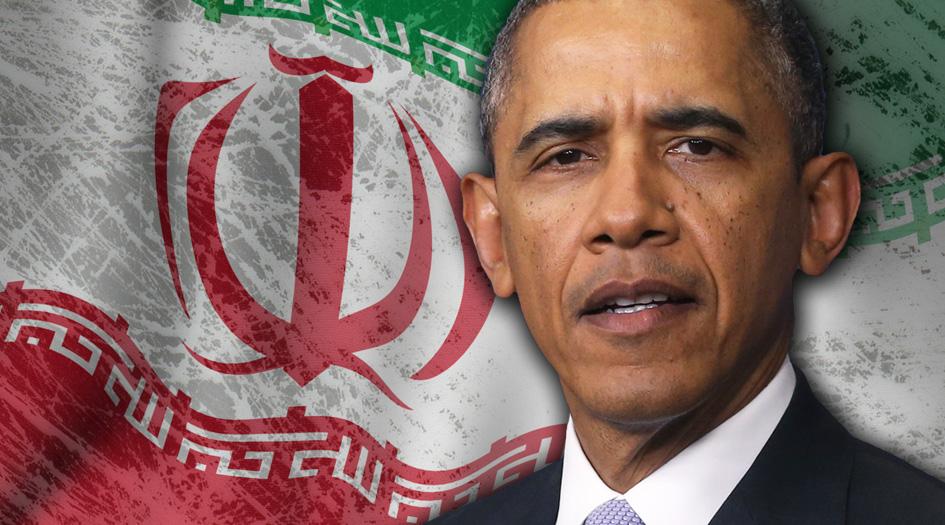
A widely reported, 15,000-word article by Josh Meyer in Politico on Sunday moves us another step closer to finding out the actual terms of President Barack Obama’s nuclear deal with the Islamic Republic of Iran.

Though the Obama administration sold the Iran deal on the narrowest possible terms as an arms control agreement, the reality was that this agreement was intended to facilitate a strategic tilt in Iran’s favour—against traditional allies—that left a regional balance requiring less American commitment.

Because the administration wanted the paper agreement, Iran had the leverage to threaten to walk away, and was therefore appeased on multiple fronts ostensibly unrelated to the nuclear issue.

Continue reading

Coalition, Hindered By the Syrian Regime, Kills Islamic State Leaders

By Kyle Orton (@KyleWOrton) on 19 December 2017

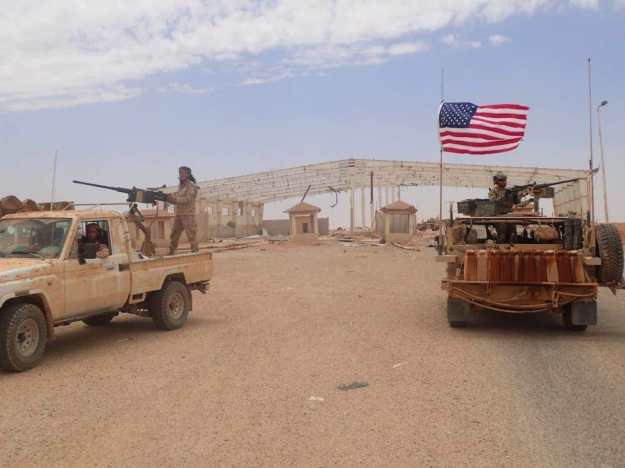
Maghaweer al-Thawra fighters next to American forces at at-Tanf. (Hammurabi’s Justice News/AP)

The U.S.-led Coalition against the Islamic State (IS) has killed several more leaders of the terrorist group, but continues to find that the campaign is hindered by the incompetence and/or complicity of the regime of Bashar al-Asad and his supporters in Iran and Russia. Continue reading

A Year In, Trump’s Syria Policy Looks A Lot Like Obama’s

Originally published at Ahval

By Kyle Orton (@KyleWOrton) on 18 December 2017

Nearly a year into Donald Trump’s administration, the president has followed the track laid down by his predecessors in Syria, accelerating it in some cases, and reinforcing the negative trends of Barack Obama’s defective policy that will undo even apparent successes, like the destruction of the Islamic State’s (ISIS) “caliphate”. Continue reading

Islamic State Denies Targeting Jordan With Chemical Weapons (2004)

By Kyle Orton (@KyleWOrton) on 13 December 2017

The founder of what is now the Islamic State, Abu Musab al-Zarqawi, gave a speech on 30 April 2004, entitled, “Blowing up the Intelligence Headquarters: A Response to the Lies of Jordanian Intelligence”.

Continue reading