Tag Archives: Communism

The Shah, the Cold War, and the Islamists

By Kyle Orton (@KyleWOrton) on 20 March 2019

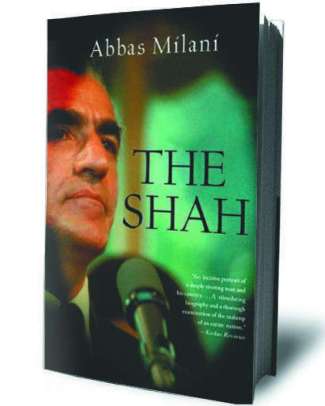
Abbas Milani’s The Shah gives a portrait of Iran’s last monarch, Muhammad Reza Pahlavi, and the impact that his downfall forty years ago continues to have in the Middle East, notably the emboldening of the Islamist movement. Continue reading

Islamic State Newsletter Celebrates Guerrilla Campaign, Attacks Saudi Arabia as ‘Stalinist’

By Kyle Orton (@KyleWOrton) on 16 February 2019

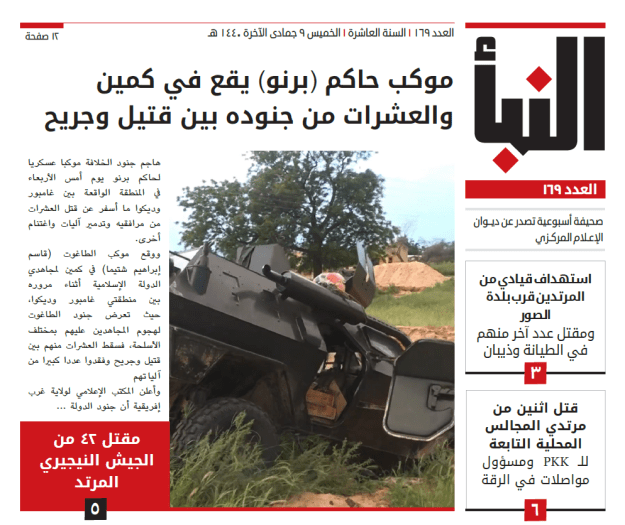
Front page Al-Naba 169

The Islamic State (IS) released the 169th edition of its newsletter, Al-Naba, on 14 February 2019. Al-Naba 169 leads with the attack on the governor of Borno in Nigeria by IS’s branch in that country. In terms of volume, much of the focus remains on the guerrilla campaign in Iraq and Syria, though there is an item on the last stand of the caliphate in Baghuz, the final village in eastern Syria. IS highlights its clashes with al-Qaeda in Yemen. There is a profile of a Russian-speaking atheist-turned-jihadist who was killed in Egypt. And perhaps most notable is an essay on Saudi Arabia, where IS has a terrorist infrastructure that is instructed to be patient. It is a question that likely is unanswerable until it is too late how strong IS is in Saudi Arabia. Continue reading

Israel Returns to Africa

Published at The Arab Weekly

By Kyle Orton (@KyleWOrton) on 27 January 2019

Israeli Prime Minister Binyamin Netanyahu and Chadian President Idriss Deby meeting in N’Djamena, 20 January 2019 [AFP]

Diplomatic relations between Israel and Chad have been restored after a half century of separation. This was a symbolic breakthrough with a Muslim-majority African country, albeit one in the works for some time. It is an illumination of Israel’s changed geopolitical circumstances, some aspects sustainable, some more wishful and illusory.
Continue reading

The Foreign Dimension to the Irish Republican Army

By Kyle Orton (@KyleWOrton) on 24 January 2019

CCTV footage of the Londonderry bombing, 19 January 2019 [source]

The bombing in Londonderry over the weekend, ostensibly by “dissident” republican elements,[1] and the two further security scares in Northern Ireland since then have brought back memories of the separatist terror-insurgency waged against the United Kingdom by the Provisional Irish Republican Army (PIRA), a war that has largely transitioned into a political phase. One fascinating aspect, looking back on PIRA’s armed campaign, is the foreign support it received, notably from the Soviet Union and its Arab clients. Continue reading

The Fall of the Shah and the Rise of Islamism

By Kyle Orton (@KyleWOrton) on 17 January 2019

Forty years ago yesterday, Muhammad Reza Pahlavi, the Shah (King) of Iran, left his country for the last time as a year-long revolution crested. A month later, the remnants of the Imperial Government collapsed and Grand Ayatollah Ruhollah Khomeini was swept to power after his long exile, establishing the first Islamist regime. Andrew Scott Cooper’s 2016 book, The Fall of Heaven: The Pahlavis and the Final Days of Imperial Iran, charts how this happened. Continue reading

The Russian Relationship with Israel: A History

By Kyle Orton (@KyleWOrton) on 12 December 2018

© AP Photo / Jim Hollander, Pool

Essay: “Zionism is Making Us Stupid”: The Russian Relationship with Israel from the Soviets to Putin Continue reading

Who Killed Kennedy?

By Kyle Orton (@KyleWOrton) on 18 September 2018

To even pose the question is, for most of us, to be already well-advanced down the road of madness that leads to saying the U.S. federal government murdered President John F. Kennedy. Dr. David Kaiser’s The Road to Dallas (2008) rejects such vast conspiracy theories, as it does the notion of Lee Harvey Oswald as the lone killer. Kaiser instead argues for a more limited conspiracy, led by the mob bosses of mid-20th century America, and originating in the grey-zone where that world met the Cuban exile community and the Central Intelligence Agency’s efforts to bring down Fidel Castro. Continue reading

The Left’s Extremism Problem

By Kyle Orton (@KyleWOrton) on 3 August 2018

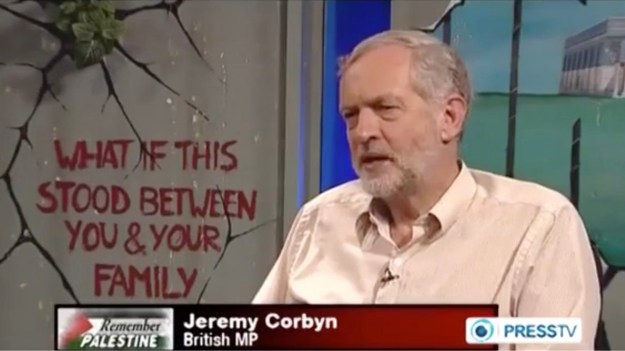
Jeremy Corbyn’s on Iran’s state television station, Press TV, 2012 (source)

The unexpected victory of Alexandria Ocasio-Cortez in the Democratic primary in The Bronx in June caused quite a stir, given her membership of the Democratic Socialists of America and her controversial policy positions. Nonetheless, she has been enthusiastically embraced as “the future” by the chairman of the Democratic National Committee. Events in Britain suggest Democrats might want to exercise some caution here before they go all in. Continue reading

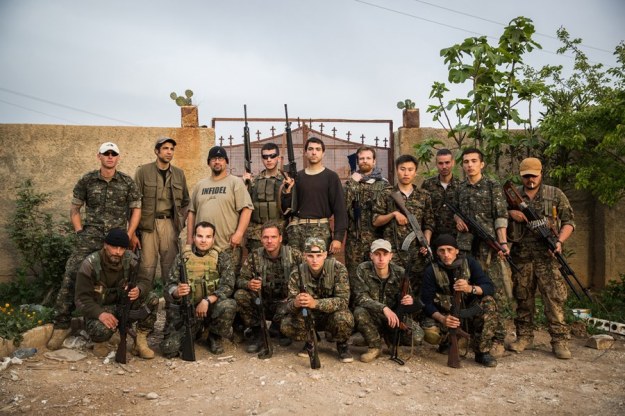
The Secular Foreign Fighters of the West in Syria

By Kyle Orton (@KyleWOrton) on 24 July 2018

Foreign fighters with the YPG/PKK on the outskirts of Tal Tamr in northwestern Syria, 16 April 2015. UYGAR ÖNDER ŞİMŞEK / AFP / Getty Images

ABSTRACT: The Kurdistan Workers Party (PKK) operates under the names of the Democratic Union Party and the People’s Protection Units in Syria. The PKK is registered as a terrorist group by most Western governments, the European Union and Turkey, where it originated as a separatist organization. Nonetheless, the YPG has been the partner of the United States-led coalition in Syria against the ISIS. The strengthening of the YPG/PKK and its political messaging has brought in a flow of western foreign fighters. Some of these fighters are now returning to their homelands with indications that they are bringing security problems with them.

Article published in Insight Turkey.

French Leftists with the “Syrian Kurds” Threaten Terrorism Against France

By Kyle Orton (@KyleWOrton) on 23 April 2018

The Facebook group for the Antifascist Forces in Afrin (AFFA) posted a video message and transcript yesterday, which was dated 12 April, threatening terrorist attacks against two NATO states, France and Turkey. AFFA, announced in February, comprises French-speaking Left-wing extremists, who are part of the foreign fighter brigades within the Kurdistan Workers’ Party (PKK) command structure in Syria. A rough translation of the statement (and the original) are reproduced below, with the key sections highlighted in bold. Continue reading