By Kyle Orton (@KyleWOrton) on 22 August 2023

By Kyle Orton (@KyleWOrton) on 12 August 2021
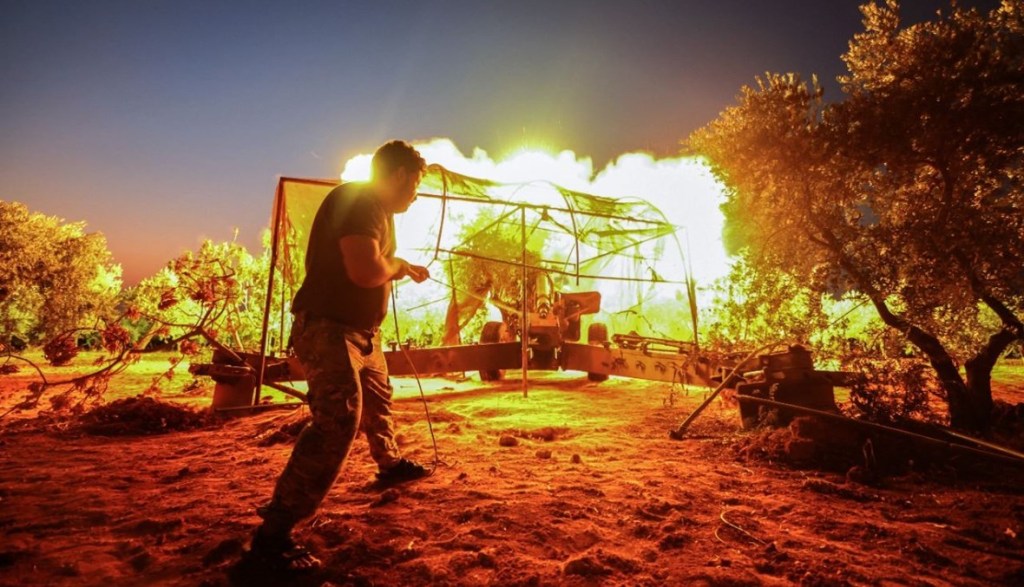
In early July, President Joe Biden confirmed his intention to withdraw all American troops from Afghanistan by September 2021. Biden cited a February 2020 U.S. “agreement” with the Taliban that he had “inherited” from the Trump administration. In truth, President Donald Trump had made no agreement. He had already begun pulling troops out by October 2019 and signed a fig leaf to cover his unconditional withdrawal.
Biden reassessed other Trump policies and could have reassessed this one, not least since the Taliban were in violation even of their vague paper promises — most notably on their commitment to deny space to al Qaeda and negotiate peace in good faith. The truth is that Biden is ideologically committed, as Barack Obama and Trump were, to ending American involvement in “forever wars.” Regardless, this does not mean those wars end or the threats that drew the United States in actually go away. Continue reading
By Kyle Orton (@KyleWOrton) on 19 November 2019

President Barack Obama meeting President-elect Donald Trump, 10 November 2016 [image source]
By Kyle Orton (@KyleWOrton) on 10 May 2019
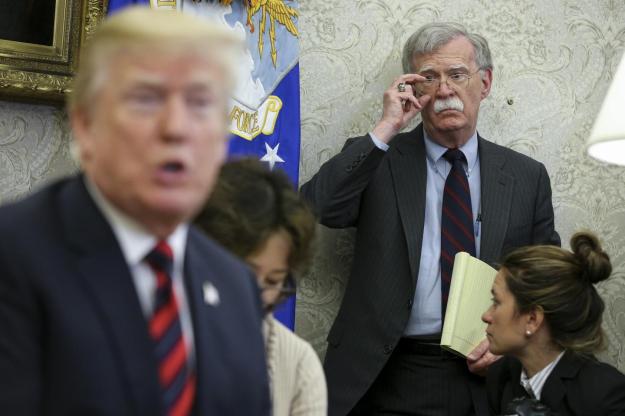
President Donald Trump speaks as John Bolton stands by in the Oval Office, 22 May 2018. OLIVER CONTRERAS-POOL/GETTY IMAGES
As tensions flared between the United States and Iran over the last ten days, a number of Washington’s Western allies have signalled their distance from the U.S. view, most dramatically in the case of Major-General Chris Ghika, Britain’s top commander in the coalition against the Islamic State (ISIS), who dismissed the U.S. intelligence assessment of an increased threat from Iran. This has since been walked back, but the fissures in the Western alliance over how to deal with Iran are real, and this has been compounded by differences within the U.S. government and the highly irregular nature of the Donald Trump administration, particularly its decision-making processes and public messaging. Continue reading
Published at The Arab Weekly
By Kyle Orton (@KyleWOrton) on 28 April 2019
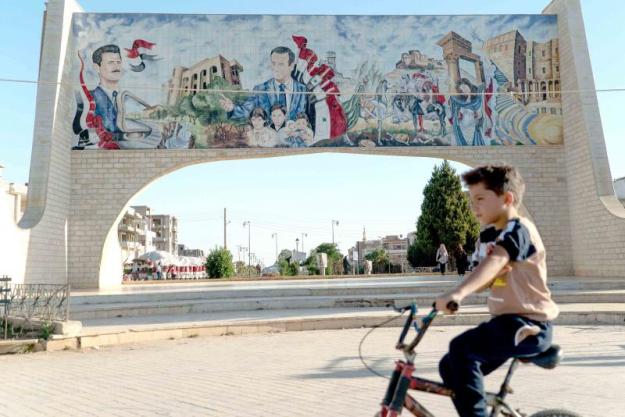
A young boy rides his bicycle in Deraa // AFP
In military terms, the fall of Daraa, in south-western Syria, to Iranian and regime forces last July eliminated the last insurgent-held pocket not dominated by jihadists. Politically, it had profound effects, demonstrating American disengagement and Israel’s misperceptions of the Syrian landscape, particularly Russia’s role in it.
Recent signs of renewed insurgency in Daraa, however, underline how far from over Syria’s war is and how badly the West has mishandled the crisis. Continue reading
By Kyle Orton (@KyleWOrton) on 9 April 2019
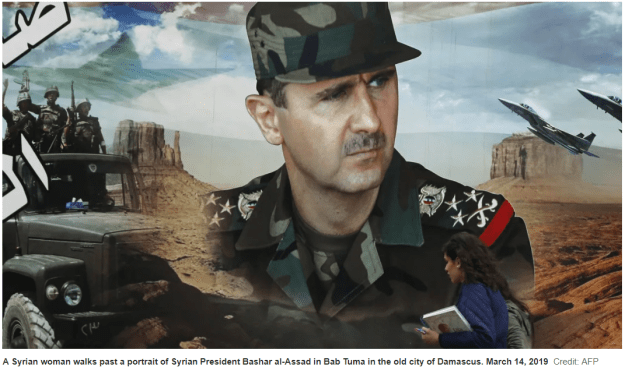
As the regime of Bashar Assad appears to be consolidating in Syria, many Israelis have concluded that their government’s handling of the crisis was generally laudable.
The most comprehensive statement of this view was given recently in Haaretz by Anshel Pfeffer (Netanyahu Outfoxed Russia, Iran and ISIS With His Cynical, Ruthless Syria Policy.) Every aspect of this is open to question. Continue reading
Published at The Arab Weekly
By Kyle Orton (@KyleWOrton) on 20 January 2019
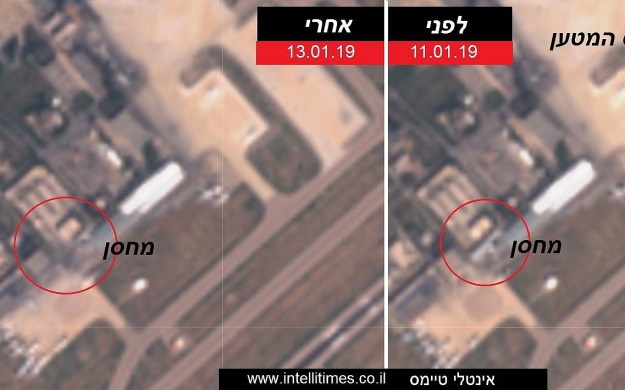
Satellite pictures before and after Israel’s attack on an Iranian weapons cache in Damascus, January 2019 [source]
Published at The Arab Weekly
By Kyle Orton (@KyleWOrton) on 27 November 2018
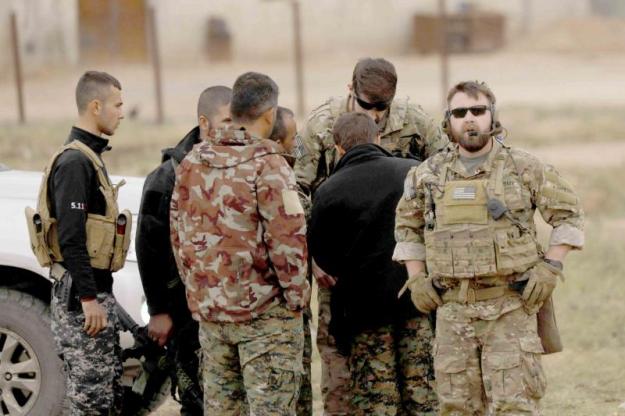
U.S. forces and members of the “Syrian Democratic Forces” (SDF) patrol Al-Darbasiya in northeastern Syria, 4 November 2018. (AFP)
Despite the change of rhetoric between US Presidents Barack Obama and Donald Trump, the United States has continued to lose influence, political and military, in the Middle East to the Iran-Russia axis. Continue reading
This article was published at The New Turkey
By Kyle Orton (@KyleWOrton) on 27 October 2018
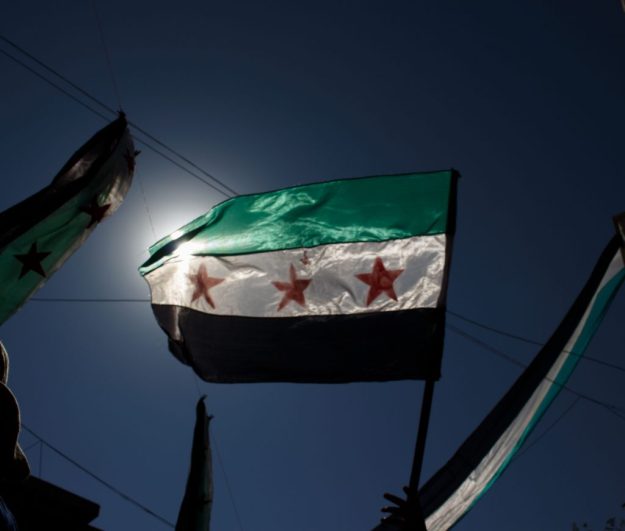
Today in Istanbul, four governments—Turkey, Russia, Germany, and France—are meeting for a summit over Syria, attempting to consolidate the Sochi Agreement signed by Russia and Turkey over Idlib, and re-invigorate the international political process. There is little reason to think that these talks can succeed on either front. Continue reading
A version of this article was published in The Arab Weekly
By Kyle Orton (@KyleWOrton) on 3 August 2018
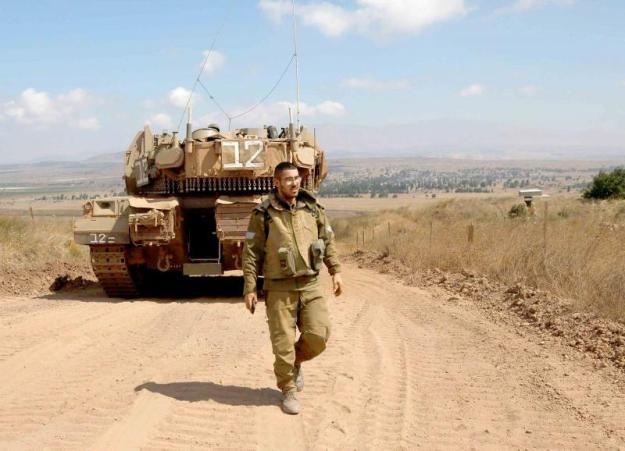
An Israeli Merkava tank patrols on the border between Israel and Syria, on 20 July 2018. (AFP)
Israel has been conflicted on the Syrian rebellion: some saw Bashar al-Assad’s reliance on Iran and thus favoured his departure; some, especially once the uprising militarized and jihadi-Salafists made their appearance among the insurgents, favoured a let-them-both-lose policy; and some saw the risk of chaos and jihadists and preferred to stick with what they knew.
The official Israeli policy, stated in the early months of the protests, was to side with the people “demonstrating for freedoms” since “the devil we know in Syria [i.e. Assad] is worse than the devil we don’t”. Continue reading
 Kyle Orton's Blog