By Kyle Orton (@KyleWOrton) on 17 July 2025
By Kyle Orton (@KyleWOrton) on 22 July 2022
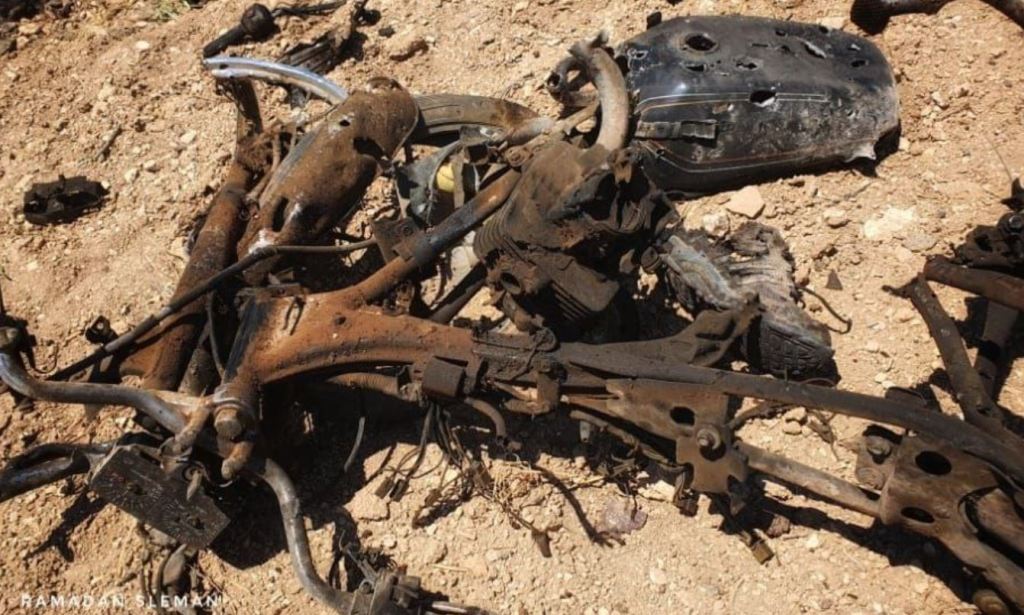
The United States announced on 12 July that it had killed the Islamic State’s (ISIS) governor of Syria in a drone strike in the village of Galtan in the Jinderes district of the north-western Syrian province of Efrin on the border with Turkey. The U.S. Central Command (CENTCOM) statement identified the slain man as “Maher al-Agal”, though a more precise transliteration is Maher al-Aqal (ماهر العقال). Riding on the motorcycle alongside Al-Aqal when he was killed was a “senior ISIS official” with whom he was “closely associated”. This ISIS official was “seriously injured during the strike”, CENTCOM notes, adding that the Jinderes strike caused no civilian casualties. Continue reading
A version of this article was published at The Arab Weekly.
By Kyle Orton (@KyleWOrton) on 12 October 2019
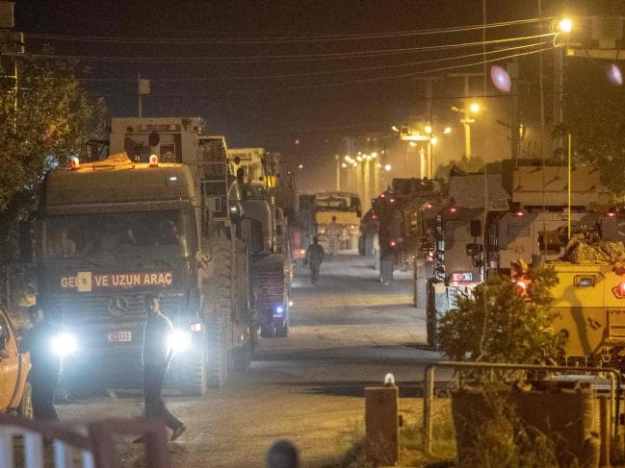
Turkish Armed Forces heading towards the border with Syria, 8 October 2019 // BULENT KILIC / AFP
The beginning of Turkey’s third incursion into Syria on Wednesday, this time dubbed Operation PEACE SPRING and aimed at the areas east of the Euphrates River, is the culmination of an American policy started under Barack Obama that has been continued by Donald Trump. That it is inevitable makes it no less tragic for the innocents caught up in this mess. It does mean that the emotive posturing on social media, and attempts by Obama era officials to cast the blame for the Syria catastrophe onto Trump, are more-than-usually grotesque. Continue reading
This article was published at The New Turkey
By Kyle Orton (@KyleWOrton) on 1 October 2019
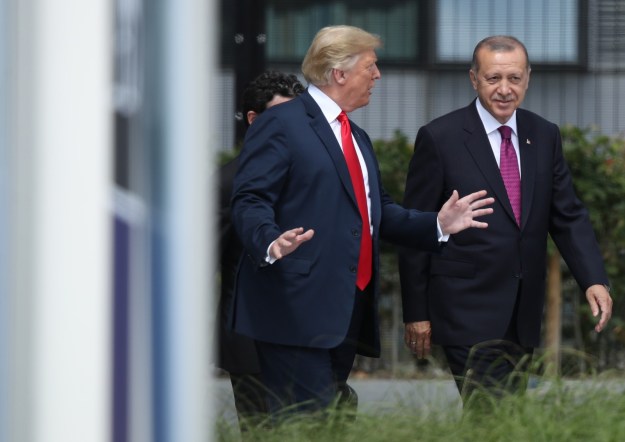
U.S. President Donald Trump and Turkish President Recep Tayyip Erdogan at the opening ceremony of the NATO Summit in Brussels, July 2018 // Getty Images
Turkey’s President Recep Tayyip Erdogan had said earlier in September that he would discuss the problems between Turkey and the United States when he met with the U.S. President Donald Trump on September 25, as part of his trip to New York for the opening of the United Nations General Assembly. But neither side has revealed what was discussed and if anything was resolved. Continue reading
By Kyle Orton (@KyleWOrton) on 25 August 2019
A version of this article was published at The Arab Weekly
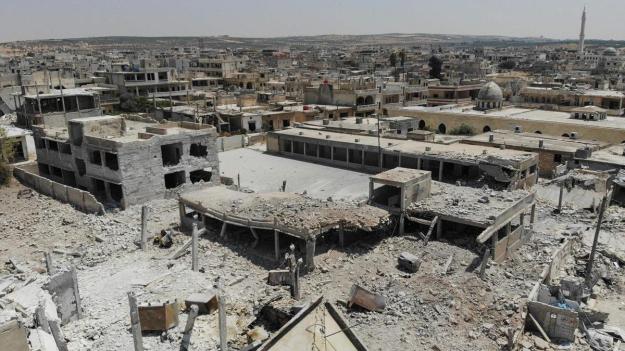
Devastation in Khan Shaykhun, Idlib, Syria, 3 August 2019 (AFP)
Bashar al-Assad’s regime, supported by Russia and (in a more deniable form) Iran, began an offensive against the last insurgent-held enclave in Syria, Idlib, in the last days of April. Up until a month ago, this looked like an embarrassing fiasco: with a minimal increase in Turkish support to its rebel proxies, the pro-Assad forces had been able to gain about one-percent of the territory in the southern part of “Greater Idlib”. In the last fortnight, however, the pro-Assad coalition has made important breakthroughs that could prove decisive. Continue reading
By Kyle Orton (@KyleWOrton) on 10 March 2019
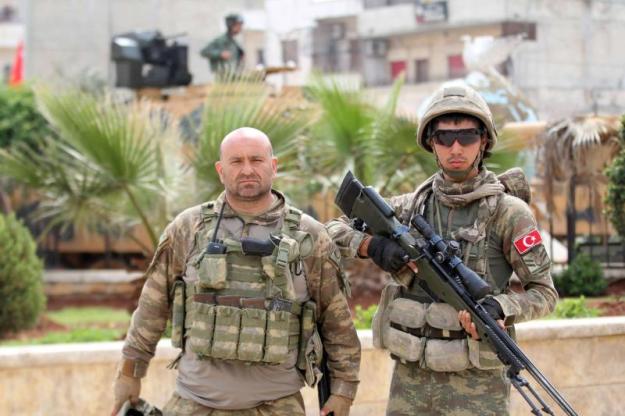
Turkish soldiers in Efrin, Syria, March 2018. (AFP)
Eight years ago, peaceful protests began against Syrian President Bashar Assad. Since then, outside powers — the Iran-Russia axis, the United States and Turkey — have become dominant in Syria.
The Iranians and Russians keeping Assad’s regime alive are clearly going nowhere. The Americans’ indecision on the point is apparently final. So, what of Turkey, which is the custodian of the remnants of the armed opposition? Continue reading
By Kyle Orton (@KyleWOrton) on 18 December 2018
Tel Abyad, Syria [source]
By Kyle Orton (@KyleWOrton) on 6 December 2018
This article was originally published at Ahval, headlined, “The Best Bad Outcome for Idlib”
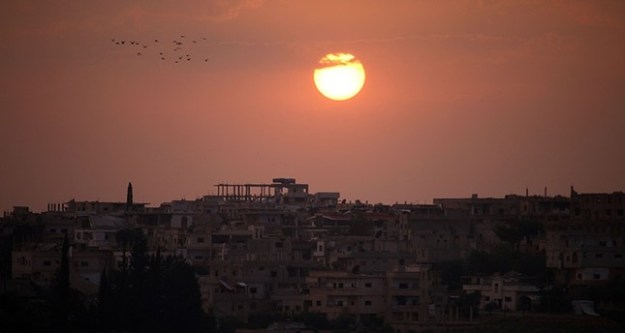
The sun setting over Deraa, in southern Syria, 28 May 2018 (image source)
The Turkey-Russia Sochi Agreement in September won Idlib a reprieve from what had seemed to be an imminent and catastrophic offensive by Syrian President Bashar Assad’s forces and his Russian and Iranian patrons against the last insurgent-held province.
The ceasefire was meant to provide space for Turkey to dismantle the radical insurgents. Instead, those radicals consolidated their dominance in Idlib and the ceasefire has been visibly fraying. How to proceed is a matter of domestic security for the West. Continue reading
By Kyle Orton (@KyleWOrton) on 21 August 2018
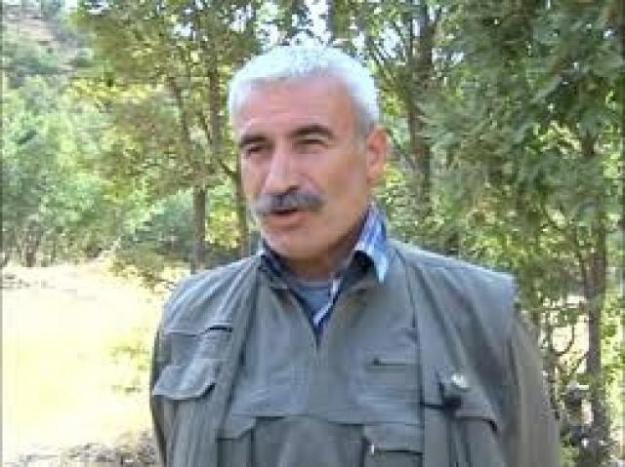
Ismail Özden (image source)
Turkey killed a senior operative of the Kurdistan Workers’ Party (PKK), the internationally-recognised terrorist organisation and narcotics trafficking entity that has been at war with the Turkish state since 1984, in Iraq last week. Turkey launched a wave of airstrikes against PKK targets in Syria and Iraq in April 2017 and for the last several months Ankara has been widening its campaign against the PKK outside Turkey’s borders, particularly in Iraq, where the PKK is not protected by the United States, as it is in eastern Syria. Having feinted in June toward an attack on the historic PKK headquarters in the Qandil Mountains—a somewhat symbolic target at this stage, with the bulk of the PKK’s leadership and resources in Syria—it appears the Turks have opted for a more targeted approach.
This operation underscores the continuance of U.S.-Turkey relations, and the mutual benefits of the relationship, even in its current damaged state, where both sides have a laundry list of legitimate grievances with the other. If a formula for normalisation can be found, the potential to contain and weaken some of the worst, most destabilising elements in the region, saliently the PKK and the Iranian regime, is within reach. Continue reading
 Kyle Orton's Blog