Tag Archives: Free Syrian Army

Al-Qaeda in Syria Declare War on Rebels Taking Part in the Astana Process

By Kyle Orton (@KyleWOrton) on 10 May 2017
1

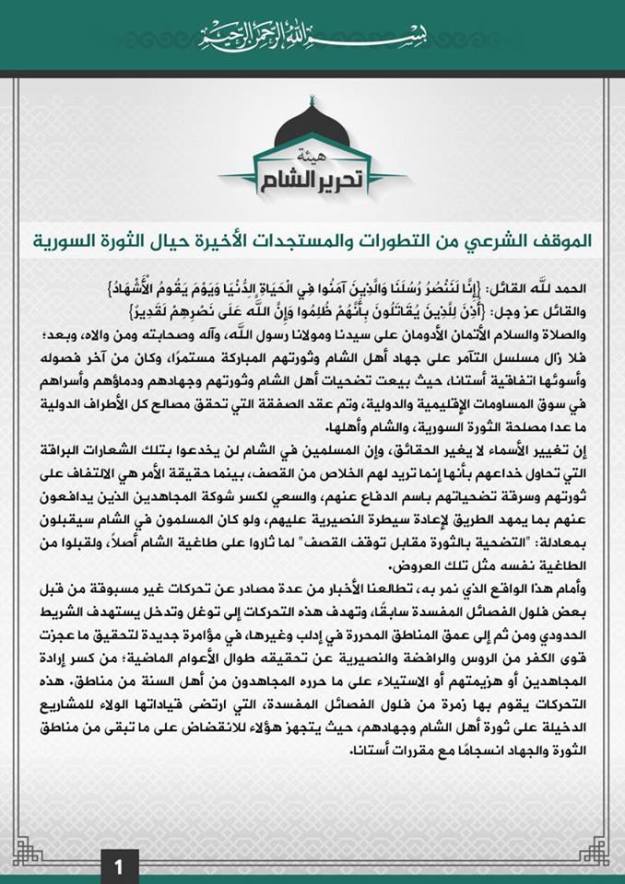
In response to the recent rounds of the Russian-organized “peace” talks in Astana, Hay’at Tahrir al-Sham (HTS), al-Qaeda’s restructured presence in Syria, put out a statement through its Fatwa Council on 9 May 2017, “The legal position concerning the latest events and developments facing the Syrian revolution”. HTS’s fatwa was a declaration of war against all parts of the rebellion participating in the Astana conferences, which HTS labelled a conspiracy to defeat the revolution and secure Bashar al-Assad in power. The statement is clearly intended against the mainstream rebellion, which operates under the colours of the Free Syrian Army (FSA) and has shown signs of coalescing into an anti-HTS alliance. HTS’s paranoia about the rebels being repurposed against it has led to previous “pre-emptive” attacks that might well have precipitated the very thing it feared. Perhaps most interesting, however, is HTS saying that it would treat as an enemy actors who “allow [the Astana-compliant factions] to work under their banner”. The reference here is to Ahrar al-Sham, a heretofore close ally of HTS, its key enabler in infiltrating and co-opting large sections of the northern insurgency, which in January sheltered various groups that survived the first wave of HTS attacks to prevent their destruction. The statement was translated by al-Maqalaat and is reproduced below with some editions in transliteration and the key sections highlighted in bold.
Continue reading
State Department Designates Two Canadian Jihadists in Syria

By Kyle Orton (@KyleWOrton) on 14 April 2017

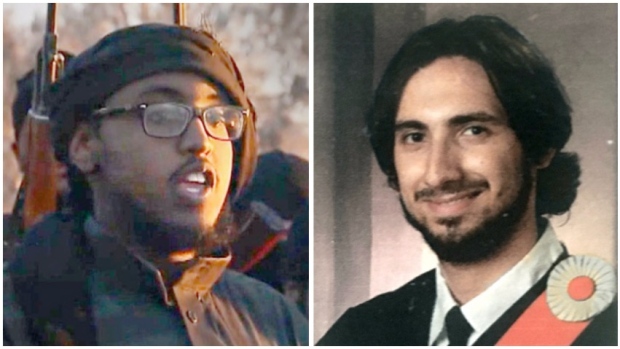
Farah Mohamed Shirdon, Tarek Sakr (image source)

The U.S. State Department added two Canadians to the list of Specially Designated Global Terrorists (SDGT) on 13 April. One of them, Tarek Sakr, of Syrian descent, is associated with Jabhat al-Nusra, al-Qaeda’s Syrian branch, which has since been through two rebrands to Jabhat Fatah al-Sham (JFS) and currently Hay’at Tahrir al-Sham (HTS). The other, Farah Mohamed Shirdon, of Somali background, is a member of the Islamic State (IS). Continue reading

Islamic State Has Been Defeated in Al-Bab, But America Needs a New Direction in Syria

Published at The International Business Times and subsequently discussed on the IBTimes podcast

By Kyle Orton (@KyleWOrton) on February 27, 2017

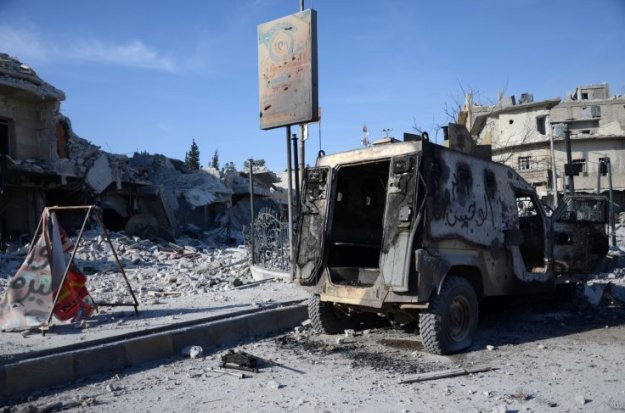
A burnt-out vehicle on a destroyed street in al-Bab on 23 February 2017 (Nazeer al-Khatib/AFP/Getty Images)

Turkey intervened in Syria in August 2016 with Operation Euphrates Shield (OES), which involved special forces, some regular troops, and the mobilisation of Syrian rebels to clear its border of terrorist threats by pushing ISIS (the Islamic State) away from the frontier and preventing the Syrian branch of the Kurdistan Workers’ Party (PKK) creating a state-let on its border that could be used as a harbour and launch-pad for attacks inside Turkey.

To secure this mission, on 13 November 2016 OES began an assault on al-Bab in the eastern countryside of Aleppo Province, just 15 miles from Turkey’s border and ISIS’ last major urban centre in Syria outside its capital, Raqqa. Some 102 days of combat later, on 23 February, al-Bab fell. What happens next could determine the course of the war as Turkey competes with the PKK to be the U.S.-led Coalition’s partner in clearing ISIS from Raqqa. Continue reading

Al-Qaeda Reshapes the Insurgency in Northern Syria

By Kyle Orton (@KyleWOrton) on February 7, 2017

Hay’at Tahrir al-Sham logo

A series of clashes broke out on 19 January between al-Qaeda’s rebranded Syrian branch, Jabhat Fatah al-Sham (JFS), and its heretofore close ally and portal into the Syrian rebellion, Ahrar al-Sham. By 23 January, JFS had expanded its targets, engaging in hostilities with mainstream rebel groups in the “Greater Idlib” area, and specifically trying—and succeeding—in dismantling the positions of Jaysh al-Mujahideen, a moderate group, west of Aleppo. The crisis continued to escalate, forcing many groups to merge with Ahrar al-Sham for protection, until 28 January, when a JFS-led merger was announced under the banner of Hay’at Tahrir al-Sham (HTS), or the Syrian Liberation Committee. HTS announced a ceasefire, and since then individuals and groups—including a significant number from Ahrar—have given allegiance to HTS. This radical reshaping of revolutionary dynamics in northern Syria has undoubtedly created antibodies going forward against al-Qaeda that could be capitalized on by the international community, but the present situation is highly favourable to al-Qaeda. Continue reading

Pro-Al-Qaeda Ideologue on Merging With Non-Jihadi Groups

By Kyle Orton (@KyleWOrton) on February 5, 2017

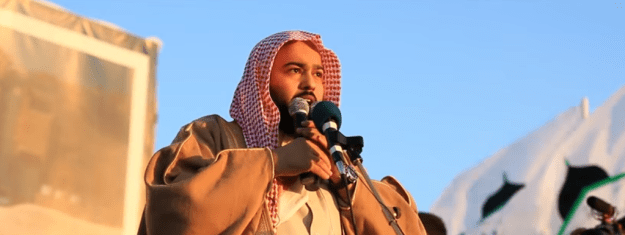
Abdallah al-Muhaysini at a rally for Hay'at Tahrir al-Sham, 3 February 2017

Abdallah al-Muhaysini at a rally for Hay’at Tahrir al-Sham, 3 February 2017

On 28 January, as a part of its long-term strategy of integrating with, and ultimately co-opting, the Syrian rebellion, al-Qaeda shifted ground again and merged into a wider spectrum of insurgent groups, many of them jihadi in character, but many not, united under the banner of Hay’at Tahrir al-Sham (HTS). One of the non-jihadi groups to join HTS was Harakat Nooradeen al-Zengi, which became infamous in July 2016 after it beheaded one of the Bashar al-Assad regime’s child soldiers on video. This has aroused some controversy in jihadi circles, and today a statement by a jihadi ideologue, Abu Mahmud al-Filistini, who lives in London, was circulating explaining why HTS was right to take in al-Zengi. The statement was entitled, “Clearing the Doubts Regarding Nooradeen al-Zengi Uniting with Hay’at Tahrir al-Sham,” and is reproduced below. Continue reading

What to Expect in Syria in 2017

By Kyle Orton (@KyleWOrton) on January 25, 2017

Syria has broken down as a functioning entity. There were some who saw in the takeover of Aleppo City last month by the coalition of states and militias that supports Bashar al-Assad’s regime the beginning of the end of the war. The pro-Assad coalition will make further territorial gains in 2017, but peace—even the peace of the graveyard—is still a long way off, and unlikely to ever arrive while Assad remains in power. The West, unwilling and apparently unable to remove him, nonetheless has vital interests in Syria that cannot be outsourced and must be secured by navigating a fragmented state. Continue reading

Jihadist Profile of Abu Bakr al-Baghdadi

By Kyle Orton (@KyleWOrton) on January 23, 2017

A short biography of the “Caliph” of the Islamic State (IS), Ibrahim al-Badri (Abu Bakr al-Baghdadi), was leaked online by the group in July 2013. A rough translation is reproduced below.

Continue reading

Trump Might Continue Obama’s Dangerous Syria Policy

Originally published at The Henry Jackson Society

By Kyle Orton (@KyleWOrton) on November 24, 2016

There is not yet any clarity with regard what Donald Trump would do about Syria once he becomes President. Virtually everything about the incoming administration is in the “wait and see” phase. Still, on the current evidence, Trump’s Syria policy would appear to be a continuation of President Barack Obama’s policy of prioritizing the threat of the Islamic State (IS) and other non-state Sunni jihadist groups, while effectively aligning with the pro-regime coalition, made up of Russian air power and a ground force led by the Islamic Republic of Iran, stitched together out of the battered remnants of Bashar al-Assad’s army and his sectarian militias, Iranian paramilitary and regular forces, and foreign Shi’a jihadist groups under Iran’s control. The only potential difference is that Trump may formally repudiate the anti-Assad forces. The effect of this would be to destroy the mainstream Syrian opposition and empower al-Qaeda, but it would not bring stability to Syria. There are hints, however, that Trump is recruiting senior officials who will alter this policy. Continue reading

Russia Moves in For the Kill in Syria

Originally published at The Henry Jackson Society

By Kyle Orton (@KyleWOrton) on October 21, 2016

Vladimir Putin’s Russia is “deploying all of the Northern fleet and much of the Baltic fleet in the largest surface deployment since the end of the Cold War,” a NATO diplomat told Reuters on Wednesday night. These Naval assets are designed to buttress a final offensive by the remnants of Bashar al-Assad’s regime in Syria, which is effectively controlled on the ground by the Islamic Republic of Iran and an assortment of foreign Shi’a jihadists, against the insurgent-held east of Aleppo city, crushing once and for all the strategic threat posed by the rebellion to the regime, a threat that had already been all-but ended in the first months of Russia’s intervention. Nearly a year ago the U.S. began a political process with the Russians intended to end the war and begin a political transition. Moscow has subverted this process, using force to buttress its political efforts to secure Assad in power. The timing of this attack is seemingly intended as one final humiliation for President Barack Obama. Continue reading

Turkey’s Intervention in Syria Improves the Prospects for Peace

By Kyle Orton (@KyleWOrton) on August 25, 2016

Picture put out by Faylaq al-Sham of Jarabulus soon after the Islamic State was expelled (Telegram, 24 August 2016)

Picture put out by Faylaq al-Sham of Jarabulus soon after the Islamic State was expelled (Telegram, 24 August 2016)

After a horrific suicide bombing by the Islamic State (IS) at a Kurdish wedding in eastern Turkey had slaughtered more than fifty people on Saturday, Turkey moved to expel IS from Jarabulus in eastern Aleppo Province at about 4 AM on Wednesday morning. IS was swept from this last major border town in Syria, a key gateway for resources to the outside world, around ten hours later.

Operation EUPHRATES SHIELD saw Turkey put troops and tanks over the border publicly for the first time, and allow the Free Syrian Army (FSA)-branded and other mainstream Syrian rebels who have been battling IS for years to use Turkish territory to launch the assault. It was supported by airstrikes from the international anti-IS coalition.

For Turkey, this is a strong indication of a change in her threat-perception vis-à-vis IS, but it is also about a (correctly) perceived threat of what was to follow IS. Continue reading