Tag Archives: Iran

The Criminality of the Syrian Regime

By Kyle Orton (@KyleWOrton) on 29 April 2018
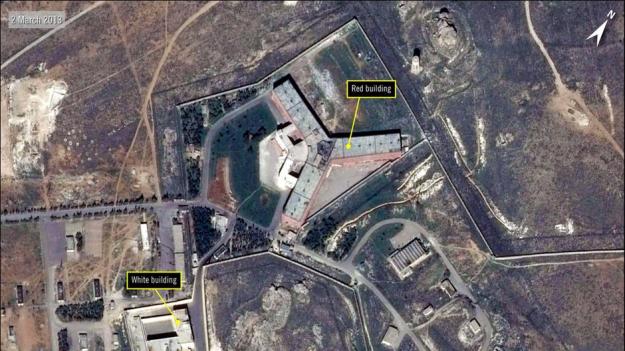
A satellite image of Sednaya prison, about 20 miles north-east of the presidential palace. CNES and ASTRIUM / Amnesty International via AFP

To accompany the release of “Syria’s Slaughterhouses”, a film by TRT World’s “Off The Grid”, I was asked to give an overview of the available evidence of the Assad regime’s crimes against humanity.

The launching of a limited punitive raid against the Syrian regime of Bashar al Assad for the use of poison gas has brought some attention to the regime’s crimes. The regime’s visible crimes are numerous and devastating.

In addition to using weapons of mass destruction, fighter jets have levelled ancient cities, sieges have starved populations into submission, and improvised explosives like barrel bombs have maimed thousands. These tactics are part of what UN investigators have called a “systematic and widespread attack against [the Syrian] civilian population”.

The UN commission recently noted that what the Assad regime has done amounts to crimes against humanity, including extermination, murder, rape, and torture.

What does not get enough attention is the part of Assad’s criminality that is most difficult to see: that which takes place in the prisons, a vast network of concentration camps where torture and murder is routine. Continue reading
As its Insurgency Gathers Pace, Islamic State Wants to Further Intensify Operations

By Kyle Orton (@KyleWOrton) on 26 April 2018

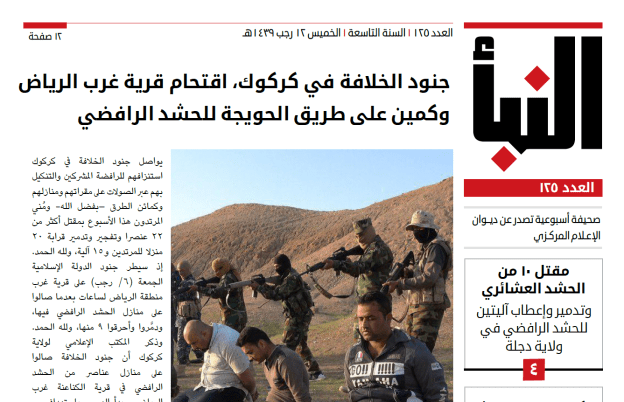
A-Naba 125

The Islamic State (IS) formally turned from statehood to insurgency last October. The 125th edition of Al-Naba, IS’s weekly newsletter, released on 29 March 2018, contained a number of indicators that the jihadists’ guerrilla warfare is gaining considerable steam—and that IS thinks it should gain more. Continue reading

The Islamic State Spokesman Directs His Fury At Regional Governments

By Kyle Orton (@KyleWOrton) on 22 April 2018

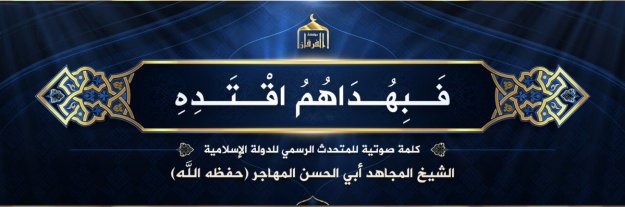
An audio statement by the official spokesman of the Islamic State (IS), Abu Hassan al-Muhajir,[1] was released today. The speech was entitled, “By their example, be guided” or “So From Their Guidance Take An Example”—drawn from Qur’an 6:30. Abu Hassan continued the themes that have been cropping up in IS messaging and propaganda for the last few months that have more firmly reoriented IS away from its foreign attacks campaign toward a more local focus in the Middle East. IS has been stressing its post-caliphate insurgency—concentrated at the present time in Iraq, but with notable operations in Syria—and its war for influence with regional rivals for Muslim loyalty, whether governments such as Egypt and particularly Saudi Arabia, or other Islamist movements like Harakat al-Muqawama al-Islamiyya (HAMAS) in Gaza. Continue reading

What Is Trump Thinking About Syria?

By Kyle Orton (@KyleWOrton) on 18 April 2018

Egyptian ruler Abdelfattah al-Sisi, Saudi King Salman, and President Donald Trump in Riyadh on 22 May 2017 (image source)

Two days ago, The Wall Street Journal reported that President Donald Trump has been exploring plans to replace American troops in the areas of Syria held by the Coalition partner force, the “Syrian Democratic Forces” (SDF), with troops from the Arab states. The problems with this proposal, even in the rudimentary form it is presented, are manifold. It also feeds into the broader problem of Trump’s inconsistent messaging about Syria—or, more precisely, his failed efforts to balance domestic messaging, which calls for what was once referred to as “nation building … at home”, and his foreign messaging that needs to emphasise U.S. constancy to see through the mission to defeat the Islamic State (IS) by, among other things, stabilising and reconstructing Syria. Continue reading

Trump’s Syria Strike Upheld an Important International Norm, But Did No More

A version of this article was published at The Sunday Express

By Kyle Orton (@KyleWOrton) on 15 April 2018

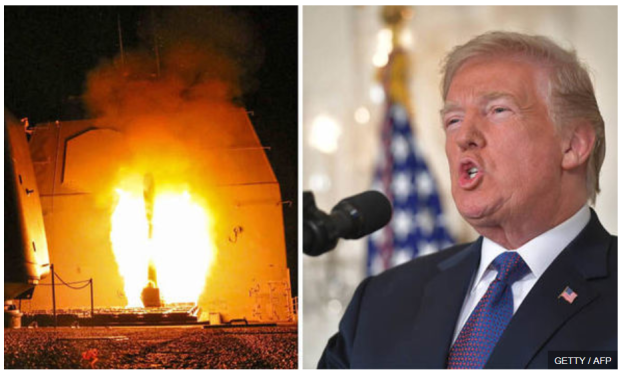
Britain joined the United States and France in a round of punitive military strikes in Syria on Friday night. The Coalition was retaliating for a poison gas attack by Bashar al-Assad’s regime in the Duma area of Damascus on 7 April. The three targets the Allies went after were related to his chemical weapons program. This was a just operation that upheld the norms of the international system, but there are disturbing signs that it will not be linked to a course correction in Syria. Continue reading

Saudi Newspaper: Make Peace with Israel, Confront Iran

By Kyle Orton (@KyleWOrton) on 14 April 2018

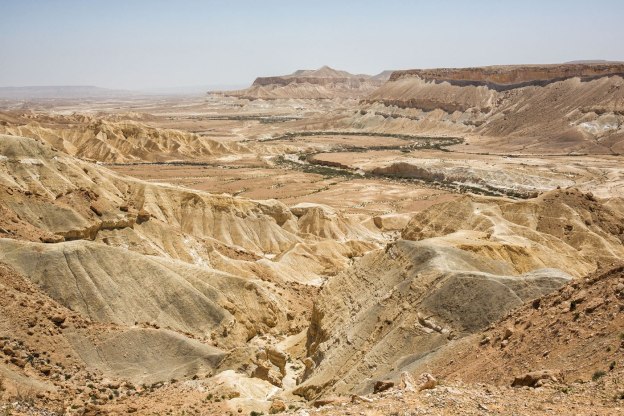
Negev Desert, Israel (image source)

Al-Riyadh is the leading daily newspaper in Saudi Arabia. While Al-Riyadh’s exact status is contested, there is little doubt it is close to the Saudi government and some identify it as a “semi-official” in the Kingdom. It was therefore very interesting that the paper hosted an opinion editorial by Dr. Ahmad al-Jamiya on 14 April, republished below, which made the case for the House of Saud to make peace with the State of Israel as part of a policy to halt and reverse the Iranian revolution in the Middle East. Continue reading

Trump Should Not Fear Russia In Responding to Assad’s Chemical Attack

By Kyle Orton (@KyleWOrton) on 10 April 2018

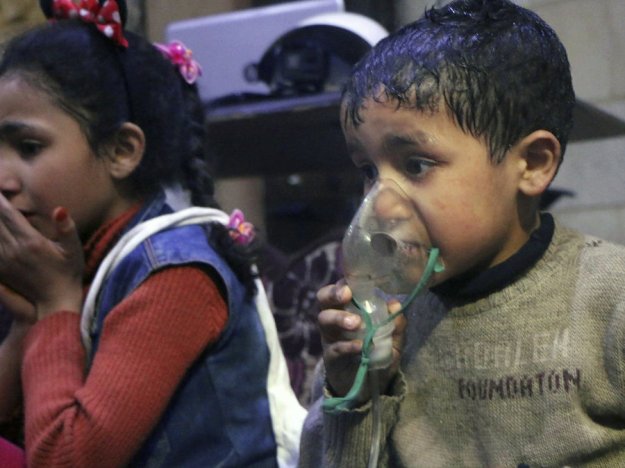
A child receiving oxygen after a poison gas attack in Douma, near Damascus, Syria | SYRIAN CIVIL DEFENSE WHITE HELMETS VIA AP

A year to the day after the United States struck at a Syrian airbase to punish Bashar al Assad for a chemical weapons attack, the regime has suspectedly carried out another devastating chemical atrocity. Signs are that the United States will, again, respond with force, attempting to rescue some part of the fraying international taboo against the use of poison gas. The larger question remains how Assad has gotten away with this for so long—and why murder only with certain categories of munitions prompts retaliation. Continue reading

How the Islamic State Uses History to Justify Cruelty

By Kyle Orton (@KyleWOrton) on 2 April 2018

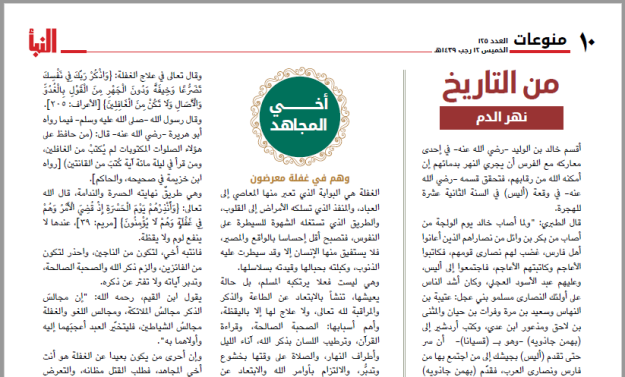
Al-Naba 125, page 10

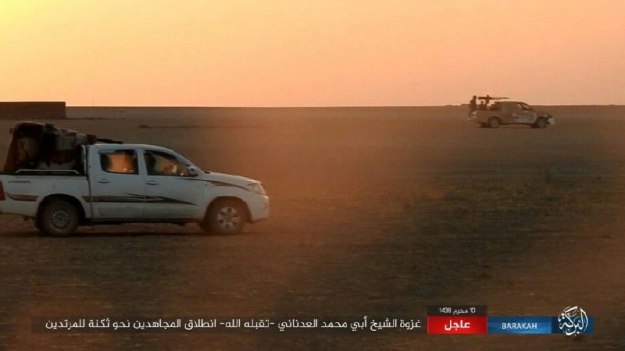
The 125th edition of Al-Naba, the Islamic State’s (IS) weekly newsletter, has an article on page 10, “From History: A River of Blood”, which relays a story that gives a good example of how IS uses Islamic historiography to justify its brutality. Continue reading

Al-Qaeda Denounces Saudi Arabia for its Closeness to America

By Kyle Orton (@KyleWOrton) on 31 March 2018

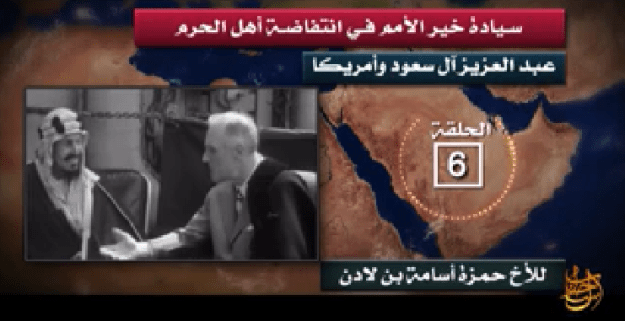
Hamza bin Ladin, son of Usama and one of al-Qaeda’s rising media stars, released an audio speech on 31 March, labelled as the sixth edition of his “Sovereignty of the Best of Nations Is In the Uprising of the People of the Haram” series. Oddly, the last speech in the series, released on 18 January, was labelled as the fourth instalment. This speech also focused on delegitimising the Saudi government, in this case by laying out the history of its close relations with the United States and the work the Saudis have done to suppress jihadism. An English-language transcript was released by al-Qaeda’s As-Sahab Media and is reproduced below with some editions in transliteration. Continue reading

The Islamic State’s First Leader Explains How to Deal With Enemies

By Kyle Orton (@KyleWOrton) on 22 March 2018

The first leader of the Islamic State (IS) after it was declared in 2006, Hamid al-Zawi (Abu Umar al-Baghdadi), gave a series of twenty-three speeches until he was killed in April 2010. Al-Zawi’s speeches laid out the strategic and ideological vision of the movement. The fifth speech, “And If You Cease, It Will Be Better for You” or “Should You Desist [in attacking the Islamic State], Then That Is Better for You”, was given as an audio statement on 8 July 2007. An English transcript of the speech was released by IS’s Al-Furqan Media and is reproduced below with some important and interesting sections highlighted in bold. Continue reading