Tag Archives: Iran

Islam’s First Terrorists, Part 2

By Kyle Orton (@KyleWOrton) on August 18, 2015

This is the second of a six-part series. For part one, see here

2. Alamut

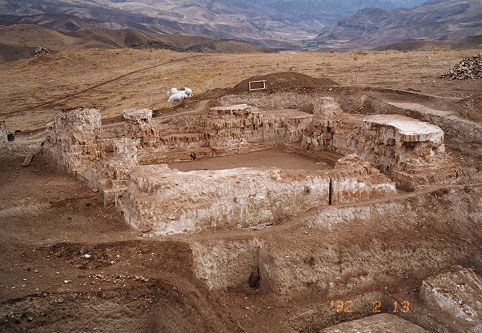
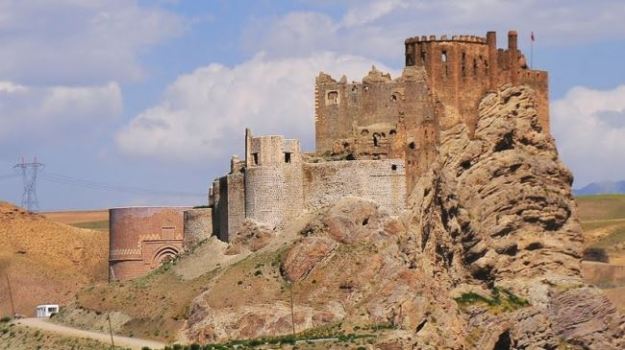
Alamut fortress, northern Iran, the headquarters of the Nizaris

The Origins of the Nizaris in Persia

Hassan-i Sabbah would lead the Nizaris in Persia. Recruited in Rayy, near Tehran, by the chief dawa (missionary) of the Fatimids in 1072, Hassan-i Sabbah went to Egypt between 1078 and 1081, before returning to Iran to proselytize. In 1090, Hassan-i Sabbah won control of the fortress of Alamut in north-west Iran, which would become the headquarters of the Nizaris. Throughout the 1090s, the Nizaris gained control of further castles in Daylam, specifically the Rudbar area; in the southwest of Iran between Khuzestan and Fars; and in the east in Quhistan. Most impressive was the capture of the fortress at Shahdiz, near Isfahan, in 1096-7.

The Daylamis were a notoriously rebellious and hardy people; one of the last to convert to Islam, they were then among the first to assert their independence within it, first politically by forming a separate dynasty and then religiously by converting to Shi’ism. Continue reading

Islam’s First Terrorists, Part 1

By Kyle Orton (@KyleWOrton) on August 17, 20151

Book Review: The Assassins: A Radical Sect in Islam (1967) by Bernard Lewis

Abstract

The fourth Caliph, Ali, was assassinated during a civil war that his supporters, Shi’atu Ali (Followers of Ali), lost to the Umayyads, who thereafter moved the capital to Damascus. The Shi’a maintained that the Caliphate should have been kept in the Prophet’s family; over time this faction evolved into a sect unto themselves, which largely functioned as an official opposition, maintaining its claim to the Caliphate, but doing little about it. Several ghulat (extremist) Shi’a movements emerged that did challenge the Caliphate. One of them was the Ismailis. Calling themselves the Fatimids, the Ismailis managed to set up a rival Caliphate in Cairo from the mid-tenth century until the early twelfth century that covered most of North Africa and western Syria. A radical splinter of the Ismailis, the Nizaris, broke with the Fatimids in the late eleventh century and for the next century-and-a-half waged a campaign of terror against the Sunni order from bases in Persia and then Syria. In the late thirteenth century the Nizaris were overwhelmed by the Mongols in Persia and by the Egyptian Mameluke dynasty which halted the Mongol invasion in Syria. The Syrian-based branch of the Nizaris became known as the Assassins, and attained legendary status in the West after they murdered several Crusader officials in the Levant. Attention has often turned back to the Assassins in the West when terrorist groups from the Middle East are in the news, but in the contemporary case of the Islamic State (ISIS) the lessons the Nizaris can provide are limited. Continue reading

America Abandons the Syrian Revolution

By Kyle Orton (@KyleWOrton) on August 14, 2015

1

In the last week, two events have provided further evidence that the United States has effectively sided with the Assad regime in Syria, acting effectively as the regime’s air force, and that America’s alliance with Assad is part of the broader policy of détente with Iran, facilitated by the nuclear deal, which has ceded Syria to Iran as a sphere of influence. Continue reading

A Response to Criticism: Why the Ex-Saddamists in the Islamic State Matter

By Kyle Orton (@KyleWOrton) on August 10, 2015

Abu Ayyub al-Masri and Abu Omar al-Baghdadi: ISIS's co-leaders, 2006-10

Abu Ayyub al-Masri and Abu Omar al-Baghdadi: ISIS’s co-leaders, 2006-10

In the Jerusalem Post on Sunday, Seth Frantzman wrote in opposition to the idea that the ex-military-intelligence officials of the Saddam Hussein regime had contributed significantly to the success of the Islamic State (ISIS) in taking over large swathes of Syria and Iraq. Much of what Frantzman says, about the overestimation of ISIS and Iran’s growing Imperium pushing Sunnis into ISIS’s camp, is unarguable, but he is in error about the time-frame of the ex-Saddamists’ migration into ISIS and underestimates their impact. Continue reading

Obituary: Robert Conquest

By Kyle Orton (@KyleWOrton) on August 5, 2015

1

Few men did more than the historian Robert Conquest to refute the lies of the Soviet Union, undermining its ideology and propaganda, therefore its appeal, and ultimately its regime. Indeed, at the final meeting of the Soviet Central Committee a Stalinist hack described Conquest as “anti-Sovietchik No. 1“; a compliment if ever there was one. Continue reading

Reassessing the Saudi-led Intervention in Yemen

By Kyle Orton (@KyleWOrton) on July 24, 2015

1

The Saudi-led Operation DECISIVE STORM began in Yemen on March 25 as a campaign of airstrikes against the Iran-backed Houthis, to weaken them and re-install the president, Abd Rabbo Mansour Hadi, who was overthrown by the Houthis last September.

In April, I wrote in support of the Saudi-led operation for: (1) having drawn a line against Iran’s imperialism after Lebanon, Syria, and Iraq; (2) potentially decreasing the growth of the Islamic State (ISIS) by providing Sunnis, in Yemen and beyond, with an alternative form of resistance to Iran’s encroachments; and (3) offering a chance for more stability in Yemen, which was then in free fall with Iran, al-Qaeda, and ISIS capitalizing on the chaos. Continue reading

The Iran Deal: More Terrorism And An Eventual Bomb—And That’s If It Holds

By Kyle Orton (@KyleWOrton) on July 17, 2015

Published at The Independent

1

With all the leaks and the numerous “interim” deals, the nuclear deal—the Joint Comprehensive Plan of Action (JCPOA)—made with Iran on July 14 contained few surprises. The deal makes Iran a threshold nuclear-weapons regime for its duration and smooths the path to an overt nuclear-weapons capacity afterward. In the meantime, it has given Iran extra resources for the export of terrorism. And that’s just if Iran keeps the deal. Continue reading

America Not Training Syria’s Rebels Isn’t “Failure”; It’s Policy

By Kyle Orton (@KyleWOrton) July 13, 2015

Syrian rebels

President Obama gave a speech on Monday about the progress of the United States-led military campaign against the Islamic State (ISIS) in which he said that America would “do more to train and equip the moderate opposition in Syria.” This is a promise that has been made repeatedly made and repeatedly broken. The President’s strategy of détente with Clerical Iran has given Syria to Tehran as a sphere of influence—which precludes the U.S. building up a viable alternative to both ISIS and the murderous Assad regime, which has been effectively under Iran’s control since late 2012. Continue reading

Is Ahrar a-Sham a “Moderate” Syrian Rebel Group?

By Kyle Orton (@KyleWOrton) on July 12, 2015

Ahrar a-Sham

To answer my headline simply: no, Ahrar a-Sham’s leadership is not what anybody in the West means by “moderate” Syrian rebels that could be supported.

The question is provoked by an op-ed in The Washington Post last night signed by Labib al-Nahhas, Ahrar’s foreign political relations officer, the culmination of a public-relations campaign by Ahrar to rebrand itself as the mainstream alternative to the Islamic State (ISIS) and the Assad tyranny we’ve all been waiting for. Continue reading

Nukes and Empire: The West is on the Brink of Giving Iran Everything it Wants

By Kyle Orton (@KyleWOrton) on July 6, 2015

In this photo released by official website of the Iranian supreme leader's office, Iranian supreme leader Ayatollah Ali Khamenei delivers a speech for the Iranian New Year, Nowruz, in Tehran, Iran, Wednesday, March 20, 2013. Nowruz marks the first day of spring and the beginning of the year on the Iranian calendar. (AP Photo/Office of the Supreme Leader)

The United States and Iran are seemingly days from signing an agreement on Iran’s nuclear program that has been brought about by a series of American concessions. If the deal is signed on the present terms it will effectively dismantle the sanctions against Iran and the international legal regime that recognizes the Iranian regime as an outlaw, will leave Iran on the threshold of nuclear weapons, and will provide legitimacy for, and billions of dollars toward, Iranian hegemony in the Middle East.

Continue reading