The New York Post had a symposium on the progress of the U.S.-led campaign against the Islamic State. This is my contribution:
The American-led effort to defeat the Islamic State is yielding significant tactical and military results. But the campaign is deeply flawed: It’s being waged as if the politics can be worked out after the fall of ISIS’s statelet, and in the process providing ISIS the conditions that will ensure its revival. Continue reading →
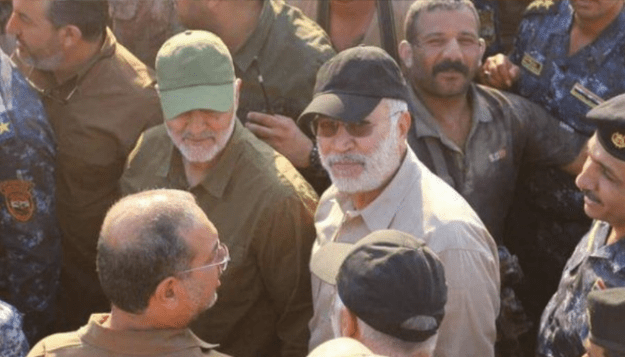
Qassem Suleimani and Jamal Ebrahimi (Abu Mahdi al-Muhandis) touring a battlefront in Fallujah
The Iraqi government announced an operation to clear the Islamic State (IS) out of Fallujah on the evening of 22 May. In the intervening three weeks, IS have lost numerous villages and towns around Fallujah and Iraqi counterterrorism forces are said to have entered Fallujah proper in the south.
As the first major city IS took on its way to proclaiming a caliphate in June 2014, the pace of the operation is not the most troubling element. What is disturbing—and what may ultimately undo any military success against IS—is the overtly sectarian nature of the offensive, led not by professional troops loyal to Baghdad, but by militias loyal to Iran and the extremist ideology of Tehran’s clerical regime. Continue reading →
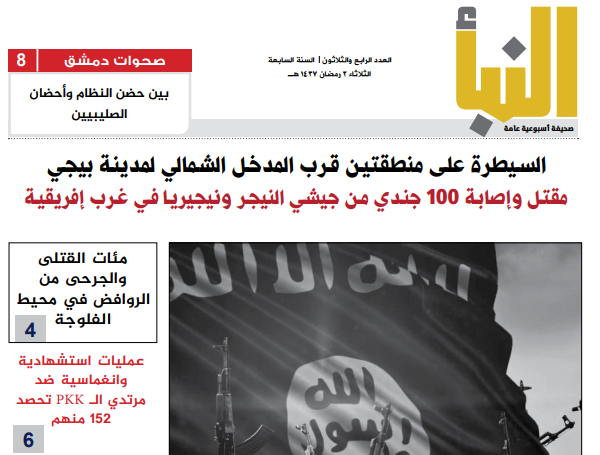
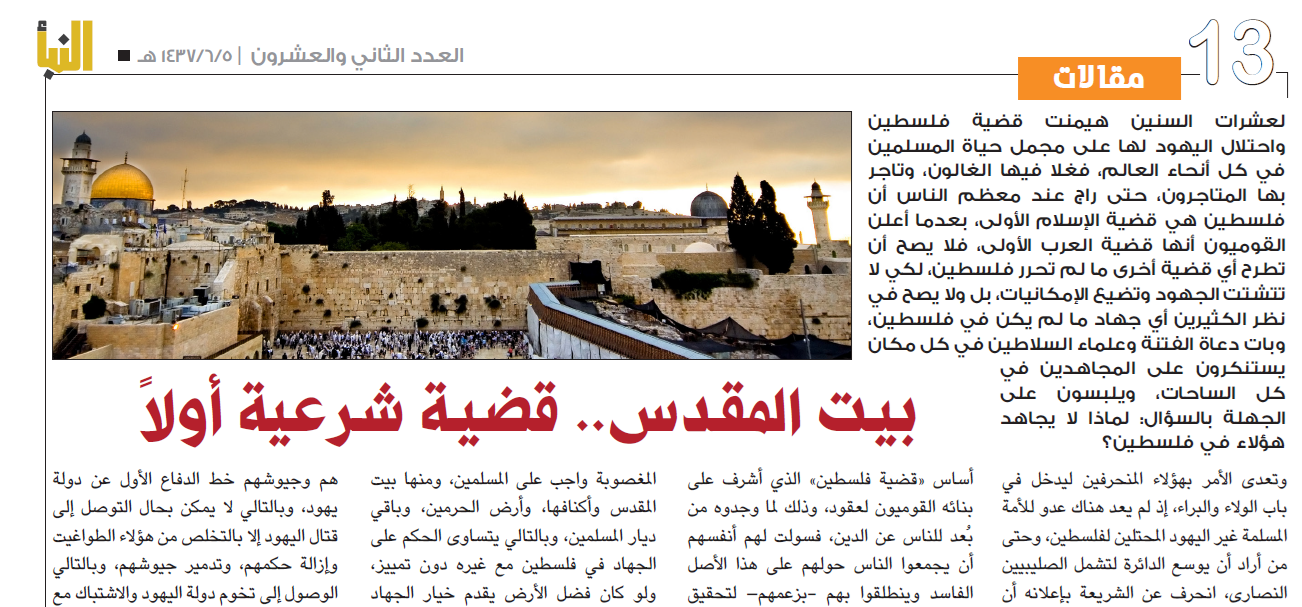
First page of the 34th edition of the Islamic State newsletter, al-Naba
The Islamic State’s (IS) spokesman, Taha Falaha (Abu Muhammad al-Adnani), gave a speech on 21 May that prepared the ground ideologically for the end of IS’s statelet and a return to the deserts where the organization survived after the surge-and-sahwa drove it from the urban zones of Iraq in 2007-08. Al-Naba, IS’s newsletter, is printed within the caliphate on Saturdays and distributed online on Tuesdays. Al-Naba’s 34th edition, published within the territories on 4 June and put on the internet on 7 June, echoed Falaha’s theme that the caliphate was a cause that would outlast the loss of territory since it was now embedded in the hearts of a generation of Muslims, and al-Naba also took a swipe at al-Qaeda and jihadi groups like Ahrar al-Sham that believe the path to an Islamist polity is bottom-up, through the building of popular consent. The Naba editorial is reproduced below with some important sections highlighted in bold. Continue reading →
Taha Falaha (Abu Muhammad al-Adnani) is the governor Islamic State-held territory in Syria and oversees the foreign attacks, a roster of duties which indicates that Falaha so powerful that he is effectively the caliph’s deputy after the demise of Abd al-Rahman al-Qaduli (Abu Ali al-Anbari) in March. Falaha is also IS’s official spokesman, and on 21 May 2016 he gave a very significant speech entitled, “That They Live By Proof”. The speech, released by Al-Hayat Media Centre, is reproduced below with some minor alterations in transliteration, some important sections highlighted in bold, and some notes added for explanation.
Falaha made three major points. First, Falaha was especially adamant that territorial control by IS should not be considered a measure of IS’s success: it lost all urban holdings and went into the deserts last time, after the strategic defeat in 2008, but it held to its cause and America withdrew, and this ideological cohesiveness and determination led it to be more powerful than ever within five years. Second, Falaha made use of the savage conduct of the coalition made up of the Assad regime, Iran, and Russia—and the Western indifference to same—to argue for Sunnis to see IS as a protective barrier against such sectarian foes. And, third, Falaha called for foreign attacks by Western Muslims, saying that if IS’s loyalists were unable to journey to IS-held areas this should not be considered a problem since attacks in the West are “more beloved to [IS] than the biggest act done [within the caliphate]”. Continue reading →
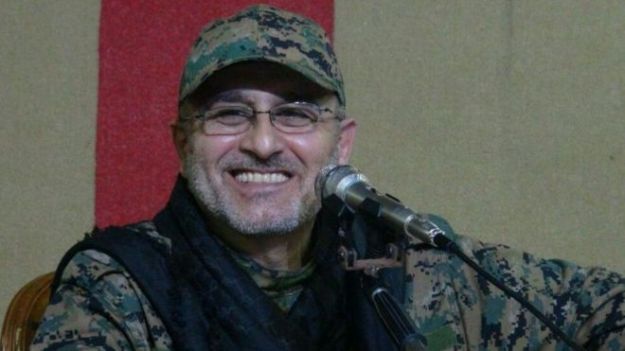
Hizballah’s military commander (2008-2015) Mustafa Amine Badreddine
Mustafa Badreddine, the military commander of Hizballah, was announced killed in Syria on 13 May. This is the third major casualty of the founding generation: Imad Mughniyeh, Badreddine’s predecessor and also his cousin and brother-in-law (Mughniyeh married Saada, Badreddine’s sister), was killed in February 2008 in Damascus in an operation led by MOSSAD and supported by the CIA, and Hassan al-Laqqis, who had become one of the Party of God’s military officials in Syria, was gunned down outside his home in Beirut in December 2013. For all the speculation about “Ahrar al-Sunna Baalbek Brigade” and its links to Kataib Abdullah Azzam and al-Qaeda—or Saudi intelligence, as Hassan Nasrallah had it—the likeliest suspect was never in doubt. Hizballah has also lost other senior and propagandistically important men like Samir Kuntar, who was killed in an explosion in Damascus in December 2015. Again, however, there seemed little doubt—even from Hizballah—that Israel had done this. Continue reading →
This essay, written to tie together my work on the relationship between the Saddam Hussein regime and the Islamic State, was completed last summer and submitted to an outlet, where it entered a form of development hell. After giving up on that option late last year, the opportunity arose to get a shorter version published in The New York Times in December. But I procrastinated too long over what to do with the full essay and a recent change in my work situation means I no longer have the bandwidth to go through the process of finding it a new home, so here it is.
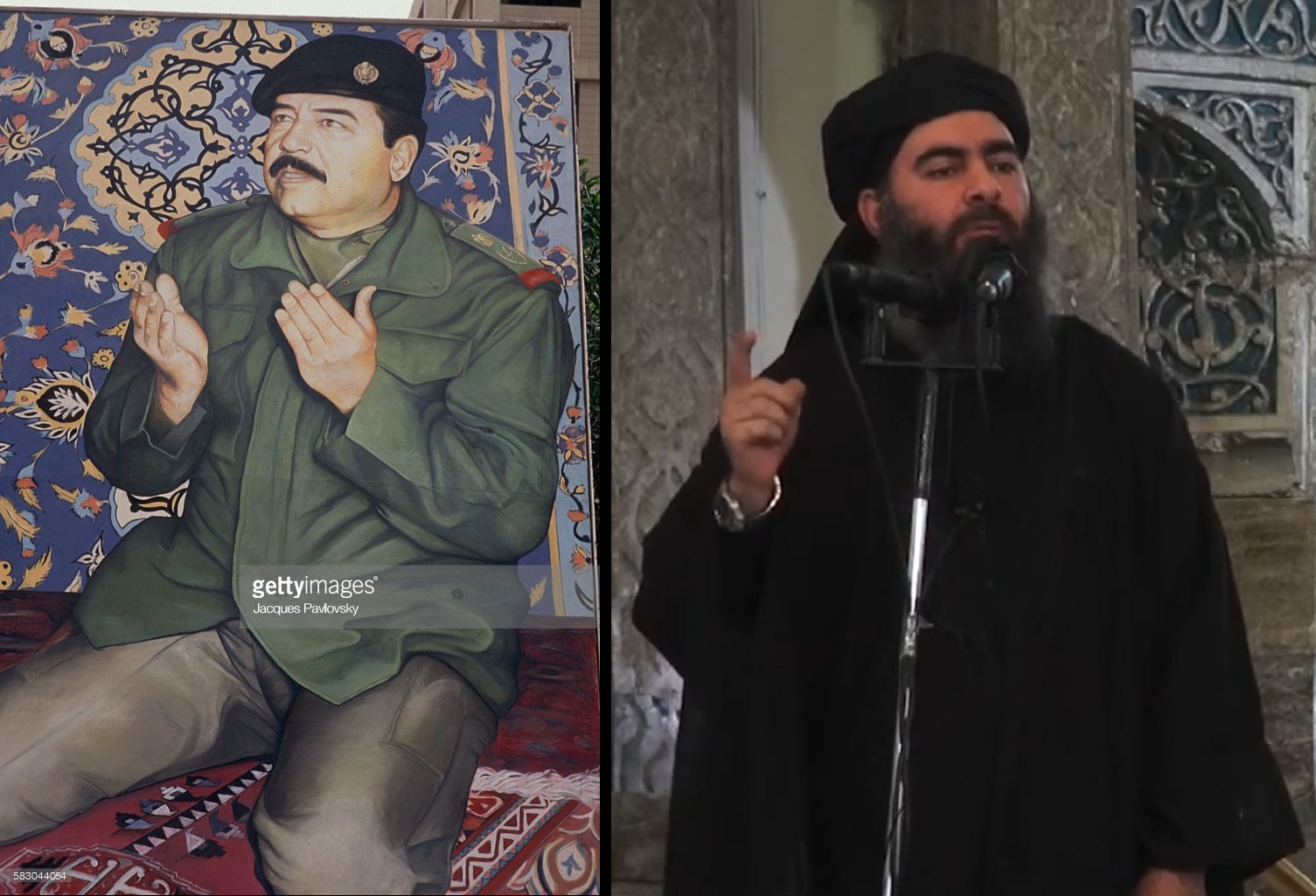
“Abu-Bakr al Baghdadi is a product of the last decade of Saddam’s reign,” argues Amatzia Baram, a scholar of Iraq. He is correct in at least three ways. First, in its last decade in power, the Iraqi Ba’ath regime transformed into an Islamist government, cultivating a more religious, sectarian population on which the Islamic State (ISIS) could draw. Part of Saddam Hussein’s “Faith Campaign” also involved outreach to Islamist terrorists, including al-Qaeda, which meant that the synthesis of Ba’athism and Salafism that fused into the Iraqi insurgency after the fall of Saddam was already well advanced by the time the Anglo-American forces arrived in Baghdad in 2003. Second, the ISIS leadership and military planning and logistics is substantially reliant on the intellectual capital grown in the military and intelligence services of the Saddam regime. And finally, the smuggling networks on which ISIS relies, among the tribes and across the borders of Iraq’s neighbours, for the movement of men and materiel, are directly inherited from the networks erected by the Saddam regime in its closing decade to evade the sanctions. The advantages of being the successor to the Saddam regime make ISIS a more formidable challenge than previous Salafi-jihadist groups, and one that is likely to be with us for some time.
An article in the twenty-second edition of al-Naba, the Islamic State’s (IS) newsletter, released on 15 March 2016, explained why the group has not made fighting Israel a priority.
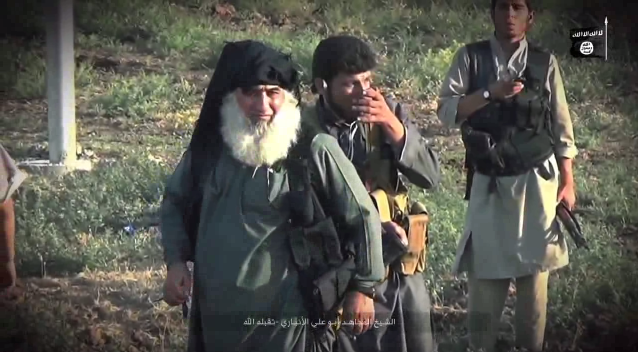
Abd al-Rahman al-Qaduli (Abu Ali al-Anbari) in an Islamic State video in May 2016
United States Secretary of Defense Ashton Carter announced this morning that he believed Abd al-Rahman Mustafa al-Qaduli, a senior leader of the Islamic State (IS), had been killed in a U.S. raid into Syria earlier this week. Al-Qaduli was “serving as a finance minister” and had been “responsible for some external affairs and plots,” said Carter. America is “systematically eliminating ISIL’s cabinet,” Carter went on, noting the alleged killing of Tarkhan Batirashvili (Abu Umar al-Shishani) two weeks ago, adding that al-Qaduli’s removal will “hamper” IS in conducting operations inside and outside its caliphate. Continue reading →
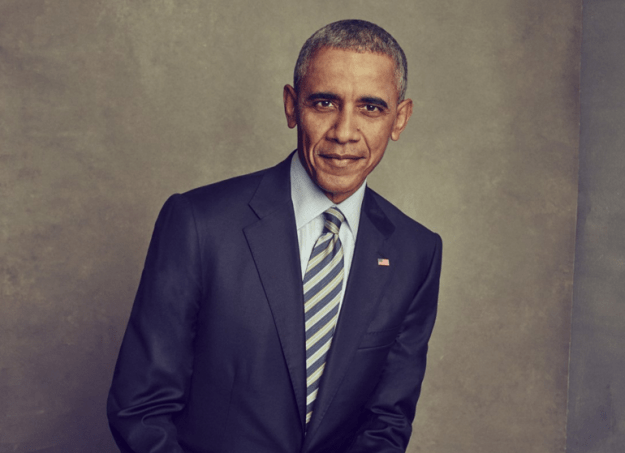
Yesterday, Jeffrey Goldberg’s latest interview with President Obama was published. There have been numerous worthwhile takes on what is a very revealing conversation, such as Max Boot and Nibras Kazimi, and it is very difficult to quarrel with the conclusion of David Frum that “the dominant theme of these interviews is that we, all of us, have grievously let down the president,” who has exactly one self-criticism: “Obama admits he does not make sufficient allowances for how unreasonable other people are.” What I think deserves most attention is that the President has finally aligned his rhetoric, especially on Iran, with his actual foreign policy. Continue reading →
Amr al-Absi, one of the most senior Islamic State (IS) leaders, was killed in an airstrike on 3 March, according to reports on social media and by the SITE Intelligence Group. Al-Absi—better known as Abu Atheer al-Absi or just Abu al-Atheer—exemplified several key dynamics at work in Syria.
Atheer was among the jihadi-Salafists released by the regime of Bashar al-Assad at the beginning of Syria’s uprising in an attempt to make self-fulfilling the regime’s claim that the opposition were terrorists, and was also a seminal figure in making Syria so dangerous for journalists that it allowed Assad and IS to shape the coverage as if Syria was a binary choice between them.
Atheer is among the longstanding ultra-extremists who shape and define IS spiritually, and he was crucial in more concrete terms in IS infiltrating and expanding in Syria, particularly by bringing in foreigners who are among the most ideologically driven category of IS members. Continue reading →


 Kyle Orton's Blog