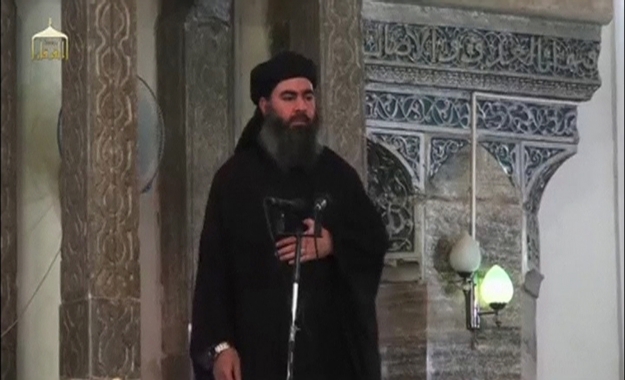
The leader of the Islamic State (ISIS), Abu Bakr al-Baghdadi, made his first public appearance on July 4, 2014, delivering the khutbat al-jum’a (Friday prayer) at the Great Mosque, also known as the Nuri Mosque or Zangi Mosque, in Mosul. A translation of al-Baghdadi’s speech was made by INSITE Blog on Terrorism and Extremism and is reproduced below.Continue reading →
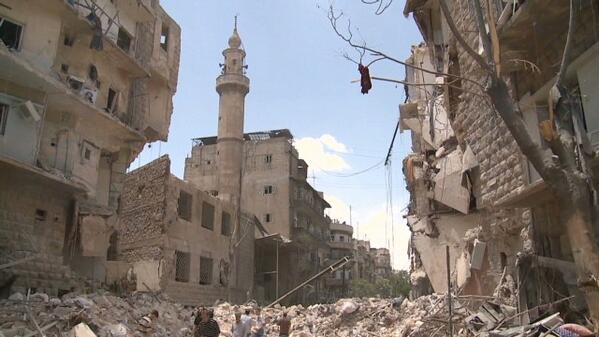
As we approach the forty month mark for the Syrian uprising the situation is grimmer than it has ever been. Not just the casualties: more than 200,000 people dead. Not just the physicaldevastation and mass-displacement of more than a third of the country. But now in military terms the rebellion is on the defensive in a way it has not been since it erupted at the end of 2011, after more than six months of peaceful protests.
As we enter the fortieth month of Syria’s ordeal, and with the renegade Zarqawi’ite network in Iraq finally declaring that its virtual ministries are being uploaded into a fully restored Caliphate extending from Raqqa to Tikrit, the most depressing thought of all is that it did not have to be this way. Continue reading →
Jordan’s King Abdullah: The West’s closest Arab ally—but for how long?
It has been a rough fortnight for Jordan. After the fall of Mosul, the Islamic State of Iraq and Syria (ISIS) announced an “unofficial” branch in Jordan and the Iraqi government surrendered its only legal border-crossing on the 110-mile frontier to tribal insurgents—opposed to ISIS, so far as can be told, but not without the danger they will be overwhelmed as has previously happened in areas like Fallujah, where the dam initially fell to local insurgents (albeit Ba’athists) and ISIS then pushed them out. Jordan has beefed up its border-defences but this has not stopped the speculationon whether Jordan, the “jewel in the ISIS crown,” will be the next domino to fall to the takfiris. Continue reading →
I was devastated to learn of Fouad Ajami’s death late last night. It was all the more shocking because nobody had known he was ill. I had noticed the decreased frequency of his columns in the Wall Street Journal but he was not a regular in any sense, writing one or two a month, so it was not wholly out of the ordinary and then he had returned last week for what it now transpires was the final time. Continue reading →
The Peshmerga (those who face death): the people’s army of Iraqi Kurdistan
President Obama met with Congressional leaders on Wednesday to brief them on a “comprehensive approach” to Iraq, which for now will not include airstrikes against the Islamic State of Iraq and Syria (ISIS) inside Iraq, “in part because”—as previously reported—”U.S. military officials lack sufficient information to hit targets that would shift momentum on the battlefield.” Obama has let this drag out so long that the Sahwa (Awakening), the Sunni Arabs who rose up against ISIS’s previous incarnations, al-Qaeda in Iraq (AQI) and the Islamic State of Iraq (ISI), are now either eliminated or mixed back in with ISIS and—crucially—other locally-focussed Sunni Islamist insurgent groups, notably the Sufi-Ba’athist Jaysh an-Naqshbandi. Defensible as this is, there are stronger reasons why the decision not to strike is correct.
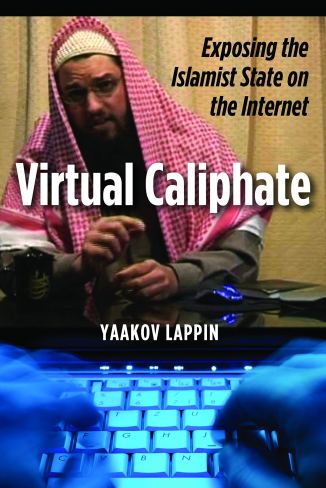
I have yet to read a book more prescient than Yaakov Lappin’s about events in Iraq in the last few days. Having sketched out the way Salafi-jihadists have created the ministries of a future Caliphate in cyber-format—the simple fact that “Al-Qaeda would not be in existence were it not for the pervasive presence of online jihadis”—Lappin finished by suggesting three options: (1) we manage to take down this virtual Empire; (2) we manage to weaken it in cyberspace; or (3) the jihadists “upload” this virtual State into the real world. Continue reading →
Traffic-jam as 150,000 people flee ISIS rule in Mosul
We might all hope to be vindicated so quickly. I wrote yesterday morning of the way the Iraqi government’s sectarianism and authoritarianism had created the space among Iraqi Sunni Arabs in which the Islamic State of Iraq and Syria (ISIS) could operate, and that I saw no way out of this, so one should expect escalating violence, chaos, and killing. By midday, Mosul, Iraq’s third city after Baghdad and Basra, had fallen to ISIS. Continue reading →
Whatever one thinks about the decision in 2003 to finish the war Saddam Hussein started by annexing Kuwait, serious people should be able to agree that the way the country was abandoned by the United States—first politically after 2009 and then militarily—was deeply irresponsible, not least because of the motives of this decision. Continue reading →
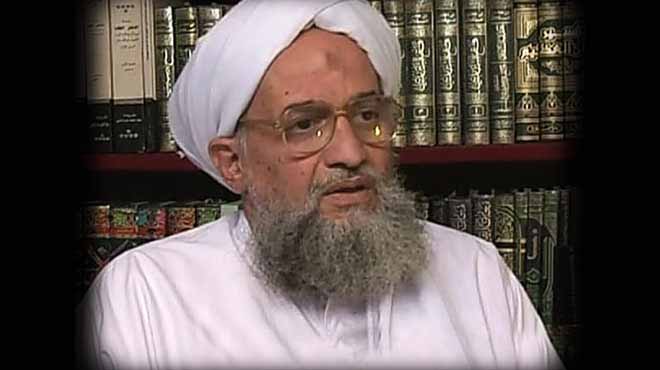
As-Sabah Media released a video on 2 May 2014 that contained a speech from Ayman al-Zawahiri, the leader of al-Qaeda, responding to the ferocious statement by Abu Muhammad al-Adnani, the spokesman of the Islamic State of Iraq and Syria (ISIS), which denied that ISIS was ever under al-Qaeda’s command and thus al-Zawahiri’s expulsion of ISIS from al-Qaeda in February was a meaningless gesture. Al-Zawahiri presents a compelling case to the contrary, drawing on documents sent by ISIS’s leaders, past and present, to al-Qaeda, some of which are public—taken in the raid that killed Usama bin Laden. Al-Zawahiri concludes with a call for ISIS to return to the fold, to accept al-Zawahiri’s order that ISIS leave Syria and return to Iraq—even if they think it is unjust—for the sake of jihadi unity and avoiding the shedding of Muslim blood. The speech is entitled, “Testimony to Preserve the Blood of the Mujahideen in Syria” (Shahada li-Haqn Dima al-Mujahideen bil-Sham). A rough translation is given below with some important sections highlighted in bold. Continue reading →




 Kyle Orton's Blog