By Kyle Orton (@KyleWOrton) on 20 June 2023

By Kyle Orton (@KyleWOrton) on 24 August 2022
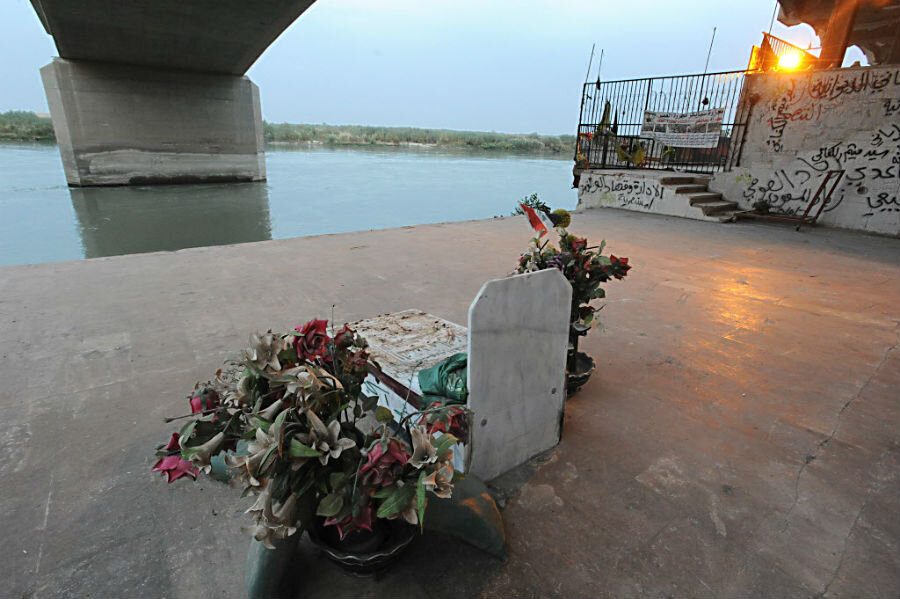
Area on the banks of the Tigris where the cadets of Camp Speicher were massacred by the Islamic State || Scott Peterson/The Christian Science Monitor
By Kyle Orton (@KyleWOrton) on 28 December 2019

In a long article last week, I looked at why the U.S. ran a formal occupation of Iraq for fourteen months after the fall of Saddam Husayn in April 2003, given that there had been an explicit pre-invasion decision not to have an occupation government. The short answer is that the occupation was installed through deception by the State Department, supported by the Central Intelligence Agency (CIA). State and CIA had argued for a protracted occupation in the Situation Room debates in 2002, but President George W. Bush had sided with the Pentagon, which advocated a rapid transfer of power to Iraqis. Having lost in the formal inter-agency process, the State Department succeeded by subversion in getting its way on the ground in Iraq. The disaster this caused in the mismanagement of post-Saddam Iraq was, as the article explained in detail, only the most serious impact of the toxic schism between State/CIA and the Pentagon, a factor whose import is difficult to overstate when examining how the Bush administration functioned. (This feud also at times drew in the Vice President’s Office, which tended to support the Pentagon.)
By Kyle Orton (@KyleWOrton) on 5 September 2018

In less than a week, it will be the seventeenth anniversary of al-Qaeda’s “Plane’s Operation”, the assault on the United States. It is a vertiginous enough reflection that many of us have been alive more years since 11 September 2001 than before it, and positively alarming that many of those who will soon move into the government, media, and other leading societal institutions will have been born after an event that still shapes so much of the international scene. As Anthony Summers and Robbyn Swan put it in The Eleventh Day: The Ultimate Account of 9/11 (2011), we are left with “the brief name ‘9/11’,” the context and meaning stripped away all this time later. The book is a useful overview of an event that should always be to some degree fresh in mind, though it is not without its problems in its analytical sections. Continue reading
By Kyle Orton (@KyleWOrton) on April 26, 2016
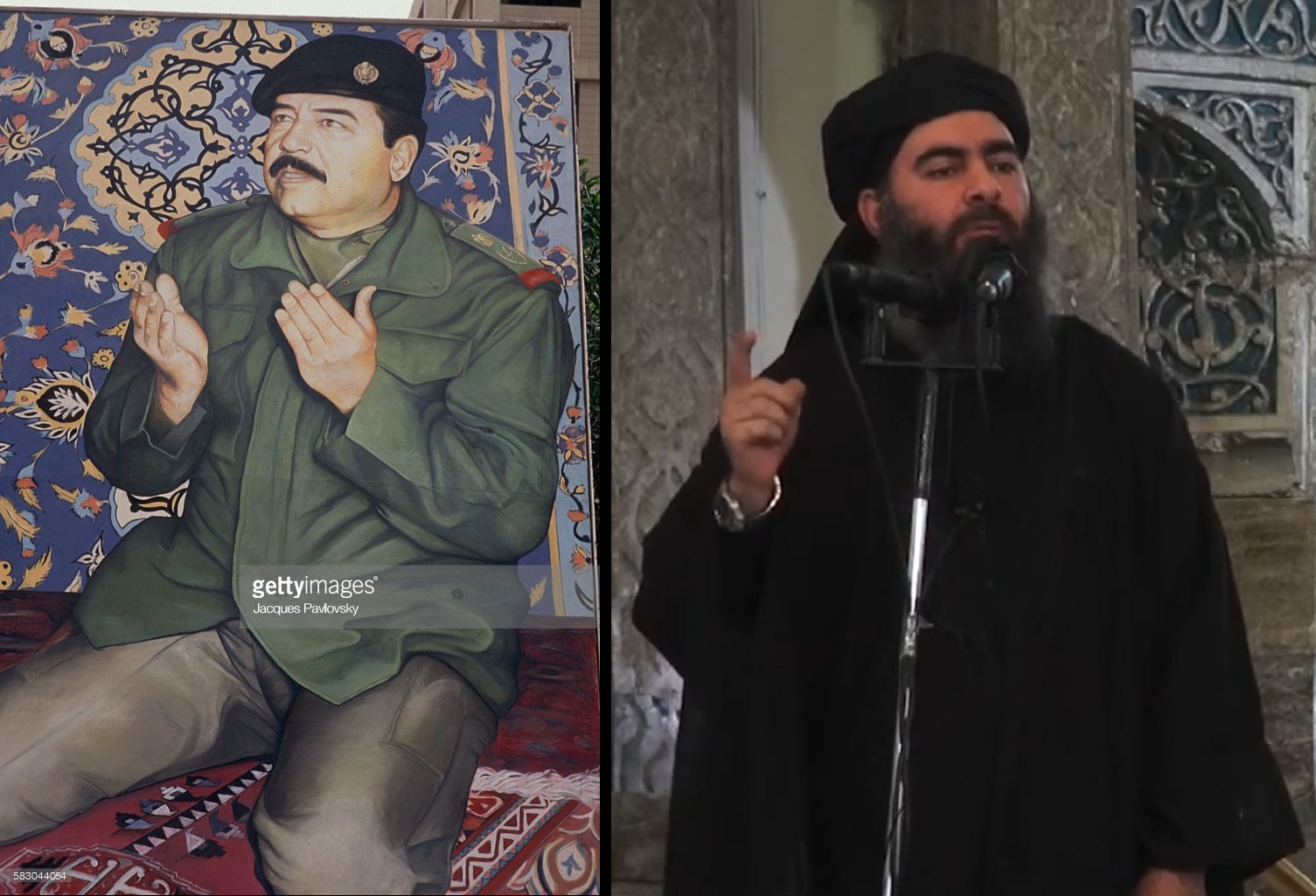
This essay, written to tie together my work on the relationship between the Saddam Hussein regime and the Islamic State, was completed last summer and submitted to an outlet, where it entered a form of development hell. After giving up on that option late last year, the opportunity arose to get a shorter version published in The New York Times in December. But I procrastinated too long over what to do with the full essay and a recent change in my work situation means I no longer have the bandwidth to go through the process of finding it a new home, so here it is.
“Abu-Bakr al Baghdadi is a product of the last decade of Saddam’s reign,” argues Amatzia Baram, a scholar of Iraq. He is correct in at least three ways. First, in its last decade in power, the Iraqi Ba’ath regime transformed into an Islamist government, cultivating a more religious, sectarian population on which the Islamic State (ISIS) could draw. Part of Saddam Hussein’s “Faith Campaign” also involved outreach to Islamist terrorists, including al-Qaeda, which meant that the synthesis of Ba’athism and Salafism that fused into the Iraqi insurgency after the fall of Saddam was already well advanced by the time the Anglo-American forces arrived in Baghdad in 2003. Second, the ISIS leadership and military planning and logistics is substantially reliant on the intellectual capital grown in the military and intelligence services of the Saddam regime. And finally, the smuggling networks on which ISIS relies, among the tribes and across the borders of Iraq’s neighbours, for the movement of men and materiel, are directly inherited from the networks erected by the Saddam regime in its closing decade to evade the sanctions. The advantages of being the successor to the Saddam regime make ISIS a more formidable challenge than previous Salafi-jihadist groups, and one that is likely to be with us for some time.
 Book Review: The Weight of a Mustard Seed: The Intimate Life of an Iraqi Family During Thirty Years of Tyranny (2009) by Wendell Steavenson
By Kyle Orton
(@KyleWOrton) on October 24, 2015
Wendell Steavenson’s The Weight of a Mustard Seed—the title drawn from a verse of the Qur’an about the difference between attaining heaven and hell—comprises five years of research about Kamel Sachet Aziz al-Janabi, one of Saddam Hussein’s favourite and most senior generals.
Born in 1947, Kamel Sachet joined the Iraqi police straight from school in the mid-1960s and joined the army in 1975. Sachet was soon in the Special Forces, training in mountain warfare in Germany in 1978, taking part in joint exercises with Iranian Special Forces during the time of the Shah—learning Farsi along the way—and then being part of the Iraqi Special Forces advanced party sent to invade Iran after Ruhollah Khomeini’s takeover. Sachet would later be part of the elite forces sent to secure Saddam’s occupation of Kuwait. After Saddam was evicted from Kuwait, Sachet, who had been slipping deeper and deeper into religious zeal from the early 1980s, was made governor of Maysan where he ran a de facto Salafi commune. Sachet was eventually removed from this post by regime internal intrigue, and was moved to a job in the office of the president. For reasons never definitively established, Sachet was murdered on Saddam Hussein’s orders on the first day of Operation DESERT FOX in December 1998.
Kamel Sachet’s story is an interesting one for what it says about the Saddam regime’s changing attitude toward Islamism as it ran its course, reversing the hard-secular outlook that prevailed at varying degrees of intensity from the late 1960s to the early 1980s, and transforming into an Islamist State in the last fifteen years of the regime. Continue reading
By Kyle Orton (@KyleWOrton) on June 29, 2015

Alleged photograph of Mullah Omar. Other photos are very rare
In examining the Saddam Hussein regime’s long relationship with al-Qaeda, a noticeable sub-theme is the connections the Saddam regime had with the Taliban theocracy in Afghanistan. The evidence accumulated suggests that Saddam’s policies in his later years, namely the Islamization of his own regime and instrumentalization of Islamists in foreign policy, included welcoming relations with the Taliban. Continue reading
By Kyle Orton (@KyleWOrton) on June 26, 2015
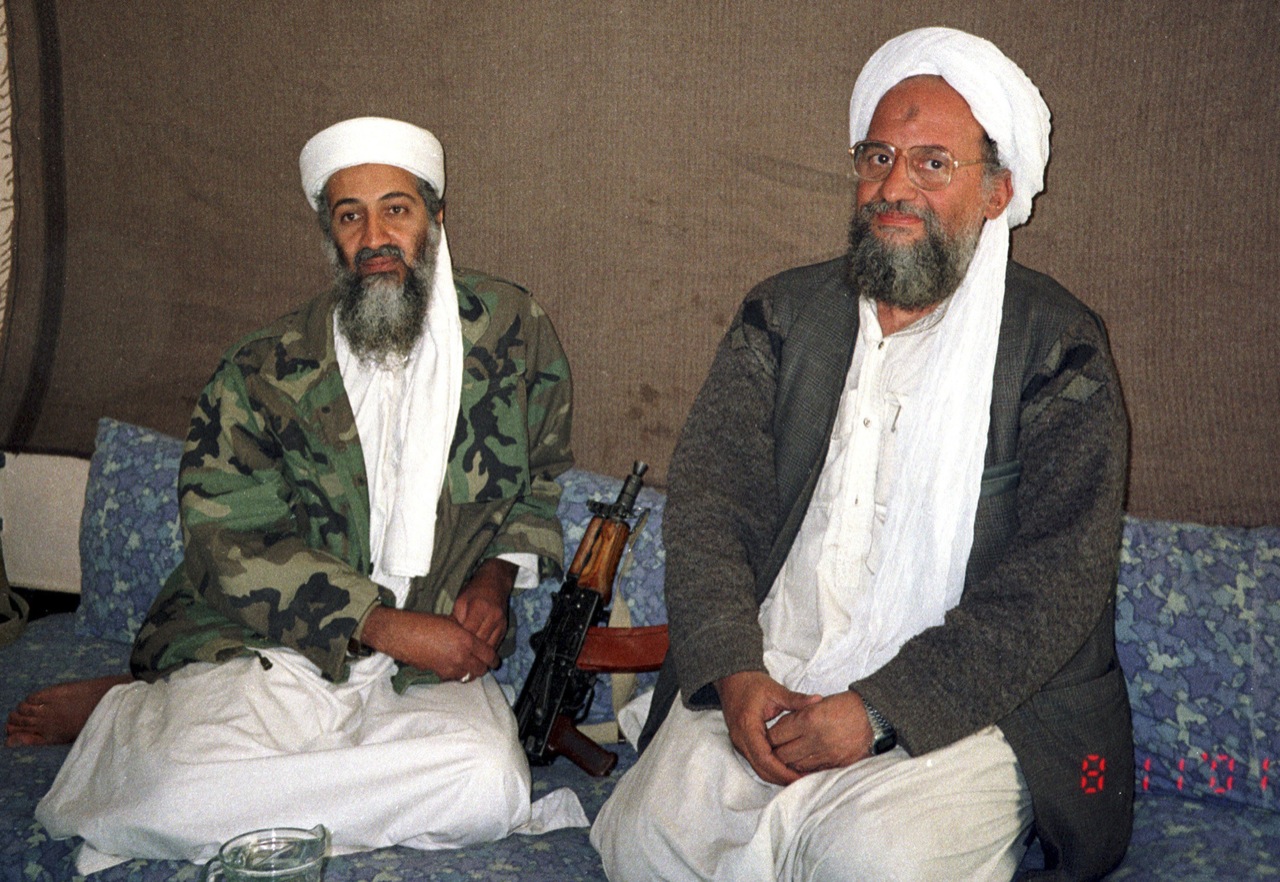
Osama bin Laden (L) and Ayman az-Zawahiri (R)
The myth that Saddam Hussein’s regime had nothing to do with al-Qaeda is persistent. Stephen Hayes’ book, The Connection, ably debunks this notion. There are some additional details that one can add to this. Continue reading
 Book Review: The Connection: How al-Qaeda’s Collaboration With Saddam Hussein Has Endangered America (2004) by Stephen Hayes
By Kyle Orton(@KyleWOrton) on June 21, 2015
More than twelve years after the fall of Saddam Hussein, the conventional wisdom is that Saddam’s regime had no connection with al-Qaeda, and such “evidence” as was adduced was tortured out of Ibn al-Shaykh al-Libi in the Bush administration’s desperation to cobble together a casus belli. But if one puts ideology on hold, and considers the evidence of Stephen Hayes’ The Connection, a rather different picture emerges. Continue reading
 Kyle Orton's Blog