Tag Archives: ISIS

The Man Who Made Crime Pay For the Islamic State

By Kyle Orton (@KyleWOrton) on 9 September 2018

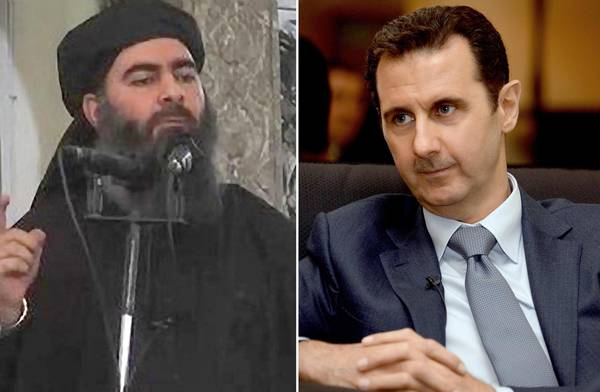
The United States has launched at least five raids into Syria to date, all of them against the Islamic State (IS).[1] The second such raid, on 15 May 2015, killed Fathi al-Tunisi (Abu Sayyaf al-Iraqi, Abu Muhammad al-Iraqi, or Abd al-Ghani), who oversaw critical revenue-generating criminal schemes for the group. Al-Tunisi was primarily responsible for the oil industry in eastern Syria, in which capacity he collaborated with Bashar al-Asad’s regime, and he worked as head of the Antiquities Division of IS Diwan al-Rikaz, which translates literally as the “Department of Precious Things That Come Out of the Ground”, usually given as the “Department of Natural Resources”. Al-Tunisi was what is sometimes termed a “middle manager”: the connective tissue between the most senior levels of the leadership and local administrators, ensuring smooth coordination between the two by inter alia keeping the books. In short, the kind of terrorist operative that keeps an organisation going. Continue reading
America Sanctions the Syrian Regime for Funding the Islamic State—Again

By Kyle Orton (@KyleWOrton) on 7 September 2018

The U.S. Treasury Department sanctioned four individuals and five entities connected to the Syrian regime of Bashar al-Asad on 6 September 2018. The most interesting was Muhammad al-Katerji, who has been involved in trade with the Islamic State (IS). A relative of his, Hussam al-Katerji, has previously been revealed as funding the jihadists on behalf of the regime, and the U.S. has previously sanctioned another Kremlin-linked Asad regime oligarch, George Haswani, for financing IS. “The United States will continue to target those who facilitate transactions with the murderous Asad regime and support ISIS”, said U.S. Treasury Secretary Steven Mnuchin. Continue reading

The State of Play in Syria and Iraq on the Eve of the Idlib Offensive

By Kyle Orton (@KyleWOrton) on 29 August 2018

Two ideas that have become quite prevalent are that the Islamic State is defeated or on its way to defeat and that the Syrian war is winding down. Both are gravely mistaken. Continue reading

Islamic State Leader in Afghanistan Killed

By Kyle Orton (@KyleWOrton) on 26 August 2018

Islamic State in Afghanistan (image source)

Attaullah Khogyani, a spokesman from Nangarhar province, says—and the spokesman for American forces in Afghanistan, Lt. Col. Martin O’Donnell, confirmed—that the leader of the Islamic State in Khorasan (ISK), Sad Arhabi, was killed in an airstrike in his province last night. It seems another ten ISK jihadists were killed alongside Arhabi. Continue reading

Islamic State Leader Urges Patience as the Path to Victory

By Kyle Orton (@KyleWOrton) on 22 August 2018

The leader of the Islamic State (IS), Ibrahim al-Badri (Abu Bakr al-Baghdadi), released a nearly 55-minute audio statement today, his first statement for eleven months, which in turn came eleven months after the prior speech. This is al-Badri’s thirteenth speech since he became leader of the IS movement in May 2010 and the eighth since IS declared the restoration of the caliphate in June 2014. The title of today’s speech, “Give Glad Tidings to the Patient”, is drawn from a verse of the Qur’an that promises “glad [or good] tidings” in Paradise to those who remain steadfast on the path of faith in life, which is very much the theme al-Badri sticks to. Continue reading

Turkey’s War Against the PKK on the Near Abroad

By Kyle Orton (@KyleWOrton) on 21 August 2018

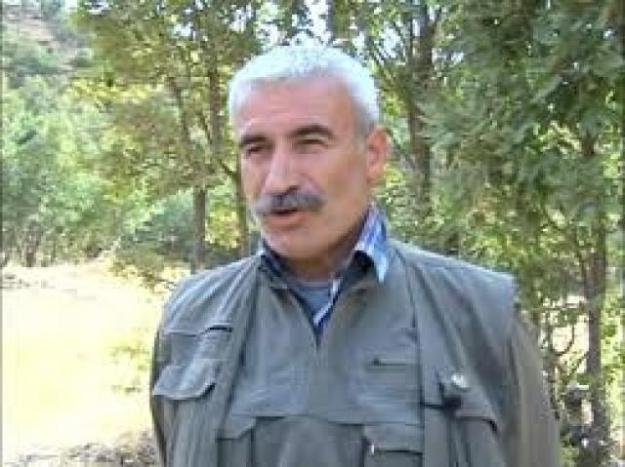
Ismail Özden (image source)

Turkey killed a senior operative of the Kurdistan Workers’ Party (PKK), the internationally-recognised terrorist organisation and narcotics trafficking entity that has been at war with the Turkish state since 1984, in Iraq last week. Turkey launched a wave of airstrikes against PKK targets in Syria and Iraq in April 2017 and for the last several months Ankara has been widening its campaign against the PKK outside Turkey’s borders, particularly in Iraq, where the PKK is not protected by the United States, as it is in eastern Syria. Having feinted in June toward an attack on the historic PKK headquarters in the Qandil Mountains—a somewhat symbolic target at this stage, with the bulk of the PKK’s leadership and resources in Syria—it appears the Turks have opted for a more targeted approach.

This operation underscores the continuance of U.S.-Turkey relations, and the mutual benefits of the relationship, even in its current damaged state, where both sides have a laundry list of legitimate grievances with the other. If a formula for normalisation can be found, the potential to contain and weaken some of the worst, most destabilising elements in the region, saliently the PKK and the Iranian regime, is within reach. Continue reading

Australia’s No-Nonsense Approach to the PKK

By Kyle Orton (@KyleWOrton) on 17 August 2018

Funeral for the victims of the TAK/PKK terrorist attack on the Besiktas football stadium in Istanbul, December 2016. Photograph: Sedat Suna/EPA

The Kurdistan Workers’ Party (PKK), the separatist group in Turkey that is a designated terrorist organisation across much of the West, has always used a vast array of front-groups in the West to raise funds and recruit. After 9/11, with the advent of the War on Terror, the PKK switched tactics in the region to try to conceal its operations and avoid the “terrorism” label. This involved rebranding its operations in Iraq, Syria, and Iran, and setting up a special forces-style urban terrorism wing, the Kurdistan Freedom Falcons (TAK), to deniably carry out its most atrocious activities. The PKK’s rebranding has not been without success. In Australia, however, the government has refused to accept the PKK’s propaganda about TAK and lists it, quite correctly, as simply an alias for the PKK. Continue reading

The Outlook for the America-Turkey Relationship is Bleak

By Kyle Orton (@KyleWOrton) on 15 August 2018

America’s imposition of sanctions on Turkey brings the relationship to its lowest ebb in more than forty years. Almost as soon as the Justice and Development Party (AKP) and its leader, Recep Tayyip Erdoğan, came into office in 2002 there have been tensions in the relationship. These manageable differences escalated considerably during the time of President Barack Obama, primarily because of his Syria policy, and now threaten to boil over. The chances to soothe a vital strategic partnership appear to be slipping. Continue reading

The Russian-Orchestrated Fall of Deraa Sets the Stage to Push the U.S. Out of Syria and Enable Assad’s Reconquest

This article was published at Ahval under the headline, “Russia to Pick Apart NATO Allies to Reconquer All of Syria”.

By Kyle Orton (@KyleWOrton) on 31 July 2018

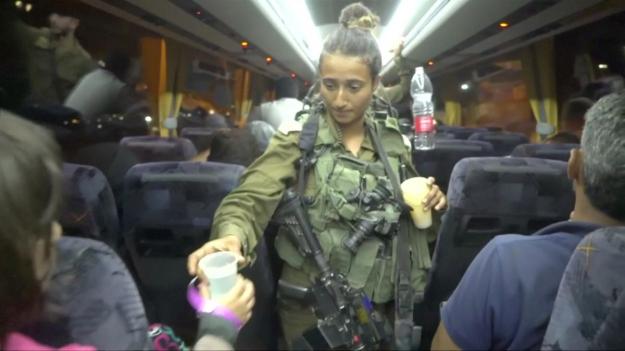
An Israeli solider hands out water on a bus, during the Syria Civil Defence extraction from the Golan Heights // 22 July 2018, provided by Israeli Army to Reuters

The collapse of the opposition in southern Syria is the final destruction of the originally constituted rebellion against President Bashar Assad. It is also a demonstration that the United States under President Donald Trump is no more invested in shaping the outcome in Syria than his predecessor, and marks the potential end of the diplomatic pact that had allowed Turkey to retain some sphere of influence unmolested by the pro-Syrian government coalition. Continue reading

The Secular Foreign Fighters of the West in Syria

By Kyle Orton (@KyleWOrton) on 24 July 2018

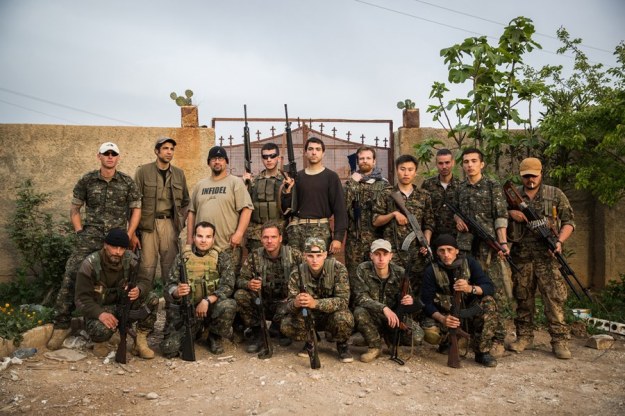
Foreign fighters with the YPG/PKK on the outskirts of Tal Tamr in northwestern Syria, 16 April 2015. UYGAR ÖNDER ŞİMŞEK / AFP / Getty Images

ABSTRACT: The Kurdistan Workers Party (PKK) operates under the names of the Democratic Union Party and the People’s Protection Units in Syria. The PKK is registered as a terrorist group by most Western governments, the European Union and Turkey, where it originated as a separatist organization. Nonetheless, the YPG has been the partner of the United States-led coalition in Syria against the ISIS. The strengthening of the YPG/PKK and its political messaging has brought in a flow of western foreign fighters. Some of these fighters are now returning to their homelands with indications that they are bringing security problems with them.

Article published in Insight Turkey.