By Kyle Orton (@KyleWOrton) on January 23, 2017
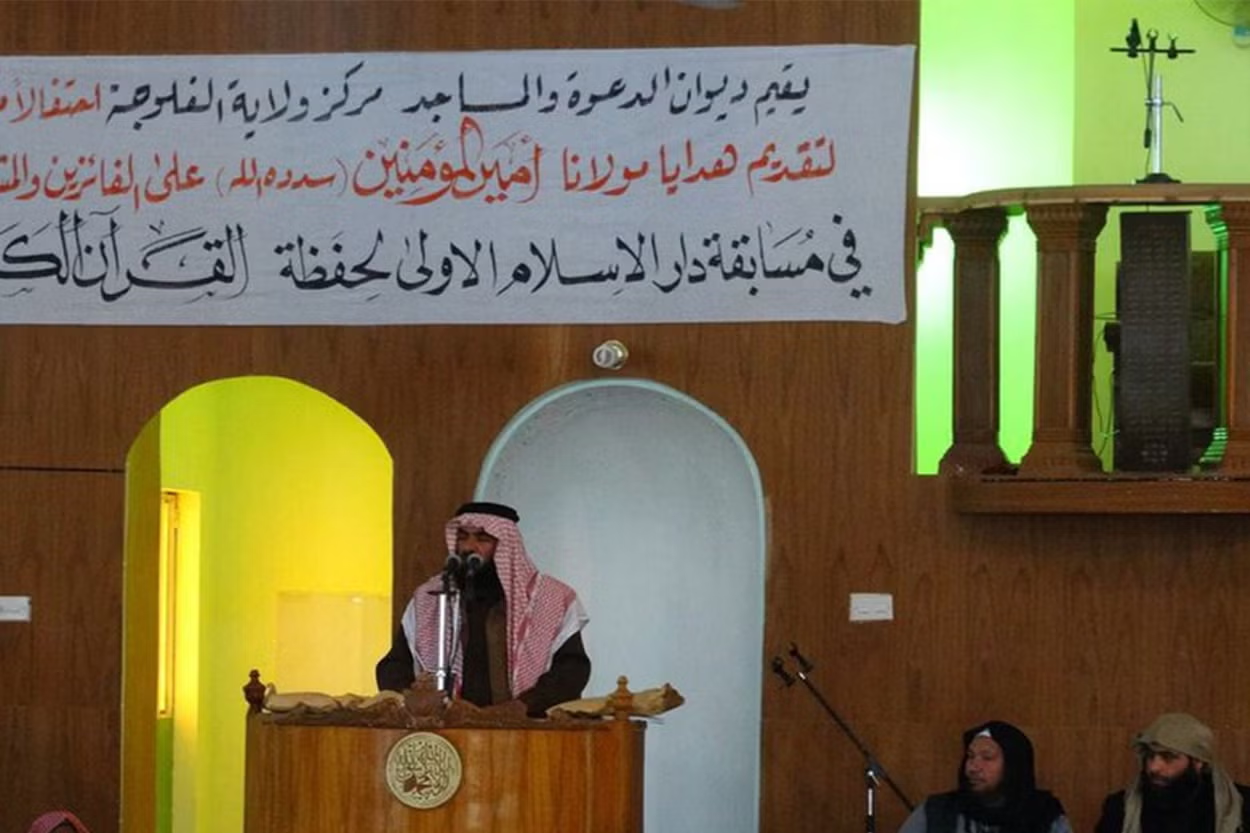
A short biography of the “Caliph” of the Islamic State (IS), Ibrahim al-Badri (Abu Bakr al-Baghdadi), was leaked online by the group in July 2013. A rough translation is reproduced below.
By Kyle Orton (@KyleWOrton) on January 23, 2017
A short biography of the “Caliph” of the Islamic State (IS), Ibrahim al-Badri (Abu Bakr al-Baghdadi), was leaked online by the group in July 2013. A rough translation is reproduced below.
By Kyle Orton (@KyleWOrton) on January 22, 2017
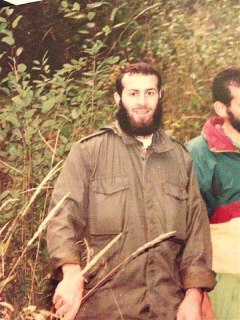
Mustafa Ramdan Darwish (Abu Muhammad al-Lubnani)
After the leaders of the Islamic State die—usually killed by their foes—short biographies tend to be circulated on internet forums that favour the group. One such obituary—with the above picture—was disseminated for Mustafa Ramadan Darwish (Abu Muhammad al-Lubnani), and is reproduced below with some editions to transliteration and some interesting sections highlighted in bold. Darwish was the first leader of the Islamic State’s military portfolio and the second overall deputy (between September 2004 and early 2005) to the movement’s founder, Ahmad al-Khalayleh (Abu Musab al-Zarqawi). One of the most interesting parts of Darwish’s profile is its addition of details on the jihadi networks linked to al-Qaeda and the first generation of the Islamic State that were operating in Iraq in the final years of Saddam Husayn’s rule, a topic touched on in other biographies of Islamic State leaders. Continue reading
By Kyle Orton (@KyleWOrton) on January 21, 2017
The first proto-caliph of the Islamic State (IS), Hamid al-Zawi (Abu Umar al-Baghdadi), gave his fourth audio speech on 16 April 2007, “The Harvest of the Years for the State of the Muwahideen (Monotheists)”. An English version of al-Zawi’s speech was disseminated by IS’s al-Furqan Media and it is reproduced below with some editions in transliteration and syntax, and some interesting or important sections highlighted in bold. Continue reading
By Kyle Orton (@KyleWOrton) on January 14, 2017
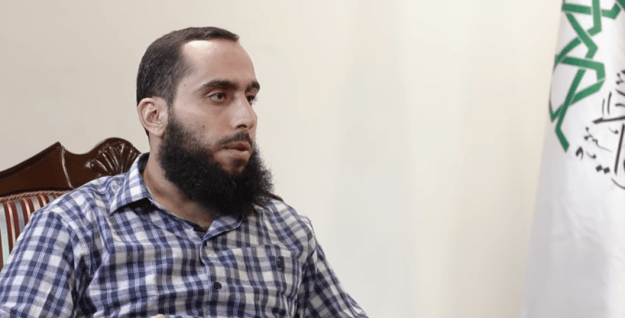
Ahrar al-Sham’s leader, Ali al-Umar (Abu Ammar)
The Syrian media activist Hadi al-Abdullah interviewed Ahrar al-Sham’s leader, Ali al-Umar (Abu Ammar al-Umar), in a video released on 11 January 2017. The focus was the ongoing negotiations with Jabhat Fatah al-Sham (JFS), al-Qaeda’s rebranded Syrian branch, to create an insurgent merger. The question has caused intense turmoil within Ahrar. Continue reading
By Kyle Orton (@KyleWOrton) on January 13, 2017
(source)
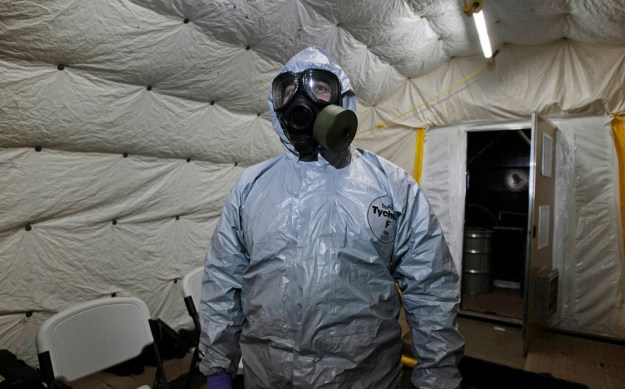
Yesterday, the United States Treasury Department imposed sanctions on eighteen senior officials in the regime of Bashar al-Assad. The sanctions come in response to reports in August and October 2016 by the Organization for the Prohibition of Chemical Weapons (OPCW), the United Nations investigative body, which found that found “the Syrian government, specifically the Syrian Arab Air Force, was responsible for three chlorine gas attacks in Talmenes on April 21, 2014, and in Qmenas and Sarmin on March 16, 2015.” This is three years after the Assad regime was spared punitive military strikes for its use of chemical weapons under a Russian-orchestrated “deal” that ostensibly disarmed Assad of such weapons. Continue reading
By Kyle Orton (@KyleWOrton) on January 12, 2017
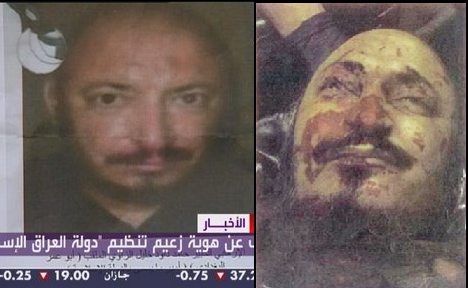
Two of the very few pictures of Hamid al-Zawi (Abu Umar al-Baghdadi) in existence. The picture on the right, taken after al-Zawi was killed in April 2010, is most often used in Islamic State media.
Hamid al-Zawi (Abu Umar al-Baghdadi), the first emir of the Islamic State when it was founded in 2006, gave his third speech—“Say, I Am Upon Clear Evidence From My Lord” or “Say, I Am Made Certain By My God”—on 13 March 2007. An English transcript of the speech was released online by the Jihad Media Battalion and a video of part of the speech was released, entitled, “This Is Our Doctrine”, a neat encapsulation of the speech’s content. The speech is an interesting first-hand statement of what the Islamic State actually believes, and is reproduced below.
Continue reading
By Kyle Orton (@KyleWOrton) on January 9, 2017
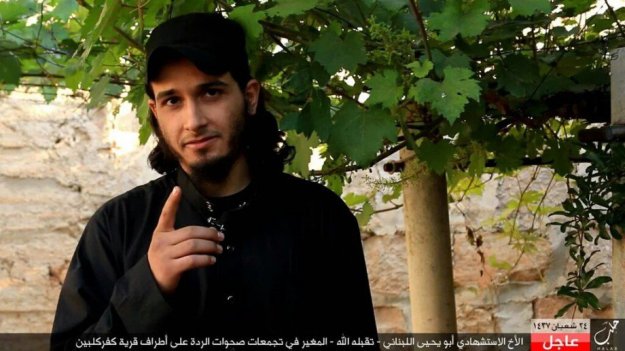
On 6 January 2017, pro-al-Qaeda channels distributed a statement, with the picture above, written by Abu Mahmud al-Filistini.1 Abu Mahmud writes of a young jihadist, Abd al-Rahman, who had, after joining the Islamic State (IS), not been fully seduced by their ideology and had maintained contact with Abu Mahmud. At a certain point, however, Abd al-Rahman accepted IS’s ideology and recently killed himself in a suicide bombing against insurgent forces in Syria. It is not clear whether the insurgents referred to are rebels or Jabhat Fatah al-Sham (JFS), al-Qaeda’s rebranded Syrian branch, which was until recently known as Jabhat al-Nusra. The statement is reproduced below with some minor editions, for the sake of clarity, to transliterations and punctuation. Continue reading
By Kyle Orton (@KyleWOrton) on January 7, 2017
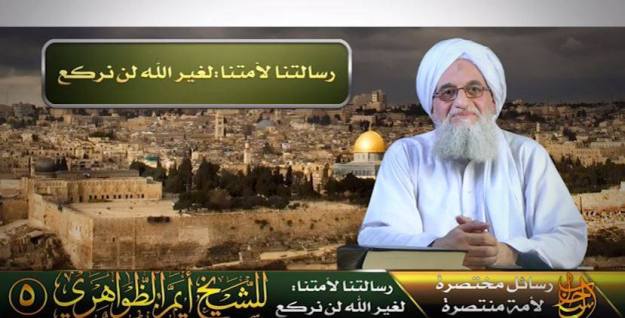
On 5 January 2017, the leader of al-Qaeda, Ayman al-Zawahiri, gave a speech, “To Other Than Allah, We Will Not Bow: Brief Messages To A Victorious Nation, Part 5”. Today, al-Qaeda channels put out an English translation. The emphasis of the speech was restating al-Qaeda’s creed and methodology, specifically as it differs from that of the Islamic State (IS). One noticeable point was al-Zawahiri’s admonition against IS’s genocidal approach to the Shi’a: lay Shi’is should not be harmed, al-Zawahiri says; rather, their leaders should be killed for misguiding them and the masses converted to Sunnism. Al-Zawahiri also reiterates that al-Qaeda remains focused on the West and determined to carry out terrorism against it—regardless of whatever short-term strategic calculations currently have al-Qaeda de-emphasizing this aspect of its worldview and conduct. The speech is reproduced below with some transliteration editions and some sections bolded for emphasis. Continue reading
By Kyle Orton (@KyleWOrton) on January 7, 2017
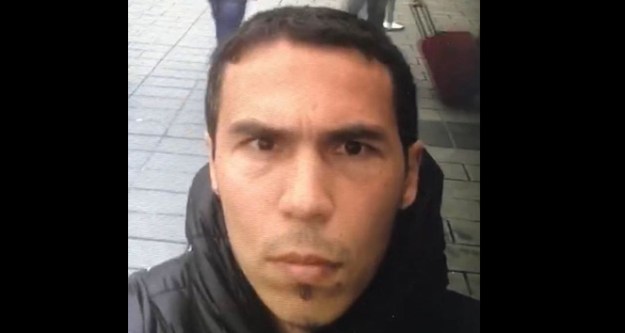
Abdulkadir Masharipov (source)
It was an hour into 2017 that the Islamic State (IS) carried out its first act of mass-murder: an IS jihadist attacked the Reina nightclub in Istanbul, massacring thirty-nine people. IS has been attacking Turkey with increasing frequency over the last two years and, since Turkey intervened directly in Syria in August, IS’s media output has elevated the Turks into a priority target for terrorism. The public claim of responsibility by IS for the Reina attack suggests that we are moving into a new era in terms of how IS treats Turkey. Turkey’s increasingly warm relations with Russia have angered many Muslims around the world, providing jihadists an incentive and opportunity, and providing al-Qaeda political space it seemed to have lost to co-opt the Syrian rebellion. It is therefore likely that more bloodshed is to come for Turkey. Continue reading
By Kyle Orton (@KyleWOrton) on January 6, 2017
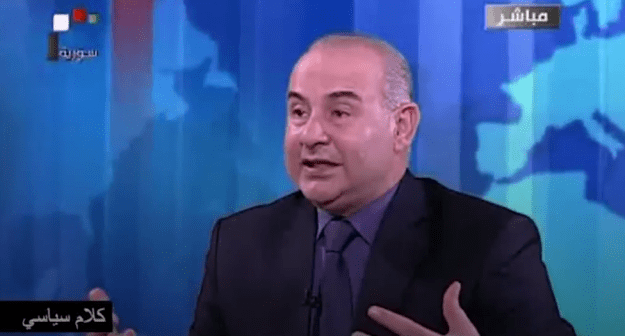
Khaled Abboud
From the beginning of the uprising in Syria in 2011, there have been accusations that Bashar al-Assad’s regime was in a de facto partnership with the Islamic State (IS) against the mainstream opposition. These accusations have a considerable basis in fact: during the entirety of the Anglo-American occupation of Iraq, Assad collaborated with IS jihadists in the destabilization of Iraq, killing thousands of Iraqi civilians and hundreds of American and British troops. Once the Syrian uprising was underway, the regime undertook various measures to bolster extremists in the insurgency. Assad and IS worked in tandem to leave Syria as a binary choice between themselves: Assad was sure this would rehabilitate him in the eyes of the world and transform his criminal regime into a partner of the international community in suppressing a terrorist insurgency, and IS wanted to rally Sunnis to its banner. The Secretary of the Syrian Parliament has now come forward to underline this. Continue reading
 Kyle Orton's Blog