Tag Archives: ISIS

Abandoning Syria to Assad Helps Al-Qaeda

By Kyle Orton (@KyleWOrton) on September 23, 2016
2

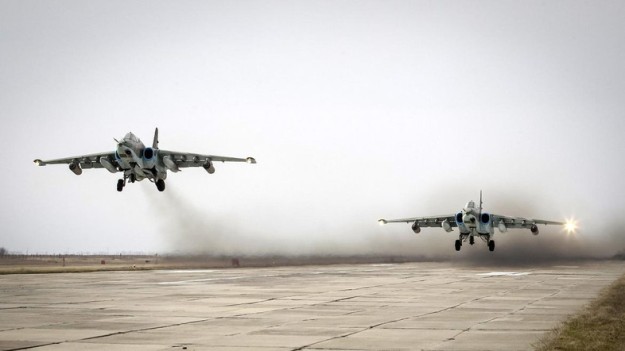
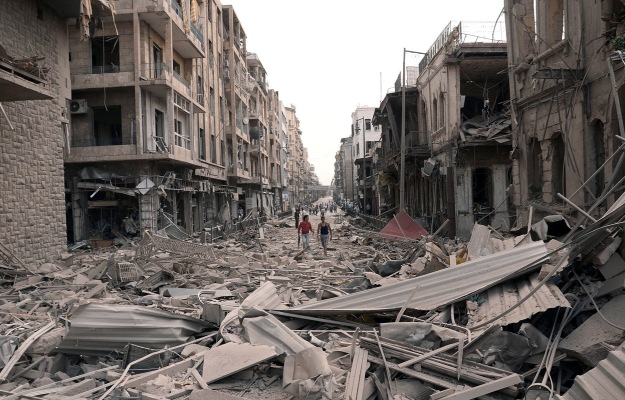
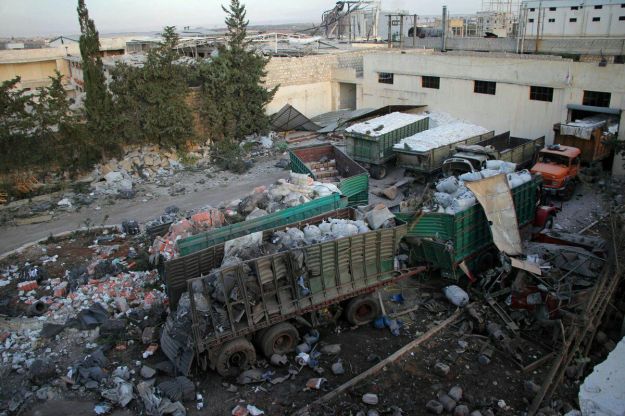
The deeply problematic attempted Syrian ceasefire agreement between the United States and Russia last week never really took hold and was finally torn asunder on Monday by Russia and the regime of Bashar al-Assad blitzing an aid convoy and launching massive, indiscriminate aerial attacks on rebel-held areas in Aleppo. Last night, the pro-Assad coalition commenced a renewed assault on Aleppo actually as the parties met to discuss putting the ceasefire back online.

It had been surreal that it was the U.S. insisting that “The ceasefire is not dead”. What it exposed was the lack of Western will to restrain the Assad regime, which al-Qaeda, especially, is exploiting, offering its services in the fight against Assad, and building a sustainable presence in Syria that will threaten the West for many years to come. Continue reading
Syria’s Flawed Ceasefire Comes Crashing Down

By Kyle Orton (@KyleWOrton) on September 21, 2016

A version of this article was published at The New Arab

Humanitarian convoy in Aleppo after the airstrikes by pro-regime coalition, 20 September 2016

The United States and Russia reached an agreement over Syria on 9 September that was supposed to lead to a week of reduced violence—a ceasefire or “cessation of hostilities” (CoH). During this time, there would be free distribution of humanitarian aid—followed by joint operations against the rebranded al-Qaeda branch in the country, Jabhat Fatah al-Sham (JFS), formerly known as Jabhat al-Nusra. This agreement was essentially ignored by Bashar al-Assad’s regime, which Russia had pledged to restrain, and on Monday the agreement was torn up by the regime, returning Syria to all-out war. Continue reading

Islamic State’s Propaganda Chief Killed in Syria

By Kyle Orton (@KyleWOrton) on September 18, 2016

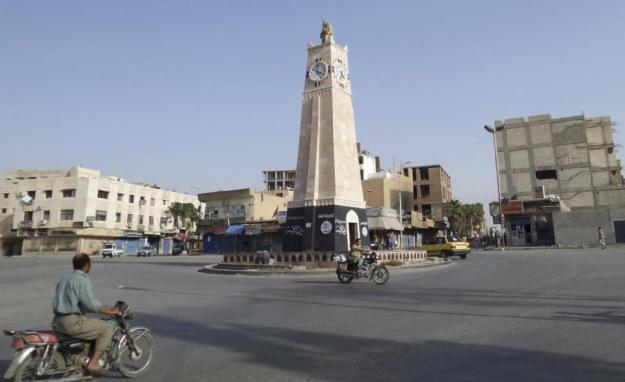
Raqqa

Raqqa

The Coalition announced on Friday that it had killed Wael al-Fayad, more fully Wael Adil Hasan Salman al-Fayad, also known as Wael al-Rawi, Dr. Wael, and Abu Muhammad al-Furqan, a reference no doubt to al-Furqan Media, IS’s oldest and most important propaganda organ, which al-Fayad controlled. The head of IS’s Media Council, thus a key member of the group’s propaganda output, al-Fayad was a member of its Shura Council. The obscurity of his name is likely a testament to his seniority and importance within IS. [UPDATE: This turned out to be correct, though Abu Muhammad’s real name was Wael al-Ta’i, as IS revealed in May 2021, and he had also used the names “Ahmad al-Ta’i”, the media emir appointed in “the State’s” second cabinet back in 2009, and “Abu Ubayda Abd al-Hakim”, the mysterious senior IS operative who made a series of media “appearances” in 2011 and signed several captured letters addressed from IS-centre to the wilayats after 2014]
Continue reading

Fifteen Years After 9/11

By Kyle Orton (@KyleWOrton) on September 11, 2016

Originally published at The International Business Times

1

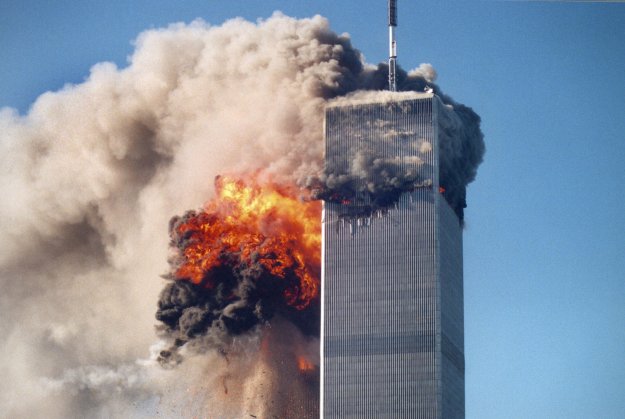
Fifteen years on from the 11 September 2001 terror attacks on the US, al-Qaeda is better-positioned than ever before. Its leadership held, and it has rebuilt a presence in Afghanistan. More importantly, al-Qaeda has built powerful regional branches in India, North Africa, Somalia, Yemen and Syria.

Rebranding itself away from the savagery of Iraq, al-Qaeda has sought to embed itself in local populations by gaining popular legitimacy to shield itself from retribution if, or when, it launches terrorist strikes in the West. This is proceeding apace, above all because of a failure to assist the mainstream opposition in Syria, sections of which were forced into interdependency with al-Qaeda to resist the strategy of massacre and expulsion conducted by the Assad regime. Continue reading

Moscow Rules in Syria, Again

By Kyle Orton (@KyleWOrton) on September 11, 2016

1

In Geneva on 9 September 2016, the United States and Russia announced an agreement to implement a ceasefire—formally a “cessation of hostilities” (CoH)—in Syria, which is intended to allow humanitarian access and restart the political process to end of the war, and then to begin jointly targeting the Islamic State (IS) and al-Qaeda’s Syrian branch, formerly Jabhat al-Nusra, recently rebranded Jabhat Fatah al-Sham (JFS).

There is reason to wonder if the deal will ever take effect and the lack of an enforcement mechanism against Bashar al-Assad’s regime leaves open the possibility that the pro-regime coalition will, as it did after the February ceasefire, abuse this process to their advantage.

Most dauntingly, if this process worked to the letter it will legitimate the gains of the regime’s aggression, carried out under the cover of the last ceasefire, and has the potential to weaken the insurgency and embolden the regime, strengthening radicalism on all sides, pushing a political settlement further away, and thus protracting the war. Continue reading

Is This the Beginning of the End for the Islamic State?

By Kyle Orton (@KyleWOrton) on September 8, 2016

Screenshot of an Islamic State video displaying captured materials from the New Syrian Army, 27 July 2016

Screenshot of an Islamic State video displaying captured materials from the New Syrian Army, 27 July 2016

City AM asked for contributions on the above question, and I took the “no” side. As can be seen from the below, however, this was very much a matter of interpretation since both sides gave roughly the same answer: the Islamic State’s statelet is coming to an end, but the group will survive, morphing back into a prior stage.  Continue reading

The End of the Islamic State by Christmas?

By Kyle Orton (@KyleWOrton) on September 5, 2016

1

Last week it was reported by The Daily Beast that United States defence and political leaders believe they can at least begin the operation to remove the Islamic State (IS) from its Iraqi capital, Mosul, before President Barack Obama leaves office on 20 January 2017. This seems unlikely. More to the point, if it is true it is highly dangerous, both in the short-term and especially over the long-term. Continue reading

Of Kurds and Compromises in Syria

By Kyle Orton (@KyleWOrton) on September 2, 2016

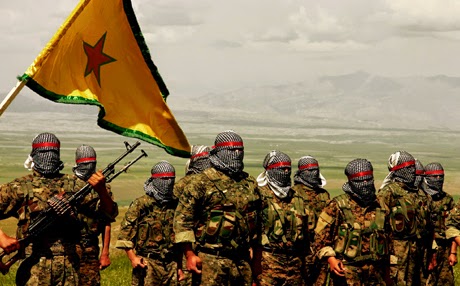
PYD/YPG soldiers

PYD/YPG soldiers

Having written extensively about the authoritarian structure in the areas run by the Democratic Union Party (PYD), the Syrian branch of the Kurdistan Workers’ Party (PKK), in northern Syria, and the problems of media, local and Western, in covering this, it was very interesting to see a report in The Wall Street Journal underlining some of these points.

The Journal notes that the PYD and its armed wing, the People’s Protection Units (YPG), have engaged in a ruthless consolidation of power within a single party, despite claims to be governing in a democratic way. This has included: heavy pressure on all non-pro-PYD media via various Soviet-style accusations of subversion; demographic engineering by a refusal to allow Arab inhabitants to return to homes or actively expelling them; forced conscription, including of children; the imposition of an ideological curriculum in schools; and the suppression and/or expulsion of all opposition. Continue reading

The Fall of the Islamic State’s Terrorism Director

By Kyle Orton (@KyleWOrton) on August 31, 2016

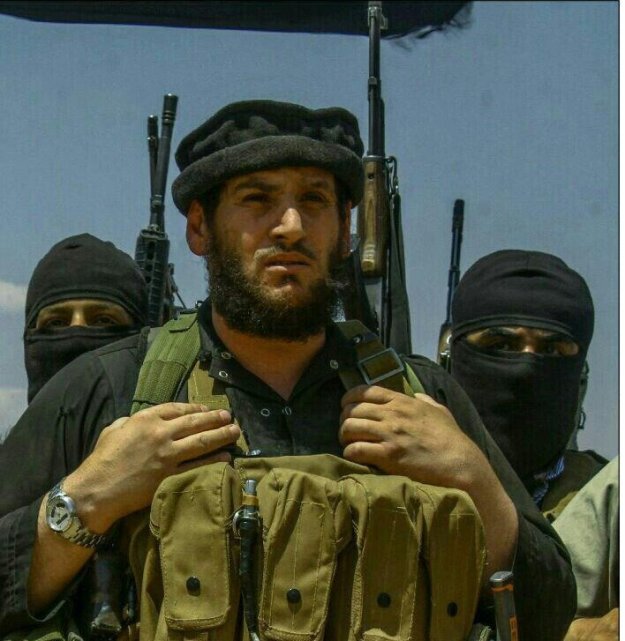
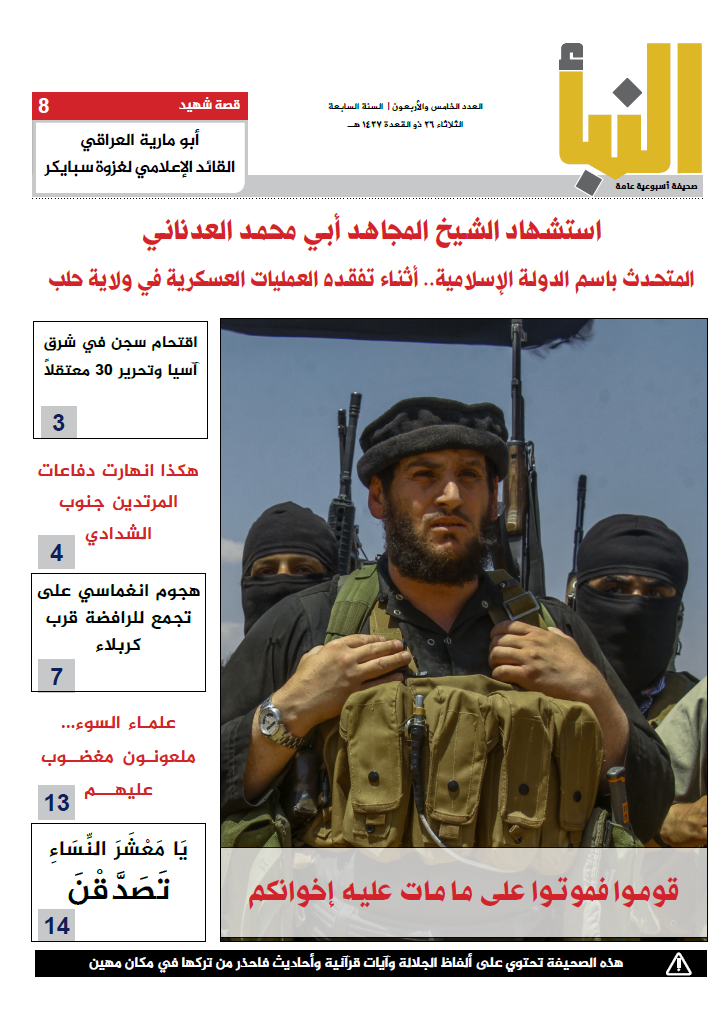
Taha Falaha (Abu Muhammad al-Adnani) in al-Naba

Taha Falaha (Abu Muhammad al-Adnani) in al-Naba

The Islamic State confirmed yesterday, via their “news” agency Amaq, that Taha Subhi Falaha had been killed in Aleppo. Falaha had gained global notoriety under his kunya, Abu Muhammad al-Adnani, after his September 2014 speech calling on Muslims in the West to “kill any disbeliever” in range, and to at least “spit in his face” if one was unable to find a knife or a car or a rock to do murder with.

Falaha was often referred to as the spokesman of IS, and so he was—the voice of the organization since 2011. He was also from the first generation of the organization, recruited before the invasion of Iraq, one of the few within the organization of that stature. But, as I explained recently in a paper for the Henry Jackson Society that compiled what is known of IS’s leadership, Falaha was much more than a figurehead.

Falaha was the governor of IS-held areas in Syria and the man who oversaw the external terrorist attacks. By now he was the caliph’s effective deputy. Heretofore, IS’s impressive bureaucracy has managed to replace individuals with minimal perturbation. IS will experience few perturbations quite like this.
Continue reading

Al-Naba’s Obituary for Abu Muhammad al-Adnani

By Kyle Orton (@KyleWOrton) on August 31, 2016

The United States reported yesterday that it had killed one of the most important officials in the Islamic State (IS), Taha Subhi Falaha, better known as Abu Muhammad al-Adnani. As the Pentagon statement noted, Falaha “served as principal architect of [IS’s] external operations and as [IS’s] chief spokesman.”

Within hours, IS issued the forty-fifth edition of its newsletter, Al-Naba. The cover of Al-Naba 45 (above) featured a photograph of Falaha, only the second one of him officially released by IS. The second page contained the only other official picture we have of Falaha—published in the second edition of Dabiq magazine on 27 July 2014—and a brief obituary. And the main editorial on page three was framed around Falaha.

Continue reading