Tag Archives: Islamic Revolutionary Guard Corps

The Price of the Iran Deal

Originally published at The Henry Jackson Society

By Kyle Orton (@KyleWOrton) on October 26, 2016
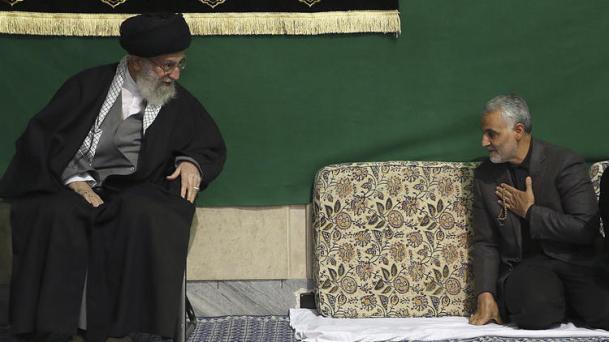
Maj. Gen. Qassem Suleimani, with Supreme Leader Ali Khamenei at a mosque in Tehran, Iran, (March 2015)

Earlier this week, The New York Times reported on the “free fall” of President Barack Obama’s Middle East policy. While the President had “inherited a messy situation in the region with the war in Iraq … by the time he took office, [President George W.] Bush’s troop surge and Gen. David H. Petraeus’s strategy change had helped turn the war around”. This relative stability has given way:

Today there is no single overarching issue but multiple ones. Syria, Iraq and Yemen are caught up in war. Turkey and Jordan are inundated by refugees. Russia has reasserted itself as a major player in the region. Libya is searching for stability after the fall of its longtime dictator. The Kurds are on the march. Egypt is fighting off a terrorist threat at home. And Saudi Arabia and Iran are waging a profound struggle for the future of the region.

Many of America’s allies disagreed with Bush’s focus on Iraq, considering Iran to be the larger threat, but if they had considered Bush too assertive, they find Obama too timorous, stepping back as the situation spins out of control. Continue reading
A Rebel Crime and Western Lessons in Syria

By Kyle Orton (@KyleWOrton) on July 24, 2016

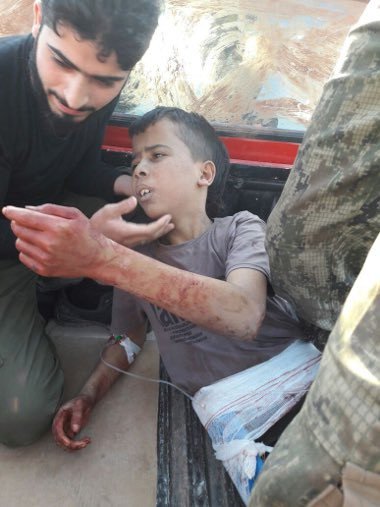
Abdullah Issa on the back of a truck with Harakat Nooradeen al-Zengi fighters who will soon behead him

Abdullah Issa on the back of a truck with Harakat Nooradeen al-Zengi fighters who will soon behead him

A horrifying video emerged on Tuesday of a teenage boy being beheaded. This had occurred the day before around Handarat in Aleppo, northern Syria. The boy had been fighting for Liwa al-Quds, a militia of the regime of Bashar al-Assad, composed mostly of Palestinians from the Nayrab camp and likely also from the unofficial settlement at Ayn al-Tal near Handarat. The rebel group that took him captive and then murdered him was Harakat Nooradeen al-Zengi, which had previously received support, including TOW anti-tank missiles, from the United States’ covert program run by the Central Intelligence Agency, though that support ended nearly a year ago. The episode is important in itself, and underlines some trends, namely al-Zengi’s evolution and the dynamics underway in northern Syria, where the U.S. is preparing to intensify its de facto policy of collaborating pro-Assad coalition against Jihadi-Salafist terrorist groups, which are strengthening al-Qaeda. Continue reading

The Caliphate at Two

By Kyle Orton (@KyleWOrton) on July 16, 2016

A version of this article was published at Radio Free Europe/Radio Liberty, “Under the Black Flag

Islamic State's spokesman and Syrian governor, Taha Subhi Falaha (Abu Muhammad al-Adnani)

Islamic State’s spokesman and Syrian governor, Taha Subhi Falaha (Abu Muhammad al-Adnani)

The extremist group now known as Islamic State (IS) first claimed statehood, with clear pretentions to a new caliphate, in 2006—and eight years later made it explicit.

“Now the dream has become a reality,” Taha Falaha (Abu Muhammad al-Adnani) said in his speech on June 29, 2014, declaring that the territory IS held in Syria and Iraq constituted the rebirth of the caliphate. “The State will remain.”

Two years later, this looks like an unsafe proposition. Continue reading

Russia Needs the Islamic State to Save Assad

By Kyle Orton (@KyleWOrton) on June 20, 2016

Cross-posted at The Interpreter.

After a coalition supporting the regime of Syrian ruler Bashar al-Assad conquered the city of Palmyra from the Islamic State (IS) in late March, suggestions were made that this demonstrated the efficacy of the pro-Assad coalition in fighting IS, and doubtless the same will be said if and when the pro-regime forces conquer Tabqa. It isn’t true. From the time of Russia’s direct intervention in Syria on 30 September 2015 to Moscow’s announcement on 14 March 2016 that it was withdrawing “the main part” of its “military” from Syria, IS was almost untouched and al-Qaeda was barely damaged, while the Assad regime was bolstered and the moderate opposition, particularly those components supported by the West, were gravely weakened.

Despite Moscow’s claims that its mission was fighting IS or “terrorism,” Russia’s real goals can be summarized as three:

  1. Rescue the Assad regime, which was assessed to be in mortal peril
  2. Damage the mainstream armed opposition, especially those elements supported by the West, in order that Russia can …
  3. Rehabilitate the Assad regime internationally by inter alia leaving only extremists as its opponents, depriving the international community of credible interlocutors, and therefore strengthening the Russian hand to make peace talks an instrument for re-legitimizing Assad, rather than removing him

In recent days, this basic war strategy has been seen again in southern Syria. Continue reading

Sectarian Provocations in Fallujah Undermine the Offensive Against the Islamic State

By Kyle Orton (@KyleWOrton) on June 13, 2016

Published at The New Arab.

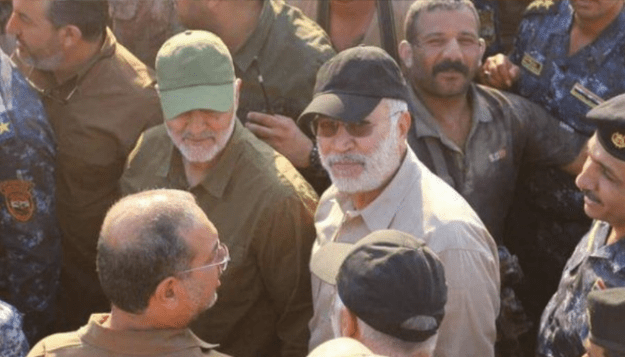
Qassem Suleimani and Jamal Ebrahimi (Abu Mahdi al-Muhandis) touring a battlefront in Fallujah

Qassem Suleimani and Jamal Ebrahimi (Abu Mahdi al-Muhandis) touring a battlefront in Fallujah

The Iraqi government announced an operation to clear the Islamic State (IS) out of Fallujah on the evening of 22 May. In the intervening three weeks, IS have lost numerous villages and towns around Fallujah and Iraqi counterterrorism forces are said to have entered Fallujah proper in the south.

As the first major city IS took on its way to proclaiming a caliphate in June 2014, the pace of the operation is not the most troubling element. What is disturbing—and what may ultimately undo any military success against IS—is the overtly sectarian nature of the offensive, led not by professional troops loyal to Baghdad, but by militias loyal to Iran and the extremist ideology of Tehran’s clerical regime. Continue reading

The Passing of Hizballah’s Old Guard

By Kyle Orton (@KyleWOrton) on May 15, 2016

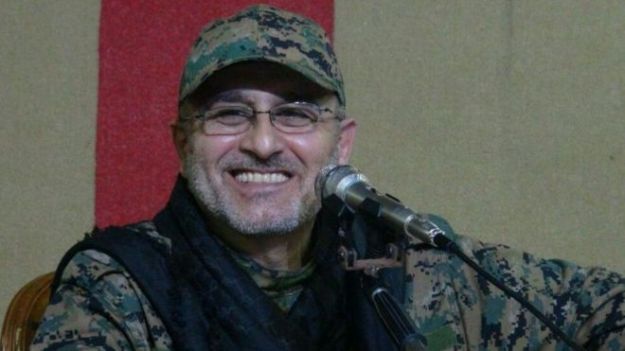
Hizballah's military commander (2008-2015) Mustafa Amine Badreddine

Hizballah’s military commander (2008-2015) Mustafa Amine Badreddine

Mustafa Badreddine, the military commander of Hizballah, was announced killed in Syria on 13 May. This is the third major casualty of the founding generation: Imad Mughniyeh, Badreddine’s predecessor and also his cousin and brother-in-law (Mughniyeh married Saada, Badreddine’s sister), was killed in February 2008 in Damascus in an operation led by MOSSAD and supported by the CIA, and Hassan al-Laqqis, who had become one of the Party of God’s military officials in Syria, was gunned down outside his home in Beirut in December 2013. For all the speculation about “Ahrar al-Sunna Baalbek Brigade” and its links to Kataib Abdullah Azzam and al-Qaeda—or Saudi intelligence, as Hassan Nasrallah had it—the likeliest suspect was never in doubt. Hizballah has also lost other senior and propagandistically important men like Samir Kuntar, who was killed in an explosion in Damascus in December 2015. Again, however, there seemed little doubt—even from Hizballah—that Israel had done this. Continue reading

Assad Taking Palmyra Does Not Bring Syria Closer To Peace

By Kyle Orton (@KyleWOrton) on March 29, 2016

Originally published at Left Foot Forward. See also pieces in The International Business Times and The New Arab today on the same subject.

1

The ancient city of Palmyra and the inhabited adjoining town of Tadmor was conquered by the armed forces of Bashar al-Assad’s regime and a consortium of foreign Shi’a jihadists, some of them designated terrorist organizations, and all of them led by the Quds Force, the external operations wing of Iran’s Islamic Revolutionary Guard Corps (IRGC), itself a listed terrorist entity.

While the takeover of Palmyra by the Islamic State (IS) in May 2015 was considered by almost everybody a negative development, the pro-Assad coalition’s capture of the city under the cover of 900 indiscriminate Russian airstrikes has been called “a good thing” by no less an authority than the United States Department of Defence. It was little surprise among that Robert Fisk echoed this sentiment; it was more surprising that Boris Johnson did.

The basic case for regarding Palmyra’s fall to the pro-Assad coalition as a positive development is that, to quote Johnson, “no matter how repulsive the Assad regime may be … their opponents in [IS] are far, far worse,” and this defeat for IS moves Syria closer to peace.

There is nothing in this formulation that stands up to scrutiny. Continue reading

What Kurdish Federalism Means for Syria

By Kyle Orton (@KyleWOrton) on March 15, 2016

Article published at The New Arab

1

Thursday morning saw two separate but related incidents.

First, in Turkey, the Kurdistan Freedom Hawks (TAK) claimed responsibility for the March 13 suicide bombing in Ankara that massacred 37 people.

The second was a declaration in Syria by the Democratic Union Party (PYD) and its armed wing, the People’s Protection Units (YPG), that they were forming a federal zone in the north of the country.

The link is simple: the Kurdistan Workers’ Party (PKK). Continue reading

Barack Obama Comes Clean

By Kyle Orton (@KyleWOrton) on March 11, 2016
1

Yesterday, Jeffrey Goldberg’s latest interview with President Obama was published. There have been numerous worthwhile takes on what is a very revealing conversation, such as Max Boot and Nibras Kazimi, and it is very difficult to quarrel with the conclusion of David Frum that “the dominant theme of these interviews is that we, all of us, have grievously let down the president,” who has exactly one self-criticism: “Obama admits he does not make sufficient allowances for how unreasonable other people are.” What I think deserves most attention is that the President has finally aligned his rhetoric, especially on Iran, with his actual foreign policy. Continue reading

The Syrian Ceasefire Gives International Sanction to Russia’s War to Save Assad

By Kyle Orton (@KyleWOrton) on February 25, 2016

Article published at Left Foot Forward

1

At midnight on Friday a ceasefire began in Syria. It was billed as a prelude to negotiations that restart on 7 March, and which are supposed to lead to a political transition that will end Syria’s war. The chances of success on either front are slim.

This was the second February ceasefire attempt—the first, on 19 February, failed without even the pretence of starting. The pretence is still being maintained this time around, but the structural problems with the ceasefire’s design—namely that it allows the regime of Bashar al-Assad and his supporters to continue their war against the Syrian population, while restraining the opposition from defending itself—ensure that it will fail and the West’s purported allies within the opposition will be worse-off, both during the period of faux-ceasefire and afterwards.

The Geneva III peace process was a dangerously misconceived effort. After Russia’s intervention in Syria on 30 September the Assad regime was simply too strong. With no US willingness to change the balance of power inside Syria it meant that either the process was preserved and ‘peace’ was redefined as regime victory, or the process was surrendered and peace on some more humane terms was sought by empowering the rebellion to enforce such terms on the regime in future negotiations. The US chose the process.

The US’s emphasis on process over substance can be seen in all kinds of ways. Continue reading