By Kyle Orton (@KyleWOrton) on January 30, 2017
![Umar Hadid [right] (source)](https://kyleorton.co.uk/wp-content/uploads/2017/01/umar-hadid-1-right.jpg?w=286&h=194)
Umar Hadid [right] (source)
By Kyle Orton (@KyleWOrton) on January 30, 2017
![Umar Hadid [right] (source)](https://kyleorton.co.uk/wp-content/uploads/2017/01/umar-hadid-1-right.jpg?w=286&h=194)
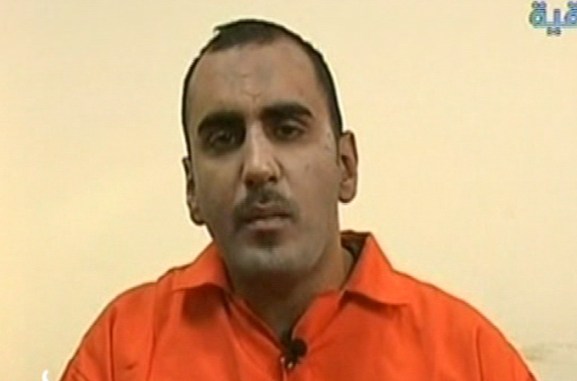
Umar Hadid [right] (source)
By Kyle Orton (@KyleWOrton) on January 30, 2017

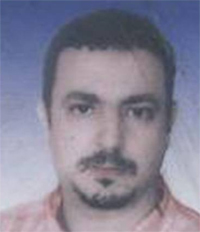
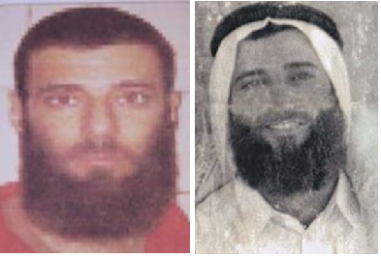
A profile of Umar Hadid, taken from the Islamic State’s “Distinguished Martyrs” series posted to a jihadist forum, is reproduced below with some interesting and important sections highlighted in bold. Hadid—variously known as Abu Khattab al-Falluji, Abu Khattab al-Ansari, and Abu Khattab al-Iraqi—was a native of Fallujah who took up Salafism in the late 1990s during the rule of Saddam Husayn, leading to clashes with the security forces and Hadid going into internal exile. After the fall of Saddam, Hadid quickly linked up with the elite circles of the nascent Islamic State movement, including its leader Ahmad al-Khalayleh (Abu Musab al-Zarqawi), his deputy Umar Yusef Jum’a (Abu Anas al-Shami), the military leader Mustafa Ramadan Darwish (Abu Muhammad al-Lubnani) and Abu Raghd who set up the Rawa Camp in Anbar Province, said to be the first terrorist training facility of the Iraqi jihad, and Abdallah Najem al-Jawari (Abu Azzam al-Iraqi), the chief financier and Anbar governor in 2004 before being appointed emir of Baghdad in 2005. Hadid was the leader of the insurgency in the two battles at Fallujah in 2004, being killed during the second of them. Continue reading
By Kyle Orton (@KyleWOrton) on January 29, 2017

Manaf al-Rawi
Manaf Abdul Rahim al-Rawi was the leader of operations in Baghdad for the Islamic State of Iraq (ISI), the predecessor to the Islamic State (IS), between 2008 and his arrest in 2010. Al-Rawi had been with IS from its earliest days and his arrest in 2004 only advanced him through the ranks as he networked in prison. Upon release and assumption of the post of wali (governor) of Baghdad, al-Rawi was responsible for some of the worst atrocities in 2009 and 2010 in that city. Al-Rawi was executed in prison in 2013. Continue reading
By Kyle Orton (@KyleWOrton) on January 29, 2017

Hudayfa al-Batawi was among the Iraqis who joined the Islamic State (IS) movement early after the fall of Saddam Husayn, having been a long-time Salafist extremist. Al-Batawi rose through the ranks and became the emir of Baghdad, involved in some of the worst attacks in that city in 2009 and 2010. Arrested in late 2010, al-Batawi was killed in a prison riot in 2011. Continue reading
By Kyle Orton (@KyleWOrton) on January 28, 2017

A joint American-Iraqi raid killed Ahmad al-Ubaydi (Abu Suhayb), the Islamic State of Iraq’s Northern Commander, on 19 April 2010, a follow-up raid after ISI’s emirs had been killed the day before. Al-Ubaydi’s death, and the many other ISI leaders picked off before and after him, seemed at the time to presage ISI’s downfall. Instead, ISI was just about to become more powerful than ever. Continue reading
By Kyle Orton (@KyleWOrton) on January 28, 2017

Abdallah Najem al-Jawari (Abu Azzam al-Iraqi) was something like the Islamic State (IS) movement’s first Finance Minister and a senior regional official, first in his native Anbar—he was from Fallujah—and later in Baghdad. Joining the group quickly after the collapse of the Saddam Husayn regime, al-Jawari was killed in 2005. Al-Jawari remains among those commemorated by IS as founders who set the stage for the current rise of “the State”.
Continue reading
By Kyle Orton (@KyleWOrton) on January 28, 2017

Mohamed Moumou (Abu Qaswara)
Mohamed Moumou, better-known as Abu Qaswara, was the Commander of the North for the Islamic State of Iraq (ISI), one of the most powerful military positions in the group, when he was killed by American forces in Mosul on 5 October 2008. Continue reading
By Kyle Orton (@KyleWOrton) on January 28, 2017

When Ibrahim al-Badri (Abu Bakr al-Baghdadi) became the leader of the then-Islamic State of Iraq (ISI) in May 2010, his deputy was man named Numan al-Zaydi, who went under various pseudonyms: Abu Ibrahim al-Ansari, Abu Sulayman al-Nasser, and Al-Nasser Lideen Allah Abu Sulayman. Al-Zaydi was killed in February 2011. Continue reading
By Kyle Orton (@KyleWOrton) on January 28, 2017

In his first speech as the then-Islamic State of Iraq’s (ISI’s) official spokesman in August 2011, Taha Falaha (Abu Muhammad al-Adnani) referred to several of the group’s “leaders” who had been killed. Among them was Abu Raghd, whose biography provides a glimpse of the role regional states—specifically Saddam Husayn’s Iraq and Bashar al-Assad’s Syria—played in facilitating the birth of the Islamic State (IS). Continue reading
By Kyle Orton (@KyleWOrton) on January 27, 2017

The Islamic State’s June 2014 declaration that the areas it controlled were the restored “Caliphate” was seen by many as a novel development. In fact, “the State” was declared in October 2006. The next month, the predecessor of the Islamic State (IS), Al-Qaeda in Mesopotamia (AQM), dissolved itself, and a month after that the claim to statehood was expanded upon—while being wilfully ambiguous about the caliphal pretensions—in the first speech by the then-emir, Hamid al-Zawi (Abu Umar al-Baghdadi). Similarly, though confusion remains on the point, it was in this same period that the symbol of the Islamic State, its black flag, was established.