Tag Archives: Islamic State

The Islamic State’s Deputy and the Ghost of Saddam Hussein

By Kyle Orton (@KyleWOrton) on August 22, 2015

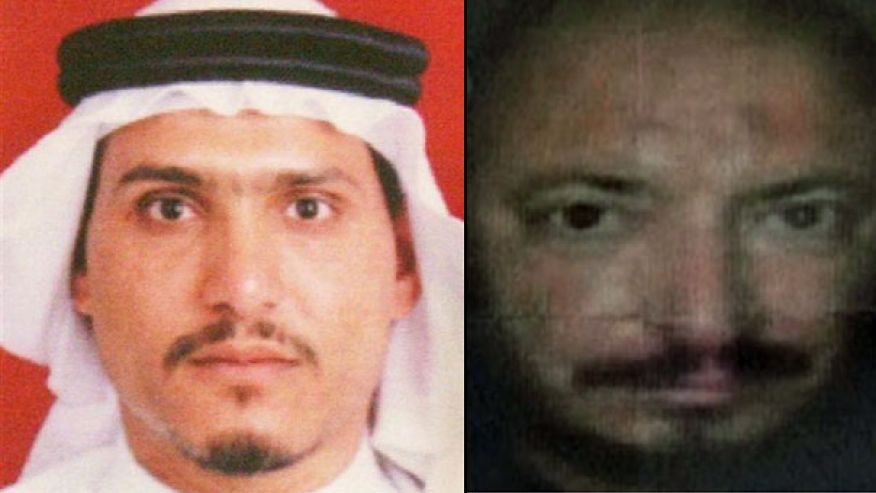
Fadel al-Hiyali

Fadel Ahmad Abdullah al-Hiyali (a.k.a. Abu Muslim al-Turkmani a.k.a. Haji Mutazz)

Fadel Ahmad Abdullah al-Hiyali, the overall deputy to the “caliph” Abu Bakr al-Baghdadi, who heads the Military Council of the Islamic State (ISIS) and is the direct commander of ISIS’s forces in Iraq, was killed in a drone strike in Mosul on August 18, according to a U.S. spokesman for the National Security Council yesterday. Al-Hiyali, who also goes by the pseudonyms Abu Muslim al-Turkmani, Abu Mutaz al-Qurayshi, and Haji Mutaz, was reported to have been travelling in a car with a media operative named Abu Abdullah when he was killed.
Continue reading

Islam’s First Terrorists, Part 6

By Kyle Orton (@KyleWOrton) on August 22, 2015

This is the final part of a six-part series. Read parts one, two, three, four, and five, or read the whole essay.
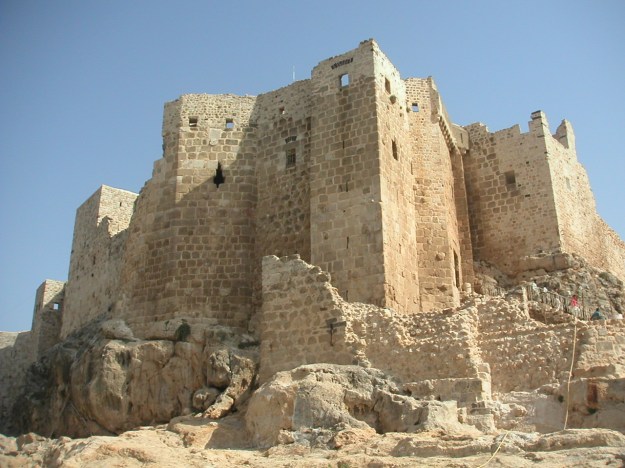
Masyaf fortress, the headquarters of the Nizari Ismailis (The Assassins) in Syria

Masyaf fortress, the headquarters of the Nizari Ismailis (The Assassins) in Syria

Conclusion

The Nizari Ismailis did not invent assassination, of course; only lent it their name. The Ismailis were “part of a long tradition that goes back to the beginnings of Islam … of popular and emotional cults in sharp contrast with the learned and legal religion of the established order.” Still, the Nizaris did rely on the Holy Law. The ideal of Islamic governance might be authoritarian, but it is not arbitrary; if a ruler crosses the shari’a it becomes a duty to resist. This element became gradually more marginal as the religion formed into a State and Empire, but it was there and many other sects had called on it in their opposition to the prevailing regimes. The Nizaris were the first to call up this tradition of righteous rebellion and combine it with an effective opposition organization.

In their use of conspiracy, assassination, and even the ceremonial nature of the murders and the weapon-cult, the Assassins were hardly unique. But they might well be the first terrorists: those who, at an overwhelming disadvantage in conventional terms, used unconventional means in a planned, long-term campaign of targeted violence as a political weapon with the intention of overturning the established order. Continue reading

Islam’s First Terrorists, Part 1

By Kyle Orton (@KyleWOrton) on August 17, 20151

Book Review: The Assassins: A Radical Sect in Islam (1967) by Bernard Lewis

Abstract

The fourth Caliph, Ali, was assassinated during a civil war that his supporters, Shi’atu Ali (Followers of Ali), lost to the Umayyads, who thereafter moved the capital to Damascus. The Shi’a maintained that the Caliphate should have been kept in the Prophet’s family; over time this faction evolved into a sect unto themselves, which largely functioned as an official opposition, maintaining its claim to the Caliphate, but doing little about it. Several ghulat (extremist) Shi’a movements emerged that did challenge the Caliphate. One of them was the Ismailis. Calling themselves the Fatimids, the Ismailis managed to set up a rival Caliphate in Cairo from the mid-tenth century until the early twelfth century that covered most of North Africa and western Syria. A radical splinter of the Ismailis, the Nizaris, broke with the Fatimids in the late eleventh century and for the next century-and-a-half waged a campaign of terror against the Sunni order from bases in Persia and then Syria. In the late thirteenth century the Nizaris were overwhelmed by the Mongols in Persia and by the Egyptian Mameluke dynasty which halted the Mongol invasion in Syria. The Syrian-based branch of the Nizaris became known as the Assassins, and attained legendary status in the West after they murdered several Crusader officials in the Levant. Attention has often turned back to the Assassins in the West when terrorist groups from the Middle East are in the news, but in the contemporary case of the Islamic State (ISIS) the lessons the Nizaris can provide are limited. Continue reading

America Abandons the Syrian Revolution

By Kyle Orton (@KyleWOrton) on August 14, 2015

1

In the last week, two events have provided further evidence that the United States has effectively sided with the Assad regime in Syria, acting effectively as the regime’s air force, and that America’s alliance with Assad is part of the broader policy of détente with Iran, facilitated by the nuclear deal, which has ceded Syria to Iran as a sphere of influence. Continue reading

A Response to Criticism: Why the Ex-Saddamists in the Islamic State Matter

By Kyle Orton (@KyleWOrton) on August 10, 2015

Abu Ayyub al-Masri and Abu Omar al-Baghdadi: ISIS's co-leaders, 2006-10

Abu Ayyub al-Masri and Abu Omar al-Baghdadi: ISIS’s co-leaders, 2006-10

In the Jerusalem Post on Sunday, Seth Frantzman wrote in opposition to the idea that the ex-military-intelligence officials of the Saddam Hussein regime had contributed significantly to the success of the Islamic State (ISIS) in taking over large swathes of Syria and Iraq. Much of what Frantzman says, about the overestimation of ISIS and Iran’s growing Imperium pushing Sunnis into ISIS’s camp, is unarguable, but he is in error about the time-frame of the ex-Saddamists’ migration into ISIS and underestimates their impact. Continue reading

The Islamic State, Saddam, and the Media

By Kyle Orton (@KyleWOrton) on August 9, 2015

1

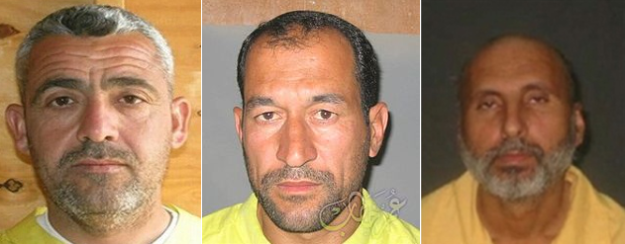
Left to Right: (1) Fadel al-Hiyali (Haji Mutazz or Abu Muslim al-Turkmani); (2) Adnan Ismail Najem al-Bilawi (Abu Abdulrahman al-Bilawi); (3) Samir al-Khlifawi (Haji Bakr)

Nearly a year ago I wrote that in crude terms the Islamic State’s (ISIS’s) “military strength comes from the remnants of Saddam Hussein’s military-intelligence apparatus and the Caucasus’ Salafi-jihadists.” Since then I have dug up some answers for why this is so that did not seem to be widely shared. This might be about to change.

Continue reading

Turkey Fears A Kurdish State More Than The Islamic State

By Kyle Orton (@KyleWOrton) on July 28, 2015

A version of this article was published at NOW Lebanon 

1

After years of threatening, Turkey directly intervened in Syria on Friday, launching airstrikes against the Islamic State (ISIS), and finally allowed the U.S. to use Incirlik for jet and drone attacks against ISIS. Concurrently, Turkey launched airstrikes into Iraqi Kurdistan against the Kurdistan Workers’ Party (PKK). Ankara is framing this as an equal-opportunities war on terrorists, but Turkey’s actions over the last four years in Syria give a lot of cause for wonder as to which side Ankara is on when it comes to terrorism. Continue reading

Reassessing the Saudi-led Intervention in Yemen

By Kyle Orton (@KyleWOrton) on July 24, 2015

1

The Saudi-led Operation DECISIVE STORM began in Yemen on March 25 as a campaign of airstrikes against the Iran-backed Houthis, to weaken them and re-install the president, Abd Rabbo Mansour Hadi, who was overthrown by the Houthis last September.

In April, I wrote in support of the Saudi-led operation for: (1) having drawn a line against Iran’s imperialism after Lebanon, Syria, and Iraq; (2) potentially decreasing the growth of the Islamic State (ISIS) by providing Sunnis, in Yemen and beyond, with an alternative form of resistance to Iran’s encroachments; and (3) offering a chance for more stability in Yemen, which was then in free fall with Iran, al-Qaeda, and ISIS capitalizing on the chaos. Continue reading

Demise of an ex-Saddamist in Libya

By Kyle Orton (@KyleWOrton) on July 21, 2015

Abu Nabil al-Anbari

Abu Nabil al-Anbari

An Islamic State (ISIS) commander was killed in Libya in mid-June, The Daily Beast reported yesterday, after being “paraded … through the streets amid the taunts of onlookers, and then walked … to a gallows, where he was hanged.” [SEE UPDATES] This occurred in the eastern city of Derna, long a hotbed of Islamic militancy. The crucial thing about the “executed” ISIS operative is that he was an Iraqi and an FRE—a former (Saddam) regime element—who had been dispatched to Libya last year to oversee the cultivation of an ISIS branch.

Continue reading

Saddam’s Henchmen Were Fanatics Long Before They Joined The Islamic State

By Kyle Orton (@KyleWOrton) on July 20, 2015

Published at National Review

After long neglect, the media has finally recognized the role of the FREs—former (Saddam) regime elements—within the Islamic State (ISIS). But the pendulum has now swung too far: Some reports are now claiming that the FREs have transformed the leader of the terror army, Abu Bakr al-Baghdadi, into nothing more than a front man for the Baathists.

These suppositions are mistaken. Most FREs within ISIS have not been ideologically Baathists for a long time. Continue reading