Tag Archives: Islamic State

Film Review: The Islamic State (2014) by Vice News

By Kyle Orton (@KyleWOrton) on August 25, 2014

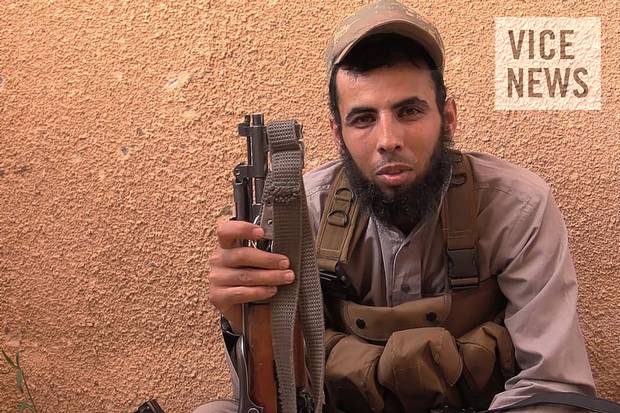
Abu Mosa, the Islamic State's press officer

Abu Mosa, the Islamic State’s press officer

This is an extraordinary piece of work from Vice News. Earlier this month they released a five-part film after one of their journalists, Medyan Dairieh, embedded with the Islamic State (I.S.), formerly ISIS, in Raqqa City, the de facto headquarters of I.S. in north-eastern Syrian. It’s an extraordinarily brave thing to do given the number of journalists I.S. has kidnapped, the number of journalists killed in Syria (at least sixty), and of course the penchant of the Zarqawi’ites for beheading Westerners on video, as gruesomely underlined again with the murder of James Foley. Continue reading

Ghouta: One Year On

By Kyle Orton (@KyleWOrton) on August 21, 2014

Some of the children killed by the Assad regime's CW attack on Aug. 21, 2013

Some of the children killed by the Assad regime’s CW attack on Aug. 21, 2013

Can it really be twelve whole months since Bashar al-Assad gassed to death more than 1,400 people in a morning? I happened to be in London when the attack on the Damascus suburbs of Ghouta took place, exactly a year ago. London has become (in)famous recently for mass-protests that throw around the word “genocide”—against Israel’s (in my view ill-thought out) recent response to HAMAS’ rocket fire. London had no time for Syria’s grief: Continue reading

Do Not Let The Murder of James Foley Distract From The Assad Regime

By Kyle Orton (@KyleWOrton) on August 20, 2014

James Foley

James Foley

Last night the Islamic State released a revolting video in which they beheaded the American journalist James Foley, who has been missing since Thanksgiving Day (November 22) 2012. Continue reading

The Jihadists’ Information War in Syria and Iraq

By Kyle Orton (@KyleWOrton) on July 22, 2014

In April, the International Centre for the Study of Radicalisation produced a report, ‘Measuring Importance and Influence in Syrian Foreign Fighter Networks,’ which examined the use of social media in recruiting people to the jihadist groups, referring almost solely to Syria at that time, but which applies equally to Iraq. I have now gotten around to reading it and its findings are extremely interesting.  Continue reading

Syria’s Forty Months Of Carnage And The Lessons Of Bosnia

By Kyle Orton (@KyleWOrton) on July 15, 2014

A picture I took of Stari Most (Old Bridge) in Mostar, Bosnia, August 2011

A picture I took of Stari Most (Old Bridge) in Mostar, Bosnia, August 2011

Since the Syrian uprising began on March 15, 2011, there have been persistent echoes of Bosnia. There are some critics of the liberal interventionism specifically on the grounds that their worldview is so heavily coloured by Bosnia—and they make some valid points—but the analogy has been inescapable in Syria.
Continue reading

Al-Qaeda In Syria Declares War On The Rebellion

By Kyle Orton (@KyleWOrton) on July 13, 2014

The only official picture of Jabhat an-Nusra’s Emir, Abu Muhammad al-Golani, given out by the Iraqi government.

Syria’s rebellion was already fighting for its life, squeezed between the regime and the Islamic State (I.S.) in Aleppo, and on Friday night a new front appeared to open. Jabhat an-Nusra, al-Qaeda’s official branch in Syria, announced that it was forming an Islamic Emirate. According to a translation by Hassan Hassan, Nusra’s commander, Abu Muhammad al-Golani, said that they would now start implementing the shari’a “in the full sense of the word,” and “without compromise, leniency, ambiguity, or politeness.” Golani specifically says that Nusra will begin implementing the hudud, the harsh punishments like amputation for theft, which Nusra has very deliberately not done so far, saying war conditions suspended such punishments according to the Holy Law. At a more material level, it avoided garnering them bad press for savagery against the civilian population. Golani dismissed with contempt the secular rebels as “grovelling” to the West, and declared I.S.’s Caliphate “void” and its members ghulat (extremists).

Continue reading

The First Appearance of the Caliph

By Kyle Orton (@KyleWOrton) on July 12, 2014

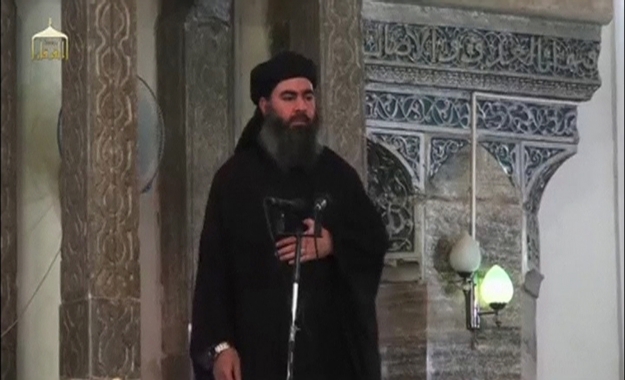
Abu Bakr al-Baghdadi

The leader of the Islamic State (ISIS), Abu Bakr al-Baghdadi, made his first public appearance on July 4, 2014, delivering the khutbat al-jum’a (Friday prayer) at the Great Mosque, also known as the Nuri Mosque or Zangi Mosque, in Mosul. A translation of al-Baghdadi’s speech was made by INSITE Blog on Terrorism and Extremism and is reproduced below. Continue reading

Syria’s Rebellion on the Ropes

By Kyle Orton (@KyleWOrton) on July 9, 2014

3

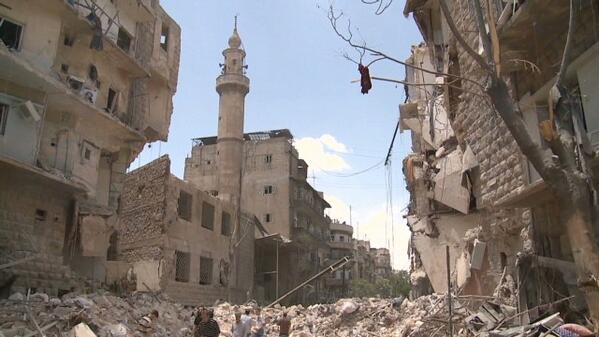
The devastated city of Aleppo

As we approach the forty month mark for the Syrian uprising the situation is grimmer than it has ever been. Not just the casualties: more than 200,000 people dead. Not just the physical devastation and mass-displacement of more than a third of the country. But now in military terms the rebellion is on the defensive in a way it has not been since it erupted at the end of 2011, after more than six months of peaceful protests.

Continue reading

The Leader of the Islamic State Explains the Caliphate’s Vision

By Kyle Orton (@KyleWOrton) on July 2, 2014

ramadan-2014

In an audio message released on 1 July 2014, two days after the Islamic State announced the restoration of the caliphate, the Islamic State’s leader, Abu Bakr al-Baghdadi, laid out the Islamic State’s vision. The Islamic State put out an English version of the speech, which is reproduced below with some minor editions and some interesting sections highlighted in bold. Continue reading

The Anti-Interventionists Got What They Wanted in Syria and Iraq: Are They Happy Now?

By Kyle Orton (@KyleWOrton) on July 1, 2014

BBC map of ISIS’/Islamic State’s operational area

As we enter the fortieth month of Syria’s ordeal, and with the renegade Zarqawi’ite network in Iraq finally declaring that its virtual ministries are being uploaded into a fully restored Caliphate extending from Raqqa to Tikrit, the most depressing thought of all is that it did not have to be this way. Continue reading