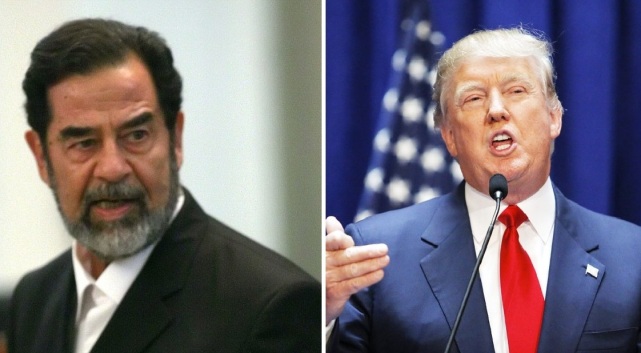
Last night Donald Trump unburdened himself of the view that Saddam Hussein was an efficient anti-terrorist operator. It is a statement Trump has made before, and it is one of such staggering ignorance—yet one which has such wide sympathy—that it seemed worth examining the multiple ways in which it was wrong. Continue reading →
This essay, written to tie together my work on the relationship between the Saddam Hussein regime and the Islamic State, was completed last summer and submitted to an outlet, where it entered a form of development hell. After giving up on that option late last year, the opportunity arose to get a shorter version published in The New York Times in December. But I procrastinated too long over what to do with the full essay and a recent change in my work situation means I no longer have the bandwidth to go through the process of finding it a new home, so here it is.
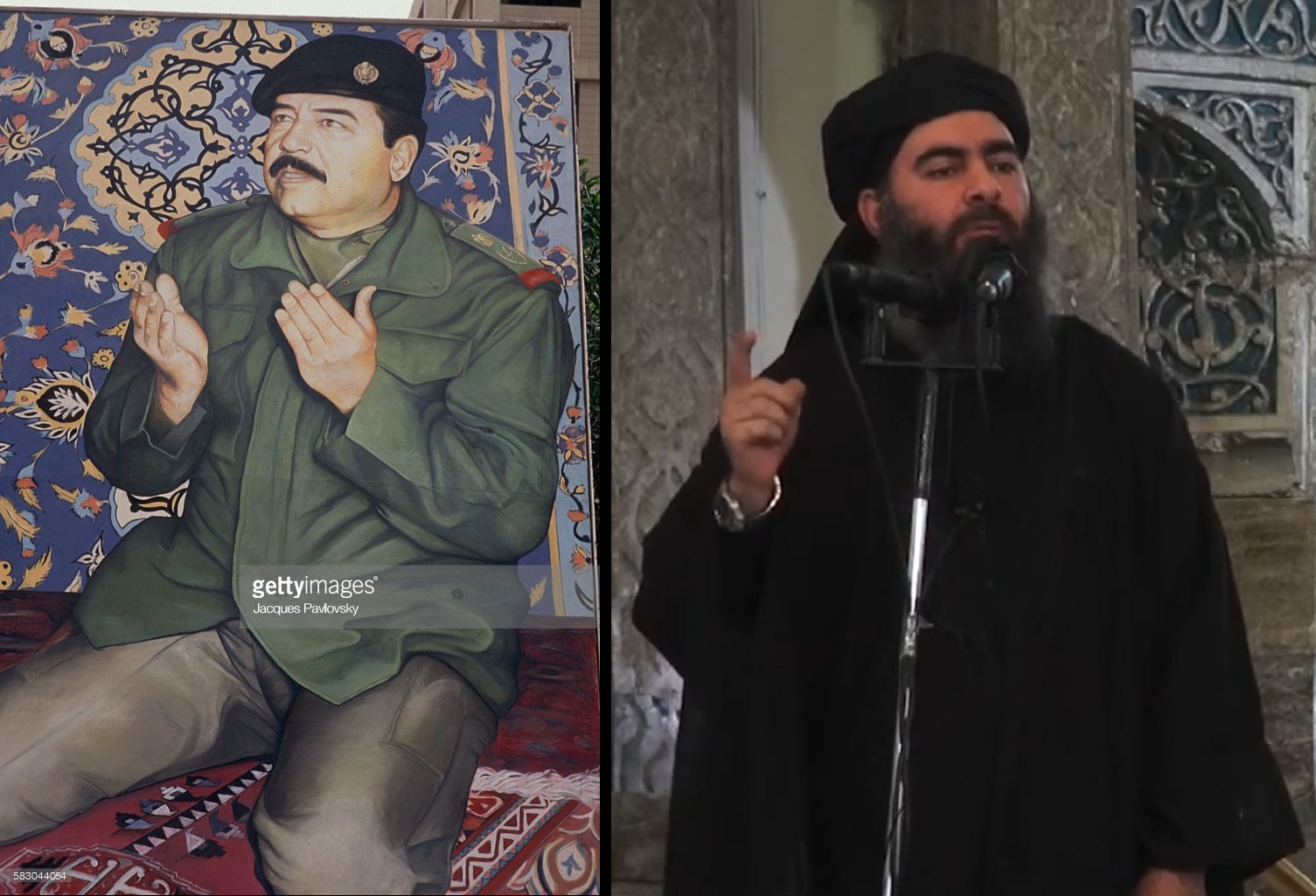
“Abu-Bakr al Baghdadi is a product of the last decade of Saddam’s reign,” argues Amatzia Baram, a scholar of Iraq. He is correct in at least three ways. First, in its last decade in power, the Iraqi Ba’ath regime transformed into an Islamist government, cultivating a more religious, sectarian population on which the Islamic State (ISIS) could draw. Part of Saddam Hussein’s “Faith Campaign” also involved outreach to Islamist terrorists, including al-Qaeda, which meant that the synthesis of Ba’athism and Salafism that fused into the Iraqi insurgency after the fall of Saddam was already well advanced by the time the Anglo-American forces arrived in Baghdad in 2003. Second, the ISIS leadership and military planning and logistics is substantially reliant on the intellectual capital grown in the military and intelligence services of the Saddam regime. And finally, the smuggling networks on which ISIS relies, among the tribes and across the borders of Iraq’s neighbours, for the movement of men and materiel, are directly inherited from the networks erected by the Saddam regime in its closing decade to evade the sanctions. The advantages of being the successor to the Saddam regime make ISIS a more formidable challenge than previous Salafi-jihadist groups, and one that is likely to be with us for some time.
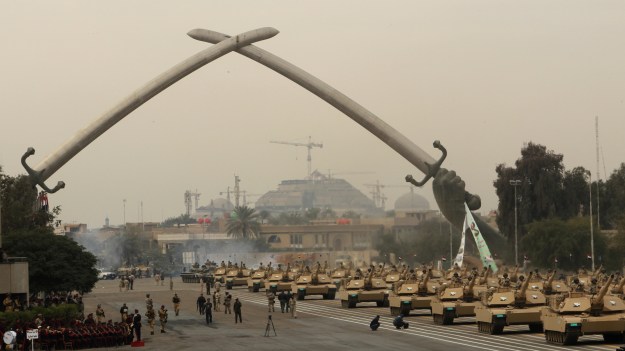
The “Victory Arch,” which Saddam built after the war with Iran. (January 2012)
About three weeks ago I wrote a piece for The New York Times explaining the evolution of Saddam Hussein’s regime away from the hard-secularism of its Ba’athist origins, and how this had prepared the ground for the Islamic State (IS). I received much positive feedback, but the social media reaction was inevitable: little thought and much anger, particularly from people who view Iraqi history through a political prism and felt I was trying to exculpate George W. Bush. With rare exceptions, the critique could hardly be called thoughtful. So it is nice to finally have such a critique to deal with, from Samuel Helfont and Michael Brill in today’s Foreign Affairs. Continue reading →
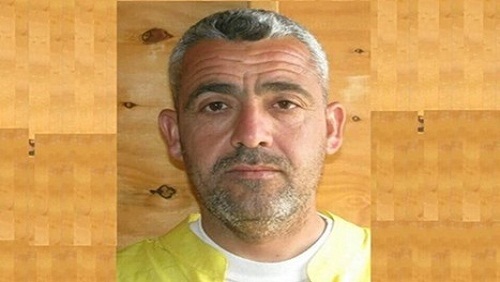
Fadel Ahmad Abdullah al-Hiyali (a.k.a. Abu Muslim al-Turkmani a.k.a. Haji Mutazz)
Fadel Ahmad Abdullah al-Hiyali, the overall deputy to the “caliph” Abu Bakr al-Baghdadi, who heads the Military Council of the Islamic State (ISIS) and is the direct commander of ISIS’s forces in Iraq, was killed in a drone strike in Mosul on August 18, according to a U.S. spokesman for the National Security Council yesterday. Al-Hiyali, who also goes by the pseudonyms Abu Muslim al-Turkmani, Abu Mutaz al-Qurayshi, and Haji Mutaz, was reported to have been travelling in a car with a media operative named Abu Abdullah when he was killed. Continue reading →
More than twelve years after the fall of Saddam Hussein, the conventional wisdom is that Saddam’s regime had no connection with al-Qaeda, and such “evidence” as was adduced was tortured out of Ibn al-Shaykh al-Libi in the Bush administration’s desperation to cobble together a casus belli. But if one puts ideology on hold, and considers the evidence of Stephen Hayes’ The Connection, a rather different picture emerges. Continue reading →
A purported defector from the Islamic State, known only as “Abu Ahmad,” released testimony online on 5 April 2014 via the Syrian opposition news site al-Durar al-Shamiya under the heading, “The Concealed Truths About al-Baghdadi’s State”. Abu Ahmad describes himself as “one of the mujahideen in Khorasan [Afghanistan-Pakistan] and Iraq, and now in al-Sham [Syria],” and it is quite clear that Abu Ahmad has defected to al-Qaeda. On 25 September 2014, an English version of this testimony was posted on the Fund for Fallen Allies website. It has been reposted below—with some editions to transliteration and syntax—to avoid it being lost.Continue reading →
As we approach the forty month mark for the Syrian uprising the situation is grimmer than it has ever been. Not just the casualties: more than 200,000 people dead. Not just the physicaldevastation and mass-displacement of more than a third of the country. But now in military terms the rebellion is on the defensive in a way it has not been since it erupted at the end of 2011, after more than six months of peaceful protests.
 Book Review: The Connection: How al-Qaeda’s Collaboration With Saddam Hussein Has Endangered America (2004) by Stephen Hayes
 Kyle Orton's Blog