Tag Archives: Jabhat al-Nusra

The Riddle of Haji Bakr

By Kyle Orton (@KyleWOrton) on November 10, 2015
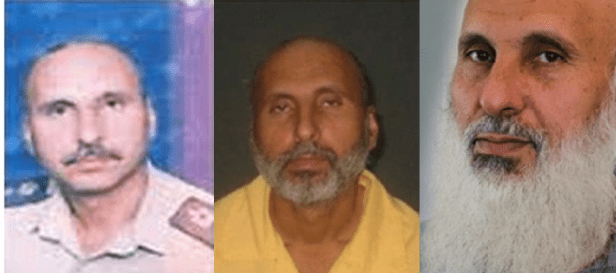
Samir al-Khlifawi (Haji Bakr): in Saddam's army, in American prison, as a commander of the Islamic State

Samir al-Khlifawi (Haji Bakr): in Saddam’s intelligence service, in American prison, as a commander of the Islamic State

In the last few months I’ve increasingly focussed on the former (Saddam) regime elements (FREs) within the Islamic State (IS). There’s now an entire section on this blog about it, and Aaron Zelin over at Jihadology recently gave me time to elaborate in a podcast.

In studying this topic there is one inescapable name: Samir Abd Muhammad al-Khlifawi, better-known by his pseudonym Haji Bakr, and sometimes by his kunya, Abu Bakr al-Iraqi. Al-Khlifawi is a former colonel in an elite intelligence unit of the Saddam Hussein regime—focussed on air defence at Habbaniya airbase, though what exactly that entails is murky. Al-Khlifawi was also apparently involved in weapons development.

Al-Khlifawi came to international attention in April when Christoph Reuter published an article in Der Spiegel naming al-Khlifawi as the “architect” of IS’s expansion into Syria, and the man who had been “pulling the strings at IS for years.” Continue reading
What’s Behind the Rise of the Islamic State?

By Kyle Orton (@KyleWOrton) on November 5, 2015

Published at NOW Lebanon.

1

William McCants’ The ISIS Apocalypse: The History, Strategy, and Doomsday Vision of the Islamic State is an immensely readable addition to the literature on the most powerful terrorist-insurgent group in the world. McCants covers the Islamic State, often referred to as ISIS, from its inception in Taliban Afghanistan in 1999 to its migration to Iraq in 2002, and through its various stages before its blitzkrieg from Syria across central Iraq in June 2014, which brought ISIS to global attention. McCants shows that ISIS’s evolution is not just a religio-socio-political and military phenomenon, but an intellectual one. ISIS has built the foundations of its statelet on the lessons learned by Salafi-jihadists from their previous battlefronts, such as Afghanistan, Chechnya, and Algeria, and their various mistakes, many of them ISIS’s own. Continue reading

Why Solely Backing the PYD Against the Islamic State is a Mistake

By Kyle Orton (@KyleWOrton) on October 20, 2015

Published at NOW Lebanon.

1

The Pentagon-run train-and-equip (T&E) program had intended to take Syrian rebels, stop them from being rebels by preventing them from fighting the Assad regime, and repurpose them into an American-directed strike force against the Islamic State (ISIS). Unsurprisingly, there were few takers and the program ended in disaster and humiliation. In the wake of this failure, President Barack Obama has turned away from the Arab rebels and looked to the Syrian Kurds to fight ISIS. This is a strategy that is not only doomed to fail—since Sunni Arabs taking responsibility for their local security is the only way to sustainably defeat ISIS—but would, if implemented, make the ISIS problem worse. A report from Amnesty International this week documenting crimes, including ethnic cleansing, by the armed Kurdish forces against Arabs and Turkmens in northern Syria also provides an occasion to look more closely at a force with a history of regime collaboration, political extremism, and terrorism. Continue reading

What Russia Wants in Syria

By Kyle Orton (@KyleWOrton) on October 4, 2015

US President Barack Obama (R) listens to Russian President Vladimir Putin after their bilateral meeting in Los Cabos, Mexico on June 18, 2012 on the sidelines of the G20 summit. Obama and President Vladimir Putin met Monday, for the first time since the Russian leader's return to the presidency, for talks overshadowed by a row over Syria. The closely watched meeting opened half-an-hour late on the sidelines of the G20 summit of developed and developing nations, as the US leader sought to preserve his

In the last few days I’ve written about Russia’s initial military action in Syria, which is intended to prop up the dictatorship of Bashar al-Assad, and explained (with my friend James Snell) how U.S. policy has enabled this, both by effectively outsourcing Middle East policy to Vladimir Putin over the chemical weapons “red line” debacle, and by the pro-Iran tilt that is implicit in President Obama’s nuclear deal-facilitated move toward détente with the Islamic Republic: Obama is effectively supporting Iran’s assets in Syria, and Putin is now using those same pieces to prosecute his own war in the Levant. With this in the background, this post will focus on what Putin wants in Syria.

Putin’s aims in Syria can be boiled down to two: (1) Ensure the Assad tyranny survives, which includes the building of a permanent military-colonial outpost on the Mediterranean coast and destroying all the moderate rebels so that Syria can be presented as a choice of Assad or the Islamic State (I.S.), legitimizing Russia’s support for Assad; and (2) humiliating the West on the way to constructing an alternate world order to American hegemony. Continue reading

Russia’s War For Assad

By Kyle Orton (@KyleWOrton) on September 30, 2015

1

Russia began airstrikes in Syria today, ostensibly to combat the Islamic State (I.S.). In reality the strikes first hit U.S.-supported moderate rebels and the campaign is intended to buttress the dictatorship of Bashar al-Assad. Continue reading

Saddam’s Faith Campaign and the Islamic State

By Kyle Orton (@KyleWOrton) on September 28, 2015

A version of this article was published at NOW Lebanon and syndicated at Business Insider

1

American intelligence analysts have been pressured into giving a more positive assessment of the progress of the war against the Islamic State (ISIS), it has been reported, confirming what was obvious to everyone not subject to influence from the White House: the anti-ISIS campaign is failing. To devise an effective strategy involves understanding where ISIS came from, and that involves examining the Saddam Hussein regime.

Saddam is commonly regarded as the quintessential secularist, and he was initially. But over its last fifteen years the Saddam regime Islamized, effectively creating a religious movement under Saddam’s leadership, giving additional space and power to the non-governmental Salafi Trend, and hardening the sectarian differences in Iraq—paving the way for something like ISIS in its aftermath. Continue reading

The Islamic State: Between Al-Qaeda and Saddam Hussein

By Kyle Orton (@KyleWOrton) on September 22, 2015

Abu Musab az-Zarqawi

Abu Musab al-Zarqawi

In August 2015’s Perspectives on Terrorism, Truls Tønnessen writes about the evolution of the leadership of what is now the Islamic State (I.S.) from its origins in al-Qaeda in Iraq (AQI) under the heading, “Heirs of Zarqawi or Saddam?” Tonnessen makes the obvious point that AQI’s leadership was largely comprised of foreign Salafi-jihadists with al-Qaeda histories, while I.S. is led by Iraqis, most of them former (Saddam) regime elements (FREs). But Tonnessen’s argument that I.S.’s leaders had not been AQI members is mistaken (they had), which erodes his arguments that AQI’s influence diminished over time as I.S. formed from various mergers, and that this diminution of influence came about because I.S.’s post-2010 leadership purged the veteran AQI elements within I.S. (I.S.’s leaders are veteran AQI elements.) The main difference between AQI’s leaders and I.S.’s is that AQI’s leaders had background connections to al-Qaeda Central (AQC) networks, and I.S.’s largely do not. While Tonnessen sees Jabhat al-Nusra as linked to these shifting dynamics, this argument does not stack up. Ultimately, Tonnessen’s contention that I.S.’s leaders are more heirs of Saddam than Zarqawi fails in the terms Tonnessen presents it. Continue reading

Iran’s Partnership with al-Qaeda and Unanswered Questions

By Kyle Orton (@KyleWOrton) on September 19, 2015

Imad Mughniyeh and Osama bin Laden

Imad Mughniyeh and Osama bin Laden

The Islamic Republic of Iran released five senior al-Qaeda terrorists in March, ostensibly as part of a prisoner exchange for an Iranian diplomat kidnapped in Yemen by al-Qaeda in the Arabian Peninsula (AQAP). But the murky circumstances in which al-Qaeda’s leaders were “held” in Iran and other inconsistencies cast some doubt on this version of events, and draw attention to some old questions about Iran’s support for al-Qaeda and its affiliates and offshoots. Continue reading

Al-Qaeda Central in Syria

By Kyle Orton (@KyleWOrton) on September 14, 2015

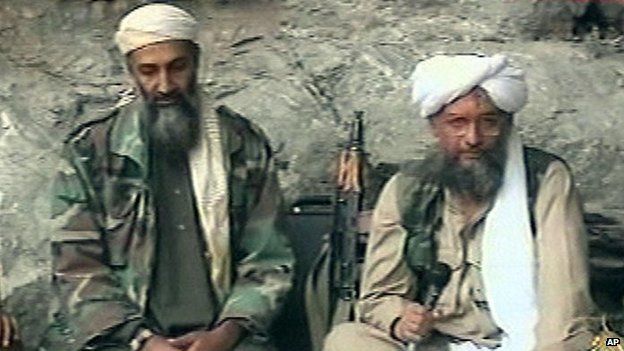
Osama bin Laden and Ayman az-Zawahiri (2001)

Usama bin Ladin and Ayman az-Zawahiri (2001)

A couple of days ago, a leader Jabhat an-Nusra issued a statement condemning Ahrar a-Sham. The statement is actually rather milder than initial reports suggested. Nusra is mostly annoyed at Ahrar for working with Turkey and Qatar to acquire money and weapons. Nusra is also displeased that Ahrar, at the instigation of Ankara and Doha, asked Nusra to publicly break its al-Qaeda link. Nusra also felt Ahrar was too willing to publicly distance itself from Salafi-jihadism to gain war materiel. This will no doubt help intensify the debate about Ahrar’s ostentatious “moderation” over the last eighteen months, and what the West should do about Ahrar.

In this post, however, I’d like to focus on the statement’s author, Abu Firas as-Suri, or more precisely on what he represents. Abu Firas is part of a group of (known) agents of al-Qaeda Central (AQC) who were sent into Syria in mid-2013 to mediate the dispute between Nusra and then-ISIS (now the Islamic State, I.S.), and when that failed the AQC veterans stayed, erected a veritable bureaucracy, and sought to forestall Nusra “going local”. Below are mini-profiles of these AQC veterans. Continue reading

A Case Study of the Islamic State as the Saddam Regime’s Afterlife: The Fedayeen Saddam

By Kyle Orton (@KyleWOrton) on August 31, 2015

Published at Baghdad Invest

Fedayeen Saddam

Saddam Hussein created the Fedayeen Saddam in 1994 as a paramilitary Praetorian unit. The Fedayeen were initially charged with protecting the regime from a repeat of the revolts that followed Saddam’s eviction from Kuwait by acting as a pre-emptive counter-insurgency force. Over time this internal security mission became increasingly about enforcing the Islamic law. Saddam had begun Islamizing his regime in the late 1980s, and intensified this in the early 1990s, attempting to create a synthesis of Ba’athism and Salafism to buttress his legitimacy. Saddam had begun Islamizing his foreign policy as early as 1982-83, making alliances with all manner of Islamist terrorists, thousands of whom came to Iraq for training in the 1990s, where they attended camps run by the Fedayeen. In the Fedayeen—connected to the global Islamist terrorist movement, combining elements of Ba’athism with an increasingly-stern Salafism—is a microcosm of the Saddam regime’s mutation into the Islamic State (ISIS). Continue reading