Tag Archives: jihadism

Islamic State and Lone Wolves

By Kyle Orton (@KyleWOrton) on 16 November 2018

Attack in Melbourne, Australia, 9 November 2018 (image source)

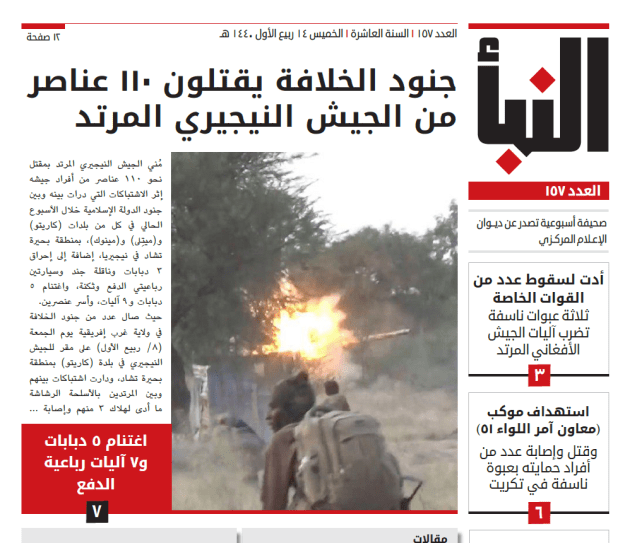
In the latest edition of its newsletter, the Islamic State (IS) explained how it had some of the terrorist attacks committed in its name around the world, where it had not had prior contact with the killers. Continue reading

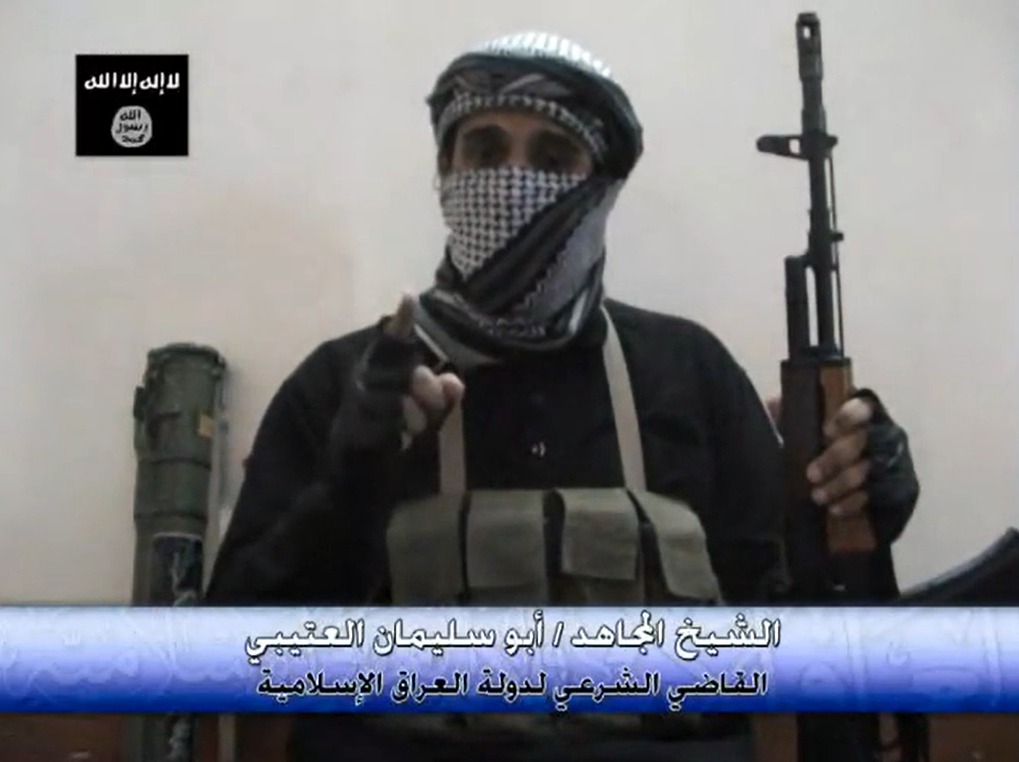
A Rare Video Statement From An Islamic State of Iraq Leader: Chief Judge Abu Sulayman al-Utaybi

By Kyle Orton (@KyleWOrton) on 8 November 2018

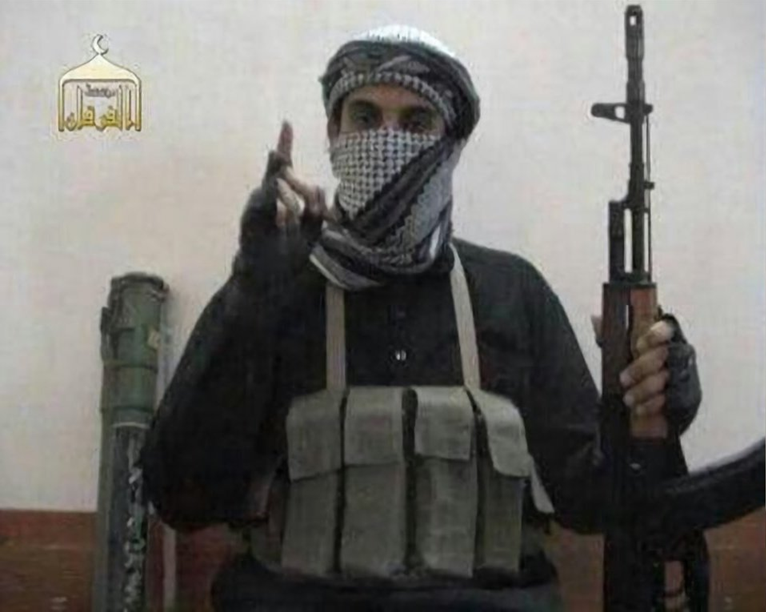
As explained in a previous post, Abu Sulayman al-Utaybi, the Chief Judge of the Islamic State of Iraq (ISI) from early April to late August 2007, has become an important character in many accounts of the history of the Islamic State movement because his abrupt removal from office was followed by his defection from ISI and a journey to Al-Qaeda’s central leadership in Pakistan, where he provided a testimony against his former bosses. If interested in an assessment of that testimony and the whole saga around how it has been used—by Western scholars, Al-Qaeda, and other critics of the Islamic State—check out the prior post. This post reproduces the transcript for what is, as far as I can tell, Abu Sulayman’s first media product for ISI, a twenty-minute video speech released by Al-Furqan Foundation for Media Production on 11 April 2007, entitled, “Why Do We Wage Jihad?”

Continue reading

Testimony of Islamic State Defector Abu Sulayman al-Utaybi

By Kyle Orton (@KyleWOrton) on 6 November 2018

Abu Sulayman al-Utaybi, a Saudi who abandoned his Islamic studies to journey to Iraq in 2006, was appointed chief judge, of the Islamic State movement in March 2007, six months after the Statehood declaration. Between April and June 2007, Abu Sulayman released some public sermons—the picture above is from the first—for what was then called the Islamic State of Iraq (ISI), which had publicly dissolved its bonds to Al-Qaeda when it became a “State” in October 2006, while in fact retaining its bay’a (oath of allegiance) to Al-Qaeda in private.

Continue reading

Europe Tries to Re-engage in Syria

By Kyle Orton (@KyleWOrton) on 30 October 2018

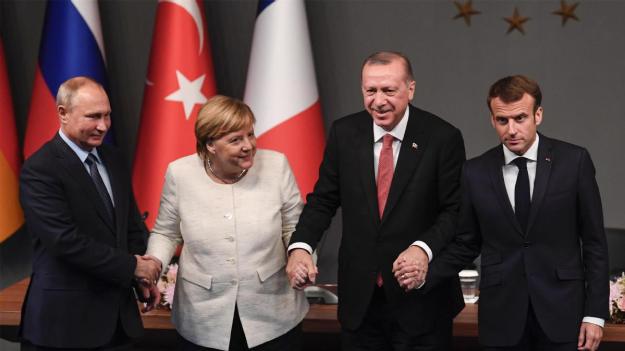
Istanbul summit, 27 October 2018 (image source)

At Saturday’s summit in Istanbul between Turkey, Russia, France and Germany, the focus was on extending the September 17 Turkey-Russia ceasefire agreement reached in Sochi that spared Idlib a full-scale offensive by Bashar al-Assad’s regime and his supporters, and to “progress” on the political track. Continue reading

Can the Europeans Help Reach Peace in Syria?

This article was published at The New Turkey

By Kyle Orton (@KyleWOrton) on 27 October 2018

Today in Istanbul, four governments—Turkey, Russia, Germany, and France—are meeting for a summit over Syria, attempting to consolidate the Sochi Agreement signed by Russia and Turkey over Idlib, and re-invigorate the international political process. There is little reason to think that these talks can succeed on either front. Continue reading

The Islamic State’s Lessons-Learned About Insurgency

By Kyle Orton (@KyleWOrton) on 5 October 2018

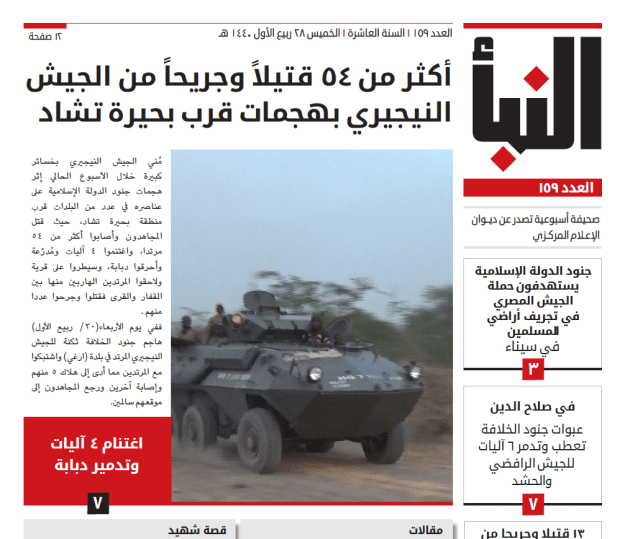
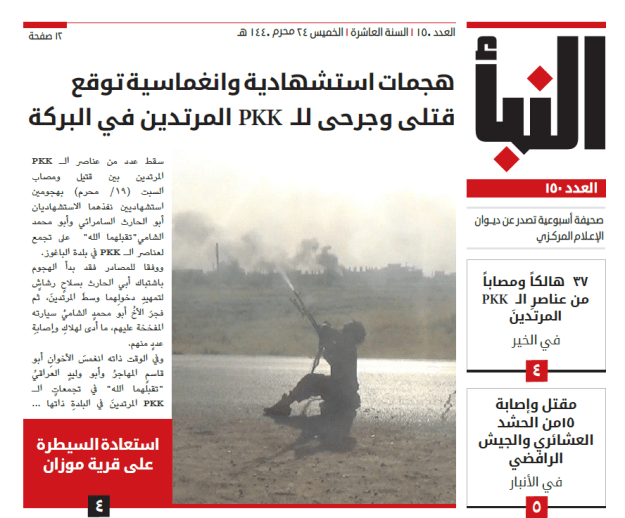
Al-Naba 150

The 150th edition of Al-Naba, the Islamic State’s (IS) weekly newsletter, was published on 4 October. IS focused on the progress of its guerrilla campaign in “Syraq” since the collapse of the caliphate, and gave a historical explanation of how it developed its insurgent methodology. Continue reading

Islamic State Spokesman Claims the Attack in the Arab Area of Iran

By Kyle Orton (@KyleWOrton) on 26 September 2018

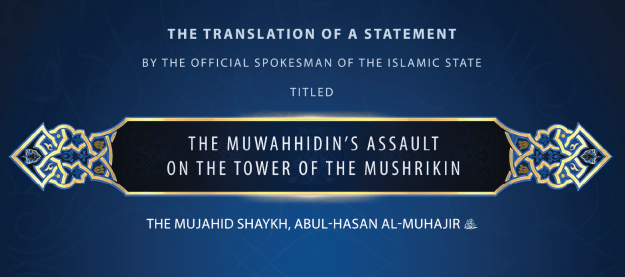
The spokesman for the Islamic State (IS), Abu Hassan al-Muhajir, gave a short speech today, “The Muwahhidin’s Assault on the Tower of the Mushrikin” (The Monotheists’ Assault on the Tower of the Polytheists). Abu Hassan’s speech was further confirmation of IS’s responsibility for the terrorist attack in Iran on 22 September. IS has published an English-language transcript of this speech, which is reproduced below with some editions for transliteration. Continue reading

The Idlib Offensive: Delayed, Not Cancelled

By Kyle Orton (@KyleWOrton) on 20 September 2018

For about two months, it has seemed that an offensive by Bashar al-Assad’s regime, Iran, and Russia into Idlib was imminent, with disastrous humanitarian and strategic consequences. On Monday, an agreement was reached between Turkey and Russia that put a halt to this prospect, at least for now. There is good reason to think the pro-Assad forces are delaying, rather than cancelling, their plans to reconquer Idlib, but the extra time gives space to Turkey to alter the terms politically. Continue reading

Al-Qaeda Leader Says America is the Main Enemy

By Kyle Orton (@KyleWOrton) on 11 September 2018

Al-Qaeda’s emir, Ayman al-Zawahiri, released a half-hour video speech today, entitled, “How to Confront America”. Al-Zawahiri’s speech mentions in passing the move of the U.S. Embassy in Israel from Tel Aviv to Jerusalem, but this—and the increasing relations of the Gulf states with the Jewish state—are held to be mere examples of the rot spread by America. Despite the lessening of Christian belief in the West, says Al-Zawahiri, the inhabitants of what was once called Christendom remain “Crusaders” at heart, with a fierce hatred for Islam and Muslims. Perhaps worse than any physical attack on the jihadists, however, is the ideological challenge of America’s secularism, Al-Zawahiri adds. An English transcript of the speech was released by As-Sahab Media and is reprinted below. Continue reading

What Questions Remain About 9/11?

By Kyle Orton (@KyleWOrton) on 5 September 2018

In less than a week, it will be the seventeenth anniversary of al-Qaeda’s “Plane’s Operation”, the assault on the United States. It is a vertiginous enough reflection that many of us have been alive more years since 11 September 2001 than before it, and positively alarming that many of those who will soon move into the government, media, and other leading societal institutions will have been born after an event that still shapes so much of the international scene. As Anthony Summers and Robbyn Swan put it in The Eleventh Day: The Ultimate Account of 9/11 (2011), we are left with “the brief name ‘9/11’,” the context and meaning stripped away all this time later. The book is a useful overview of an event that should always be to some degree fresh in mind, though it is not without its problems in its analytical sections. Continue reading