Tag Archives: jihadism

The Current Condition of Al-Qaeda

By Kyle Orton (@KyleWOrton) on October 4, 2020

A chapter about Al-Qaeda I wrote for the American Foreign Policy Council’s (AFPC) ‘World Almanac of Islamism’ was published today. Do check it out, and the broader site, which is a great, accessible resource. The format of the website necessitated that the chapter as I submitted it was edited, condensed, and split up to fill out the various categories. In case it is of any interest, the original version of the chapter is reproduced below.

Continue reading

Islamic State is Resurging in Libya

By Kyle Orton (@KyleWOrton) on 13 June 2020

Ghanima (war spoils) captured by Islamic State in Sabha, Libya [Al-Naba 181, 9 May 2019]

After nearly a year of lying low, the Islamic State (IS) has begun reactivating—and advertising its reactivation—in Libya. Continue reading

Coalition Eliminates Senior Islamic State Official Haji Tayseer

By Kyle Orton (@KyleWOrton) on 26 May 2020

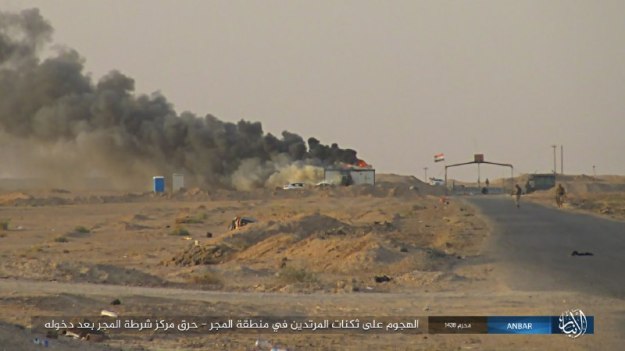
Islamic State Wilayat al-Anbar, October 2017

This morning, the Iraqi government announced that Moataz Numan al-Jaburi (Haji Tayseer), a senior member of the Islamic State (IS), had been killed in Deir Ezzor in eastern Syria by an airstrike from the U.S.-led Coalition, utilising intelligence supplied by Iraq’s Counter-Terrorism Service (CTS, Jihaz Mukafahat al-Irhab). Continue reading

Tunisia and Jihadism

By Kyle Orton (@KyleWOrton) on 26 May 2020

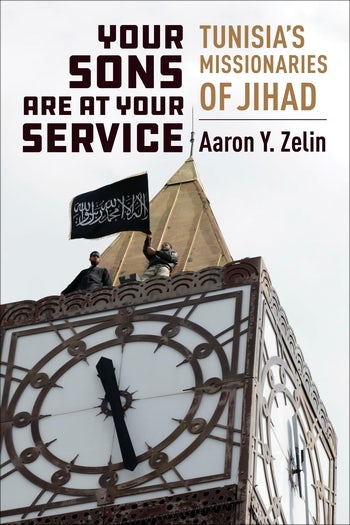
Early in his new book, Your Sons Are At Your Service: Tunisia’s Missionaries of Jihad, The Washington Institute’s Aaron Zelin quotes a pair of sociologists who note that ‘where theories are plentiful … ideas are vacuous’. The book is in many ways the antithesis of this approach. It is not without theoretical content; where social movement theory arises as a means of understanding jihadism, say, the author gives an overview of the literature to contextualise it for the reader. But the general approach is historical, empirical, and detail-rich, so that by the time Zelin summarises his findings in the various sections there can be no doubt about the evidentiary basis. Continue reading

Former Head of Islamic State Executive Committee Speaks

By Kyle Orton (@KyleWOrton) on 23 May 2020

Abd al-Nasir, who claims his real name is Taha al-Ghassani (image sources 1 & 2)

There is now, with various caveats, a general agreement that the Islamic State (IS) is on the upswing—in Iraq, particularly, but also in the Badiya, the desert regions of eastern Syria, and more recently in the south of Syria around Deraa. Still, there have been some recent notable gains against the terrorist group. Continue reading

The Intelligence Value of the Iraqi National Congress

By Kyle Orton (@KyleWOrton) on 27 December 2019

The Iraqi National Congress (INC), the umbrella group for the Iraqi opposition to Saddam Husayn from the 1990s up to 2003, has been immensely controversial, mostly because of its leader, Ahmad Chalabi, against whom the Central Intelligence Agency (CIA) and State Department waged a bitter bureaucratic war, a lot of it in the press, getting into circulation stories of INC trickery—possibly on behalf of Iran—being behind the Bush administration’s decision to invade Iraq.

Continue reading

Why Was There Ever An American Occupation of Iraq?

By Kyle Orton (@KyleWOrton) on 22 December 2019

Douglas Feith was the U.S. Under Secretary of Defense for Policy from 2001 to 2005, one of the most senior positions at the Pentagon during one of the most consequential periods in recent history, covering the 11 September 2001 atrocities and early phase of the U.S.-led response. Feith later wrote a highly illuminating memoir, War and Decision: Inside the Pentagon at the Dawn of the War on Terrorism, which tried to drain some of the hysteria out of the public “debate” about the Iraq dimension of the U.S. policy in particular by explaining the internal arguments in the Bush administration leading up to the decision to finish with Saddam Husayn in 2003, and trying to set those arguments in their proper historical context, both in relation to Iraq—where “the war” had begun twelve years earlier—and the altered American threat perceptions in the shadow of 9/11. Unlike a lot of the gossipy tomes that emerged from former officials, Feith’s book is notably light on opinion and contains reams of declassified documents so readers can check his analysis against the source material. One of Feith’s key judgments is that “the chief mistake was maintaining an occupation government in Iraq for over a year”.[1] As Feith explains in great detail in the book, this was never supposed to happen. So how did it?

Continue reading

Islamic State Bids Farewell to the Caliph

By Kyle Orton (@KyleWOrton) on 10 November 2019

The 207th edition of Al-Naba, the weekly newsletter of the Islamic State (IS), published on 7 November 2019, devotes its main editorial to Ibrahim al-Badri (Abu Bakr al-Baghdadi), the first “Caliph” when the “Caliphate” was declared in June 2014, who was killed on 27 October 2019.

Continue reading

Some thoughts on Turkey, ‘the Kurds’, America, and Syria

By Kyle Orton (@KyleWOrton) on 9 October 2019

Interview with De Re Militari Journal. Continue reading

Last Insurgent Bastion in Syria Shows Signs of Collapse

By Kyle Orton (@KyleWOrton) on 25 August 2019

A version of this article was published at The Arab Weekly

Devastation in Khan Shaykhun, Idlib, Syria, 3 August 2019 (AFP)

Bashar al-Assad’s regime, supported by Russia and (in a more deniable form) Iran, began an offensive against the last insurgent-held enclave in Syria, Idlib, in the last days of April. Up until a month ago, this looked like an embarrassing fiasco: with a minimal increase in Turkish support to its rebel proxies, the pro-Assad forces had been able to gain about one-percent of the territory in the southern part of “Greater Idlib”. In the last fortnight, however, the pro-Assad coalition has made important breakthroughs that could prove decisive. Continue reading