The Iraqi National Congress (INC), the umbrella group for the Iraqi opposition to Saddam Husayn from the 1990s up to 2003, has been immensely controversial, mostly because of its leader, Ahmad Chalabi, against whom the Central Intelligence Agency (CIA) and State Department waged a bitter bureaucratic war, a lot of it in the press, getting into circulation stories of INC trickery—possibly on behalf of Iran—being behind the Bush administration’s decision to invade Iraq.
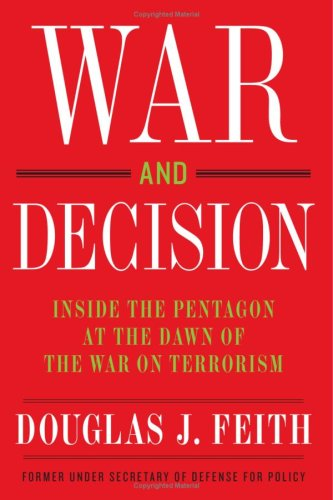
Douglas Feith was the U.S. Under Secretary of Defense for Policy from 2001 to 2005, one of the most senior positions at the Pentagon during one of the most consequential periods in recent history, covering the 11 September 2001 atrocities and early phase of the U.S.-led response. Feith later wrote a highly illuminating memoir, War and Decision: Inside the Pentagon at the Dawn of the War on Terrorism, which tried to drain some of the hysteria out of the public “debate” about the Iraq dimension of the U.S. policy in particular by explaining the internal arguments in the Bush administration leading up to the decision to finish with Saddam Husayn in 2003, and trying to set those arguments in their proper historical context, both in relation to Iraq—where “the war” had begun twelve years earlier—and the altered American threat perceptions in the shadow of 9/11. Unlike a lot of the gossipy tomes that emerged from former officials, Feith’s book is notably light on opinion and contains reams of declassified documents so readers can check his analysis against the source material. One of Feith’s key judgments is that “the chief mistake was maintaining an occupation government in Iraq for over a year”.[1] As Feith explains in great detail in the book, this was never supposed to happen. So how did it?
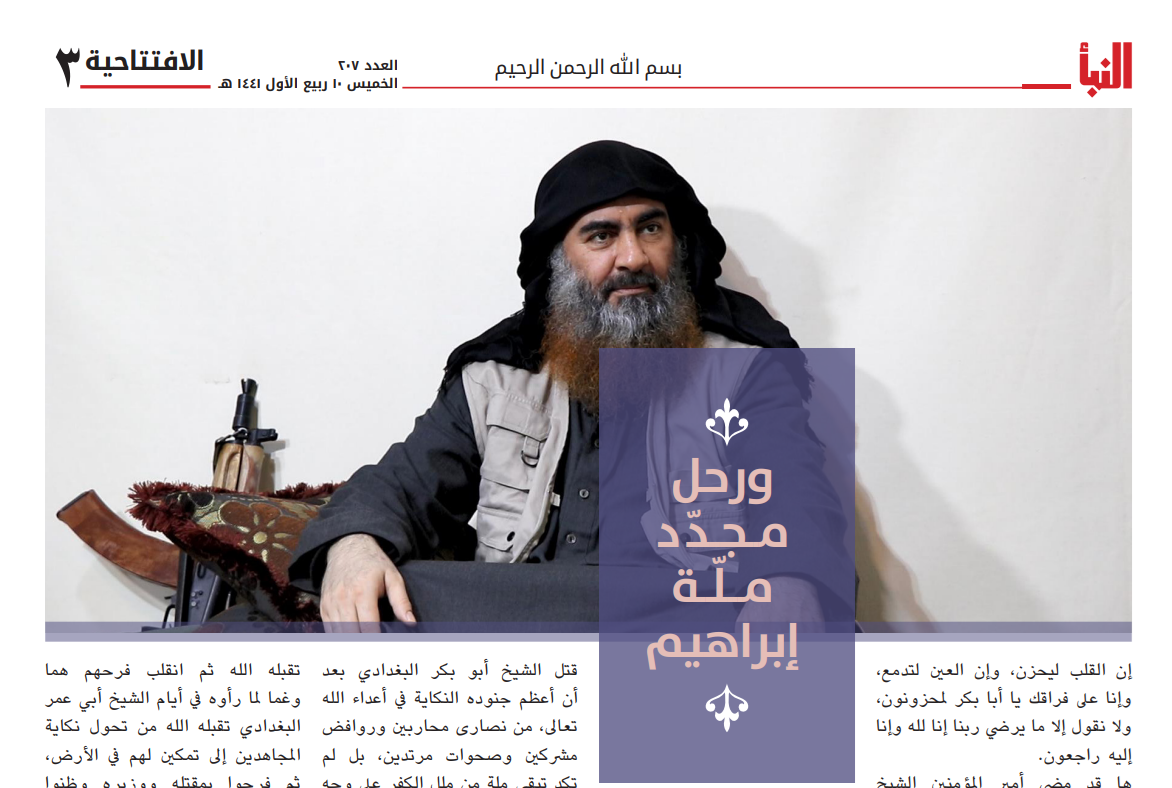
The 207th edition of Al-Naba, the weekly newsletter of the Islamic State (IS), published on 7 November 2019, devotes its main editorial to Ibrahim al-Badri (Abu Bakr al-Baghdadi), the first “Caliph” when the “Caliphate” was declared in June 2014, who was killed on 27 October 2019.
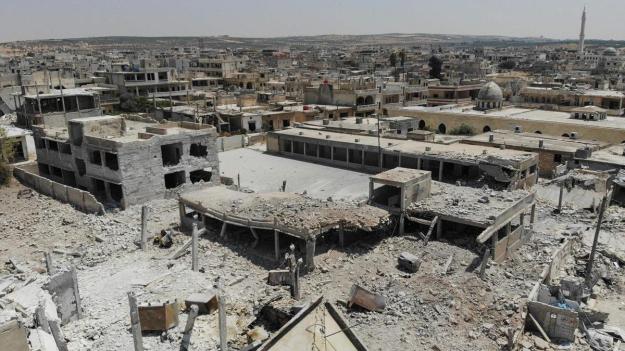
Devastation in Khan Shaykhun, Idlib, Syria, 3 August 2019 (AFP)
Bashar al-Assad’s regime, supported by Russia and (in a more deniable form) Iran, began an offensive against the last insurgent-held enclave in Syria, Idlib, in the last days of April. Up until a month ago, this looked like an embarrassing fiasco: with a minimal increase in Turkish support to its rebel proxies, the pro-Assad forces had been able to gain about one-percent of the territory in the southern part of “Greater Idlib”. In the last fortnight, however, the pro-Assad coalition has made important breakthroughs that could prove decisive. Continue reading →
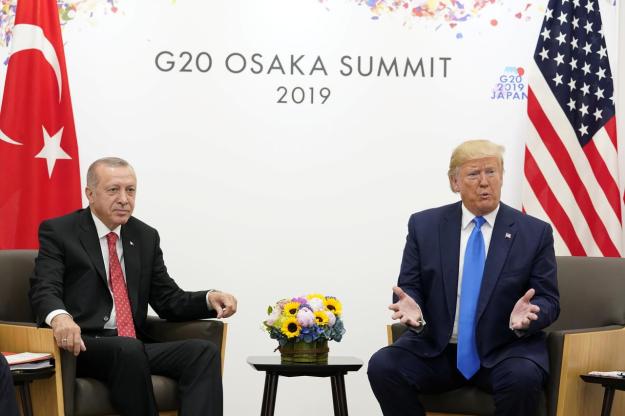
U.S. President Donald Trump and Turkey’s President Recep Tayyip Erdogan meeting during the G20 leaders summit in Osaka, Japan, 29 June 2019 [image source]
The delivery of the first parts of the Russian S-400 anti-missile missile system to Turkey on 12 July has brought the crisis in the Turkish-American relations to a head. This long-simmering problem is intertwined with America’s and Turkey’s policies in Syria, specifically where the latter is responsive to the former, which has resulted in as serious rift within NATO and exposed Turkey to pressure from the Russian government. Continue reading →
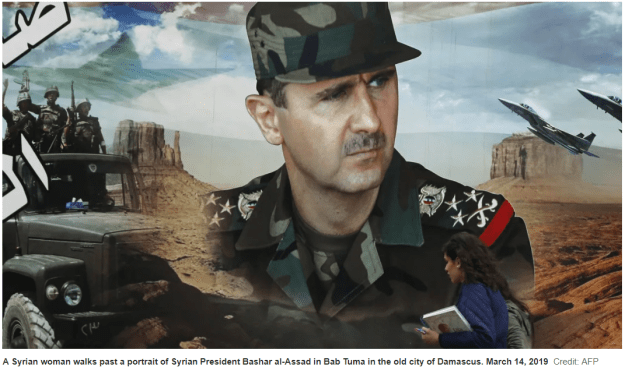
As the regime of Bashar Assad appears to be consolidating in Syria, many Israelis have concluded that their government’s handling of the crisis was generally laudable.
Islamic State flag in front of the main gate of Saddam Husayn’s palace in Tikrit, 5 April 2015 // AFP PHOTO / MOHAMMED SAWAF
A lengthy document—roughly sixty pages and 12,000 words—was published online on 21 February 2019 containing biographies of twenty-seven senior Islamic State (IS) officials, past and more recent. Those bios that are dated were written between October 2018 and the time of publication, with one exception that was written in the summer of 2018. The author claims to be an IS veteran. While longevity is difficult to prove, the fact that the author provides heretofore unseen images of some of the IS leaders suggests that at a minimum he is an IS operative. Continue reading →
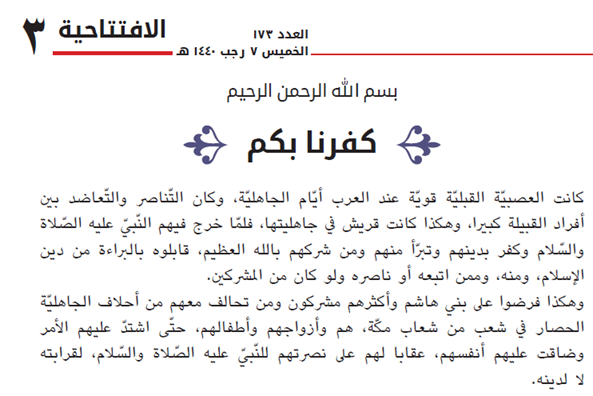
In the 173rd edition of Al-Naba, the Islamic State’s weekly newsletter, published on 14 March 2019, the main editorial was entitled, “We Have Rejected You” (Kafarna Bikum), a reference to Qur’an 60:4. A translation of the article is given below.
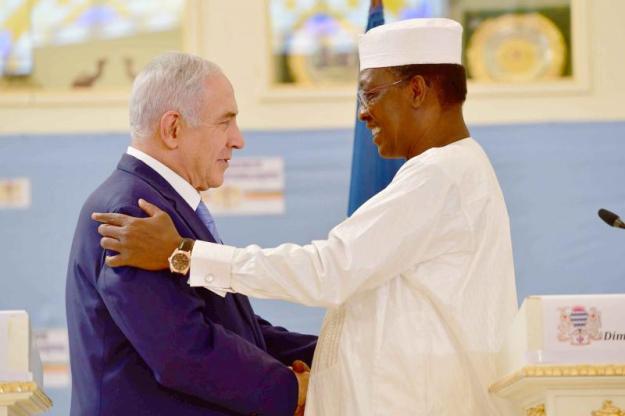
Israeli Prime Minister Binyamin Netanyahu and Chadian President Idriss Deby meeting in N’Djamena, 20 January 2019 [AFP]
Diplomatic relations between Israel and Chad have been restored after a half century of separation. This was a symbolic breakthrough with a Muslim-majority African country, albeit one in the works for some time. It is an illumination of Israel’s changed geopolitical circumstances, some aspects sustainable, some more wishful and illusory. Continue reading →