Tag Archives: jihadism

America’s Wars With the Barbary Pirates

By Kyle Orton (@KyleWOrton) on 27 February 2018

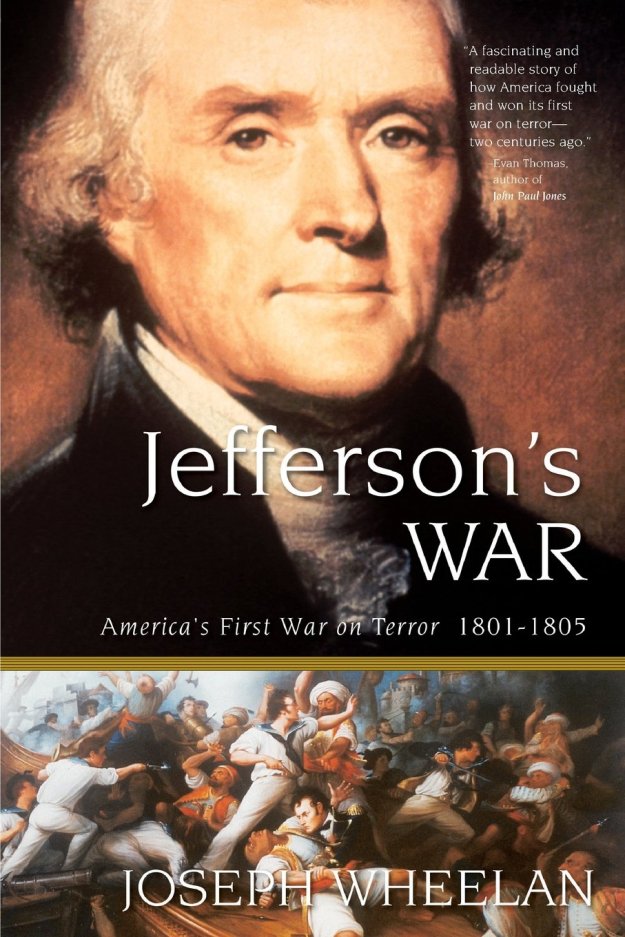
Review of ‘Jefferson’s War: America’s First War on Terror, 1801-1805’, by Joseph Wheelan

“The Terror,” raids by pirates who believed themselves to be on a holy mission, were “an accepted hazard of conducting foreign trade, much like hurricanes”. So notes Joseph Wheelan in his 2004 book, Jefferson’s War. That changed after a naval expedition by the United States put down the trade in the first two decades of the nineteenth century. Continue reading

Al-Qaeda’s Leader Tells Syrian Insurgents To Avoid State Allies, Focus on Guerrilla Tactics

By Kyle Orton (@KyleWOrton) on 21 February 2018

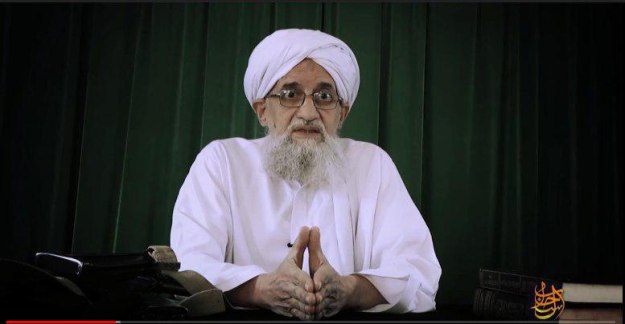
Al-Qaeda’s leader, Ayman al-Zawahiri, released a video statement on 20 February 2018, entitled, “Oh Our Brothers in Syria, Reconcile Amongst Yourselves”. The speech continued themes Dr. al-Zawahiri has hit on many times before, notably encouraging the Syrian insurgency to avoid allying with the West or other foreign states, to unite behind al-Qaeda since all outside actors are conspiring against the Syrian opposition, and to refuse all compromise in imposing the shari’a. Simultaneously, al-Zawahiri suggests that his adherents avoid trying for quick results and “cling[ing] to ground”, an echo of the advice given in the summer of 2016 that al-Qaeda’s operatives and the Syrian insurgents they can co-opt should prepare for a long war focused on guerrilla tactics, rather than holding territory. An English translation of al-Zawahiri’s speech was made by As-Sahab Media, disseminated by pro-al-Qaeda Telegram channels, and is reproduced below with some editions for syntax and transliteration. Continue reading

Al-Qaeda Continues to Take Advantage of Egypt’s Dictatorship

By Kyle Orton (@KyleWOrton) on 15 February 2018

Al-Qaeda’s leader, Ayman al-Zawahiri, released a speech on 15 February 2018, entitled, “Glad Tidings of Victory To Our People in Egypt”. Al-Zawahiri’s address was the eighth episode of the “Brief Messages To A Victorious Umma (Islamic community or nation)” series. Al-Zawahiri reiterated a theme al-Qaeda has used many times, by referring to the downfall of Muhammad Morsi, the first elected president of Egypt, who was deposed in a military coup d’état in July 2013. Morsi, a member of the Muslim Brotherhood, had taken part in elections and had tried to find a compact with the non-Islamist sections of the Egyptian state and society, including the felul, the remnants of the fallen tyranny, notably in the military, police, bureaucracy, and judiciary, plus the media and business class. It had served Morsi no good: severely constrained in his authority, Morsi’s government unravelled quickly when these forces came together with foreign sponsors for a putsch. The old regime was restored in Egypt, with the support of Western countries, despite being more violent than ever. For al-Qaeda, the lesson of this episode is clear: without a violent revolution that creates tabula rasa, Islamist politics will not get a chance. An English-language transcript of al-Zawahiri’s speech was made available by al-Qaeda’s media apparatus and is reproduced below. Continue reading

America’s Kurdish Allies in Syria Can’t Counter Iran

Published at The Arab Weekly

By Kyle Orton (@KyleWOrton) on 11 February 2018

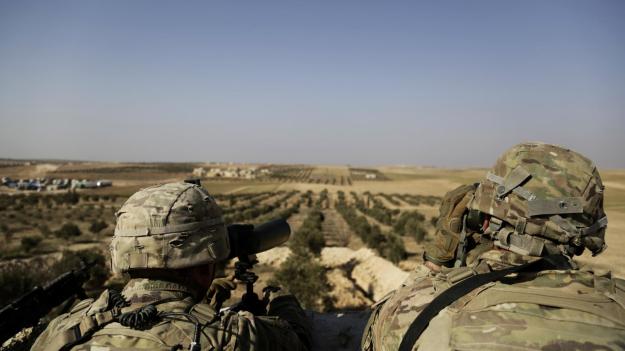
US Secretary of State Rex Tillerson laid out the Trump administration’s vision for Syria, making clear that, contrary to the expectations of many, the United States will stay in Syria beyond the collapse of the Islamic State’s (ISIS) self-proclaimed caliphate, holding the jihadists at bay and establishing an order compatible with US interests.

Crucially, Tillerson—in a sharp break with US President Donald Trump’s predecessor—specified that countering Iranian influence within Syria was a central US objective. The problem with the strategy is that it seems to rely on repurposing the United States’ anti-ISIS Kurdish militia allies against the Iranian revolution. Continue reading

When Al-Qaeda’s Military Leader Asked The Architect of 9/11 to Resign

By Kyle Orton (@KyleWOrton) on 9 February 2018

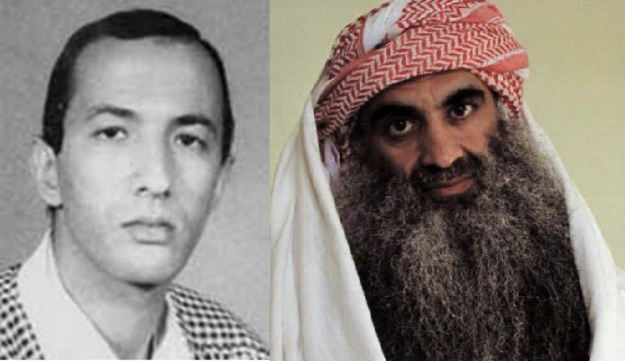
Sayf al-Adel (image source), Khalid Shaykh Muhammad (image source)

Muhammad Saladin Abd al-Halim Zaydan (Sayf al-Adel) wrote a letter on 13 June 2002 to Khalid Shaykh Muhammad (KSM or Mukhtar), the operational planner of the 9/11 massacre. Zaydan criticises KSM’s handling of al-Qaeda in the aftermath of 9/11 and the fall of the Taliban, and calls on him to surrender control to others. At that time the latter was written, Zaydan had been the head of al-Qaeda’s military committee for about seven months, replacing Muhammad Atef (Abu Hafs al-Masri), who was killed by an American airstrike in Afghanistan in November 2001. Zaydan was based then—as he is now—in Iran, with much of al-Qaeda’s senior leadership, at the invitation of Qassem Sulaymani, the head of the Quds Force, the component of the Islamic Revolutionary Guard Corps (IRGC) tasked with exporting the Iran’s Islamist revolution. The letter is reproduced below with the key sections highlighted in bold.

Phrased with much surrounding politeness, Zaydan gets to the point: KSM has been on a spree of external operations—notably with “shoe bomber” Richard Reid and José Padilla (Abdullah al-Muhajir)—that have failed spectacularly and exposed al-Qaeda to ridicule. Instead of learning from his mistakes, KSM has heedlessly rushed to the next plot, says Zaydan. Usama bin Ladin might have signed off on these plots, Zaydan writes, but Bin Ladin is also reckless and refuses to heed advice—instead changing the advisor to get the answer he wants. (Bin Ladin had done this—or tried to—for the 9/11 attack itself, stacking the executive committee with loyalists before the key vote, which he ended up not bothering to hold anyway.) KSM should halt all plots currently underway and resign his duties to others so that stock can be taken of how these disasters have befallen the organisation, Zaydan concludes. Zaydan adds a final note demanding the removal of a post on an al-Qaeda forum that identifies his children by their real names. Continue reading

The End of the Line for “The Beatles” of the Islamic State

By Kyle Orton (@KyleWOrton) on 9 February 2018

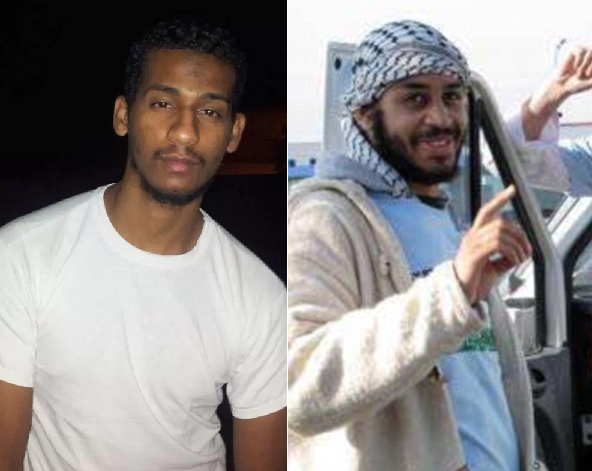
El Shafee Elsheikh (image source) and Alexanda Kotey (image source)

Last night, The New York Times reported and Reuters confirmed that two British Islamic State (IS) jihadists, El Shafee Elsheikh and Alexanda Kotey, both of them designated terrorists by the United States, have been arrested in Syria. Kotey and Elsheikh, along with the late Mohammed Emwazi (Abu Muharib al-Muhajir) and Aine Davis, formed a four-man cell that has become known as “The Beatles”—hence Emwazi being near-universally known as “Jihadi John”—that guarded, abused, and murdered hostages for IS from before the “caliphate” was founded in 2014. Continue reading

Islamic State Claims the Failed Paris Attacker: Salah Abdeslam

By Kyle Orton (@KyleWOrton) on 8 February 2018

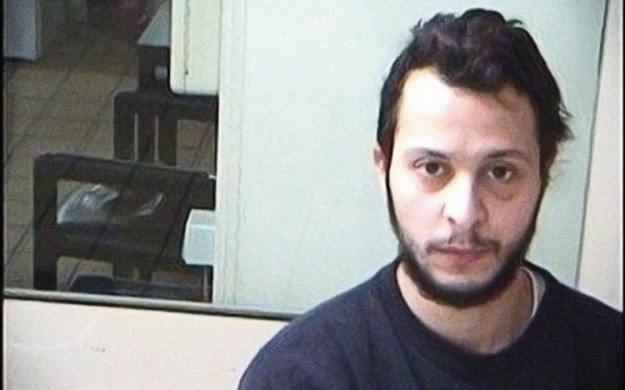
Salah Abdeslam in prison, April 2016 (image source)

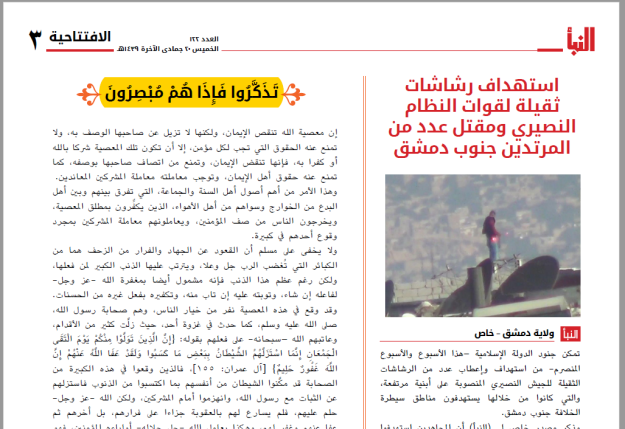
In the 118th edition of Al-Naba, the Islamic State’s newsletter, there was an acknowledgment of Salah Abdeslam as a “brother”. Abdeslam is a Belgian citizen of Moroccan extraction, who acted as a logistician and facilitator for the 13 November 2015 massacre in Paris, though failed on the night to carry out his own part in the atrocity. Abdeslam is one of the few conspirators involved in the Paris attacks and the subsequent bombing in Brussels on 22 March 2016 who is still alive.[1] The significance of this is that IS has generally ignored its operatives if they end up being arrested, and Abdeslam is an acute case of this: he has never been acknowledged in IS’s propaganda since the Paris attack, notably being excluded from the twelfth issue of IS’s Dabiq magazine released on 18 November 2015 that named the Paris attackers and described how the operation was carried out. The Naba article is reproduced below. Continue reading

Al-Qaeda Letter on Relations with the Islamic State and Iran

By Kyle Orton (@KyleWOrton) on 5 February 2018

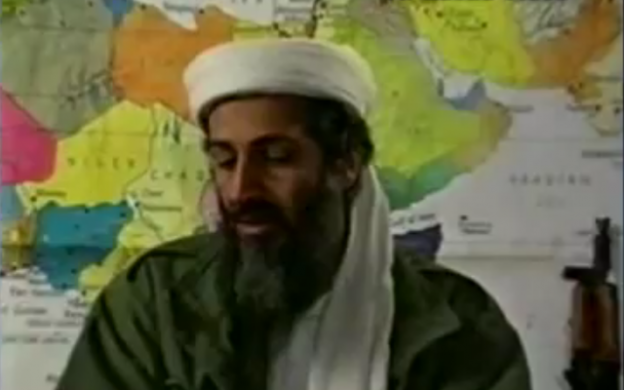
Usama bin Ladin in an al-Qaeda video (image source: CNN)

A letter released by the Office of the Director of National Intelligence (ODNI) on 20 May 2015, the “Letter to Abu Abdallah al-Hajj”, was written by an al-Qaeda leader on 17 December 2007. The letter, reproduced below with some editions in transliteration and some important sections highlighted bold, is interesting for several reasons. Continue reading

Profile of a 9/11 Planner: Muhammad Atef

By Kyle Orton (@KyleWOrton) on 5 February 2018

Al-Qaeda’s military leader Muhammad Atef at a press conference in Afghanistan, 26 May 1998 (image source: CNN)

Muhammad Atef, best-known as Abu Hafs al-Masri, but who also went by the names Taseer Abdullah or Taysir Abdullah and Subhi Abu Sitta, was al-Qaeda’s military leader between 1996 and 2001, and one of the three people most responsible for the terrorist attack in the United States on 11 September 2001. Continue reading

Al-Qaeda’s First Military Emir

By Kyle Orton (@KyleWOrton) on 5 February 2018

Moments after the bombing of the U.S. Embassy in Kenya on 7 August 1998 (picture source: UPI)

Ali Amin al-Rashidi (Abu Ubayda al-Banshiri or Abu Ubayda al-Panjshiri) was the first head of al-Qaeda’s military committee until his death in an accident in 1996. Continue reading