Tag Archives: jihadism

Islamic State Claims Responsibility for Terror Attacks in Australia, Canada, and America

By Kyle Orton (@KyleWOrton) on November 21, 2014

The Islamic State released the fifth edition of its English-language propaganda magazine, Dabiq, on November 21, 2014. In it, the Islamic State claimed responsibility for the terrorist attacks: in Australia by Numan Haider on September 23, in Canada by Martin Couture-Rouleau on October 20 and Michael Zehaf-Bibeau on October 22, and in America by Zale Thompson on October 23. The Islamic State says these attacks were in response to the call on September 22 by the organization’s spokesman, Abu Muhammad al-Adnani. The article is reproduced below with some minor editions for transliteration and some important sections highlighted in bold. Continue reading

Islamic State Biography of the Spokesman: Abu Muhammad al-Adnani

By Kyle Orton (@KyleWOrton) on November 8, 2014
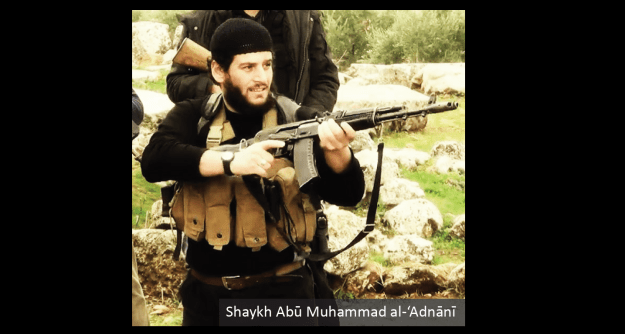
Picture of Abu Muhammad al-Adnani from the second edition of Dabiq magazine (July 27, 2014)

A Bahraini jihadist ideologue, Turki al-Binali, who has become a cleric in the Islamic State, put out a profile of the Islamic State’s official spokesman, Abu Muhammad al-Adnani, on November 1. By this account, al-Adnani took up jihadism in 2000 and was among a small cadre of people who joined the Islamic State’s founder, Ahmad al-Khalayleh, the infamous Abu Musab al-Zarqawi, when he journeyed through Syria on a recruitment-drive in 2002. Learned in Islamic jurisprudence and rigid in doctrinal literalness, al-Adnani was associated with some of the titans of the Islamic State’s legend like Abu Muhammad al-Lubnani and Abu Anas al-Shami. Appointed as emir of a small town in Anbar, Haditha, the first leader after the declaration of “the State” in 2006, Hamid al-Zawi (Abu Umar al-Baghdadi), worked under al-Adnani’s command. Al-Adnani then moved on to be an ideological instructor. Such was al-Adnani’s status, he did not have to consult al-Zarqawi before ordering operations; he only had to brief al-Zarqawi afterwards. Al-Adnani was arrested by the Americans in Iraq in May 2005, thereafter spending six years behind the wire, though never giving up his missionary activity. Indeed, the profile says al-Adnani developed the first full training program, academic and physical, for jihadi inmates. Upon release, al-Adnani took the post of official spokesman and has maintained it ever since. This profile is reproduced below with some minor editions for transliteration, syntax, and spelling. Continue reading

The Nuclear Negotiations Are Only Part Of Iran’s Regional Ambitions—And Obama’s

By Kyle Orton (@KyleWOrton) on October 27, 2014

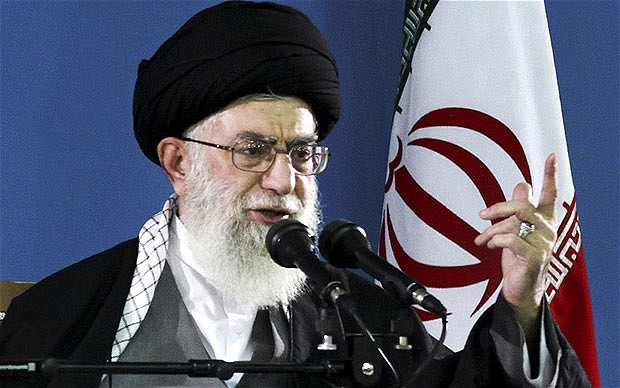
Ali Khamenei

Ali Khamenei

When the next—and supposedly final—round of negotiations over Iran’s nuclear program end next month, there are three possible outcomes:

  1. The “interim” deal, the Joint Plan of Action (JPA), will be rolled over for another six months after it was rolled over in July, and will, like so much else in the Middle East billed as temporary, begin to look permanent.
  2. A final deal is signed that is an Iranian victory in all-but name, putting them on the threshold of a nuclear weapon with only the regime’s goodwill stopping them crossing the finishing line to a bomb.
  3. Iran’s dictator, Ali Khamenei, refuses President Obama both of the above fig leaves and breaks off negotiations.

How did we get here? Continue reading

Al-Qaeda in Syria Condemns Al-Qaeda in Yemen’s Softness on the Islamic State

By Kyle Orton (@KyleWOrton) on October 20, 2014

Maysar al-Jiburi (Abu Mariya al-Qahtani) [source]

Al-Qaeda broke relations with the then-Islamic State of Iraq and Syria (ISIS) in February. In June, ISIS declared that it had restored the caliphate and changed its name to simply the Islamic State (IS). Since then, some jihadist groups, including some affiliated with al-Qaeda, have declared their allegiance to IS. With the beginning of American airstrikes against IS, in Iraq on 7 August and extended to Syria on 23 September, the question of where jihadi-salafists stand with regard to IS has become more acute. It was in this predicament that a statement was released today from a leader of al-Qaeda in Syria condemning al-Qaeda’s branch in Yemen for its statement of solidarity with IS in the face of these U.S.-led attacks. By the lights of al-Qaeda in Syria, the Yemeni branch’s statement was too lenient toward IS and will be misinterpreted as support for an organization that has struck down senior officials of al-Qaeda in Syria and remains actively at war with al-Qaeda in that theatre to this hour. Continue reading

The Balkan Front of the Jihad in the Fertile Crescent

By Kyle Orton (@KyleWOrton) on October 14, 2014

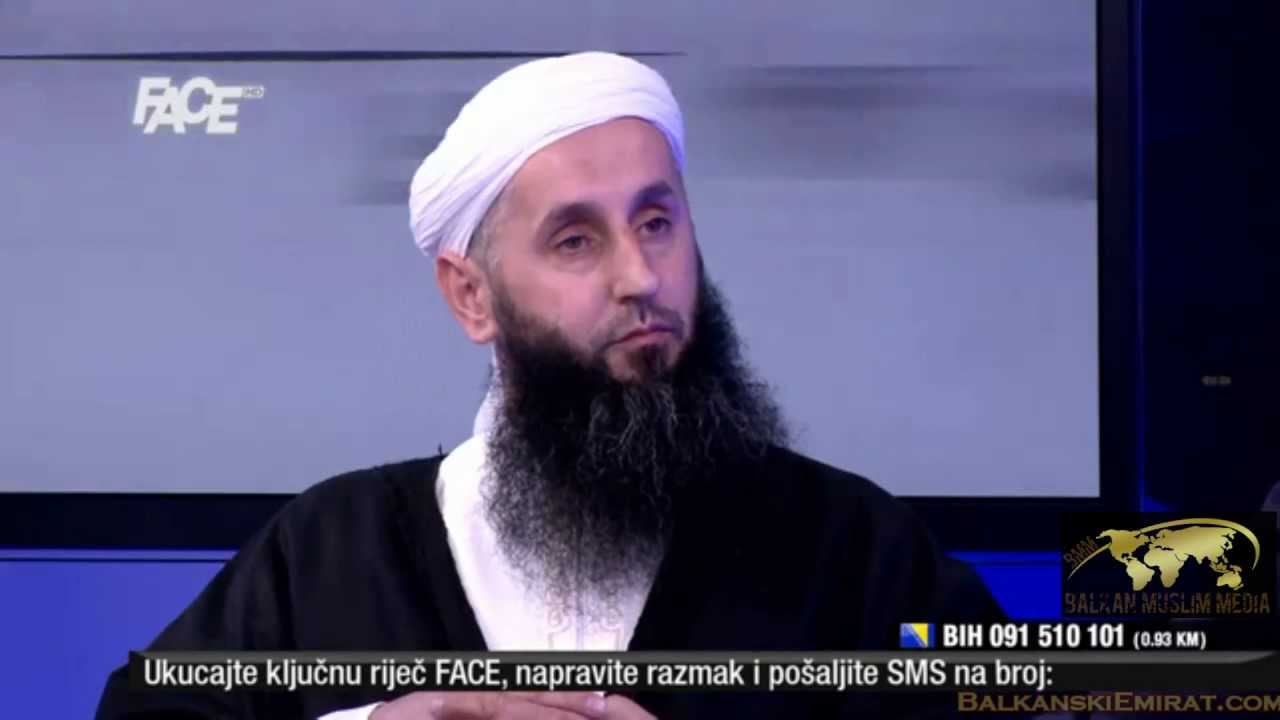
Bilal Bosnić, I.S.'s recruiter in Bosnia

Bilal Bosnić, the Islamic State’s lead recruiter in Bosnia

A week after the American-led airstrikes inside Syria began, it was reported that two women from the Balkans, Dora Bilic and Fatima Mahmutović, had been hit in ar-Raqqa, and that Ms. Mahmutović had been killed. Ms. Bilic, born in Croatia, converted to Islam two years ago and moved to Gornja Maoca, north-east Bosnia, which is in effect a Wahhabi commune, where she met her husband with whom she travelled to Syria for jihad. Ms. Mahmutović is from a village in Bosnia not far from the infamous Srebrenica, and she moved herself and her young son to Syria late last year. As is so often the case, it seems that the Croatian intelligence services were aware of Ms. Bilic but had done little about it. Even less surprising was the follow-up report that Ms. Bilic had been radicalised in London. Continue reading

Obama’s Abandonment of Kobani Isn’t Just A Disaster For The Kurds

By Kyle Orton (@KyleWOrton) on October 9, 2014

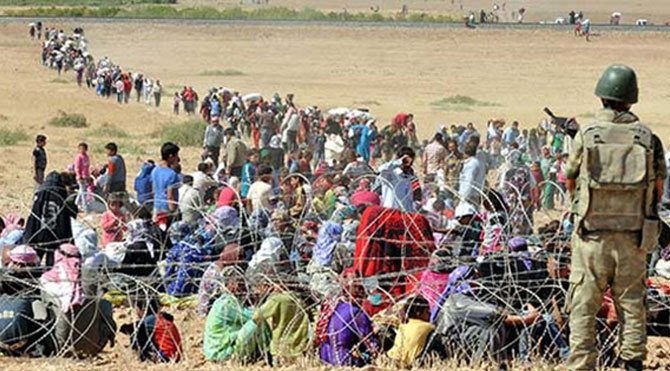
Syrian Kurdish refugees at the Turkish frontier

Syrian Kurdish refugees at the Turkish frontier

After three-and-a-half years of resistance, the United States finally intervened in Syria on September 23 with airstrikes against the Islamic State (I.S.). The I.S. had begun an attack on the Kurdish-controlled enclave in northern Aleppo along the Turkish border on September 15/16. By October 5, the Kurdish forces had been driven back into the Kurdish-majority town of Kobani (a.k.a. Ayn al-Arab), and I.S. had them surrounded. The desperate scenes of Syrian Kurds fleeing over the Turkish border in the face of the takfiris’ recalls the Iraqi Kurds making a run for the hills after the March 1991 uprising against Saddam Hussein was crushed. Then as now the Kurds believed they had stronger American backing than turned out to be the case. Continue reading

A Syrian Rebel Commander Accuses Iran of Helping The Islamic State

By Kyle Orton (@KyleWOrton) on September 25, 2014

Is there anything Hajj Qassem can't do?

Is there anything Hajji Qassem can’t do?

Middle East Monitor Online (MEMO) has published an article by Yvonne Ridley that consists of an interview with Hassan Abboud just a few hours before he and most of the Ahrar a-Sham leadership were killed on September 9. The accusations Ridley records Abboud levelling against the Islamic State (I.S.) are deeply upsetting to the conventional view of the Syrian conflict. Continue reading

Has Hillary Clinton Become A Hawk?

By Kyle Orton (@KyleWOrton) on September 21, 2014

The next American President?

The next American President?

Last month, Jeffrey Goldberg at The Atlantic published an interview with Hillary Clinton. At 8,000 words it can be off-putting to plough through, but I have now finally got around to it, and it is rather interesting. The interview focusses on the three areas where President Obama’s foreign policy has so conspicuously failed—Syria, Iran, and Israel—and also includes sections on Egypt and Libya, where the administration’s failure has been somewhat less in the news. Continue reading

Obama Declares War On The Islamic State … Kind Of

By Kyle Orton (@KyleWOrton) on September 13, 2014

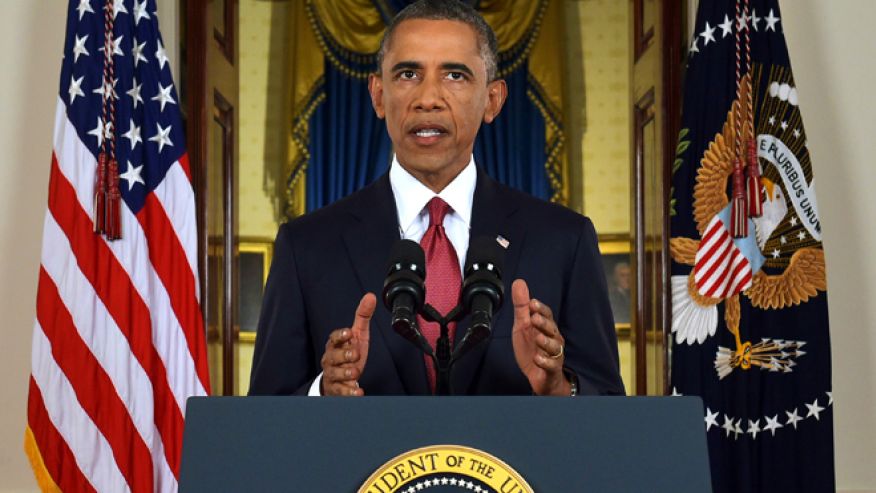
On Wednesday night, President Obama gave a speech, the purport of which was to be a war plan to defeat the Islamic State (I.S.). Indeed in the speech the President committed to a “roll back” of the territory the I.S. had conquered, and to “degrade and ultimately destroy” the Takfiri Caliphate. But as to how he was going to do that, the details were few. Continue reading

What Now For Ahrar a-Sham?

By Kyle Orton (@KyleWOrton) on September 10, 2014

Ahrar a-Sham's leader, Hassan Abboud

Ahrar a-Sham’s leader, Hassan Abboud

A mysterious explosion decapitated the Syrian rebel group Ahrar a-Sham on September 9. This could have major implications for the rebellion as a whole.
Continue reading