Tag Archives: Kataib Hezbollah

Sectarian Provocations in Fallujah Undermine the Offensive Against the Islamic State

By Kyle Orton (@KyleWOrton) on June 13, 2016

Published at The New Arab.
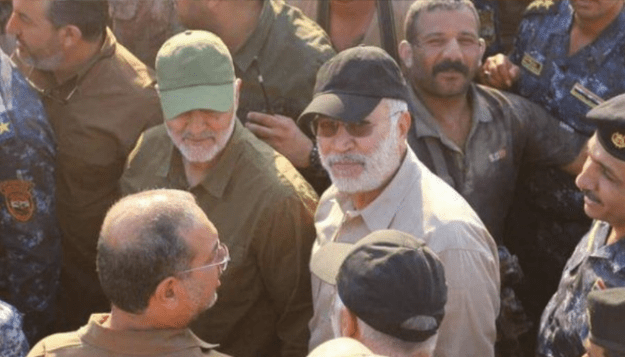
Qassem Suleimani and Jamal Ebrahimi (Abu Mahdi al-Muhandis) touring a battlefront in Fallujah

Qassem Suleimani and Jamal Ebrahimi (Abu Mahdi al-Muhandis) touring a battlefront in Fallujah

The Iraqi government announced an operation to clear the Islamic State (IS) out of Fallujah on the evening of 22 May. In the intervening three weeks, IS have lost numerous villages and towns around Fallujah and Iraqi counterterrorism forces are said to have entered Fallujah proper in the south.

As the first major city IS took on its way to proclaiming a caliphate in June 2014, the pace of the operation is not the most troubling element. What is disturbing—and what may ultimately undo any military success against IS—is the overtly sectarian nature of the offensive, led not by professional troops loyal to Baghdad, but by militias loyal to Iran and the extremist ideology of Tehran’s clerical regime. Continue reading
Destroying Islamic State, Defeating Assad: A Strategy for Syria

By Kyle Orton (@KyleWOrton) on November 25, 2015

1

Today, my first report with The Henry Jackson Society was published: “Destroying Islamic State, Defeating Assad: A Strategy for Syria“. Continue reading

A Year Into The War Against The Islamic State, The Coalition Has Little To Show For It

By Kyle Orton (@KyleWOrton) on September 30, 2015

Published at Left Foot Forward

1

A year into the campaign against the Islamic State, the American-led coalition has precious little to show for it. Tactical victories in Kobani, Tikrit and Tel Abyad have been more than offset not only by the negative long-term side-effects of those victories but by direct I.S. military gains in the present—notably the capture of a third provincial capital in Ramadi, the capture of Palmyra and a push into Homs and southern Syria; as well as increasing I.S. infiltration of Idlib, an area cleared entirely of I.S. by a rebel offensive in early 2014. Continue reading

The Islamic State’s Strategy Is Working, Its Enemies Are Failing

By Kyle Orton (@KyleWOrton) on May 23, 2015

1

To hear President Obama tell it, his announced program to defeat the Islamic State (ISIS), which began with airstrikes into Iraq last August that were extended into Syria in September, is working, albeit with some tactical setbacks. The implication is that the setbacks of the U.S.-led anti-ISIS campaign are not strategic.

As J.M. Berger phrased it:

In the Washington vernacular, the act of Being Strategic implies a near mystical quality of superior thinking possessed by some, and clearly lacking amongst the vulgarians of the world—heedless brutes such as ISIL. Tactics are short-term ploys, easy to dismiss. Strategy is for winners.

Unfortunately, this soothing view is almost exactly wrong: it is the United States that is relying on various short-term methods—commando raids into the Syrian desert, for example—while ISIS has a long-term goal fixed in mind and is working assiduously to achieve it. The U.S.-led Coalition is losing, in short, and ISIS is winning. Continue reading

Raids in Syria Can’t Defeat the Islamic State If Obama Continues Alignment with Iran

By Kyle Orton (@KyleWOrton) on May 16, 2015

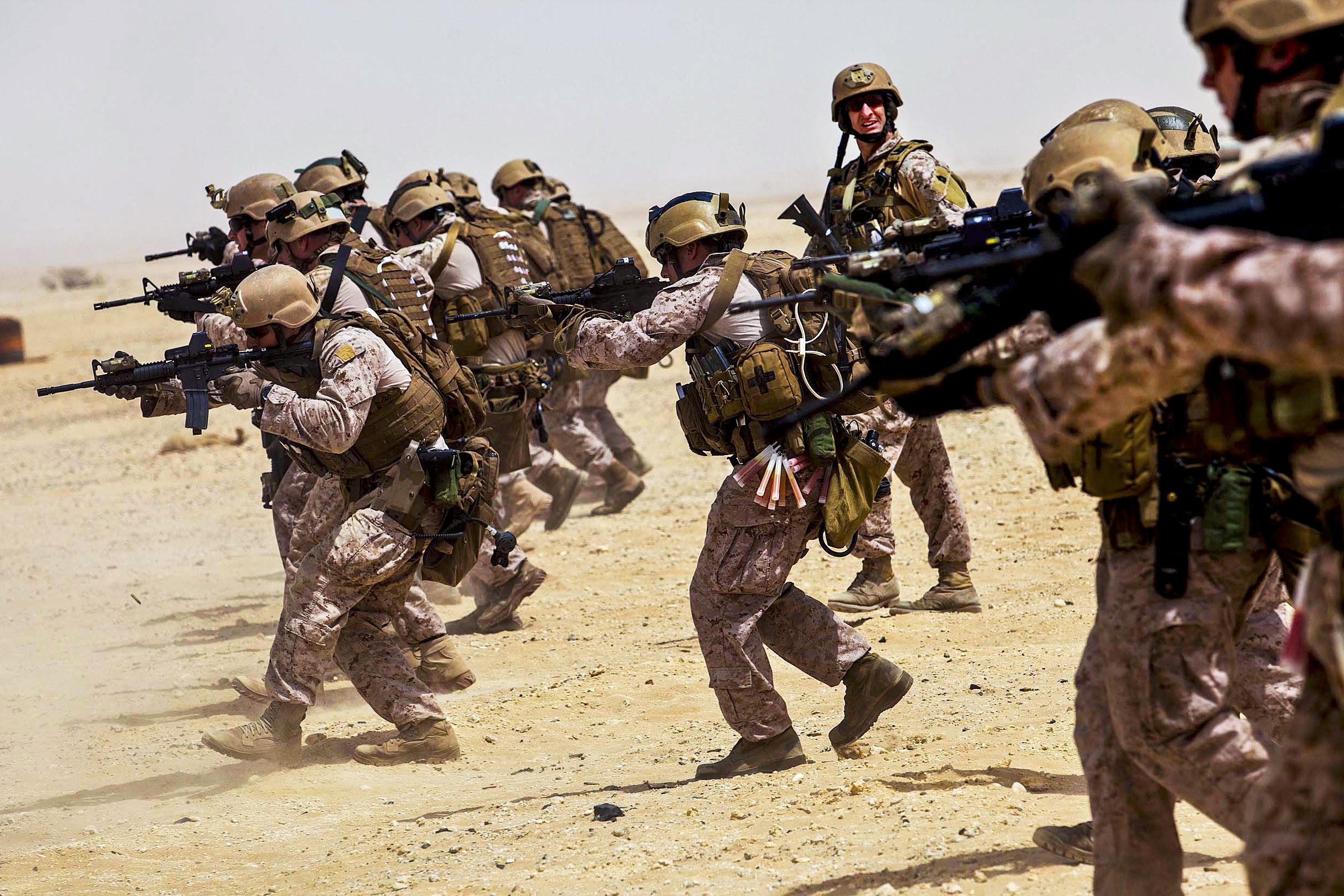
26th Marine Expeditionary Unit (MEU) Maritime Raid Force Marines fire M4 Carbines while conducting a marksmanship training exercise at a range in Qatar, April 22, 2013. Eagle Resolve is an annual multilateral exercise designed to enhance regional cooperative defense efforts of the Gulf Cooperation Council nations and U.S. Central Command. The 26th MEU is deployed to the 5th Fleet area of operations aboard the Kearsarge Amphibious Ready Group. The 26th MEU operates continuously across the globe, providing the president and unified combatant commanders with a forward-deployed, sea-based quick reaction force. The MEU is a Marine Air-Ground Task Force capable of conducting amphibious operations, crisis response and limited contingency operations. (U.S. Marine Corps photo by Cpl. Christopher Q. Stone, 26th MEU Combat Camera/Released)

Last night the United States launched a commando raid into al-Amr in Deir Ezzor in eastern Syria. According to the White House statement, Abu Sayyaf (real name: Fathi ben Awn ben Jildi Murad al-Tunisi), a senior Islamic State (ISIS) commander “overseeing … illicit oil and gas operations,” was killed, and his wife, Umm Sayyaf, was taken into American custody and is being held in Iraq. The Sayyaf couple had been holding a young Yazidi woman as a slave and she has now been freed.

Unfortunately, this American raid is a tactical success amid a strategic failure—and a tactical success likely to be used to obscure the strategic failure of the U.S. anti-ISIS campaign. Even in the narrowest humanitarian terms: if the freedom of this one Yazidi girl is used to perpetuate a policy that leaves many more Yazidi girls in bondage then it is a failure. Continue reading

Obama’s Iran Deal Increases Nukes, Terrorism, and Instability

By Kyle Orton (@KyleWOrton) on April 28, 2015

1

The key thing to understand about the Joint Comprehensive Plan of Action (JCPOA), the nuclear accord announced on April 2 between the P5+1 and Iran, is that it does not exist. The British Foreign Secretary Philip Hammond said at one point, “We envisage being able to deliver a narrative,” adding that this might not be written and—these being forgiving times—Iran’s narrative need not match the West’s. In other words, nothing was signed or agreed to. This is the reason for the wild discrepancies between the American and Iranian JCPOA “factsheets”: both are drawing from a rolling text that is ostensibly to lead to a “final” or “comprehensive” deal and spinning it to their own respective advantage. The administration has as much as said so with its mantra that “nothing is agreed until everything is agreed”.

The purpose of the announcement of the JCPOA therefore was, charitably, to “build political momentum toward a final agreement“. Less charitably it was intended to “demonstrate progress in order to fend off congressional action,” as Obama’s former nuclear adviser Gary Samore put it. In that at least it was successful. Continue reading

Why The West Should Support The Saudi-Led Intervention In Yemen

By Kyle Orton (@KyleWOrton) on April 11, 2015

1

In The Independent of April 10, Daniel Wickham wrote in opposition to the campaign of airstrikes, led by Saudi Arabia, against the Iran-backed Houthi militia in Yemen, which has overthrown the government in that country and is now marching on the port city of Aden where the remnants of the fallen regime reside. Wickham notes that the Houthis have behaved abominably since they took the capital, Sanaa, including the “use of torture and extreme violence to suppress dissent,” still “two wrongs do not make a right” and the Saudi-led Operation DECISIVE STORM is “very clearly wrong.” I think this is mistaken. Continue reading

Amerli Shows The Futility Of Aligning With Iran To Defeat The Islamic State

By Kyle Orton (@KyleWOrton) on March 18, 2015

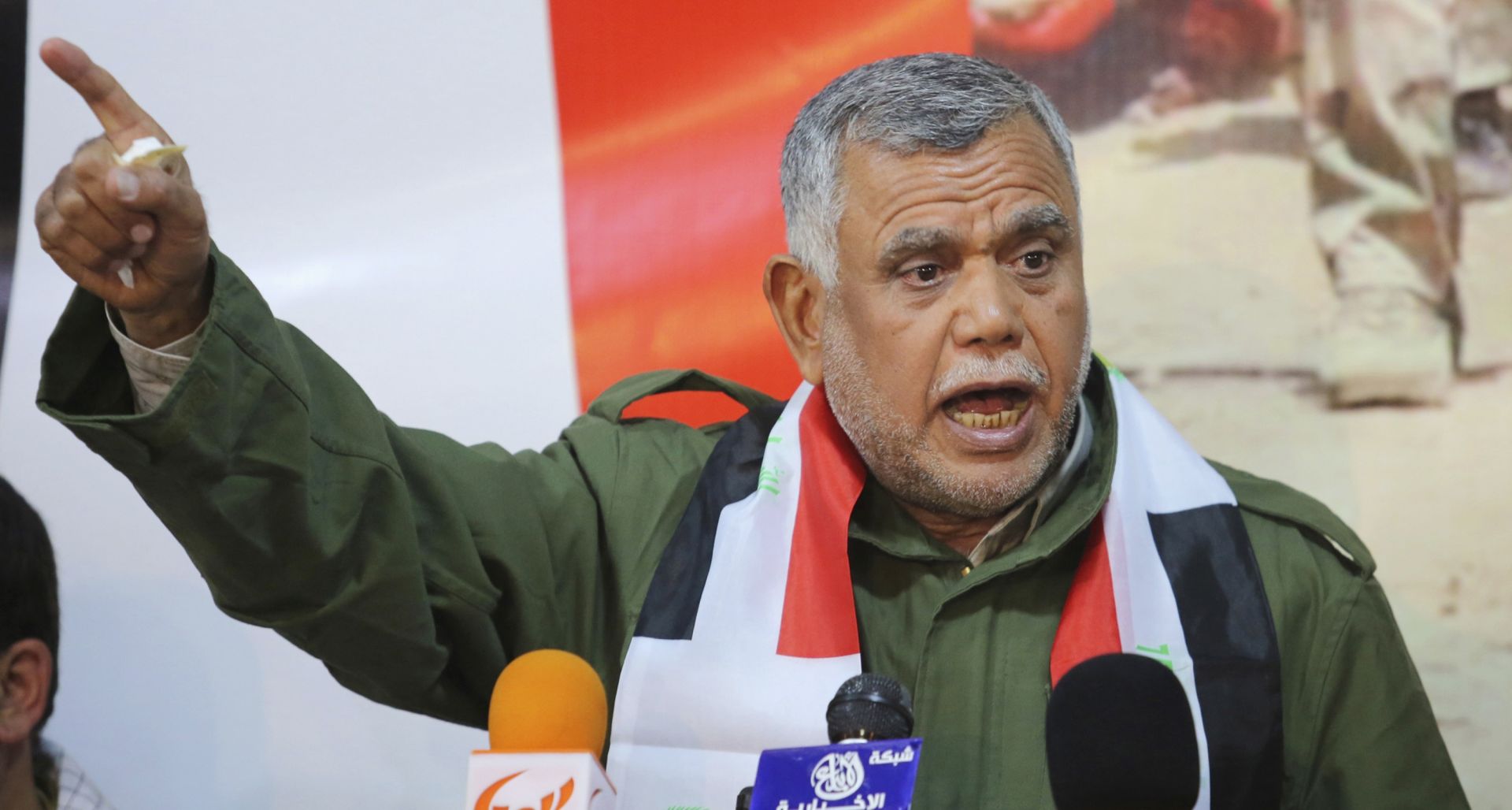
Badr Corp commander Hadi al-Ameri

Badr Corp commander Hadi al-Ameri

This morning Human Rights Watch released a report, “After Liberation Came Destruction: Iraqi Militias and the Aftermath of Amerli.”

Amerli is a town of about 25,000 people, mostly Shi’a Turcomen, in the east of Saladin Province, close to Diyala Province, sixty miles from the Iranian border.

The Islamic State (ISIS) invaded Iraq from Syria, conquering Mosul on June 10, 2014, then swept across central Iraq into Diyala. In a situation not dissimilar to the Assad regime’s terror-sieges and ISIS surrounding of the Yazidis on Sinjar Mountain, ISIS imposed a siege on the population of Amerli on June 14.

By the time the Iraqi government forces and Hashd al-Shabi (a.k.a. the Popular Mobilization Units, PMUs), the Shi’ite militias that are largely Iran proxies, broke the siege on August 31, with the help of airstrikes from the American-led Coalition, “at least 15 civilians in Amerli, including newborn infants, had died from lack of food, water or medical treatment, and more than 250 children were suffering from severe malnutrition and dehydration,” HRW reports. On Sept. 1, the militias and Iraqi Security Forces (ISF) entered Amerli. Continue reading

Allowing Iran To Conquer Iraq Will Not Help Defeat The Islamic State

By Kyle Orton (@KyleWOrton) on March 15, 2015

Qassem Suleimani

Qassem Suleimani

Iraq’s Prime Minister Haider al-Abadi announced the beginning of an offensive on March 1 to dislodge the Islamic State (ISIS) from Salah ad-Din Province. Abadi announced that this would be led by the Iraqi army and Hashd al-Shabi, known in English as the Popular Mobilization Units (PMUs), the militias composed overwhelmingly of Shi’ites and directed by Iran.

While the offensive seems to be winding down, it is not over. ISIS is out of ad-Dawr/Dour and al-Awja, south of Tikrit, and Albu Ajeel to the east. Al-Alam to the north seems to still be contested. On March 10, ISIS was driven out of al-Qadissiya, a northern district of Tikrit City. On March 11, the anti-ISIS forces entered Tikrit City, “inched closer to the city center … and took up positions in a military hospital, the police academy and the traffic police headquarters … Forces in southern districts took over three palaces erected by former dictator Saddam Hussein”. Continue reading

Iran and Global Terror: From Argentina to the Fertile Crescent

By Kyle Orton (@KyleWOrton) on February 27, 2015

Khobar Towers, which Iran jointly bombed with al-Qaeda

Khobar Towers, which Iran jointly bombed with al-Qaeda

Argentina’s government yesterday announced it was dissolving the Secretariat of Intelligence (S.I.), an intelligence agency tainted by the “Dirty War” regimes (1974-83), and more recent abuses as President Cristina Kirchner has taken Argentina back toward autocracy, and replacing it with a Federal agency. Just two days before, charges of corruption were levelled against Antonio Stiusso, S.I.’s director until Kirchner fired him in December. At the beginning of this month, Stiusso went missing. It now seems Stiusso has taken shelter in a neighbouring State.

These events are the latest twist in an extraordinary saga that has followed the discovery of the body of Alberto Nisman on Jan. 18 in his apartment in Buenos Aires, shot in the head in an apparent suicide. Nisman was a prosecutor investigating the July 18, 1994, bombing of the Argentine Israelite Mutual Association (AMIA) building in Argentina’s capital. All the evidence that Nisman had gathered pointed to Iran as the perpetrator. Few believe Nisman committed suicide, and—the history of Argentines being “suicided” considered—most fingers are pointing at Iran. Continue reading