By Kyle Orton (@KyleWOrton) on 6 February 2023

By Kyle Orton (@KyleWOrton) on 21 August 2022
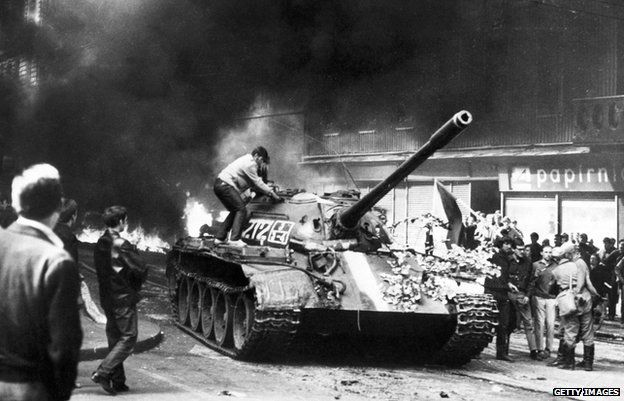
It was on this day in 1968, fifty-four years ago, that the Soviet Union invaded Czechoslovakia, one of its colonies in the “Warsaw Pact”, which had embarked on a program of liberalising reforms. The Czech leadership did not intend to depart from the socialist path, merely to soften its edges—and ran into the brute fact that this was not possible. Continue reading
By Kyle Orton (@KyleWOrton) on 3 July 2022

An IRA parade in Belfast || Image source
By Kyle Orton (@KyleWOrton) on 28 June 2022
By Kyle Orton (@KyleWOrton) on 9 August 2021
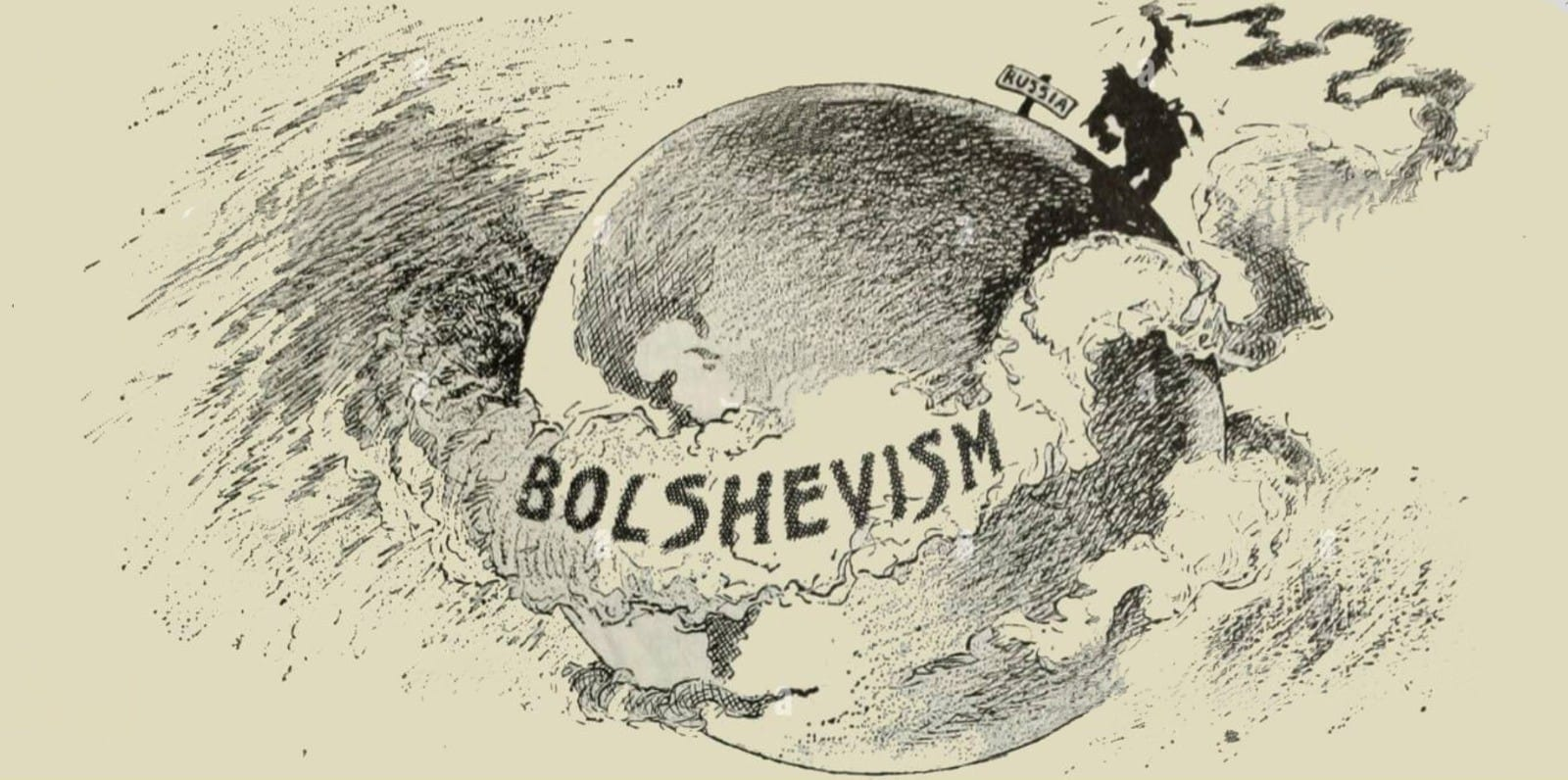
After the post looking at the relationship of Reuben Falber and the Communist Party of Great Britain (CPGB) to the Soviet Union—namely the total subservience of the former to the latter—a follow-up was intended on the broader issue of the how the KGB and its predecessors interacted with the “fraternal” Parties around the world. Eighteen months later, this is that post. Let’s blame COVID.
The accusation that the Communist Parties around the world were fronts for the KGB was often derided as “McCarthyism” while the Cold War was going on. Arguments about that term in general to one side,[1] it certainly did not apply in this case. The accusations as stated were entirely factual. Continue reading
By Kyle Orton (@KyleWOrton) on 23 February 2021
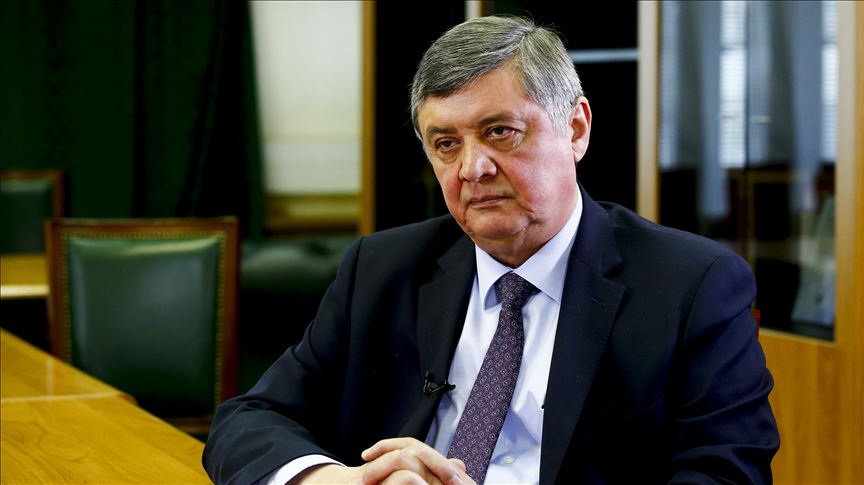
Russia’s presidential envoy for Afghanistan Zamir Kabulov
Russian ruler Vladimir Putin’s current special envoy for Afghanistan, Zamir Kabulov, spoke to Sputnik’s Tajik service on 17 February, and a translation of the interview is published below with some interesting sections highlighted in bold. Kabulov was the KGB resident in Kabul in the 1980s and early 1990s, and later in the 1990s, during the Taliban’s reign over Kabul and much of the rest of the country, he was an adviser to the United Nations peace envoy. Continue reading
By Kyle Orton (@KyleWOrton) on 8 January 2021
This article was originally published at European Eye on Radicalization

The world has been captivated this week by the scenes of an insurrectionary mob overrunning the United States Capitol at the behest of President Donald Trump. It is unlikely that many people remember or even know that nearly forty years ago, this building—the meeting place of the U.S. Congress, the place where laws are made—was bombed by a Communist terrorist group, a group remarkable for its all-female membership. A new book, Tonight We Bombed the U.S. Capitol: The Explosive Story of M19, America’s First Female Terrorist Group, by William Rosenau, a senior policy historian at CNA and a fellow in the International Security program at New America, examines this forgotten episode. Continue reading
By Kyle Orton (@KyleWOrton) on September 11, 2020

In writing a chapter earlier this year about the current status of Al-Qaeda, part of the process was reviewing the organisation’s history since its formation in the late 1980s. What really struck me was how extensively Al-Qaeda is now manipulated, under the influence of, and in places even controlled by state powers. To mark the nineteenth anniversary of 9/11, I thought I could give a brief sketch of this development.
By Kyle Orton (@KyleWOrton) on 22 February 2020

Communist Party of Great Britain (Marxist–Leninist) (CPGB-ML) carrying banners and Stalin postsers at a May Day parade // May 2016
Jeremy Corbyn has been dogged throughout his time as leader of the British Labour Party by his associates. Having Seumas Milne, a believing Stalinist and general conspiracy theorist, as his spin-doctor and primary strategist is actually among the least disgraceful things about Corbyn. Corbyn was, despite later attempts at obfuscation, a vocal supporter of the Provisional Irish Republican Army (PIRA). Corbyn was paid £20,000 for pro-Iranian propaganda by the clerical regime. He laid a wreath honouring Black September, the deniable unit of the Palestine Liberation Organisation (PLO) responsible inter alia for the mutilation and murder of Israeli athletes at Munich in 1972. Then there was Fidel Castro, HAMAS, Hizballah, and on and on.
Thus, when it was revealed, two years ago this month, that Corbyn supplied political and other intelligence to the secret police of Communist Czechoslovakia, it was unsurprising. Corbyn was known to have supported the Soviet side in the Cold War, from Castro’s Cuba to the Sandinistas in Nicaragua; had he known of Soviet support to PIRA, it would not have turned him against them. So, it was all taken very much in stride. Putting aside the lament that it should have been a bigger scandal that the Leader of the Opposition was once an “operational contact” for the Soviet Bloc, it was an interesting look at how the Soviet Union, through its satellite states, sought to cultivate sympathisers and exert influence in Britain—and how little is known, even now, about the scale and success of such things.
Somebody who could have shed more light on this was Reuben Falber, a senior official of the Communist Party of Great Britain (CPGB) and its key liaison with the KGB. When he died on 29 April 2006, he took most of his secrets with him. Still, what is known of Falber’s career gives some insight and such insights are by no means all retrospective. Continue reading