A version of this article was published at CapX
By Kyle Orton (@KyleWOrton) on 21 December 2018

President Trump in a Twitter video saying fallen soldiers agree with his plan to withdraw from Syria, 19 December 2018 [image source]
Continue reading
A version of this article was published at CapX
By Kyle Orton (@KyleWOrton) on 21 December 2018
President Trump in a Twitter video saying fallen soldiers agree with his plan to withdraw from Syria, 19 December 2018 [image source]
By Kyle Orton (@KyleWOrton) on 12 December 2018

© AP Photo / Jim Hollander, Pool
Essay: “Zionism is Making Us Stupid”: The Russian Relationship with Israel from the Soviets to Putin Continue reading
By Kyle Orton (@KyleWOrton) on 9 December 2018
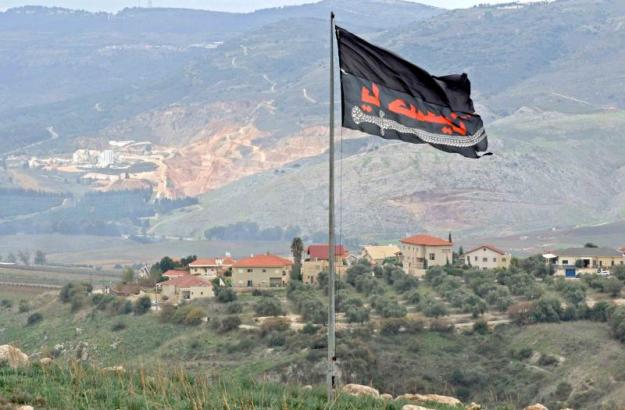
Large black flag with the words “Oh, Husayn” flies near the Lebanon-Israel border (5 December, AFP)
Israel announced an operation to “destroy the threat of the terror tunnels” into northern Israel from Hezbollah, the Levantine branch of Iran’s Islamic Revolutionary Guard Corps (IRGC) in southern Lebanon. Continue reading
By Kyle Orton (@KyleWOrton) on 6 December 2018
This article was originally published at Ahval, headlined, “The Best Bad Outcome for Idlib”

The sun setting over Deraa, in southern Syria, 28 May 2018 (image source)
The Turkey-Russia Sochi Agreement in September won Idlib a reprieve from what had seemed to be an imminent and catastrophic offensive by Syrian President Bashar Assad’s forces and his Russian and Iranian patrons against the last insurgent-held province.
The ceasefire was meant to provide space for Turkey to dismantle the radical insurgents. Instead, those radicals consolidated their dominance in Idlib and the ceasefire has been visibly fraying. How to proceed is a matter of domestic security for the West. Continue reading
Published at The Arab Weekly
By Kyle Orton (@KyleWOrton) on 27 November 2018
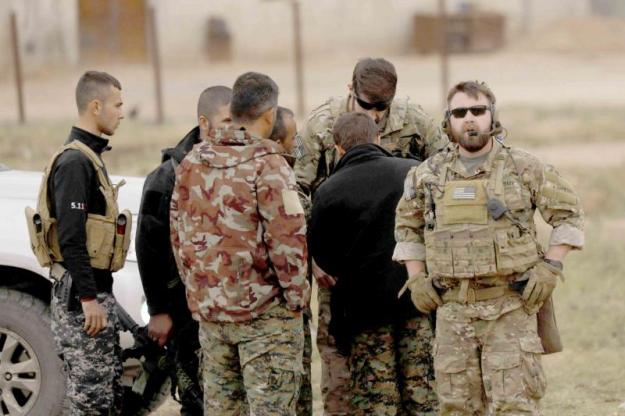
U.S. forces and members of the “Syrian Democratic Forces” (SDF) patrol Al-Darbasiya in northeastern Syria, 4 November 2018. (AFP)
Despite the change of rhetoric between US Presidents Barack Obama and Donald Trump, the United States has continued to lose influence, political and military, in the Middle East to the Iran-Russia axis. Continue reading
This article was originally published at The Brief
By Kyle Orton (@KyleWOrton) on 26 October 2018

At the beginning of September, New America published a paper, based on recovered al-Qaeda documents, which concluded that there was “no evidence of cooperation” between the terrorist group and the Islamic Republic of Iran. New America’s study lauds itself for taking an approach that “avoids much of the challenge of politicization” in the discussion of Iran’s relationship with al-Qaeda. This is, to put it mildly, questionable.
A narrative gained currency in certain parts of the foreign policy community during the days of the Iraq war, and gained traction since the rise of the Islamic State (IS) in 2014, that Iran can be a partner in the region, at least against (Sunni) terrorism, since Tehran shares this goal with the West. Under President Barack Obama, this notion became policy: the US moved to bring Iran’s revolutionary government in from the cold, to integrate it into the international system. Continue reading
By Kyle Orton (@KyleWOrton) on 7 September 2018
The U.S. Treasury Department sanctioned four individuals and five entities connected to the Syrian regime of Bashar al-Asad on 6 September 2018. The most interesting was Muhammad al-Katerji, who has been involved in trade with the Islamic State (IS). A relative of his, Hussam al-Katerji, has previously been revealed as funding the jihadists on behalf of the regime, and the U.S. has previously sanctioned another Kremlin-linked Asad regime oligarch, George Haswani, for financing IS. “The United States will continue to target those who facilitate transactions with the murderous Asad regime and support ISIS”, said U.S. Treasury Secretary Steven Mnuchin. Continue reading
A version of this article was published in The Arab Weekly
By Kyle Orton (@KyleWOrton) on 3 August 2018
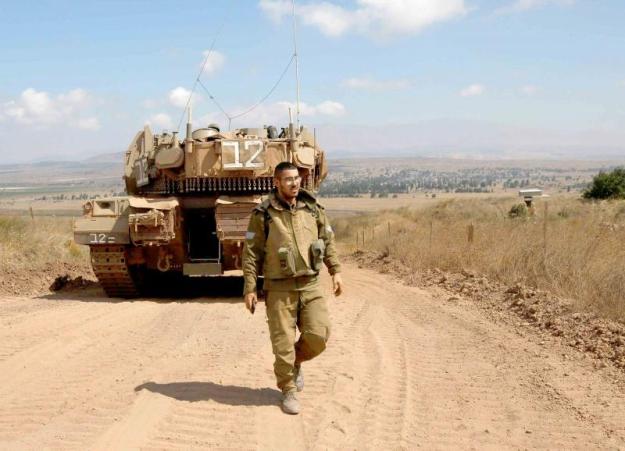
An Israeli Merkava tank patrols on the border between Israel and Syria, on 20 July 2018. (AFP)
Israel has been conflicted on the Syrian rebellion: some saw Bashar al-Assad’s reliance on Iran and thus favoured his departure; some, especially once the uprising militarized and jihadi-Salafists made their appearance among the insurgents, favoured a let-them-both-lose policy; and some saw the risk of chaos and jihadists and preferred to stick with what they knew.
The official Israeli policy, stated in the early months of the protests, was to side with the people “demonstrating for freedoms” since “the devil we know in Syria [i.e. Assad] is worse than the devil we don’t”. Continue reading
Published at TRT World
By Kyle Orton (@KyleWOrton) on 13 February 2018
There was a serious escalation between Israel and Iran in Syria last week. This has been a long-time coming, an inevitable part of the contest for regional order that was obscured, and fuelled, by the narrow focus on the Islamic State (Daesh) and the war against its “caliphate”, particularly over the last year. Continue reading
Film review of The Final Year (2018)
By Kyle Orton (@KyleWOrton) on 31 January 2018
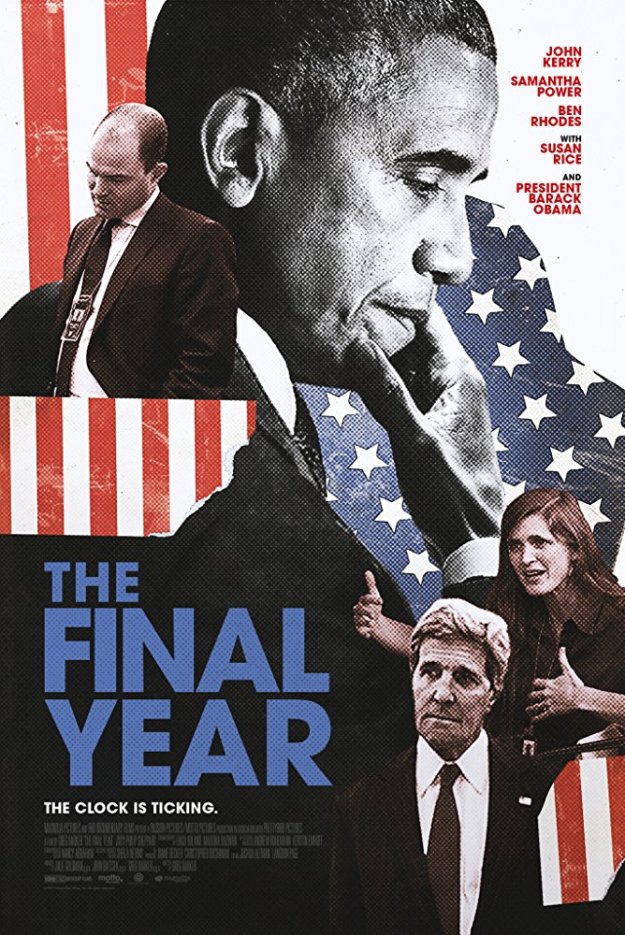
The Final Year, a new documentary film directed by Greg Barker, tracks the closing stages of the administration of President Barack Obama in 2016. Senior officials are followed and interviewed, and the White House is watched as it tries to react to daily events. Much of the substance contained in the film was knowable in real time, but it is very useful to have these officials on record—on video, no less—explaining the assumptions and thought processes they were operating with as they made decisions that led to a series of such intense disasters around the world. This is especially interesting since the ripple effects from these catastrophes ultimately set the conditions for the election of Donald Trump and dismantling of much of the Obama legacy. Continue reading
 Kyle Orton's Blog