By Kyle Orton (@KyleWOrton) on 3 January 2025
By Kyle Orton (@KyleWOrton) on 4 September 2022
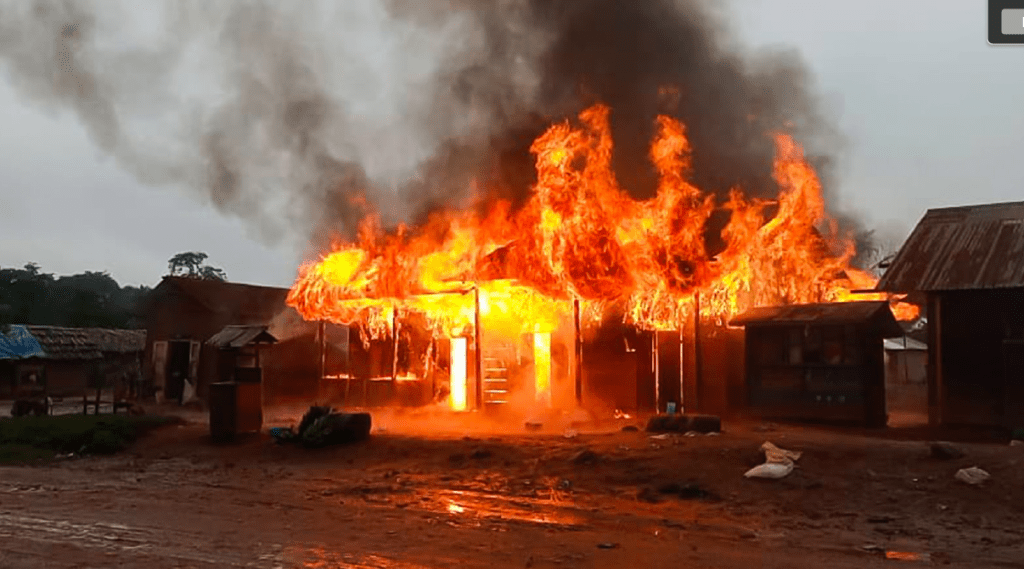
Christian homes burned by the Islamic State in the Ituri region of the Democratic Republic of the Congo || Al-Naba 352, p. 5
By Kyle Orton (@KyleWOrton) on 22 February 2022

Kabul, the capital of Afghanistan, fell to jihadists on 15 August 2021, and this has emboldened the jihadist movement across the world, providing it with a morale boost and a model, as well as renewing the terrorist safe haven that incubated 9/11. Continue reading
By Kyle Orton (@KyleWOrton) on 21 July 2018

Seda Dudarkaeva (image source)
Turkish police announced on 19 July that they had arrested the wife of Tarkhan Batirashvili (Abu Umar al-Shishani), an Islamic State (IS) commander who was killed two years ago this month in Shirqat, Iraq. The capture brings to the fore a story stretching from senior levels of the Chechen Republic to the Levant. Continue reading
By Kyle Orton (@KyleWOrton) on 26 May 2018
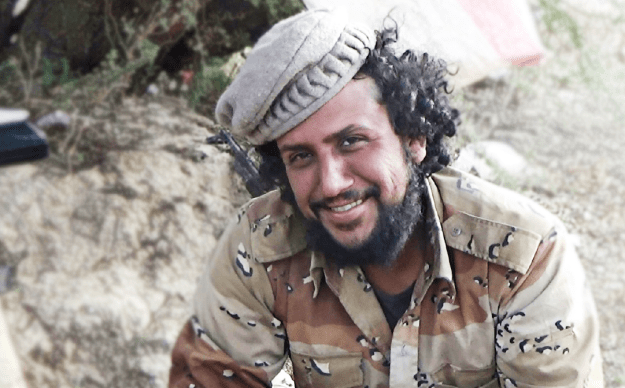
Ahmad bin Sa’id al-Amudi (Abu Karam al-Hadrami) // Picture from page 9 of Al-Naba 133 (25 May 2018)
The 133rd edition of the Islamic State’s (IS) weekly newsletter, Al-Naba, was released on 25 May 2018. In Al-Naba, on page nine, there was a profile of Ahmad bin Sa’id al-Amudi (Abu Karam al-Hadrami), a Saudi jihadist who fought for IS and was killed in Yemen. Al-Naba has run obituaries for prominent IS operatives like Mohammed Emwazi (Abu Muharib al-Muhajir), often known as “Jihadi John”, very senior IS officials whose biographies were shrouded in mystery like Abd al-Rahman al-Qaduli (Abu Ali al-Anbari) and Ali Aswad al-Jiburi (Abu Ayman al-Iraqi), as well as completely unknown figures like Abu Sulayman al-Libi. Al-Amudi is in this final category. Continue reading
By Kyle Orton (@KyleWOrton) on 9 February 2018
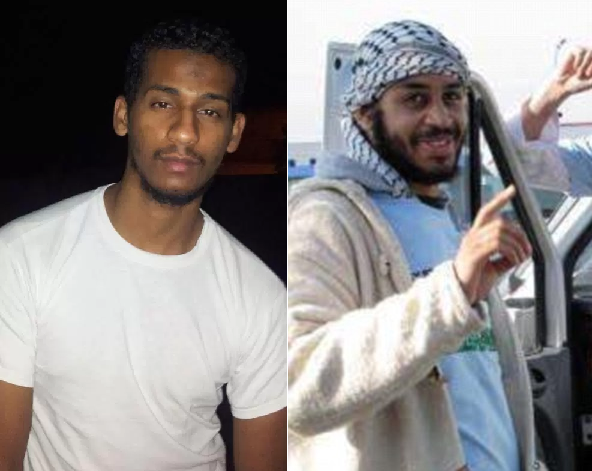
El Shafee Elsheikh (image source) and Alexanda Kotey (image source)
Last night, The New York Times reported and Reuters confirmed that two British Islamic State (IS) jihadists, El Shafee Elsheikh and Alexanda Kotey, both of them designated terrorists by the United States, have been arrested in Syria. Kotey and Elsheikh, along with the late Mohammed Emwazi (Abu Muharib al-Muhajir) and Aine Davis, formed a four-man cell that has become known as “The Beatles”—hence Emwazi being near-universally known as “Jihadi John”—that guarded, abused, and murdered hostages for IS from before the “caliphate” was founded in 2014. Continue reading
By Kyle Orton (@KyleWOrton) on 6 August 2017

A year ago, I wrote a report documenting the biographies of Islamic State (IS) leaders and something of the structure of the organisation. Since then, the intricacies of the structure have been further revealed, even as it has somewhat crumbled in practice. The caliphate—the statelet built by IS—has been significantly degraded: the Iraqi “capital”, Mosul, has fallen, and operation to clear the Syrian “capital”, Raqqa, is underway. More significantly, upwards of 40% of those profiled have been killed, so it seemed an opportune moment for an update on who currently leads the world’s most infamous terrorist movement.
Continue reading
By Kyle Orton (@KyleWOrton) on 30 March 2017
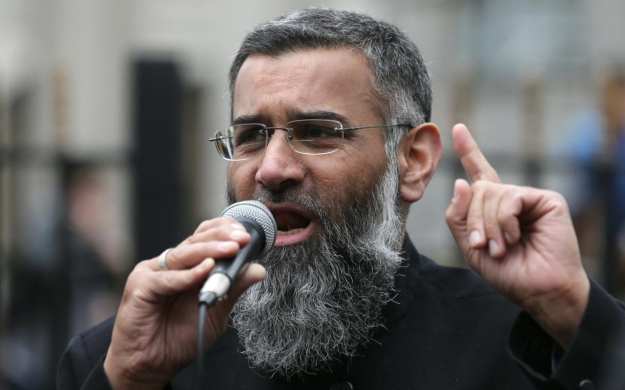
Anjem Choudary (image source)
The State Department designated five individuals on 30 March 2017 as Specially Designated Global Terrorists (SDGTs), imposing sanctions on them for having “committed, or [for] pos[ing] a significant risk of committing, acts of terrorism that threaten the security of U.S. nationals or the national security, foreign policy, or economy of the United States.” Four of those sanctioned are members of the Islamic State (IS), including two key British operatives in the group’s global network, and the other is a member of al-Qaeda. On the same day, the Treasury Department sanctioned two IS operatives involved in funding and guiding external IS operations in the Far East and Southeast Asia. Continue reading
Originally published at The Henry Jackson Society.
By Kyle Orton (@KyleWOrton) on February 21, 2017
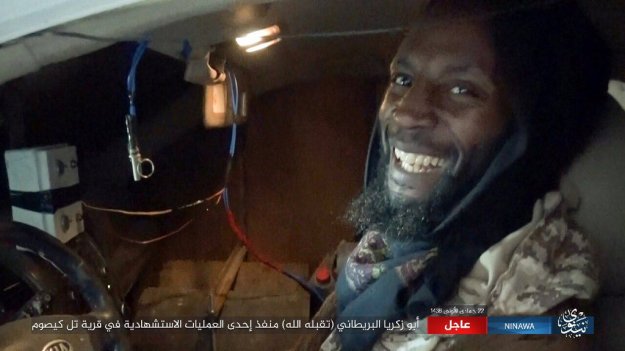
Ronald Fiddler (Abu Zakariya al-Britani)
Since the offensive against Mosul, the Iraqi capital of the Islamic State (IS), began five months ago, IS has expended a high number of lives quite deliberately in suicide attacks. One of the suicide-attacks conducted on 20 February 2017, a car bombing against an Iraqi base, was by Abu Zakariya al-Britani, a British citizen now identified as Ronald Fiddler from Manchester. In 2002, Fiddler, then calling himself Jamal Udeen al-Harith, was sent to Guantanamo Bay, before being released in 2004 while still protesting his innocence. After suing the British government over his imprisonment, Fiddler received a substantial cash settlement in order to avoid compromising state secrets. Fiddler’s demise invites some revisiting of widely-held assumptions surrounding Guantanamo. Continue reading
 Kyle Orton's Blog