Tag Archives: National Defence Forces

The Local And Regional Implications From The Fall Of Idlib

By Kyle Orton (@KyleWOrton) on March 31, 2015
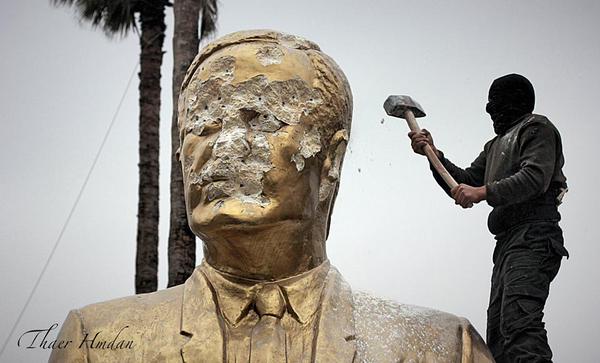
Statue of Hafez al-Assad defaced after Idlib City falls, March 29, 2015

Statue of Hafez al-Assad defaced after Idlib City falls, March 29, 2015

After an insurgent offensive began on March 24, Idlib City fell on March 29, making it only the second—of Syria’s fourteen—provincial capitals to slip from the control of Bashar al-Assad’s regime, the last one being Raqqa City on March 4, 2013. The regime has been on borrowed time in Idlib City since Wadi al-Deif to the south, near Maarat an-Numan, fell in mid-December.

In a scene reminiscent of Raqqa—and indeed the fall of Baghdad—a statue of Hafez al-Assad was destroyed. The insurgents broke open some secret prisons, while finding that in a final act of needless cruelty the regime had murdered other prisoners in the cells before retreating.

An operations room, Jaysh al-Fatah (Army of Conquest), organised this offensive, and is composed of: Faylaq a-Sham (Sham Legion), Liwa al-Haq, Ajnad a-Sham, Jaysh al-Sunna, Ahrar a-Sham, Jund al-Aqsa (JAA), and al-Qaeda’s Syrian branch, Jabhat an-Nusra. Continue reading

A Red Line For Iran’s Imperialism In Yemen

By Kyle Orton (@KyleWOrton) on March 27, 2015

1

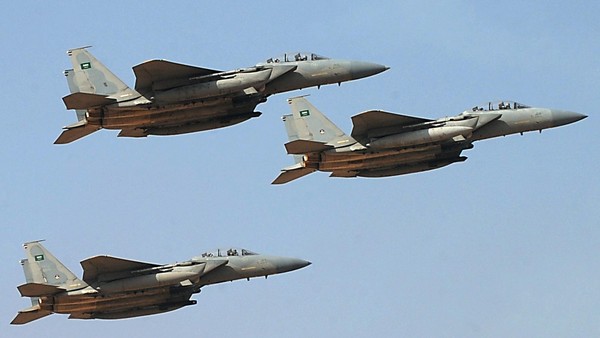
Late in the day on March 25, a Saudi-led coalition intervened in Yemen with airstrikes against the Houthis.

The Iranian-backed Houthis (a.k.a. Ansar Allah) took over Yemen’s capital, Sanaa, in September, and forced the resignation of the Saudi-backed Yemeni ruler, Abed Rabbo Mansour Hadi, in January. Hadi escaped house arrested in Sanaa and retreated to Aden with the remnants of his regime. On March 21, the Houthis had called for a “general mobilisation” and by the next day had pushed south toward Aden. The Houthis said they were combatting “terrorist forces”. As in Syria, Iran’s allied forces cast a narrative where there were no Sunni moderates, nobody with whom a deal might be struck.

Hadi’s predecessor, Ali Abdullah Saleh, whose resignation was compelled in early 2012 after the “Arab Spring,” stands accused not only by Hadi but by the United States of supporting the Houthis. Continue reading

Shi’a Holy War and Iran’s Jihadist Empire

By Kyle Orton (@KyleWOrton) on February 12, 2015

1

In watching the Syrian conflict, one of the most extraordinary tendencies of the reporting is the way “foreign fighter” and “jihadist” have become synonymous with the Sunni militants who have descended on that tormented country. This is one among many illusions that will hopefully be ended by Phillip Smyth’s monograph, “The Shiite Jihad in Syria and its Regional Effects“. You should read the whole thing but below are the salient points I took away. Continue reading

America’s Silent Partnership With Iran And The Contest For Middle Eastern Order: Part Four

By Kyle Orton (@KyleWOrton) on February 10, 2015

1

This is the fourth of a four-part series looking at the United States’ increasingly-evident de facto alliance with Iran in the region. The first part looked at the way this policy has developed since President Obama took office and how it has been applied in Iraq; the second part looked at the policy’s application in Syria; the third part looked at its application in Lebanon, Afghanistan, and Yemen; and this part is a conclusion. Continue reading

America’s Silent Partnership With Iran And The Contest For Middle Eastern Order: Part Three

By Kyle Orton (@KyleWOrton) on February 3, 2015

1

This is the third of a four-part series looking at the United States’ increasingly-evident de facto alliance with Iran in the region. This first part looked at the way this policy has developed since President Obama took office and how it has been applied in Iraq. The second part looked at the policy’s application in Syria; this part will look at its application in Lebanon, Afghanistan, and Yemen; and part four will be a conclusion. Continue reading

America’s Silent Partnership With Iran And The Contest For Middle Eastern Order: Part Two

By Kyle Orton (@KyleWOrton) on January 29, 2015

Assad meeting with the boss

Assad meeting with the boss

This is the second of a four-part series looking at the United States’ increasingly-evident de facto alliance with Iran in the region. This first part looked at the way this policy has developed since President Obama took office and how it has been applied in Iraq. This part will look at the policy’s application in Syria; part three will look at its application in Lebanon, Afghanistan, and Yemen; and part four will be a conclusion. Continue reading

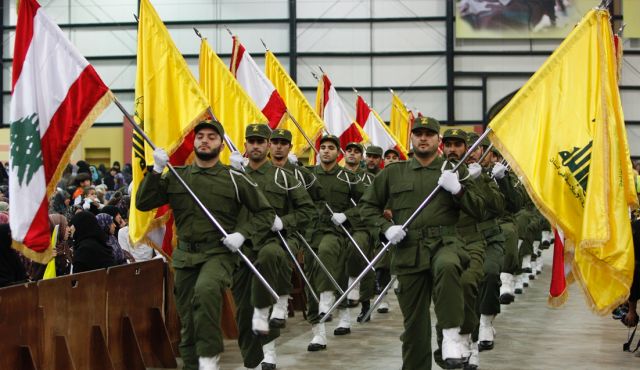
Iran Tries To Get American Support For Its Takeover Of Lebanon

By Kyle Orton (@KyleWOrton) on December 31, 2014

In early August, the Lebanese Armed Forces (LAF) arrested Abu Ahmad Jumaa, the leader of Liwa Fajr al-Islam (Islamic Dawn Brigade), which had been loyal to al-Qaeda’s Syrian branch, Jabhat an-Nusra but which had then-recently defected to the Islamic State (I.S.). In response, Nusra and I.S. fighters poured across the border into Arsal, Lebanon, where Jumaa was being held, and after five days of clashes the Salafi jihadists withdrew, taking with them thirty Lebanese security personnel. Five of the thirty are now dead: one from his injuries, the other four murdered—at least two of them beheaded. Continue reading

What To Do About Syria: Sectarianism And The Minorities

By Kyle Orton (@KyleWOrton) on December 24, 2014

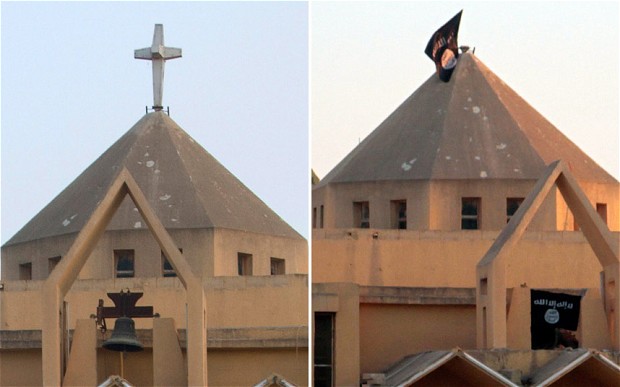
The Armenian Catholic Church of the Martyrs in Raqqa City

The Armenian Catholic Church of the Martyrs in Raqqa City

In the last few days I’ve been asked a lot about my longstanding view that the beginning of a Western strategy in Syria is the removal of Bashar al-Assad. The question has come from various angles and been phrased in various ways but it always boils down to: “What comes next?”

The best response I have seen to this comes from Thomas Nichols: “When someone says ‘tell me how it ends,’ it’s another way of saying: ‘I just don’t happen to like this particular case for intervention,’ for whatever reason.” Continue reading

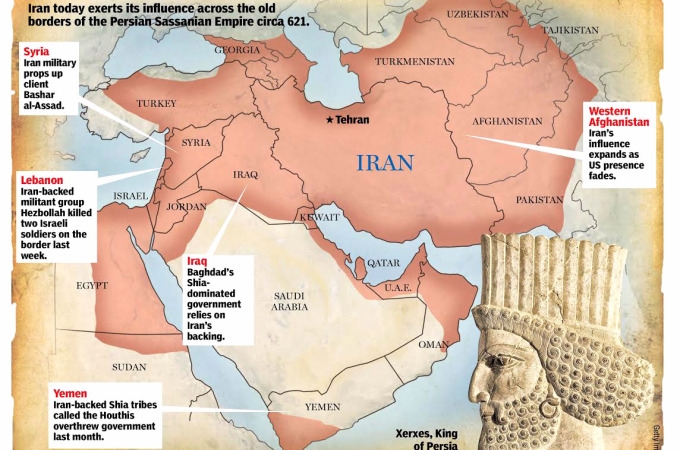
The Nuclear Negotiations Are Only Part Of Iran’s Regional Ambitions—And Obama’s

By Kyle Orton (@KyleWOrton) on October 27, 2014

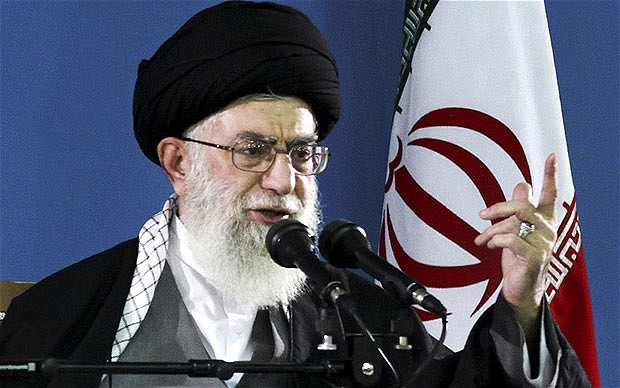
Ali Khamenei

Ali Khamenei

When the next—and supposedly final—round of negotiations over Iran’s nuclear program end next month, there are three possible outcomes:

  1. The “interim” deal, the Joint Plan of Action (JPA), will be rolled over for another six months after it was rolled over in July, and will, like so much else in the Middle East billed as temporary, begin to look permanent.
  2. A final deal is signed that is an Iranian victory in all-but name, putting them on the threshold of a nuclear weapon with only the regime’s goodwill stopping them crossing the finishing line to a bomb.
  3. Iran’s dictator, Ali Khamenei, refuses President Obama both of the above fig leaves and breaks off negotiations.

How did we get here? Continue reading

Will The Alawis Break With Assad?

By Kyle Orton (@KyleWOrton) on October 12, 2014

A grisly brood: The Assad family

A grisly brood: The Assad family

Last Thursday, in Akrama, an Alawi section of Homs City, there was the most extraordinary scene: Alawite anti-Assad protests. A twin bombing at a local school—reported as a suicide bombing by the regime, though there is no evidence for this—had massacred fifty Alawi civilians, most of them pupils. Annexing the slogans of the revolution, the Alawis took to the streets to demand the removal of Homs Governor Talal al-Barazi. “The people want to topple the governor,” people shouted, a conscious echo of the “Arab Spring” chant, a-shab yurid izkat an-nizam (the people want to topple the regime). Continue reading