Tag Archives: NATO

The Assad Regime Admits to Manipulating the Islamic State

By Kyle Orton (@KyleWOrton) on January 6, 2017

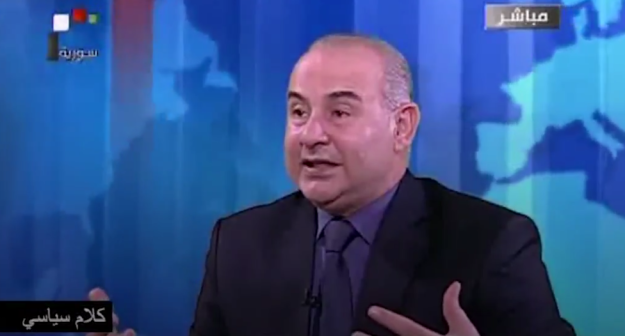
Khaled Abboud

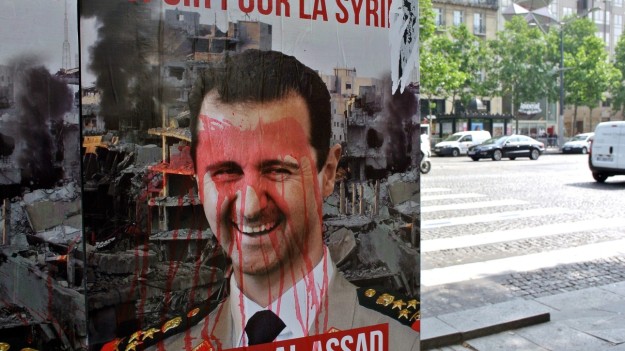
From the beginning of the uprising in Syria in 2011, there have been accusations that Bashar al-Assad’s regime was in a de facto partnership with the Islamic State (IS) against the mainstream opposition. These accusations have a considerable basis in fact: during the entirety of the Anglo-American occupation of Iraq, Assad collaborated with IS jihadists in the destabilization of Iraq, killing thousands of Iraqi civilians and hundreds of American and British troops. Once the Syrian uprising was underway, the regime undertook various measures to bolster extremists in the insurgency. Assad and IS worked in tandem to leave Syria as a binary choice between themselves: Assad was sure this would rehabilitate him in the eyes of the world and transform his criminal regime into a partner of the international community in suppressing a terrorist insurgency, and IS wanted to rally Sunnis to its banner. The Secretary of the Syrian Parliament has now come forward to underline this. Continue reading

Turkey Continues to Protest the Coalition’s Syrian Kurdish Allies

By Kyle Orton (@KyleWOrton) on November 22, 2016

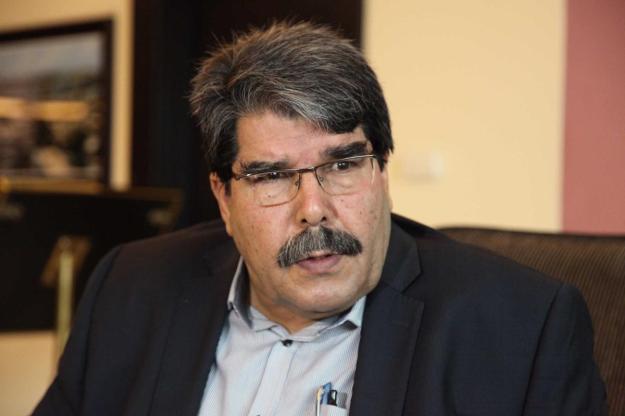
Saleh Muslim Muhammad

This morning, Turkey issued arrest warrants for forty-eight members of the Kurdistan Workers’ Party (PKK), which has fought a forty-year war against the Turkish state. The PKK is listed as terrorist by Ankara, Britain, the European Union, NATO, and the United States. Among those being sought is Saleh Muslim Muhammad, the leader of the Syrian branch of the PKK, known as the Democratic Union Party (PYD), whose armed wing—the People’s Protection Units (YPG)—happens to be the favoured Western instrument in combatting the Islamic State (IS) in Syria. The West has long denied or obfuscated the fact it is working with an organization that a NATO partner considers its nemesis and a long-standing threat to its national security. The Turks, it seems, are not content to let this ambiguity stand, and there are good reasons of Western self-interest why the alliance with the PKK deserves another look. Continue reading

The Coalition’s Flawed Endgame Strategy for the Islamic State

By Kyle Orton (@KyleWOrton) on November 6, 2016

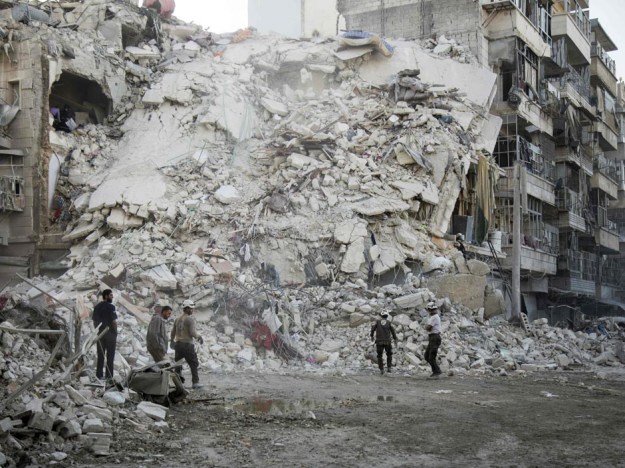
After some (perhaps wilful) confusion over the timing, the operation to expel the Islamic State (IS) from Raqqa City, its Syrian capital, got underway this morning, running concurrent with the effort to evict IS from its Iraqi capital, Mosul. There are deep concerns about the methods adopted in both cases. The ground forces the U.S.-led Coalition has chosen to support in Raqqa cannot lead to sustainable stability in Syria, something that is essential to defeat IS. While the Mosul operation has proceeded generally to plan, there are increasing signs of trouble within the operation itself and the most troubling aspect—the aftermath—still appears to be unplanned. Beyond this is the continued assault on Aleppo City by Bashar al-Assad’s regime and its Russian and Iranian patrons that is systematically destroying the forces needed if there is to be any settlement to Syria’s war that ends the space given to international terrorists. Continue reading

Russia Moves in For the Kill in Syria

Originally published at The Henry Jackson Society

By Kyle Orton (@KyleWOrton) on October 21, 2016

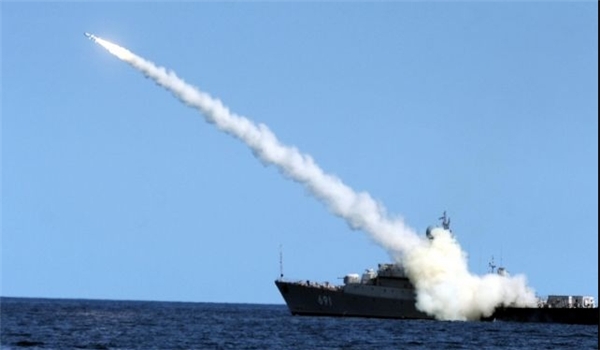
Vladimir Putin’s Russia is “deploying all of the Northern fleet and much of the Baltic fleet in the largest surface deployment since the end of the Cold War,” a NATO diplomat told Reuters on Wednesday night. These Naval assets are designed to buttress a final offensive by the remnants of Bashar al-Assad’s regime in Syria, which is effectively controlled on the ground by the Islamic Republic of Iran and an assortment of foreign Shi’a jihadists, against the insurgent-held east of Aleppo city, crushing once and for all the strategic threat posed by the rebellion to the regime, a threat that had already been all-but ended in the first months of Russia’s intervention. Nearly a year ago the U.S. began a political process with the Russians intended to end the war and begin a political transition. Moscow has subverted this process, using force to buttress its political efforts to secure Assad in power. The timing of this attack is seemingly intended as one final humiliation for President Barack Obama. Continue reading

Of Kurds and Compromises in Syria

By Kyle Orton (@KyleWOrton) on September 2, 2016

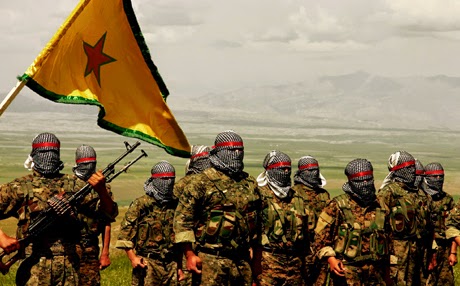
PYD/YPG soldiers

PYD/YPG soldiers

Having written extensively about the authoritarian structure in the areas run by the Democratic Union Party (PYD), the Syrian branch of the Kurdistan Workers’ Party (PKK), in northern Syria, and the problems of media, local and Western, in covering this, it was very interesting to see a report in The Wall Street Journal underlining some of these points.

The Journal notes that the PYD and its armed wing, the People’s Protection Units (YPG), have engaged in a ruthless consolidation of power within a single party, despite claims to be governing in a democratic way. This has included: heavy pressure on all non-pro-PYD media via various Soviet-style accusations of subversion; demographic engineering by a refusal to allow Arab inhabitants to return to homes or actively expelling them; forced conscription, including of children; the imposition of an ideological curriculum in schools; and the suppression and/or expulsion of all opposition. Continue reading

One Man’s Terrorist …

By Kyle Orton (@KyleWOrton) on August 30, 2016

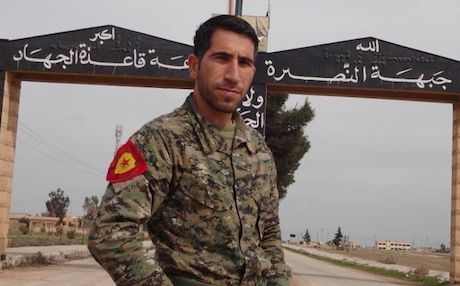
Polat Can, 2014, head of the YPG's information centre (source)

Polat Can, 2014, head of the YPG’s information centre (source)

Over the last twenty-four hours, as fighting has escalated between Turkey and the Kurdish People’s Protection Units (YPG), the armed wing of the Democratic Union Party (PYD), in northern Syria, an YPG/PYD operative has taken to Twitter to protest. Polat Can is the YPG’s representative to the American-led international coalition ranged against the Islamic State (IS), and his missives have sought to inform the coalition who and what terrorism is, which can be broadly summarized as: the Turkish government. Can himself, however, might easily be considered a terrorist since he is an allegedly-former member of the Kurdistan Workers’ Party (PKK), a registered terrorist organization by the United States, European Union, and Turkey. Continue reading

Is Turkey Responsible for the Islamic State?

By Kyle Orton (@KyleWOrton) on December 20, 2015

1

Turkey concluded its biggest investigation to date into Islamic State (IS) operatives on its territory on Friday, and blacklisted sixty-seven people. This provides a good moment to review what Turkey’s role has been in the rise of IS, especially amid the escalating accusations from Russia that Turkey is significantly responsible for financing IS. The reality is that while Turkish policy has, by commission and omission, made IS stronger than it would otherwise have been, so has Russia’s policy—and Russia’s policy was far more cynical than Turkey’s, deliberately intended empower extremists to discredit the rebellion against Bashar al-Assad. Turkey’s focus on bringing down Assad and Ankara’s fear of Kurdish autonomy led it into these policies and now—having seemingly found the will to act to uproot IS’s infrastructure on Turkish territory—there is the problem of actually doing so, when IS can (and has) struck inside Turkey. The concerns about these external funding mechanisms for IS, while doubtless important, obscure the larger problem: IS’s revenue is overwhelmingly drawn from the areas it controls and only removing those areas of control can deny IS its funds. Continue reading

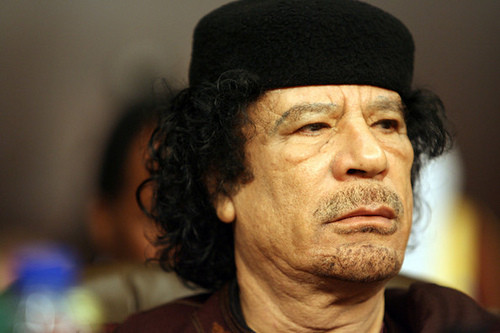
Why NATO Was Right To Intervene In Libya

By Kyle Orton (@KyleWOrton) on October 21, 2015

Published at Left Foot Forward.

1

Periodically, since the overthrow of Libyan dictator Muammar el-Qaddafi, there appears a series of articles, couched in tones from tentative to vehement, suggesting that if NATO had stayed out and allowed Qaddafi to retake the rebellious city of Benghazi in March 2011 then Libya would now be stable and would not be haemorrhaging refugees.

With the onset of the refugee crisis in Europe earlier this year, and Libya providing a major transit point for those trying to get to Europe, it was inevitable that this would happen again. But it is still mistaken: instability was coming to Libya no matter what the West did, and the main problem with the intervention was that it wasn’t early enough, forceful enough, or protracted enough. Continue reading

Iran’s Partnership with al-Qaeda and Unanswered Questions

By Kyle Orton (@KyleWOrton) on September 19, 2015

Imad Mughniyeh and Osama bin Laden

Imad Mughniyeh and Osama bin Laden

The Islamic Republic of Iran released five senior al-Qaeda terrorists in March, ostensibly as part of a prisoner exchange for an Iranian diplomat kidnapped in Yemen by al-Qaeda in the Arabian Peninsula (AQAP). But the murky circumstances in which al-Qaeda’s leaders were “held” in Iran and other inconsistencies cast some doubt on this version of events, and draw attention to some old questions about Iran’s support for al-Qaeda and its affiliates and offshoots. Continue reading

Sanctions Alone Won’t Stop Putin in Ukraine

By Kyle Orton (@KyleWOrton) on December 28, 2014

There has been much gloating from the U.S. government in the last few weeks about the damage the sanctions have done to the value of the Russian ruble, including a rather strange episode when President Obama adopted the third person to deny that he had been “rolled” by Vladimir Putin, and to take credit for the “financial crisis” Putin was now faced with.

Continue reading