Tag Archives: NATO

One Man’s Terrorist …

By Kyle Orton (@KyleWOrton) on August 30, 2016
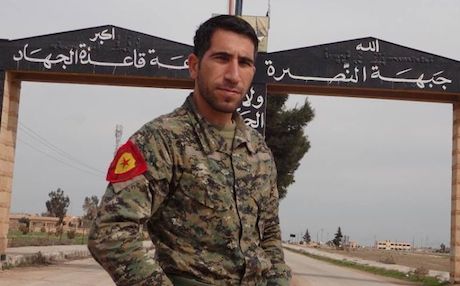
Polat Can, 2014, head of the YPG's information centre (source)

Polat Can, 2014, head of the YPG’s information centre (source)

Over the last twenty-four hours, as fighting has escalated between Turkey and the Kurdish People’s Protection Units (YPG), the armed wing of the Democratic Union Party (PYD), in northern Syria, an YPG/PYD operative has taken to Twitter to protest. Polat Can is the YPG’s representative to the American-led international coalition ranged against the Islamic State (IS), and his missives have sought to inform the coalition who and what terrorism is, which can be broadly summarized as: the Turkish government. Can himself, however, might easily be considered a terrorist since he is an allegedly-former member of the Kurdistan Workers’ Party (PKK), a registered terrorist organization by the United States, European Union, and Turkey. Continue reading →
Is Turkey Responsible for the Islamic State?

By Kyle Orton (@KyleWOrton) on December 20, 2015

1

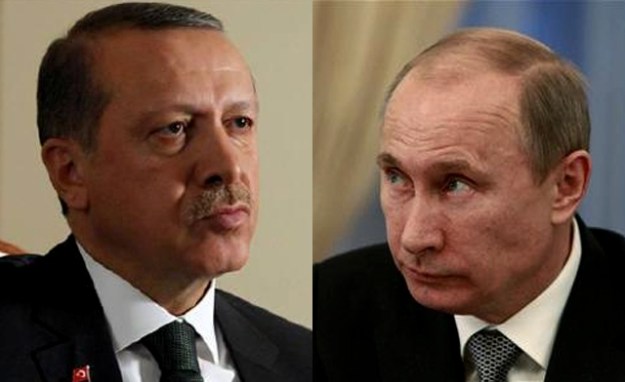
Turkey concluded its biggest investigation to date into Islamic State (IS) operatives on its territory on Friday, and blacklisted sixty-seven people. This provides a good moment to review what Turkey’s role has been in the rise of IS, especially amid the escalating accusations from Russia that Turkey is significantly responsible for financing IS. The reality is that while Turkish policy has, by commission and omission, made IS stronger than it would otherwise have been, so has Russia’s policy—and Russia’s policy was far more cynical than Turkey’s, deliberately intended empower extremists to discredit the rebellion against Bashar al-Assad. Turkey’s focus on bringing down Assad and Ankara’s fear of Kurdish autonomy led it into these policies and now—having seemingly found the will to act to uproot IS’s infrastructure on Turkish territory—there is the problem of actually doing so, when IS can (and has) struck inside Turkey. The concerns about these external funding mechanisms for IS, while doubtless important, obscure the larger problem: IS’s revenue is overwhelmingly drawn from the areas it controls and only removing those areas of control can deny IS its funds. Continue reading →

Why NATO Was Right To Intervene In Libya

By Kyle Orton (@KyleWOrton) on October 21, 2015

Published at Left Foot Forward.

1

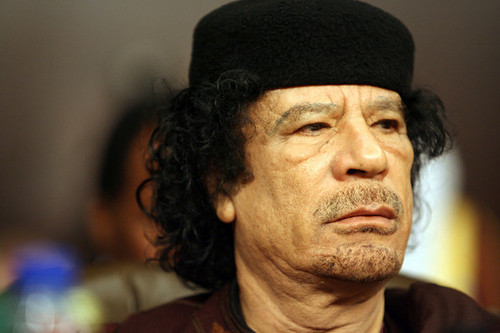
Periodically, since the overthrow of Libyan dictator Muammar el-Qaddafi, there appears a series of articles, couched in tones from tentative to vehement, suggesting that if NATO had stayed out and allowed Qaddafi to retake the rebellious city of Benghazi in March 2011 then Libya would now be stable and would not be haemorrhaging refugees.

With the onset of the refugee crisis in Europe earlier this year, and Libya providing a major transit point for those trying to get to Europe, it was inevitable that this would happen again. But it is still mistaken: instability was coming to Libya no matter what the West did, and the main problem with the intervention was that it wasn’t early enough, forceful enough, or protracted enough. Continue reading →

Iran’s Partnership with al-Qaeda and Unanswered Questions

By Kyle Orton (@KyleWOrton) on September 19, 2015

Imad Mughniyeh and Osama bin Laden

Imad Mughniyeh and Osama bin Laden

The Islamic Republic of Iran released five senior al-Qaeda terrorists in March, ostensibly as part of a prisoner exchange for an Iranian diplomat kidnapped in Yemen by al-Qaeda in the Arabian Peninsula (AQAP). But the murky circumstances in which al-Qaeda’s leaders were “held” in Iran and other inconsistencies cast some doubt on this version of events, and draw attention to some old questions about Iran’s support for al-Qaeda and its affiliates and offshoots. Continue reading →

Bernard Lewis and the Armenian Genocide Question

By Kyle Orton (@KyleWOrton) on June 7, 2015

In 2012, Bernard Lewis published his memoirs, Notes on a Century: Reflections of a Middle East Historian, which included a chapter on the court case brought against him in France in the 1990s for refusing to agree that the massacres of Armenians in the Ottoman Empire in 1915-16 constitute genocide in the original sense of the term, as applied to the Nazi Holocaust of European Jewry. The chapter is reproduced below.

Continue reading →

Sanctions Alone Won’t Stop Putin in Ukraine

By Kyle Orton (@KyleWOrton) on December 28, 2014

There has been much gloating from the U.S. government in the last few weeks about the damage the sanctions have done to the value of the Russian ruble, including a rather strange episode when President Obama adopted the third person to deny that he had been “rolled” by Vladimir Putin, and to take credit for the “financial crisis” Putin was now faced with.

Continue reading →

There Have Been Real Achievements In Afghanistan, But Leaving Puts Them At Risk

By Kyle Orton (@KyleWOrton) on November 22, 2014

1

Since President Obama’s 2009 announcement of a ‘surge’ in Afghanistan that simultaneously announced the date of withdrawal, the western focus in Afghanistan has shifted to the exits.

The steady drizzle of bad news since then has reinforced this sense that it’s over, we’ve had enough and we’re leaving.

American and British troops quit Helmand in late October, basically ceding it to Taliban control. On Tuesday John Sopko, the head of the American auditor mechanism (SIGAR) said that efforts to promote economic growth in Afghanistan have ‘accomplished nothing.’ Continue reading →

Obama’s Abandonment of Kobani Isn’t Just A Disaster For The Kurds

By Kyle Orton (@KyleWOrton) on October 9, 2014

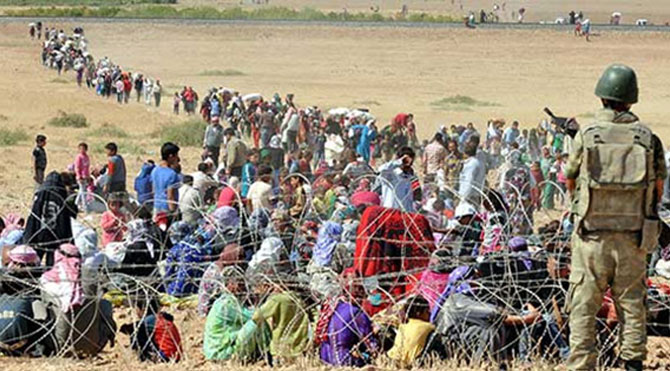
Syrian Kurdish refugees at the Turkish frontier

Syrian Kurdish refugees at the Turkish frontier

After three-and-a-half years of resistance, the United States finally intervened in Syria on September 23 with airstrikes against the Islamic State (I.S.). The I.S. had begun an attack on the Kurdish-controlled enclave in northern Aleppo along the Turkish border on September 15/16. By October 5, the Kurdish forces had been driven back into the Kurdish-majority town of Kobani (a.k.a. Ayn al-Arab), and I.S. had them surrounded. The desperate scenes of Syrian Kurds fleeing over the Turkish border in the face of the takfiris’ recalls the Iraqi Kurds making a run for the hills after the March 1991 uprising against Saddam Hussein was crushed. Then as now the Kurds believed they had stronger American backing than turned out to be the case. Continue reading →

Too LITTLE Intervention Doomed Libya

By Kyle Orton (@KyleWOrton) on August 27, 2014

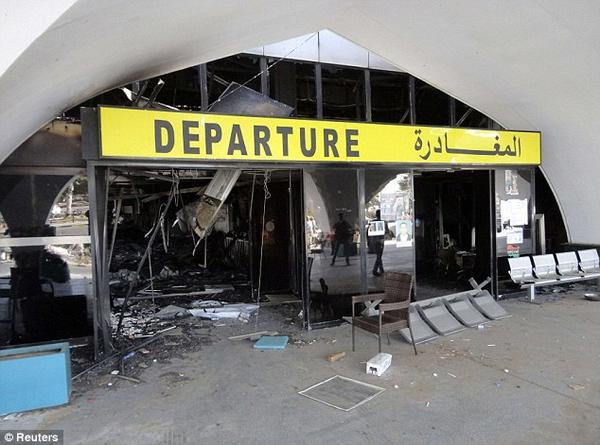
Devastated International Airport in Tripoli, Aug. 23, 2014

Devastated International Airport in Tripoli, Aug. 23, 2014

With the Arabian Revolt sweeping the Middle East in early 2011, Libya’s turn came on February 17. Throwing off decades of fear, and not bothering with peaceful demonstrations as Tunisia and Egypt had to free themselves of tyranny, nor the Syrians who tried peaceful demonstrations for six entire months, the Libyans went straight to armed rebellion, and soon the city of Benghazi had been pried from the regime’s grip and become the de facto capital of the revolution. Continue reading →

Stephen F. Cohen Disgraces Himself … Again

By Kyle Orton (@KyleWOrton) on August 16, 2014

Also cross-posted at the Gerasites blog

Stephen F. Cohen

Stephen F. Cohen

Since the Ukraine crisis began earlier this year, Stephen Cohen has acquired quite the reputation for apologetics for the Putin dictatorship and its aggression against Ukraine. Cohen, a scholar of Russia, especially the Bolshevik Revolution, has printed most of his pieces in support of Vladimir Putin in The Nation, a magazine edited by his wife Katrina vanden Heuvel. Now he has done so again. Credit where it is due: each salvo has been more hysterical than the last. Continue reading →