Tag Archives: Osama bin Laden

Statement by Al-Qaeda Bomb-Maker Ibrahim al-Asiri on 9/11

By Kyle Orton (@KyleWOrton) on 13 September 2017

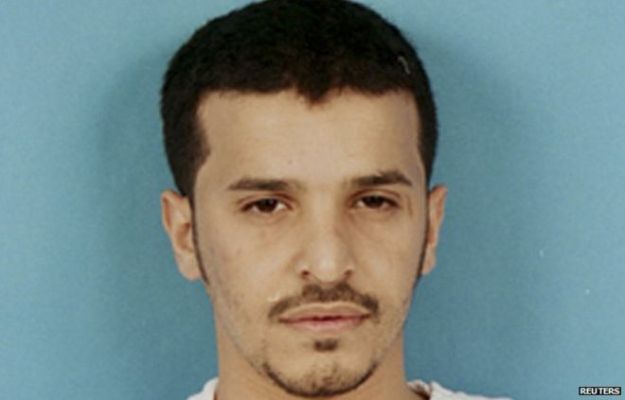
Ibrahim al-Asiri

Al-Malahim Media Institute, the affiliated media outlet for al-Qaeda in the Arabian Peninsula (AQAP), released a statement on 13 September 2017, “The March of Victory and the Defeat of America”, as part of al-Qaeda’s “In Remembrance of the Blessed September 11 Raids” series. The statement, attributed to Ibrahim Hassan bin Tali al-Asiri, the infamous AQAP bomb-maker, is reproduced below with some editions for syntax and spelling. Continue reading

One More Time on Saddam and the Islamic State

Originally published at The Henry Jackson Society

By Kyle Orton (@KyleWOrton) on 2 September 2017

The most recent issue of Perspectives on Terrorism had a paper by Ronen Zeidel entitled, ‘The Dawa’ish: A Collective Profile of IS Commanders’, which was “the first attempt to provide a comprehensive collective profile of commanders and leaders of the Islamic State (IS)”. Based on “an inventory of over 600 names”, the paper assessed the nationality, ethnicity, and tribal origins not just of the very senior IS commanders, but those lower down, a novel and much-needed line of investigation. Zeidel found that these commanders of the IS movement are or were overwhelmingly Iraqi and Sunni Arab, with an important Turkoman contingent.

Zeidel’s findings are important for drawing attention again to the local-revolutionary character of an organisation that gets a great deal of attention for its foreign fighters and external attacks, especially in the West, but which only a recently acquired global reach—and, indeed, only recently needed to: until 2011, the West was easily reachable since it had troops on the ground in Iraq, so the incentive to invest resources in creating a foreign terrorist apparatus was minimal.

One small part of Zeidel’s work has created something of a storm, however. Zeidel gives the occupation held by these commanders and, for those where this was known, 72% of them were former regime elements (FREs) from the dictatorship of Saddam Husayn. This reignited the argument over how important the FREs have been to IS. Continue reading

Iran and Russia Are Using the Taliban Against the West

By Kyle Orton (@KyleWOrton) on 5 August 2017

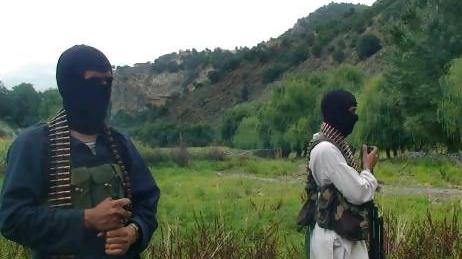
Taliban jihadists (image source)

The New York Times reported on the growing closeness of relations between the governments in Iran and Russia, and the Taliban movement in Afghanistan, something that became especially salient earlier this year and which has been visible for at least two years. Continue reading

The Top American in the Islamic State Attacks the Top American in Al-Qaeda

By Kyle Orton (@KyleWOrton) on 20 July 2017

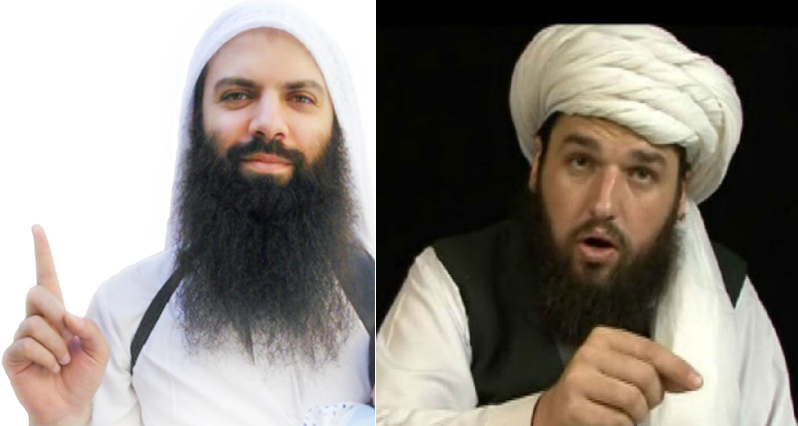
A couple of months ago, the Islamic State revealed that one of its most senior officials in the crucial media department until his death in January 2017 was an American, Ahmad Abousamra, known by various kunyas, including Abu Sulayman al-Shami and Abu Maysara al-Shami. Looking around afterwards, I came across an article by Abousamra condemning Adam Gadahn, another American, who was part of the core leadership of Al-Qaeda—one of the handful of men around Usama bin Laden and then Ayman al-Zawahiri—until he was killed in January 2015.

Continue reading

When Usama Bin Laden Defended the Islamic State

By Kyle Orton (@KyleWOrton) on 17 July 2017

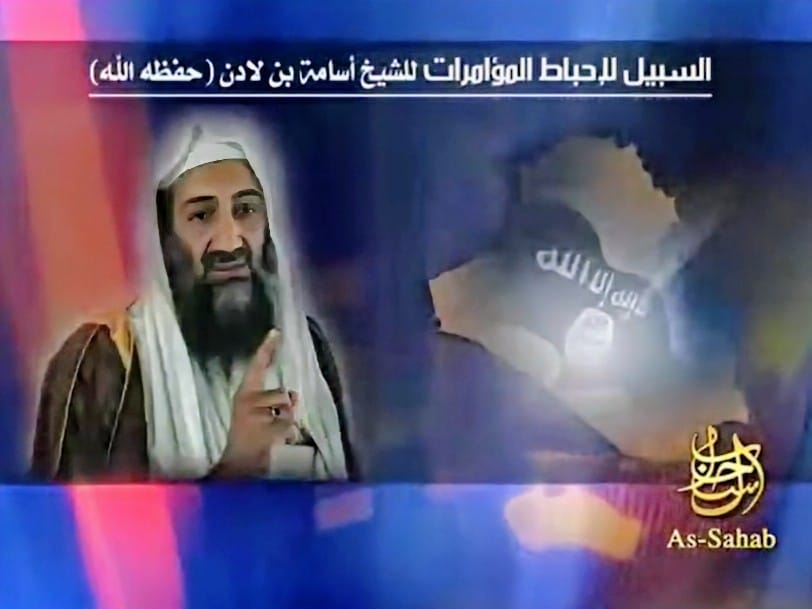
Usama bin Laden gave a speech lasting nearly an hour on 29 December 2007, entitled, “The Way to Foil the Conspiracies”. A translation of the speech is published below.

Continue reading

Al-Qaeda Leader Calls on Muslims to Unite Against the West

By Kyle Orton (@KyleWOrton) on 9 June 2017

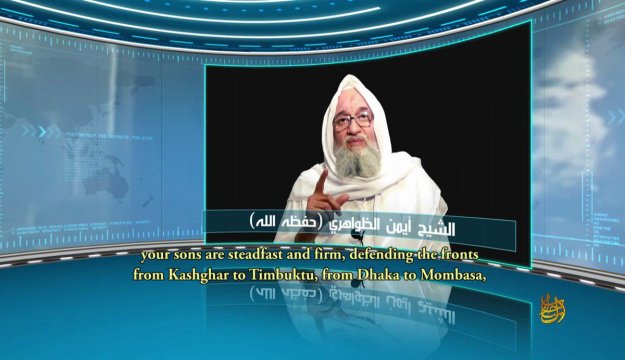
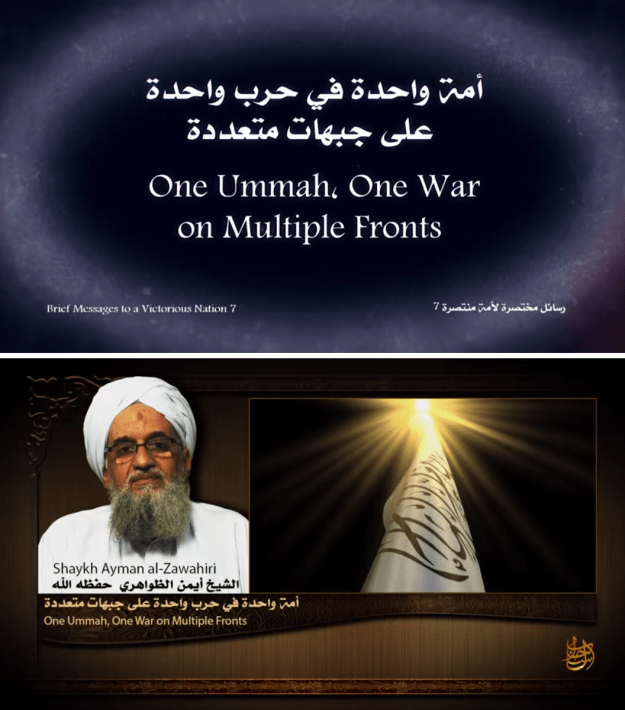
Ayman al-Zawahiri, the leader of al-Qaeda, released a nearly-six-minute speech today entitled, “One Umma, One War on Multiple Fronts,” as part of the “Brief Messages” series, this being “Brief Messages to a Victorious Nation 7”. A transcript of al-Zawahiri’s speech was released by As-Sabha Media and is reproduced below with some editions in transliteration and explanatory notes added.

Al-Zawahiri continues a theme he has emphasized in previous speeches in this series, namely that Muslims are a unitary block, and thus the interference of the jihadists in all these states is legitimate because these states are false, their borders drawn by colonialists so as to keep Islamdom weak and divided, and their governments are agents of external powers (and therefore a de facto foreign occupation). The historical examples that al-Zawahiri reaches for in describing the kind of “resistance” to this Western scheme that al-Qaeda supports include the founder of the Muslim Brotherhood, Hassan al-Banna, and the first leader of the Taliban, Mullah Muhammad Umar. Continue reading

Jihadist Terror Remains a Significant Problem for Britain

By Kyle Orton (@KyleWOrton) on 4 May 2017

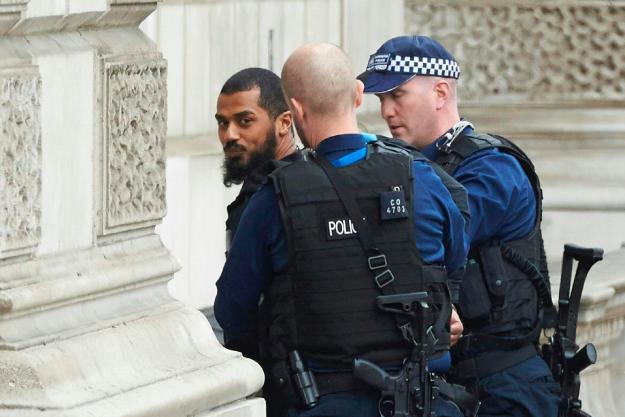
Khalid Mohamed Omar Ali being arrested (image source)

Over the past week, the authorities have disrupted two potential terrorist attacks in London. This follows the Westminster Bridge attack in March, which was claimed by the Islamic State (IS). Britain has been one of the most targeted states by IS’s campaign of global terror, and these latest incidents—whether or not they transpire to be IS-linked—underline the scale of the terrorist threat to Britain. Security forces prevented thirteen attacks in the U.K. between June 2013 and March 2017, and at any one time there are five-hundred live investigations into potential terrorist incidents, with 3,000 Britons believed to be capable of committing an act of domestic terrorism. Continue reading

Jihadi Clerics Dispute Legitimacy of Hay’at Tahrir al-Sham

By Kyle Orton (@KyleWOrton) on 30 April 2017

Abu Mahmud al-Filistini (@battar2812) is a London-based jihadi cleric, one of those to whom al-Qaeda’s loyalists look for guidance. An essay by Abu Mahmud, “An Indispensable Though Imperfect Unity,” has been put out defending Hay’at Tahrir al-Sham (HTS), the restructured al-Qaeda presence in Syria. Abu Mahmud writes mostly against those who are attacking HTS “from the Right,” the jihadists who believe that the rebranding and merging with groups of distinctly imperfect jihadi-salafist credentials like Harakat Nooradeen al-Zengi is a betrayal of the cause. Abu Mahmud writes specifically and harshly against Issam al-Barqawi (Abu Muhammad al-Maqdisi), the Jordan-based cleric who is the leading light of the part of the jihadi world that did not go over to the Islamic State, without ever naming him. The essay is reproduced below with some interesting and/or important parts highlighted in bold, and some notes added. Continue reading

Russia and Iran Use Terrorism Against Western Interests

By Kyle Orton (@KyleWOrton) on 25 April 2017

The evidence is mounting that Vladimir Putin’s government supports the Taliban as a means of thwarting NATO interests in Afghanistan. Russia has long manipulated terrorists, internally and abroad, to suit its policy aims, but as Moscow solidifies its relationship with the Iranian revolution the Russian policy, particularly in Syria, has become something more like a conventional alliance—not least because those who run Tehran’s foreign policy and the clerical regime’s most powerful assets are themselves terrorists. Continue reading

Islamic State Attacks Have Sown Division in France, Marine Le Pen Would Sow More

Published at The Telegraph

By Kyle Orton (@KyleWOrton) on 21 April 2017

Security forces stand guard after attack in Paris, 20 April 2017 (CREDIT: ETIENNE LAURENT/EPA)

In Paris last night a gunman parked his car, stepped out, and opened fire on a police van outside a Marks & Spencer’s on the Champs Élysées. One policeman was murdered; two were wounded. A female tourist was also injured. The attacker was killed by police as he tried to flee and continue his rampage. Within two hours, the Islamic State (ISIL) had claimed the attack via its Amaq News Agency, and, rather unusually, had named the killer: “Abu Yusuf al-Baljiki”.

It has been widely reported that “Abu Yusuf the Belgian” is really Karim Cheurfi the Frenchman, a 39-year-old imprisoned for fifteen years after being convicted for three counts of attempted murder in 2001. Notably, two of his intended victims were police officers. French media has reported that Cheurfi was briefly arrested on 23 February after expressing an intent to kill law-enforcement officials, but released due to lack of evidence; the Interior Ministry refused to comment. Continue reading