By Kyle Orton (@KyleWOrton) on 3 July 2022

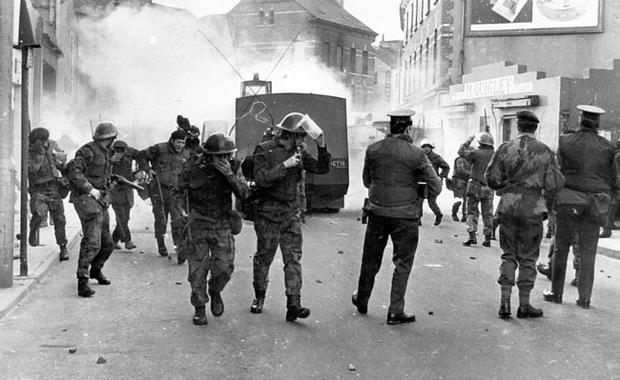
An IRA parade in Belfast || Image source
By Kyle Orton (@KyleWOrton) on 3 July 2022
An IRA parade in Belfast || Image source
By Kyle Orton (@KyleWOrton) on 28 June 2022
By Kyle Orton (@KyleWOrton) on 31 March 2022

Israeli security forces reacting to the terrorist attack in Bnei Brak near Tel Aviv, 29 March 2022 || Photo by JACK GUEZ / AFP
Israeli Prime Minister Naftali Bennett has said his country is “facing a new wave of terrorism” after five attacks in the last ten days have killed eleven people. The Islamic State (IS) has effectively admitted to carrying out two of the atrocities, the first time in five years the terrorist group has carried out attacks in the Jewish state. This hiatus, partly a reflection of the fact that, unlike some other Islamist extremists, IS does not make the anti-Israel cause a central plank of its propaganda, also reflects the relatively small inroads IS’s ideology has made to this point among Palestinian and Israeli Arabs. Whether this is now changing is unclear. Continue reading
By Kyle Orton (@KyleWOrton) on 29 June 2021
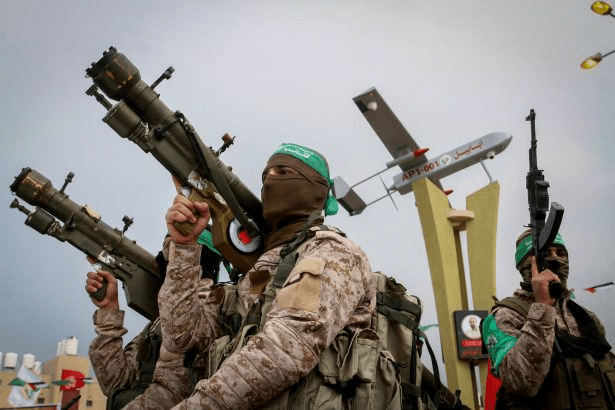
Members of the Ezzedine al-Qassam Brigades, the military wing of Hamas, at a memorial in Gaza, 31 January 2017. Photo by Abed Rahim Khatib, Flash90.
The May 2021 round of fighting in Gaza brought with it the upending of the unspoken understanding between Israel and Hamas and a level of intercommunal violence within Israel that has not been seen in quite some time. The scale of the rocket attacks on the Jewish state must also be counted among the unusual elements of this latest flare-up, with Iran clearly identifiable as the enabling state behind Hamas and Palestinian Islamic Jihad (PIJ), the two primary factions behind these attacks. Continue reading
By Kyle Orton (@KyleWOrton) on 2 February 2021
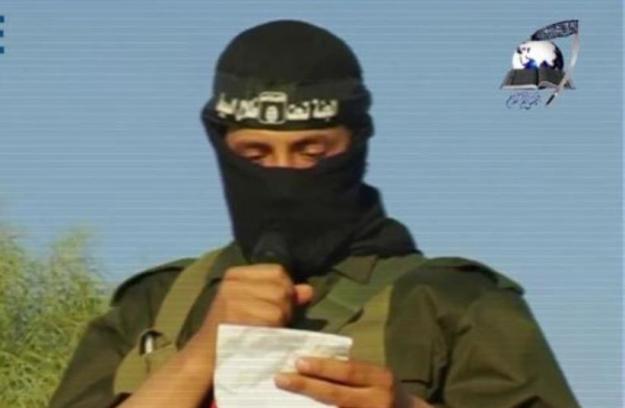
Jaysh al-Islam in Gaza joins the Islamic State in 2015 (image source)
Hamid al-Zawi (Abu Umar al-Baghdadi), the second leader of the Islamic State movement, known at the time as the Islamic State of Iraq (ISI), made his ninth speech out of what would prove to be twenty-three, entitled “Al-Deen al-Naseeha” or “The Deen is Sincere Advice” (الدين النصيحة), on 14 February 2008. “Deen” is often translated as “religion”, but the implication of referring to the “spiritual” side of life—and not the “secular”—is inadequate to describe the totality contained within the word; something like “creed” or “lifeway” is more accurate. The speech is most notable as something of a rarity in that it focused on Palestine. A transcript of the speech was put out by ISI and is reproduced below with edits for grammar and clarity. Continue reading
By Kyle Orton (@KyleWOrton) on 8 January 2021
This article was originally published at European Eye on Radicalization

The world has been captivated this week by the scenes of an insurrectionary mob overrunning the United States Capitol at the behest of President Donald Trump. It is unlikely that many people remember or even know that nearly forty years ago, this building—the meeting place of the U.S. Congress, the place where laws are made—was bombed by a Communist terrorist group, a group remarkable for its all-female membership. A new book, Tonight We Bombed the U.S. Capitol: The Explosive Story of M19, America’s First Female Terrorist Group, by William Rosenau, a senior policy historian at CNA and a fellow in the International Security program at New America, examines this forgotten episode. Continue reading
By Kyle Orton (@KyleWOrton) on October 23, 2020
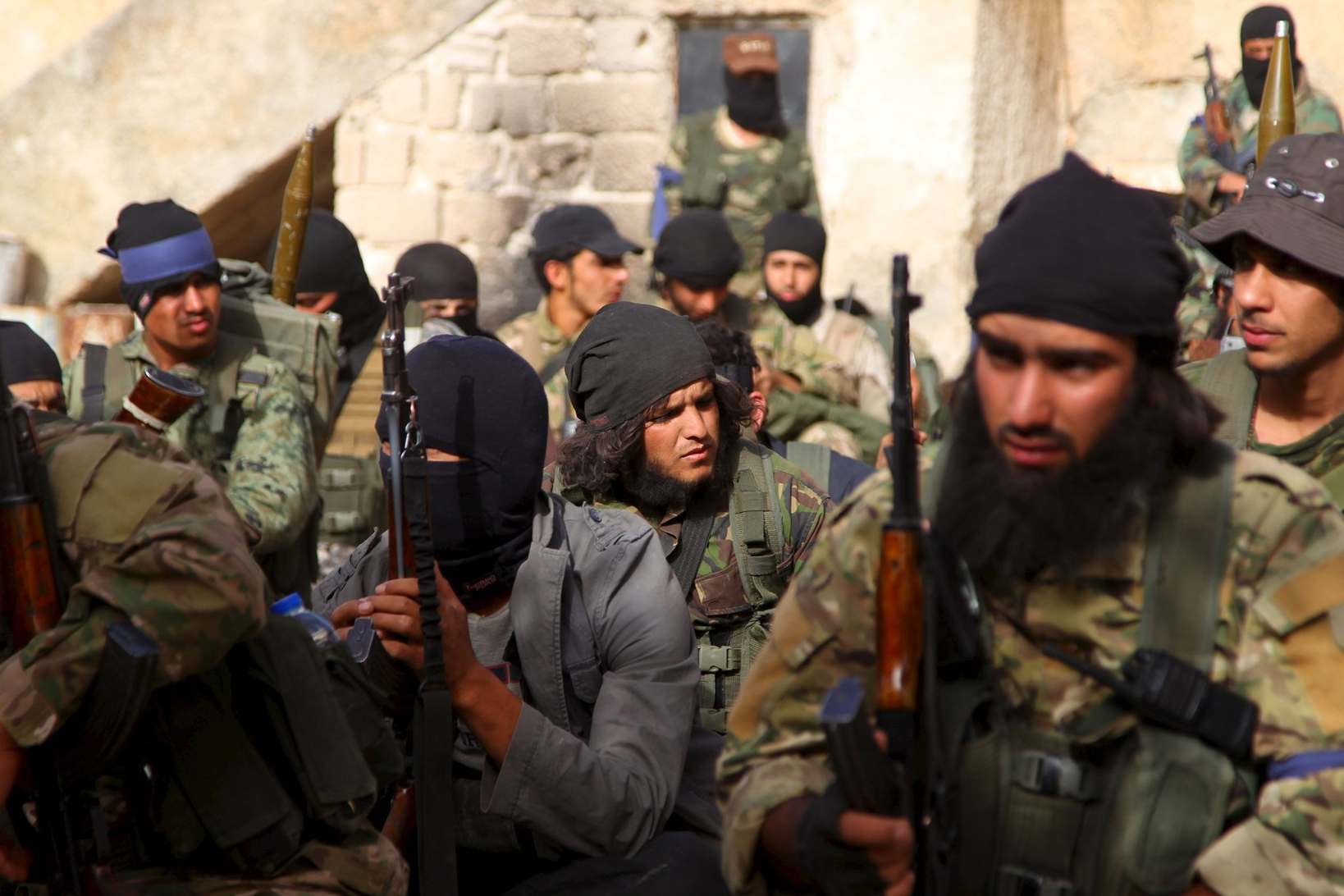
A chapter about Islamism in Syria I wrote for the American Foreign Policy Council’s (AFPC) ‘World Almanac of Islamism’ was published today. Do check it out, and the broader site, which is a great, accessible resource. The format of the website necessitated that the chapter as I submitted it was edited, condensed, and split up to fill out the various categories. In case it is of any interest, the original version of the chapter is reproduced below.
By Kyle Orton (@KyleWOrton) on 12 June 2020

Ismail Nazlikul (Kasim Engin) [image source]
By Kyle Orton (@KyleWOrton) on 22 February 2020
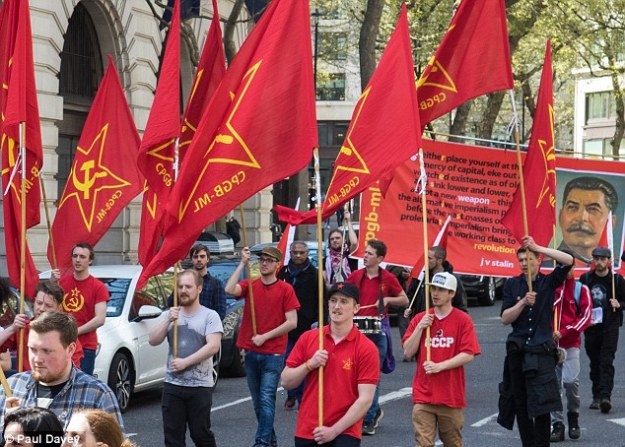
Communist Party of Great Britain (Marxist–Leninist) (CPGB-ML) carrying banners and Stalin postsers at a May Day parade // May 2016
Jeremy Corbyn has been dogged throughout his time as leader of the British Labour Party by his associates. Having Seumas Milne, a believing Stalinist and general conspiracy theorist, as his spin-doctor and primary strategist is actually among the least disgraceful things about Corbyn. Corbyn was, despite later attempts at obfuscation, a vocal supporter of the Provisional Irish Republican Army (PIRA). Corbyn was paid £20,000 for pro-Iranian propaganda by the clerical regime. He laid a wreath honouring Black September, the deniable unit of the Palestine Liberation Organisation (PLO) responsible inter alia for the mutilation and murder of Israeli athletes at Munich in 1972. Then there was Fidel Castro, HAMAS, Hizballah, and on and on.
Thus, when it was revealed, two years ago this month, that Corbyn supplied political and other intelligence to the secret police of Communist Czechoslovakia, it was unsurprising. Corbyn was known to have supported the Soviet side in the Cold War, from Castro’s Cuba to the Sandinistas in Nicaragua; had he known of Soviet support to PIRA, it would not have turned him against them. So, it was all taken very much in stride. Putting aside the lament that it should have been a bigger scandal that the Leader of the Opposition was once an “operational contact” for the Soviet Bloc, it was an interesting look at how the Soviet Union, through its satellite states, sought to cultivate sympathisers and exert influence in Britain—and how little is known, even now, about the scale and success of such things.
Somebody who could have shed more light on this was Reuben Falber, a senior official of the Communist Party of Great Britain (CPGB) and its key liaison with the KGB. When he died on 29 April 2006, he took most of his secrets with him. Still, what is known of Falber’s career gives some insight and such insights are by no means all retrospective. Continue reading
 Kyle Orton's Blog