By Kyle Orton (@KyleWOrton) on 25 February 2026
By Kyle Orton (@KyleWOrton) on 22 July 2022
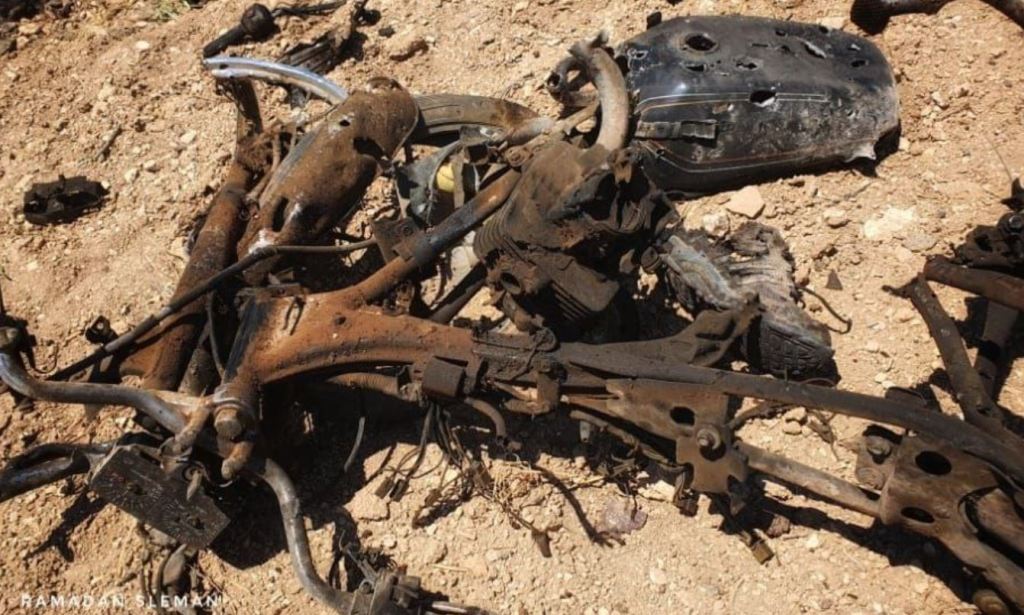
The United States announced on 12 July that it had killed the Islamic State’s (ISIS) governor of Syria in a drone strike in the village of Galtan in the Jinderes district of the north-western Syrian province of Efrin on the border with Turkey. The U.S. Central Command (CENTCOM) statement identified the slain man as “Maher al-Agal”, though a more precise transliteration is Maher al-Aqal (ماهر العقال). Riding on the motorcycle alongside Al-Aqal when he was killed was a “senior ISIS official” with whom he was “closely associated”. This ISIS official was “seriously injured during the strike”, CENTCOM notes, adding that the Jinderes strike caused no civilian casualties. Continue reading
By Kyle Orton (@KyleWOrton) on 3 July 2022

An IRA parade in Belfast || Image source
By Kyle Orton (@KyleWOrton) on September 11, 2020
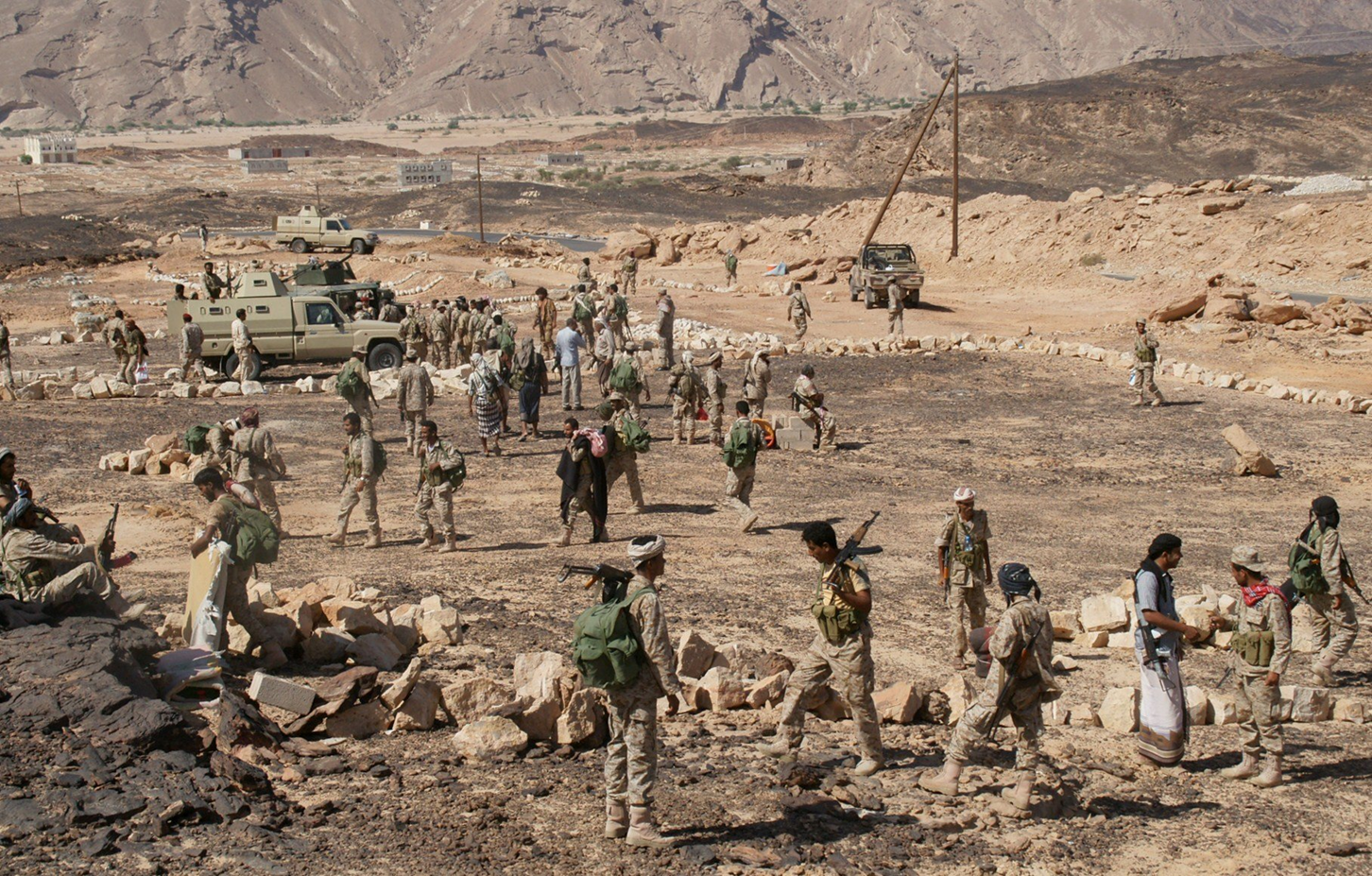
In writing a chapter earlier this year about the current status of Al-Qaeda, part of the process was reviewing the organisation’s history since its formation in the late 1980s. What really struck me was how extensively Al-Qaeda is now manipulated, under the influence of, and in places even controlled by state powers. To mark the nineteenth anniversary of 9/11, I thought I could give a brief sketch of this development.
By Kyle Orton (@KyleWOrton) on 11 June 2020
France announced last Friday that its forces in Mali had killed Abd al-Malek Drukdel (Abu Musab Abd al-Wadud), the emir of Al-Qaeda in the Islamic Maghreb (AQIM), which covers the North Africa and Sahel areas. Paris has sometimes been unreliable on these matters, but the United States independently confirmed Drukdel was gone, as have sources within AQIM. The French also announced that on 19 May they had arrested Mohamed Mrabat, a veteran jihadist and member of the Islamic State in the Greater Sahara (ISGS). Continue readingBy Kyle Orton (@KyleWOrton) on 15 April 2019
In February 1979, police in south-eastern Australia arrested six people. The suspects were members of the Croatian nationalist scene that agitated against Communist Jugoslavija and they had planned to commit a series of attacks against symbols of Marshal Tito’s regime that could have killed hundreds of Australians. Except they hadn’t, as Hamish McDonald, a journalist with the Sydney Morning Herald, shows in Framed (2012). Despite the “Croatian Six” being convicted for terrorism and spending a decade in prison, the reality of what had happened was nearly the exact opposite—and at least some powerful people in the Australian government knew or suspected as much from the get-go. Continue reading
By Kyle Orton (@KyleWOrton) on 18 September 2018
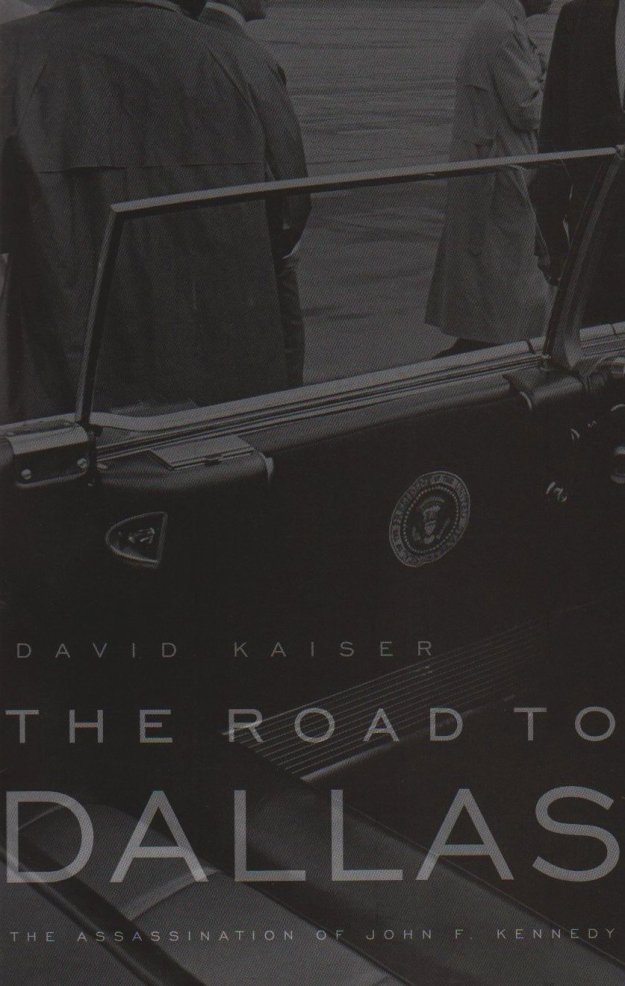
To even pose the question is, for most of us, to be already well-advanced down the road of madness that leads to saying the U.S. federal government murdered President John F. Kennedy. Dr. David Kaiser’s The Road to Dallas (2008) rejects such vast conspiracy theories, as it does the notion of Lee Harvey Oswald as the lone killer. Kaiser instead argues for a more limited conspiracy, led by the mob bosses of mid-20th century America, and originating in the grey-zone where that world met the Cuban exile community and the Central Intelligence Agency’s efforts to bring down Fidel Castro. Continue reading
By Kyle Orton (@KyleWOrton) on 21 July 2018

Seda Dudarkaeva (image source)
Turkish police announced on 19 July that they had arrested the wife of Tarkhan Batirashvili (Abu Umar al-Shishani), an Islamic State (IS) commander who was killed two years ago this month in Shirqat, Iraq. The capture brings to the fore a story stretching from senior levels of the Chechen Republic to the Levant. Continue reading
By Kyle Orton (@KyleWOrton) on 20 April 2018
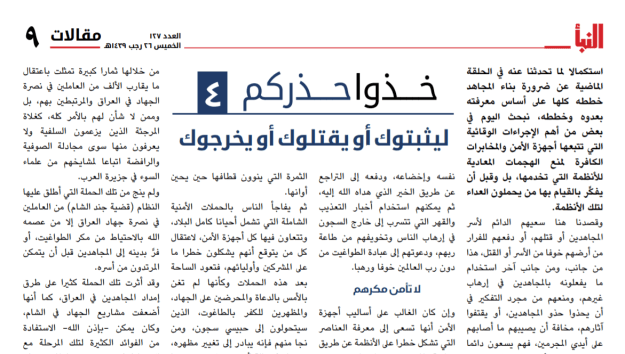
Since the uprising in Syria began in 2011, Bashar al-Asad’s regime has followed a tried and trusted script to destroy the opposition by eliminating all engageable elements, creating a binary choice for the population and the world—the despotism or a terrorist takeover.
Asad bolstered extremists within the insurgency: letting Islamists out of prison while imprisoning secular activists, pushing a peaceful protest movement into violence, heightening sectarian tensions, and financial schemes of various kinds. Asad then then left IS alone for a year to build its caliphate, while obliterating rebel-held areas that could provide an attractive alternative to the dictatorship. Continue reading
By Kyle Orton (@KyleWOrton) on 16 March 2018
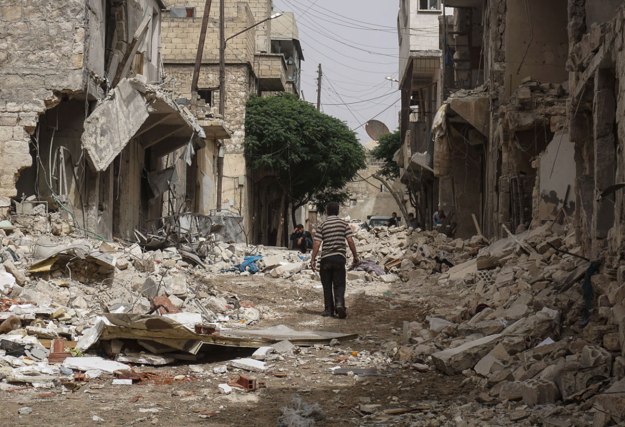
Devastation in Aleppo (image source)
This week marks the seventh anniversary of the Syrian revolution. A movement that began with peaceful street protests calling for reform and—after the government responded with lethal violence—the downfall of the dictator, descended into war that has to this point cost the lives of at least 500,000 people and displaced nearly twelve million others—more than half of Syria’s pre-war population.
In any strategic sense the rebellion has been defeated—it is not able to overthrow Bashar al-Assad by force on its own—and its political cause is increasingly strained as the remnants of the armed opposition are increasingly co-opted by external actors, state and non-state. Continue reading

 Kyle Orton's Blog