Tag Archives: Qassem Suleimani

If Assad Murdered His Own Brother-In-Law To Survive, What Wouldn’t He Do?

By Kyle Orton (@KyleWOrton) on December 19, 2014
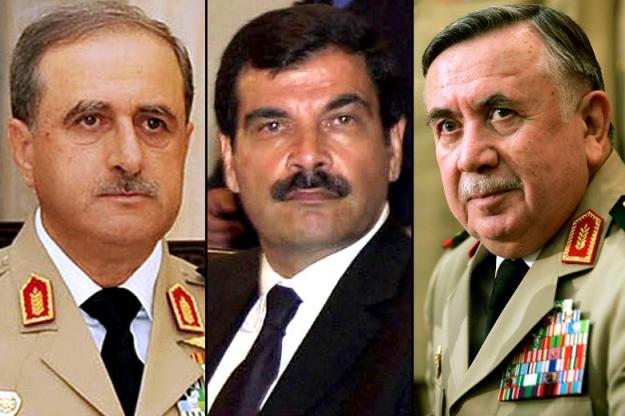
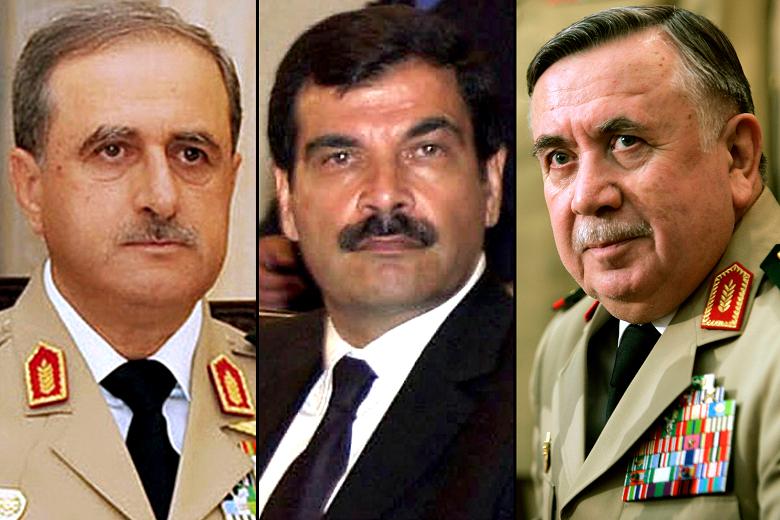
Defence Minister Daoud Rajha, General Assef Shawkat and General Hassan Ali Turkmani

Defence Minister Daoud Rajha, General Assef Shawkat and General Hassan Ali Turkmani

Sam Dagher at the Wall Street Journal has identified the July 18, 2012, bombing, which killed four senior Assad regime officials, most seriously Assef Shawkat, as the turning point in Syria, reversing the rebellion’s momentum, bringing the scale of the killing above where it had been before, closing the ranks of the minorities around the regime, and opening the country up to Iran.

Dagher certainly has the timing correct. It was the late summer, and most noticeably the fall of 2012, when the death toll in Syria markedly increased. 5,000 people had been killed in all of 2011, and another 5,000 by May 2012. By September 2012, 30,000 people were dead, the kill-rate now reaching 5,000-per-month. By January 2013, 60,000 people were dead, a kill-rate of 10,000-per-month. Nobody really knows what the total, let alone the rate, is now, but this was when it spiked. This period is also concurrent with the massive operation mounted by Clerical Iran to rescue the Bashar dictatorship.

Given how beneficial this bombing was to the regime, there have long been rumours it was an inside job. A recent report by Naame Shaam said exactly this, that this was an Iranian-orchestrated counter-intelligence operation to snuff-out the softliners within the regime who were trying to reach a deal with the protesters and rebels inside the country and their Gulf Arab patrons, which would have involved some concessions from the regime on its absolute control. Continue reading

Nuclear Negotiations With Iran Go On—And On And On

By Kyle Orton (@KyleWOrton) on December 2, 2014

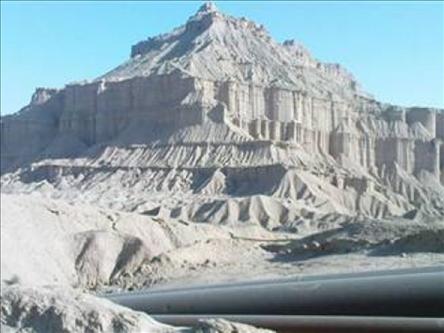
Fordow, an Iranian nuclear enrichment facility near Qom—easily mistaken for the volcano lair of a Bond villain

Fordow, an Iranian nuclear enrichment facility near Qom—easily mistaken for the volcano lair of a Bond villain

It wasn’t exactly a nail-biting finish in the end was it? In Vienna on Nov. 24, the P5+1 and Iranian negotiators decided to extend for another seven months the “interim” deal, the Joint Plan of Action (JPA), made in November 2013 on Iran’s nuclear weapons program, until June 2015. Conditions always favoured an extension but I was not absolutely sure that this is what would happen until Secretary of State John Kerry said on Nov. 21: “We are not discussing an extension.” Continue reading

The Nuclear Negotiations Are Only Part Of Iran’s Regional Ambitions—And Obama’s

By Kyle Orton (@KyleWOrton) on October 27, 2014

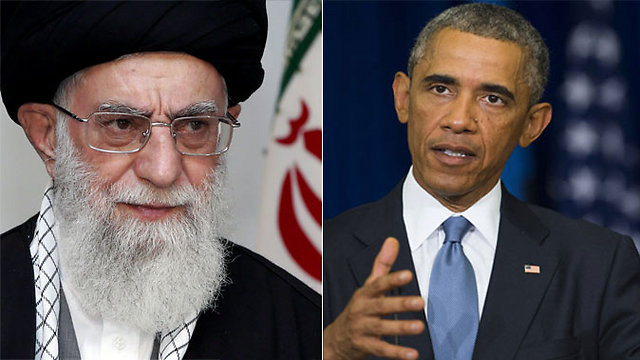
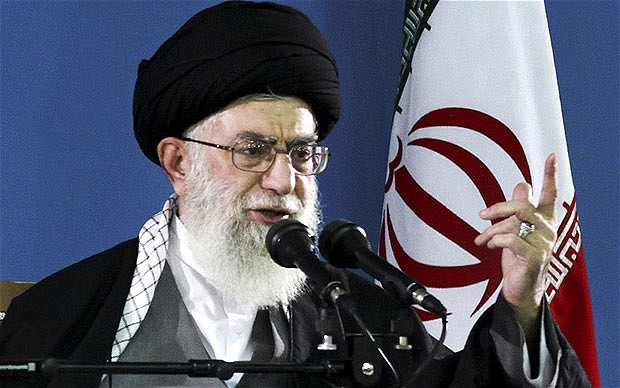
Ali Khamenei

Ali Khamenei

When the next—and supposedly final—round of negotiations over Iran’s nuclear program end next month, there are three possible outcomes:

  1. The “interim” deal, the Joint Plan of Action (JPA), will be rolled over for another six months after it was rolled over in July, and will, like so much else in the Middle East billed as temporary, begin to look permanent.
  2. A final deal is signed that is an Iranian victory in all-but name, putting them on the threshold of a nuclear weapon with only the regime’s goodwill stopping them crossing the finishing line to a bomb.
  3. Iran’s dictator, Ali Khamenei, refuses President Obama both of the above fig leaves and breaks off negotiations.

How did we get here? Continue reading

Obama’s Abandonment of Kobani Isn’t Just A Disaster For The Kurds

By Kyle Orton (@KyleWOrton) on October 9, 2014

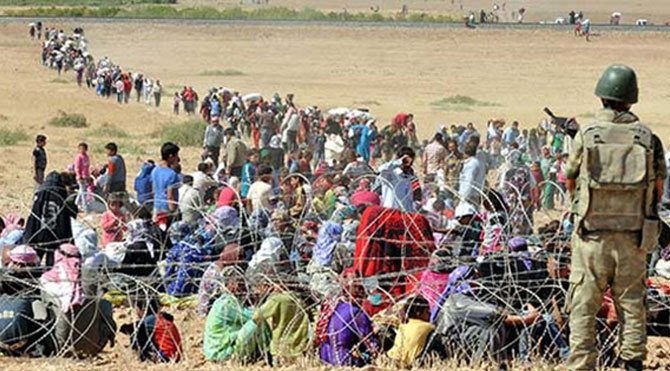
Syrian Kurdish refugees at the Turkish frontier

Syrian Kurdish refugees at the Turkish frontier

After three-and-a-half years of resistance, the United States finally intervened in Syria on September 23 with airstrikes against the Islamic State (I.S.). The I.S. had begun an attack on the Kurdish-controlled enclave in northern Aleppo along the Turkish border on September 15/16. By October 5, the Kurdish forces had been driven back into the Kurdish-majority town of Kobani (a.k.a. Ayn al-Arab), and I.S. had them surrounded. The desperate scenes of Syrian Kurds fleeing over the Turkish border in the face of the takfiris’ recalls the Iraqi Kurds making a run for the hills after the March 1991 uprising against Saddam Hussein was crushed. Then as now the Kurds believed they had stronger American backing than turned out to be the case. Continue reading

A Syrian Rebel Commander Accuses Iran of Helping The Islamic State

By Kyle Orton (@KyleWOrton) on September 25, 2014

Is there anything Hajj Qassem can't do?

Is there anything Hajji Qassem can’t do?

Middle East Monitor Online (MEMO) has published an article by Yvonne Ridley that consists of an interview with Hassan Abboud just a few hours before he and most of the Ahrar a-Sham leadership were killed on September 9. The accusations Ridley records Abboud levelling against the Islamic State (I.S.) are deeply upsetting to the conventional view of the Syrian conflict. Continue reading

Obama Declares War On The Islamic State … Kind Of

By Kyle Orton (@KyleWOrton) on September 13, 2014

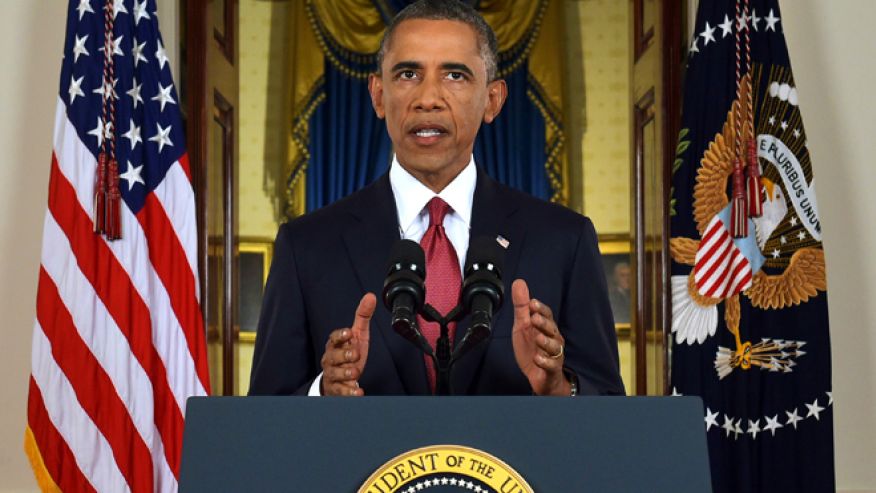
On Wednesday night, President Obama gave a speech, the purport of which was to be a war plan to defeat the Islamic State (I.S.). Indeed in the speech the President committed to a “roll back” of the territory the I.S. had conquered, and to “degrade and ultimately destroy” the Takfiri Caliphate. But as to how he was going to do that, the details were few. Continue reading

Ghouta: One Year On

By Kyle Orton (@KyleWOrton) on August 21, 2014

Some of the children killed by the Assad regime's CW attack on Aug. 21, 2013

Some of the children killed by the Assad regime’s CW attack on Aug. 21, 2013

Can it really be twelve whole months since Bashar al-Assad gassed to death more than 1,400 people in a morning? I happened to be in London when the attack on the Damascus suburbs of Ghouta took place, exactly a year ago. London has become (in)famous recently for mass-protests that throw around the word “genocide”—against Israel’s (in my view ill-thought out) recent response to HAMAS’ rocket fire. London had no time for Syria’s grief: Continue reading

Syria’s Rebellion on the Ropes

By Kyle Orton (@KyleWOrton) on July 9, 2014

3

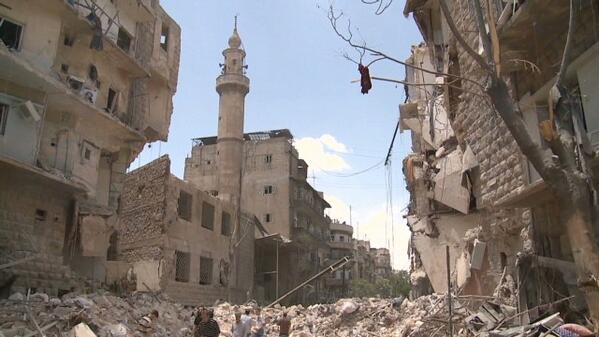
The devastated city of Aleppo

As we approach the forty month mark for the Syrian uprising the situation is grimmer than it has ever been. Not just the casualties: more than 200,000 people dead. Not just the physical devastation and mass-displacement of more than a third of the country. But now in military terms the rebellion is on the defensive in a way it has not been since it erupted at the end of 2011, after more than six months of peaceful protests.

Continue reading

To Save Iraq from ISIS: Get Rid Of Maliki, Support The Kurds And Syrian Rebels

By Kyle Orton (@KyleWOrton) on June 20, 2014

The Peshmerga (those who face death): the people's army of Iraqi Kurdistan

The Peshmerga (those who face death): the people’s army of Iraqi Kurdistan

President Obama met with Congressional leaders on Wednesday to brief them on a “comprehensive approach” to Iraq, which for now will not include airstrikes against the Islamic State of Iraq and Syria (ISIS) inside Iraq, “in part because”—as previously reported—”U.S. military officials lack sufficient information to hit targets that would shift momentum on the battlefield.” Obama has let this drag out so long that the Sahwa (Awakening), the Sunni Arabs who rose up against ISIS’s previous incarnations, al-Qaeda in Iraq (AQI) and the Islamic State of Iraq (ISI), are now either eliminated or mixed back in with ISIS and—crucially—other locally-focussed Sunni Islamist insurgent groups, notably the Sufi-Ba’athist Jaysh an-Naqshbandi. Defensible as this is, there are stronger reasons why the decision not to strike is correct.

Continue reading

Are There Any Good Guys Left In Syria?

By Kyle Orton (@KyleWOrton) on May 30, 2014

3

The short answer is “yes”. The longer answer is, “It depends on how good you want,” and discovering the answer to that relies on having a strategic vision of what you want from Syria. Continue reading