Tag Archives: Qods Force

Why The Obama Doctrine Failed

Film review of The Final Year (2018)

By Kyle Orton (@KyleWOrton) on 31 January 2018

The Final Year, a new documentary film directed by Greg Barker, tracks the closing stages of the administration of President Barack Obama in 2016. Senior officials are followed and interviewed, and the White House is watched as it tries to react to daily events. Much of the substance contained in the film was knowable in real time, but it is very useful to have these officials on record—on video, no less—explaining the assumptions and thought processes they were operating with as they made decisions that led to a series of such intense disasters around the world. This is especially interesting since the ripple effects from these catastrophes ultimately set the conditions for the election of Donald Trump and dismantling of much of the Obama legacy. Continue reading
When Iran Saved Al-Qaeda

By Kyle Orton (@KyleWOrton) on 24 January 2018

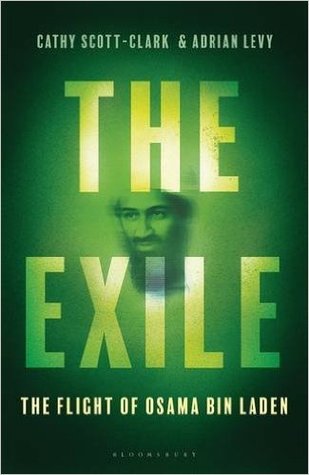
The new book by the investigative journalists Adrian Levy and Catherine Scott-Clark, The Exile: The Flight of Osama bin Laden, charts the career of al-Qaeda’s founder, Osama bin Laden, up to the day he became a household name—11 September 2001—through his downfall in 2011, to the end of 2016, when al-Qaeda was more powerful than ever. It is a thoroughly absorbing account, bringing to light vast tranches of new facts, including many intricate details of how al-Qaeda operated on a human, day-to-day level, and of those states and para-states that shielded the terror network, collaborated with it, and enabled it—and still do.

The gathering of the Bin Laden network in Sudan and then in the Taliban-held areas of Afghanistan in the 1990s is a familiar story, but the splits and debates among the Arab jihadists around Bin Laden, including the opposition of significant numbers of them to the 9/11 massacre, is perhaps less well known. The authors trace out how Bin Laden manipulated his own quasi-institutions to get his way. First, Bin Laden took on the plan of a man, Khalid Shaykh Muhammad (KSM), who was not even a member of al-Qaeda, and then, ahead of the crucial vote, packed the shura (consultation) council with ultra-zealous Egyptians by engineering a merger between al-Qaeda and Islamic Jihad, led by Ayman al-Zawahiri. Continue reading

What The West Can Do About The Iran Protests

By Kyle Orton (@KyleWOrton) on 2 January 2018

Protests in Tehran, Iran, 30 December 2017. (Photo by Stringer/Anadolu Agency/Getty Images)

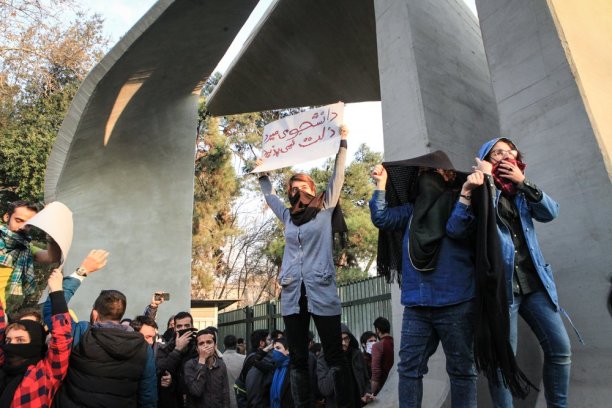
Protests broke out against the Iranian government on 27 December, and have achieved a wider geographic spread in the country than even the massive uprising of June 2009, reaching into religiously conservative, working-class towns and districts traditionally regarded as pro-regime. It is likely these demonstrations will be suppressed, but that does not obviate the need for Western policy. To the contrary, the protests exposed several flawed assumptions in recent policy-making, and a course correction is urgently necessary. Continue reading

Iran Claims to “Defeat” the Islamic State in Syria, a “Dangerous Conspiracy” by America and Israel

By Kyle Orton (@KyleWOrton) on 22 November 2017

Qassem Sulaymani, Hassan Nasrallah, Ali Khamene’i (c. 2000)

The leader of the Quds Force, the expeditionary unit of Iran’s Islamic Revolutionary Guard Corps (IRGC), Qassem Sulaymani, sent a public letter to Iran’s Supreme Leader, Ali Khamene’i, on 21 November. Sulaymani’s letter followed the apparent expulsion of the Islamic State from its last urban stronghold in Syria, al-Bukamal, on 19 November, by Quds Force-led troops—foreign Shi’a jihadists and the battered remnants of Bashar al-Asad’s army. Sulaymani informs Khamene’i that in overcoming the Islamic State and its caliphate, a “U.S.-Zionist-made” terrorist entity has been defeated. Sulaymani’s letter is reproduced below, with some noteworthy sections highlighted in bold. Continue reading

Iraqi Kurdistan’s Independence Referendum and the West’s Middle East Strategy

By Kyle Orton (@KyleWOrton) on 27 September 2017

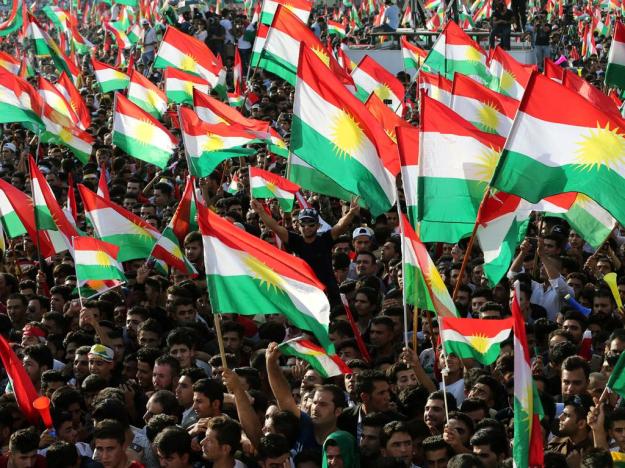
The Kurdistan Regional Government (KRG) held a referendum on 25 September, and voted overwhelmingly—with nearly 93% in favour—for independence. The comparison with Brexit might have been overworked by all sides, but there was a familiarity: while the result itself was not a shock, the fact of the referendum itself came as a surprise to many in what one might call the global elite, which lectured in that endearing way that had such success in deterring Brits a year ago. Then as now, the effect was, if anything, to stoke the bloody-mindedness of a population that had considerable qualms but had enough pride to repudiate being harangued in those accents. Still, as with Brexit, it wasn’t as if the naysayers didn’t have a case, and now comes the really difficult work. Continue reading

Iran Raises the Stature of One of Its Shi’a Jihadist Militias: Harakat Hizballah al-Nujaba

By Kyle Orton (@KyleWOrton) on 22 September 2017

Logo of Harakat Hizballah al-Nujaba

Reuters has published a profile of Harakat Hizballah al-Nujaba (HHN), sometimes simply called Harakat al-Nujaba, a Shi’a militia made up of Iraqi citizens that is loyal to Iran’s Supreme Leader Ali Khamene’i and the revolutionary theocracy’s ideology of absolute wilayat al-faqih (guardianship of the jurist). HHN, which first emerged in the summer of 2013, is one of a web of overlapping Shi’a jihadist groups recruited from Iraq, Afghanistan, Pakistan, and beyond—as far afield as the Ivory Coast—that have been used to spearhead Tehran’s imperial push into the Arab world, particularly the rescue of Bashar al-Asad’s regime in Syria that would otherwise have fallen to a popular rebellion. In recent months, Iran has been raising the profile of HHN. Continue reading

Al-Qaeda in Syria Linked to a Terror Plot in the United States

By Kyle Orton (@KyleWOrton) on 30 June 2017

Abdirahman Sheik Mohamud (source)

In April 2015, a United State Federal Grand jury in Ohio charged Abdirahman Sheik Mohamud, also known as “Ayanle”, with three terrorism-related offences. Yesterday, court records were unsealed that revealed that Mohamud pleaded guilty to all charges, admitting to having fought with a terrorist organization in Syria and returned to the United States with the intention of carrying out an act of domestic terrorism. Mohamud was in contact with foreign terrorist operatives throughout the period he was plotting an attack within the United States. But—and this is the most significant aspect of the case—Mohamud was not in contact with one of the Islamic State’s intelligence operatives, who guide attacks in a manner now relatively well-understood. Instead, Mohamud was in contact with Jabhat al-Nusra, at that time al-Qaeda’s declared branch in Syria. Al-Nusra is now known as Hay’at Tahrir al-Sham (HTS) and claimed in July 2016 to have disaffiliated from al-Qaeda’s “central”, not that this has (nor will nor should) remove HTS from the terrorism list. Regardless of its formal status within al-Qaeda’s command structure, HTS retains significant links with al-Qaeda’s global networks, and a breakaway group from HTS in Syria has reaffirmed its loyalty to al-Qaeda. Mohamud’s case is an extremely important data point in assessing the risk these overlapping and mutually reinforcing entities pose to the West and the wider world. Continue reading

The Iranian Regime’s Terrorism Against the West

By Kyle Orton (@KyleWOrton) on 14 June 2017

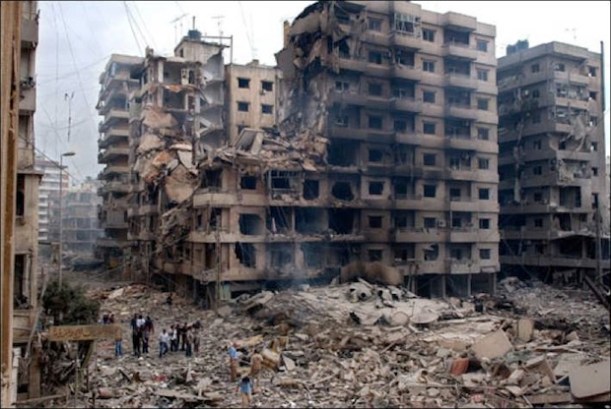
The destroyed Marine barracks that Iran’s agents blew up in Beirut on 23 October 1983 (image source)

The United States Department of Justice released indictments on 8 June 2017 for two operatives of the jihadist terrorist organisation, Hizballah, the Lebanese branch of Iran’s Islamic Revolutionary Guard Corps (IRGC), which is tasked with exporting the Islamist revolution in Iran through terrorism, subversion, and other means. The two men, Ali Kourani of New York and Samer al-Debek of Michigan, had been arrested on 1 June, and are charged with conducting surveillance for potential future terrorist attacks in the United States.
Continue reading

France Presents Evidence Assad Committed Chemical Weapons Atrocity

By Kyle Orton (@KyleWOrton) on 26 April 2017

The French government has released its assessment of the 4 April chemical weapons attack in Syria, and “independently and categorically confirms that sarin was used”. France “deployed the required resources to obtain its own samples,” the report notes, and “collected biomedical and environmental samples and munitions and pieces of munitions” from this attack site and several prior. Continue reading

America Pushes Back Against Iranian Subversion on the Gulf

Originally posted at The Henry Jackson Society

By Kyle Orton (@KyleWOrton) on 17 March 2017

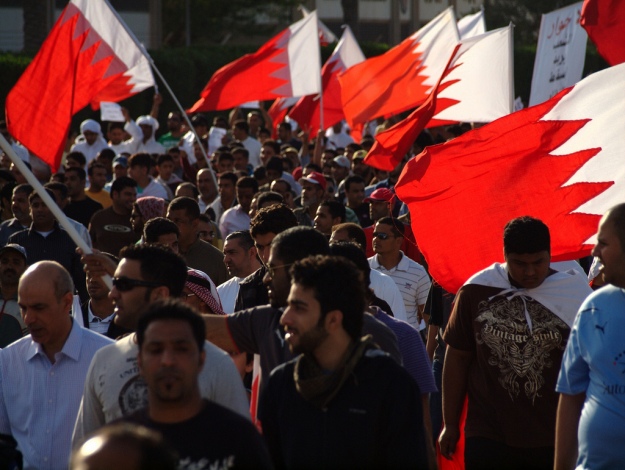
Protesters march through Manama, Bahrain in March 2011 (Photo from Al-Jazeera)

The U.S. State Department today imposed sanctions on two men, Ahmad Hasan Yusuf (Abu Maryam, Sajjad Hassan Nasir al-Zubaydi) and Alsayed Murtadha Majeed Ramadhan Alawi (Murtadha Majeed Ramadan al-Sindi), labelling them Specially Designated Global Terrorists (SDGT). Both men are members of a group, Saraya al-Ashtar or al-Ashtar Brigades (AAB) that has conducted terrorism in Bahrain and is part of the Iranian revolution’s long reach in the region. Continue reading