Tag Archives: Quds Force

Iraqi Kurdistan’s Independence Referendum and the West’s Middle East Strategy

By Kyle Orton (@KyleWOrton) on 27 September 2017
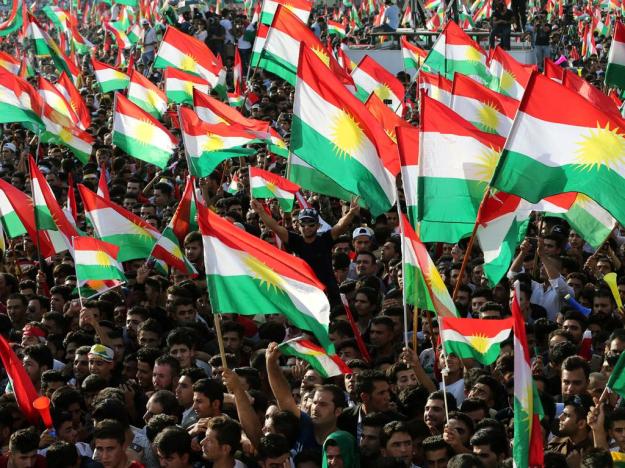
The Kurdistan Regional Government (KRG) held a referendum on 25 September, and voted overwhelmingly—with nearly 93% in favour—for independence. The comparison with Brexit might have been overworked by all sides, but there was a familiarity: while the result itself was not a shock, the fact of the referendum itself came as a surprise to many in what one might call the global elite, which lectured in that endearing way that had such success in deterring Brits a year ago. Then as now, the effect was, if anything, to stoke the bloody-mindedness of a population that had considerable qualms but had enough pride to repudiate being harangued in those accents. Still, as with Brexit, it wasn’t as if the naysayers didn’t have a case, and now comes the really difficult work. Continue reading
Iran Raises the Stature of One of Its Shi’a Jihadist Militias: Harakat Hizballah al-Nujaba

By Kyle Orton (@KyleWOrton) on 22 September 2017

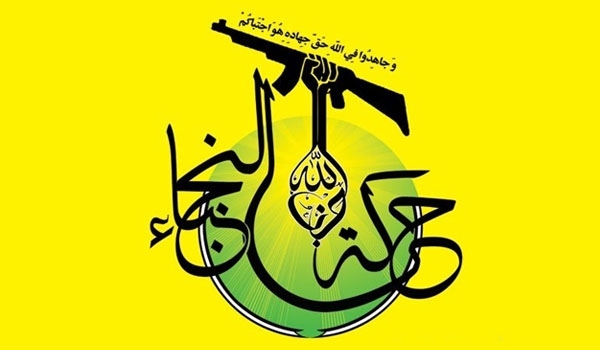
Logo of Harakat Hizballah al-Nujaba

Reuters has published a profile of Harakat Hizballah al-Nujaba (HHN), sometimes simply called Harakat al-Nujaba, a Shi’a militia made up of Iraqi citizens that is loyal to Iran’s Supreme Leader Ali Khamene’i and the revolutionary theocracy’s ideology of absolute wilayat al-faqih (guardianship of the jurist). HHN, which first emerged in the summer of 2013, is one of a web of overlapping Shi’a jihadist groups recruited from Iraq, Afghanistan, Pakistan, and beyond—as far afield as the Ivory Coast—that have been used to spearhead Tehran’s imperial push into the Arab world, particularly the rescue of Bashar al-Asad’s regime in Syria that would otherwise have fallen to a popular rebellion. In recent months, Iran has been raising the profile of HHN. Continue reading

Al-Qaeda in Syria Linked to a Terror Plot in the United States

By Kyle Orton (@KyleWOrton) on 30 June 2017

Abdirahman Sheik Mohamud (source)

In April 2015, a United State Federal Grand jury in Ohio charged Abdirahman Sheik Mohamud, also known as “Ayanle”, with three terrorism-related offences. Yesterday, court records were unsealed that revealed that Mohamud pleaded guilty to all charges, admitting to having fought with a terrorist organization in Syria and returned to the United States with the intention of carrying out an act of domestic terrorism. Mohamud was in contact with foreign terrorist operatives throughout the period he was plotting an attack within the United States. But—and this is the most significant aspect of the case—Mohamud was not in contact with one of the Islamic State’s intelligence operatives, who guide attacks in a manner now relatively well-understood. Instead, Mohamud was in contact with Jabhat al-Nusra, at that time al-Qaeda’s declared branch in Syria. Al-Nusra is now known as Hay’at Tahrir al-Sham (HTS) and claimed in July 2016 to have disaffiliated from al-Qaeda’s “central”, not that this has (nor will nor should) remove HTS from the terrorism list. Regardless of its formal status within al-Qaeda’s command structure, HTS retains significant links with al-Qaeda’s global networks, and a breakaway group from HTS in Syria has reaffirmed its loyalty to al-Qaeda. Mohamud’s case is an extremely important data point in assessing the risk these overlapping and mutually reinforcing entities pose to the West and the wider world. Continue reading

The Iranian Regime’s Terrorism Against the West

By Kyle Orton (@KyleWOrton) on 14 June 2017

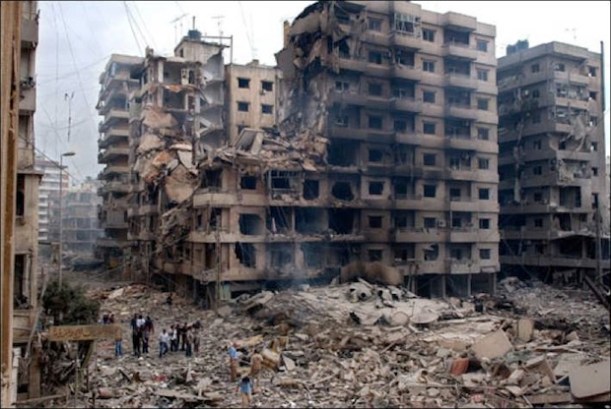
The destroyed Marine barracks that Iran’s agents blew up in Beirut on 23 October 1983 (image source)

The United States Department of Justice released indictments on 8 June 2017 for two operatives of the jihadist terrorist organisation, Hizballah, the Lebanese branch of Iran’s Islamic Revolutionary Guard Corps (IRGC), which is tasked with exporting the Islamist revolution in Iran through terrorism, subversion, and other means. The two men, Ali Kourani of New York and Samer al-Debek of Michigan, had been arrested on 1 June, and are charged with conducting surveillance for potential future terrorist attacks in the United States.
Continue reading

France Presents Evidence Assad Committed Chemical Weapons Atrocity

By Kyle Orton (@KyleWOrton) on 26 April 2017

The French government has released its assessment of the 4 April chemical weapons attack in Syria, and “independently and categorically confirms that sarin was used”. France “deployed the required resources to obtain its own samples,” the report notes, and “collected biomedical and environmental samples and munitions and pieces of munitions” from this attack site and several prior. Continue reading

America Pushes Back Against Iranian Subversion on the Gulf

Originally posted at The Henry Jackson Society

By Kyle Orton (@KyleWOrton) on 17 March 2017

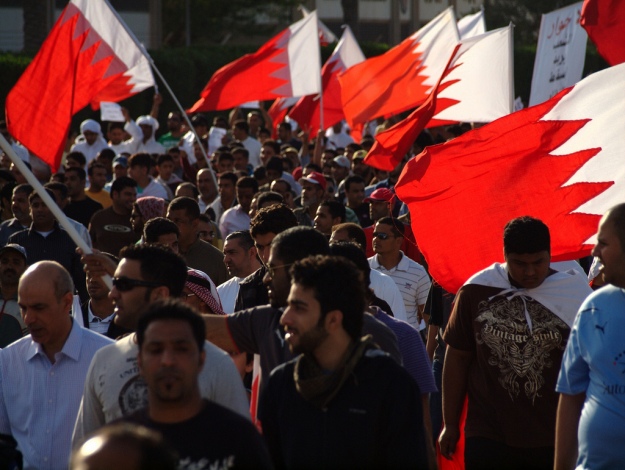
Protesters march through Manama, Bahrain in March 2011 (Photo from Al-Jazeera)

The U.S. State Department today imposed sanctions on two men, Ahmad Hasan Yusuf (Abu Maryam, Sajjad Hassan Nasir al-Zubaydi) and Alsayed Murtadha Majeed Ramadhan Alawi (Murtadha Majeed Ramadan al-Sindi), labelling them Specially Designated Global Terrorists (SDGT). Both men are members of a group, Saraya al-Ashtar or al-Ashtar Brigades (AAB) that has conducted terrorism in Bahrain and is part of the Iranian revolution’s long reach in the region. Continue reading

Outcome Uncertain as American Involvement in Syria Deepens

By Kyle Orton (@KyleWOrton) on March 10, 2017

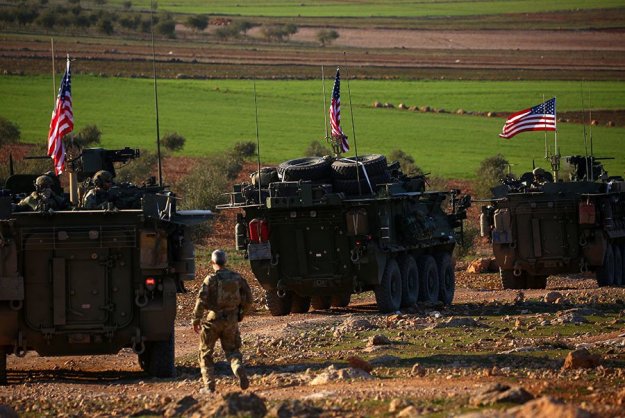
American ground forces are getting more deeply entangled in Syria as the offensive to push the Islamic State (IS) out of its de facto capital city, Raqqa, approaches. It remains unclear exactly which actors in Syria these troops will be assisting, though there are more and more indications that their mission will redound to the benefit of the regime of Bashar al-Assad and his allies, Iran and Russia. Continue reading

Al-Qaeda’s Deputy Killed in Syria

By Kyle Orton (@KyleWOrton) on February 27, 2017

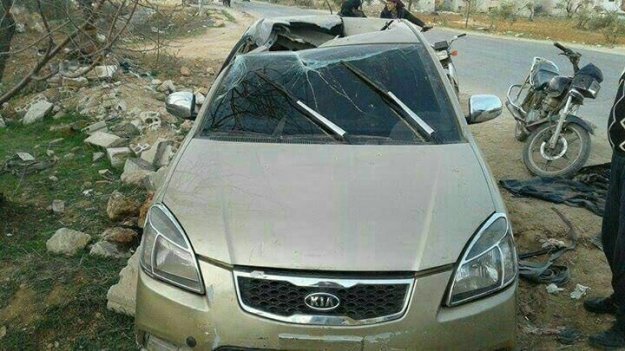
abu-al-khayr-car-killed-in

Last night it was reported that al-Qaeda’s overall deputy, Abu Khayr al-Masri, had been killed by the U.S.-led Coalition in Syria with a drone strike. This was soon seemingly confirmed by pro-Qaeda channels, and Abu al-Khayr was said to have been buried this morning. Though the emphasis on targeting jihadist leaders can be overdone, the demise of Abu al-Khayr is an important development, and one with significance beyond itself.

Abu al-Khayr’s career is demonstrative of a few interesting trends within the Jihadi-Salafist movement, primary among them the willingness of the Iranian revolution to work with the Sunni jihadists, al-Qaeda very much included, when it suits its purposes, particularly in undermining Western interests. Abu al-Khayr also elucidates the changed nature of al-Qaeda, where the “centre” (AQC) could now be said to be more in Syria than the Afghanistan-Pakistan, and where al-Qaeda operates both an overt and covert presence to try to secure a durable foothold in the Levant, which might in time be a base for attacks against the West, currently suspended only for tactical reasons. Continue reading

Trump Might Continue Obama’s Dangerous Syria Policy

Originally published at The Henry Jackson Society

By Kyle Orton (@KyleWOrton) on November 24, 2016

There is not yet any clarity with regard what Donald Trump would do about Syria once he becomes President. Virtually everything about the incoming administration is in the “wait and see” phase. Still, on the current evidence, Trump’s Syria policy would appear to be a continuation of President Barack Obama’s policy of prioritizing the threat of the Islamic State (IS) and other non-state Sunni jihadist groups, while effectively aligning with the pro-regime coalition, made up of Russian air power and a ground force led by the Islamic Republic of Iran, stitched together out of the battered remnants of Bashar al-Assad’s army and his sectarian militias, Iranian paramilitary and regular forces, and foreign Shi’a jihadist groups under Iran’s control. The only potential difference is that Trump may formally repudiate the anti-Assad forces. The effect of this would be to destroy the mainstream Syrian opposition and empower al-Qaeda, but it would not bring stability to Syria. There are hints, however, that Trump is recruiting senior officials who will alter this policy. Continue reading

The Price of the Iran Deal

Originally published at The Henry Jackson Society

By Kyle Orton (@KyleWOrton) on October 26, 2016

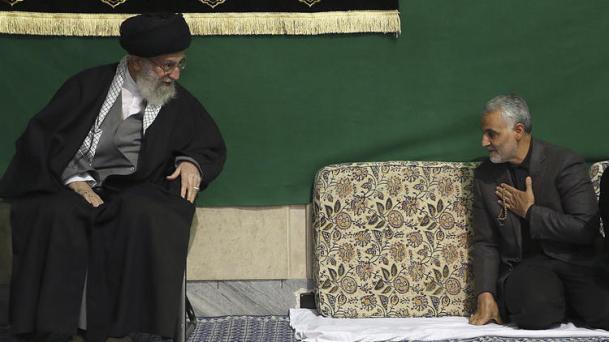
Maj. Gen. Qassem Suleimani, with Supreme Leader Ali Khamenei at a mosque in Tehran, Iran, (March 2015)

Earlier this week, The New York Times reported on the “free fall” of President Barack Obama’s Middle East policy. While the President had “inherited a messy situation in the region with the war in Iraq … by the time he took office, [President George W.] Bush’s troop surge and Gen. David H. Petraeus’s strategy change had helped turn the war around”. This relative stability has given way:

Today there is no single overarching issue but multiple ones. Syria, Iraq and Yemen are caught up in war. Turkey and Jordan are inundated by refugees. Russia has reasserted itself as a major player in the region. Libya is searching for stability after the fall of its longtime dictator. The Kurds are on the march. Egypt is fighting off a terrorist threat at home. And Saudi Arabia and Iran are waging a profound struggle for the future of the region.

Many of America’s allies disagreed with Bush’s focus on Iraq, considering Iran to be the larger threat, but if they had considered Bush too assertive, they find Obama too timorous, stepping back as the situation spins out of control. Continue reading