By Kyle Orton (@KyleWOrton) on 9 October 2019

Interview with De Re Militari Journal. Continue reading
By Kyle Orton (@KyleWOrton) on 9 October 2019

Interview with De Re Militari Journal. Continue reading
This article was published at The New Turkey
By Kyle Orton (@KyleWOrton) on 1 October 2019

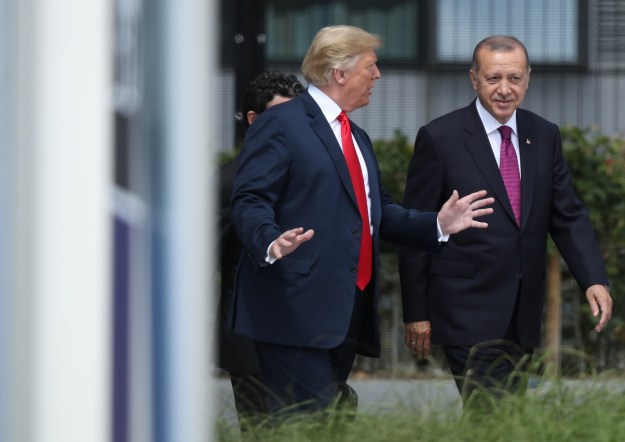
U.S. President Donald Trump and Turkish President Recep Tayyip Erdogan at the opening ceremony of the NATO Summit in Brussels, July 2018 // Getty Images
Turkey’s President Recep Tayyip Erdogan had said earlier in September that he would discuss the problems between Turkey and the United States when he met with the U.S. President Donald Trump on September 25, as part of his trip to New York for the opening of the United Nations General Assembly. But neither side has revealed what was discussed and if anything was resolved. Continue reading
By Kyle Orton (@KyleWOrton) on 12 September 2019

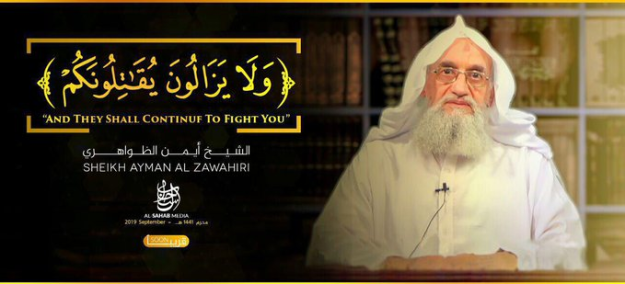
To mark the eighteenth anniversary of the 9/11 massacre, Al-Qaeda’s Al-Sahab media department released a video, “And They Shall Continue to Fight You”. The video, which ran over a half-hour, featured a speech by the group’s emir, Ayman al-Zawahiri, interspersed with other leadership figures.
Much attention has been given to Dr. Al-Zawahiri encouraging attacks on America, his contention that the U.S. has enabled the spread of Iranian power by providing its vicious sectarian militias in Iraq, Syria, and beyond with direct support as part of the war against the Islamic State (ISIS), and his use of the issue of Palestine. There are some indications Al-Qaeda is looking abroad again with its terrorism campaign, but the primary purpose of re-emphasising the justice of attacks on the West seems to be to meet the ideological challenge from ISIS. Behind the veneer of the “far enemy” rhetoric in this speech, Al-Zawahiri was in fact very defensive—particularly about 9/11, Al-Qaeda’s greatest “success”, where he seems stung by the accusation Al-Qaeda murdered innocents—and “near enemy” (regionally) focused. Even the call to attack America suggested attacks on military installations in the Middle East, rather than in America itself. Such attacks would also avoid the issue of civilian casualties, Al-Zawahiri noted.
An English translation was put out of the video of Al-Zawahiri’s speech and a transcript is reproduced below.
Continue reading
By Kyle Orton (@KyleWOrton) on 25 August 2019
A version of this article was published at The Arab Weekly

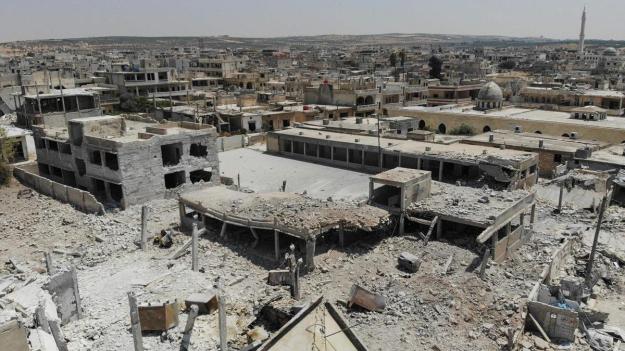
Devastation in Khan Shaykhun, Idlib, Syria, 3 August 2019 (AFP)
Bashar al-Assad’s regime, supported by Russia and (in a more deniable form) Iran, began an offensive against the last insurgent-held enclave in Syria, Idlib, in the last days of April. Up until a month ago, this looked like an embarrassing fiasco: with a minimal increase in Turkish support to its rebel proxies, the pro-Assad forces had been able to gain about one-percent of the territory in the southern part of “Greater Idlib”. In the last fortnight, however, the pro-Assad coalition has made important breakthroughs that could prove decisive. Continue reading
By Kyle Orton (@KyleWOrton) on 22 July 2019

U.S. President Donald Trump and Turkey’s President Recep Tayyip Erdogan meeting during the G20 leaders summit in Osaka, Japan, 29 June 2019 [image source]
By Kyle Orton (@KyleWOrton) and Oved Lobel on 14 July 2019

Abror Azimov in court in Moscow in April 2017 [photo source] and Mukhamadyusup Ermatov [photo source]
By Kyle Orton (@KyleWOrton) on 9 July 2019

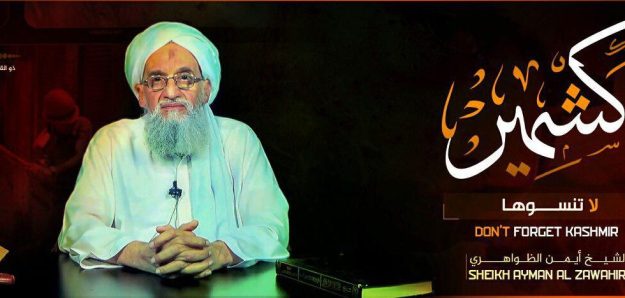
Al-Qaeda’s leader, Ayman al-Zawahiri, released a speech, “Don’t Forget Kashmir”, which as the title suggests focused on that conflict on the Subcontinent. Al-Zawahiri was insistent on fighting India, but he also wanted to “liberate” the Kashmiri jihad from the oversight of the Pakistani secret police and military, who have used these Islamist paramilitary forces as instruments of state policy against the Indian Union since the time of partition. In Al-Zawahiri’s telling the Pakistani state, such as it is, is too close to the Americans and the West. A transcript of the speech, released in English by Al-Qaeda’s As-Sahab Media, is reproduced below. Continue reading
By Kyle Orton (@KyleWOrton) on 15 June 2019
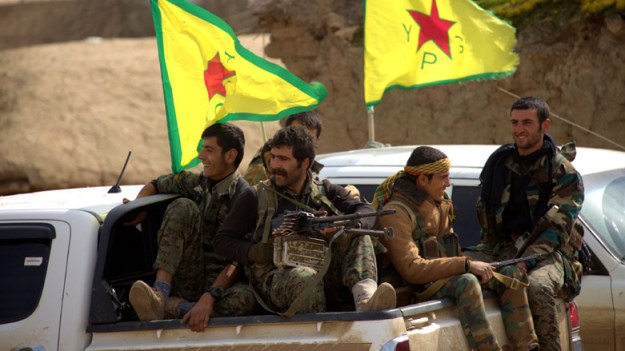
The Arab inhabitants of eastern Syria have once again turned out in protest against the Syrian Democratic Forces (SDF), the Western partner force in the campaign against the Islamic State (IS). The rejection of the SDF’s rule in the area has its roots in political dynamics that were entirely foreseeable. Continue readingPublished at The Arab Weekly
By Kyle Orton (@KyleWOrton) on 28 April 2019

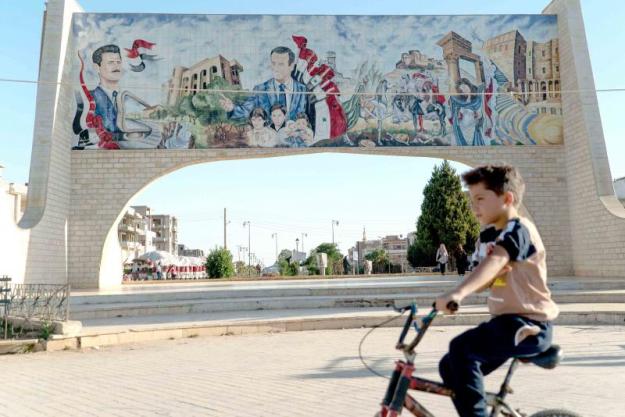
A young boy rides his bicycle in Deraa // AFP
In military terms, the fall of Daraa, in south-western Syria, to Iranian and regime forces last July eliminated the last insurgent-held pocket not dominated by jihadists. Politically, it had profound effects, demonstrating American disengagement and Israel’s misperceptions of the Syrian landscape, particularly Russia’s role in it.
Recent signs of renewed insurgency in Daraa, however, underline how far from over Syria’s war is and how badly the West has mishandled the crisis. Continue reading
By Kyle Orton (@KyleWOrton) on 18 April 2019

Israeli opinion generally regards the country’s efforts to contain Iran, especially in Syria, as having been successful. In fact, the trendline runs the other way: Iran is constraining Israel, entrenching all around the Jewish state. Continue reading